Welcome back to My Weird Prompts, everyone. We are hitting a pretty big milestone today, our four hundred twenty-fifth episode. It is wild to think how long we have been doing this, sitting here in Jerusalem, digging into whatever strange corners of the world our housemate Daniel decides to point us toward. And today, he has sent us something that feels both incredibly historical and urgently modern.

Herman Poppleberry here, and Corn, I have to say, Daniel really hit a nerve with this one. He was mentioning that roof leak we had back in twenty twenty-five, the one that turned part of the guest room into a temporary mycological experiment. It is funny how a bit of unwanted mold in your house can get you thinking about the history of medicine. He wants to know about antibiotic resistance, where we stand here in early twenty twenty-six, and how much of our survival still depends on those natural sources versus the digital models we are building.
It is a great jumping-off point. We often take for granted that we live in the post-antibiotic era, or at least we have for the last century. But Daniel’s question about whether we are staying ahead of the bacteria is a heavy one. I remember back in episode one hundred sixty-one, we talked about A-I in drug discovery, but the landscape has shifted so much even in the last few years. Herman, let’s start with the big picture. Are we actually winning this arms race, or are we just running faster and faster to stay in the same place?
That is the perfect way to frame it, the Red Queen’s Race. In evolutionary biology, you have to keep running just to stay in the same place. Here in twenty twenty-six, the situation is, to be blunt, precarious. We are seeing a rise in what researchers call the silent pandemic. The twenty twenty-five W-H-O Global Antimicrobial Resistance report was a wake-up call. It tracked over twenty-three million infections globally where the bacteria simply stopped responding to common drugs. We are seeing rates of resistance to carbapenems—our absolute last-resort drugs—reaching over fifty-four percent in pathogens like Acinetobacter baumannii. In some regions, like Egypt or Iran, that number is over eighty-five percent. These are the drugs we use when nothing else works, Corn, and the shield is cracking.
Fifty-four percent is a staggering number. I think most people still have this mindset that if you get a nasty infection, you just go to the doctor, get a round of pills, and you are fine in a week. But what you are saying is that for a huge portion of the population, those pills are becoming about as effective as a sugar tablet.
Exactly. And the scary part is not just the stuff you hear about in the news, like M-R-S-A or drug-resistant tuberculosis. It is the everyday stuff. Urinary tract infections, skin infections, even the prophylactic antibiotics given during routine surgeries like hip replacements or C-sections. If those stop working, the entire infrastructure of modern medicine starts to crumble. We take for granted that surgery is relatively safe because we can control infection. Without effective antibiotics, a simple procedure becomes a life-threatening gamble. Recent forecasts suggest that bacterial resistance could cause thirty-nine million deaths between twenty twenty-five and twenty fifty. That is three deaths every single minute.
So, let’s look at why this is happening. We have known about resistance since Alexander Fleming himself warned us about it in his Nobel Prize speech in nineteen forty-five. He literally said that if people use penicillin too sparingly or too often, the bacteria will learn to resist it. Why has it taken us so long to find a solution? Is it just that bacteria are better at evolving than we are at inventing?
Well, bacteria have a few billion years of a head start on us. They have these incredible mechanisms for survival. They do not just wait for random mutations; they share genetic information through horizontal gene transfer. It is like they have their own version of a global internet where they can upload the blueprints for resisting a specific drug and share it with totally different species of bacteria. They use efflux pumps to literally spit the drug out of their cells, or they produce enzymes that chew the antibiotic up before it can do any damage.
It is like they are constantly patching their software against our exploits. But on our side, the human side, there has been a massive discovery void, right? I remember reading that for decades, we basically stopped finding new classes of antibiotics.
That is the economic side of the disaster. From the nineteen sixties through the early two thousands, we were mostly just tweaking existing drugs. We would take a known antibiotic and change a side chain to make it slightly harder for the bacteria to break down. But we were not finding new modes of action. And the reason is simple: money. Developing a new drug costs billions, and unlike a heart medication that a patient takes every day for thirty years, an antibiotic is something you take for ten days and then you are cured. From a purely capitalist perspective, there is very little incentive for big pharma to invest in something that is designed to be used sparingly and then shelved as a drug of last resort. This is why the P-A-S-T-E-U-R Act—the subscription model we have been debating in Congress—is so critical. It is a Netflix-style model where the government pays for access to the drug regardless of how much is used, decoupling profit from volume.
This is where Daniel’s question about A-I becomes so critical. If the old model of discovery, the one where we just stumble upon things in a petri dish like Fleming did, is too slow and too expensive, can the digital realm save us? You have been following the latest models. How is A-I actually changing the math here in twenty twenty-six?
It is transforming the search space, Corn. Traditionally, looking for a new antibiotic was like trying to find a specific needle in a haystack the size of the moon. You would screen thousands of compounds manually, which is slow and incredibly prone to failure. But now, we are using generative A-I models. We are not just screening existing libraries anymore; we are asking the A-I to design entirely new molecules from scratch. Just last year, in twenty twenty-five, researchers at the University of Pennsylvania released a tool called A-M-P-Diffusion. It uses the same math behind A-I image generators to create tens of thousands of new antimicrobial peptides—short strings of amino acids—that evolution never even tried.
I remember the big news about Halicin a few years back. That was one of the first major proof-of-concept moments, right?
Exactly. Researchers at M-I-T used a neural network to screen a library of six thousand compounds and found Halicin. But that was just the beginning. Today, we have models like SyntheMol, which doesn't just find a molecule; it provides the chemical recipe for how to build it in a lab. We are moving from discovery to intentional design. We are asking the A-I to look at a specific protein pocket in a bacterium and three-D-print a key that is mathematically guaranteed to turn it.
That is a huge distinction. But here is my question, Herman. If we are designing these things in a vacuum, how do we know they won’t be toxic to humans? Or that the bacteria won’t just develop resistance to the A-I-generated drugs just as fast?
Those are the two biggest hurdles. The toxicity issue is being handled by training models on human cellular data. The A-I is taught not just what kills bacteria, but what leaves human cells untouched. It is about specificity. As for the resistance, that is where it gets really clever. We are now using A-I to model the evolutionary trajectory of the bacteria. We are trying to find targets within the bacterial cell that are essential for survival and very difficult to mutate without killing the bacteria itself. We are looking for the structural weaknesses that have remained unchanged for millions of years.
It sounds like we are trying to find the biological equivalent of a fundamental law of physics for that specific organism. If they change it, they cease to function. But let’s go back to Daniel’s other point, the mold. He asked if natural sources like mold still play a role or if we have moved entirely into the digital and synthetic realm. Given our recent experience with the roof leak, I think he is wondering if there is still gold in those hills, or in this case, in the damp corners of the house.
It is a fascinating tension. You might think that because we have these powerful digital tools, we would move away from nature, but the opposite is actually happening. We are using A-I to go back into nature with much more precision. There is this field called bioprospecting. Only a tiny fraction of the microbes on Earth can be grown in a lab. We call it the microbial dark matter. Most of the bacteria and fungi in the soil or the deep ocean simply won’t grow on a petri dish.
So we have been missing out on the vast majority of nature’s own chemical weapons because we couldn't figure out how to farm them?
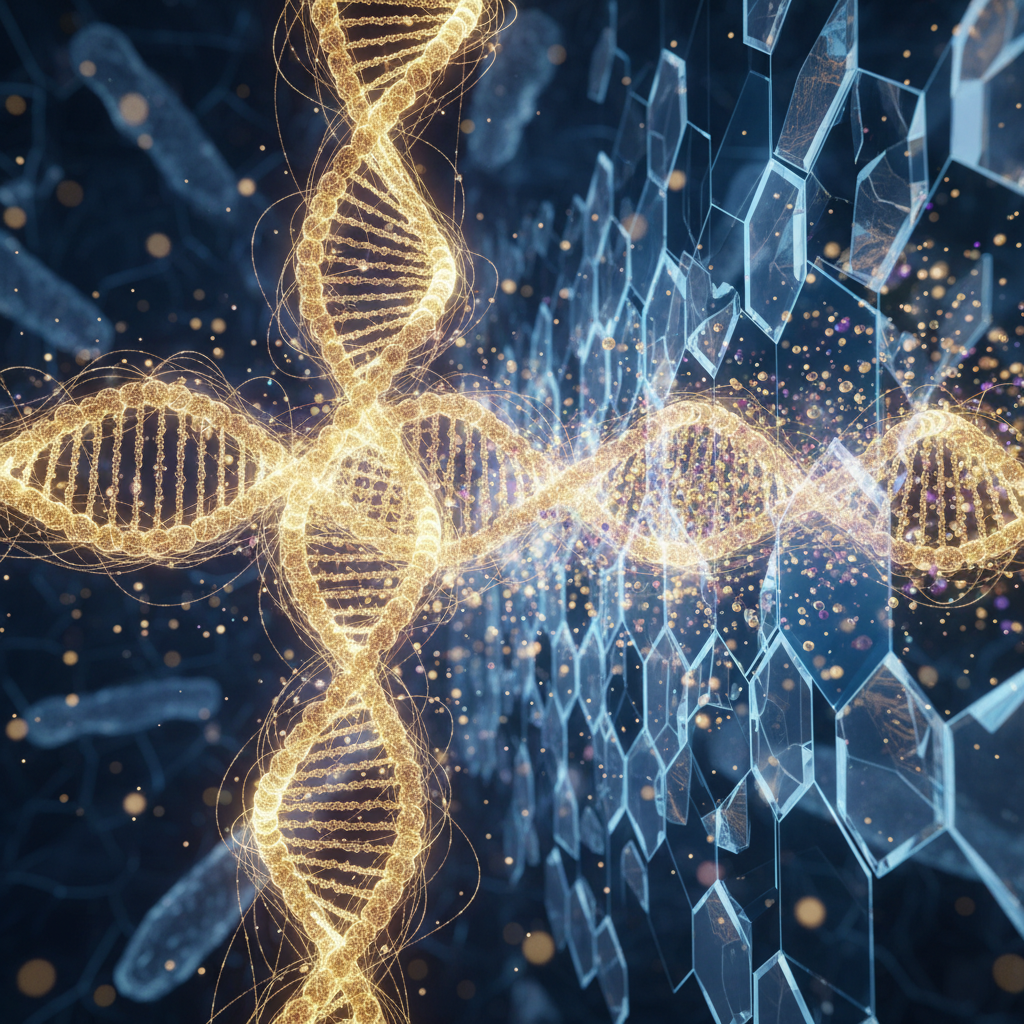
Exactly. But now, we can use metagenomics. We take a scoop of soil from a forest or a sample of water from a deep-sea vent, and we sequence all the D-N-A in it. We don’t need to grow the organisms. We just look at the genetic code. Then, we use A-I to scan those billions of genetic sequences for biosynthetic gene clusters. These are basically the blueprints that nature uses to build complex molecules, including antibiotics. We are even using A-I to de-extinct molecules—looking at the D-N-A of woolly mammoths and Neanderthals to see what kind of antimicrobial defenses they had that we have lost.
That is incredible. So the A-I is acting like a translator, reading the ancient code of soil bacteria and telling us, hey, this organism over here has a recipe for a molecule that can punch a hole through a cell wall in a way we have never seen before.
Precisely. We are finding that nature is still the ultimate chemist. The molecules that fungi and bacteria produce are often far more complex and elegant than anything we could design from scratch in a computer. Nature has had billions of years of R and D. What the A-I does is allow us to navigate that vast library without having to read every single book manually. We are finding new antibiotics in the most unlikely places: the skin of frogs, the guts of insects, and yes, even in common molds that we previously ignored.
It is a bit poetic, isn't it? We use the most advanced technology we have ever created to better understand the most ancient biological processes on the planet. But I want to push on the potential downsides here. If we start flooding the market with A-I-discovered antibiotics, aren't we just accelerating the cycle? If we make it easier to find new drugs, does that mean we will continue to use them irresponsibly, thinking there is always a new one around the corner?
That is the danger of a technological fix. If we don’t change the way we use these drugs, we are just kicking the can down the road. We need what is called antibiotic stewardship. We need better diagnostic tools, which, interestingly, is another area where A-I is helping. Right now, if you go to a doctor with a fever, they might prescribe a broad-spectrum antibiotic just to be safe, because it takes days to get a lab culture back. But A-I-powered diagnostics can now identify the specific strain of bacteria in minutes, allowing the doctor to prescribe a narrow-spectrum drug that only targets the bad guys and leaves your microbiome intact.
That seems like a massive part of the puzzle. If we stop carpet-bombing our internal ecosystems and start using precision strikes, we give the bacteria far fewer opportunities to learn and adapt. It also protects our own beneficial bacteria, which we have discussed in previous episodes as being vital for our immune systems.
Right, and remember episode three hundred fifty-nine when we talked about personalized medicine? This fits right into that. In twenty twenty-six, the goal is to move away from one-size-fits-all medicine. Every time we use an antibiotic, we are exerting selective pressure. We are essentially training the bacteria to defeat us. If we can reduce that pressure by being more precise, we extend the lifespan of every drug we have.
I’m curious about the global perspective. We are sitting here in Jerusalem, but antibiotic resistance doesn't care about borders. In fact, it thrives on global travel. How are we handling the data sharing part of this? Because if an A-I in a lab in Boston finds a new compound, but a resistant strain is emerging in a hospital in New Delhi, how quickly can we bridge that gap?
This is where the international policy has finally started to catch up. There is a much more robust global surveillance network now. We are seeing real-time tracking of resistance patterns. If a new resistant gene is detected, it is uploaded to global databases that A-I models use to update their predictions. It is a true global immune system. But there is still a massive equity issue. Developing these A-I tools is expensive, and ensuring that the resulting drugs are affordable and accessible in the global south is one of the biggest challenges of this decade.
It always comes back to the human element, doesn't it? The tech is brilliant, the science is sound, but the distribution and the politics are where things get messy. Herman, let’s talk about some specific breakthroughs. Are there any A-I-discovered antibiotics that are actually in clinical trials right now, in early twenty twenty-six, that people should be hopeful about?
There are several. One of the most promising is a compound called Abaucin. It was discovered specifically to target Acinetobacter baumannii, which is one of the most dangerous pathogens in hospitals. While Abaucin is navigating the early clinical phases, we actually have a major milestone to celebrate: Roche’s new antibiotic, Zosurabalpin, entered Phase Three trials in twenty twenty-five. It is the first antibiotic in fifty years to successfully target the outer membrane of these deadly Gram-negative bacteria. It is a massive win for the field.
That is huge. Acinetobacter is one of those names that strikes fear into hospital administrators. If we can take that off the table, it would save thousands of lives every year. What about the role of synthetic biology? Are we at the point where we can just print these new antibiotics at the bedside?
We are getting closer to distributed manufacturing, but we are not quite at the Star Trek replicator stage yet. However, we are seeing the rise of bio-foundries. These are highly automated labs that use A-I to optimize the production of these complex molecules. Instead of huge chemical plants, we can use engineered yeast or bacteria to brew the antibiotics in smaller, more localized facilities. This would be a game-changer for supply chain resilience. Remember the shortages we saw a few years ago? This would solve that.
It would also make us less dependent on a few massive factories halfway across the world. But let's go back to Daniel's question about whether nature still inspires us. You mentioned bioprospecting, but is there any new research into using the fungi themselves, rather than just their chemical outputs? I’m thinking of bacteriophages or other living treatments.
Phage therapy is having a massive resurgence. For those who don’t know, bacteriophages are viruses that specifically eat bacteria. They are the natural enemies of bacteria. They are incredibly specific; one type of phage might only kill one specific strain of E. coli. For a long time, they were ignored in the West because antibiotics were so easy to use. But now, with resistance on the rise, we are looking at phages again. And guess what? A-I is the key to making them viable.
How so? Is it about matching the right phage to the right infection?
Exactly. There are trillions of phages in the world. Finding the right one for a specific patient’s infection used to be a manual process of trial and error. Now, we use A-I to analyze the genome of the bacteria causing the infection and then search a digital library of phage genomes to find the perfect match. We can even use C-R-I-S-P-R to engineer phages to be more effective or to prevent the bacteria from developing resistance to them. It is a living, evolving medicine.
That is fascinating. So instead of a static chemical, we are sending in a biological hunter that can adapt alongside its prey. It feels like we are finally fighting on the same level as the bacteria. We are using their own natural predators against them, but with a high-tech guidance system.
It is the ultimate synthesis of the natural and the digital. And it brings us back to Daniel’s mold. Mold produces penicillin because it is in a constant war with bacteria in the soil. It is a survival mechanism. We are just finally learning how to listen to that conversation and join in with our own tools.
I love that image. The conversation of the soil. It makes the world feel much more alive and much more interconnected. But I want to bring this down to earth for our listeners. If someone is listening to this in twenty twenty-six, and they are worried about antibiotic resistance, what is the practical takeaway? We can’t all run A-I models or sequence soil D-N-A.
The first thing is to realize that antibiotics are a precious, finite resource. They are not like other drugs. When you use one, you are affecting the efficacy of that drug for everyone else. So, the most important thing is to only use them when absolutely necessary and to always finish the full course as prescribed. Even if you feel better after three days, there might still be a small population of bacteria that are slightly more resistant. If you stop early, those survivors will multiply, and next time, that drug won’t work.
Right, you are essentially providing a training camp for the bacteria if you don’t finish the job. What about the agricultural side? I know a huge percentage of antibiotics are used in livestock, not humans.
That is a massive issue. In many parts of the world, antibiotics are still used as growth promoters in healthy animals. This creates a massive reservoir of resistant bacteria that can then jump to humans through the food chain or the environment. As consumers, we can vote with our wallets by choosing meat raised without routine antibiotics. And as citizens, we can support regulations that limit the non-medical use of these drugs.
It is about systemic change as much as individual action. Herman, I have to ask, as someone who spends his life looking at these numbers and these models, are you optimistic? When you look at the trajectory of A-I discovery versus the trajectory of bacterial resistance, who is winning right now?
If you had asked me five years ago, I would have been much more pessimistic. We were in a real slump. But the breakthroughs in generative A-I and metagenomics in the last twenty-four months have changed the game. For the first time in my career, it feels like we have a tool that can match the speed of bacterial evolution. We are not just reacting anymore; we are starting to anticipate. I think we are entering a second Golden Age of antibiotics, but one that is much more precise and sustainable than the first.
That is a powerful thought. A second Golden Age, but this time with the wisdom to use it better. It is a reminder that even when things look dire, human ingenuity, especially when it’s paired with a deeper understanding of the natural world, has a way of finding a path forward.
Exactly. And it all starts with someone like Fleming looking at a bit of mold, or Daniel looking at a leak in the roof and asking the right questions. Those moments of curiosity are the fuel for all of this.
Well, speaking of curiosity, we have covered a lot of ground today. From the mechanics of efflux pumps to the deep-sea vents and the neural networks of twenty twenty-six. It is a lot to take in, but it really underscores why we do this show. There is so much happening beneath the surface of the news, and understanding these mechanisms is the only way to make sense of the world we are moving into.
Absolutely. And if you enjoyed this deep dive, you should definitely check out some of our past episodes. Episode three hundred fifty-nine on the medical revolution of A-I diagnostics is a great companion to this one. And if you want to hear more about the weird ways A-I is interacting with the physical world, episode sixty-eight on the digital ice age is a classic.
And hey, if you have been listening to My Weird Prompts for a while and you haven't left us a review yet, we would really appreciate it. Whether you are on Spotify or Apple Podcasts, a quick rating or a few words about what you like really helps new people find the show. It makes a huge difference for a small, independent production like ours.
It really does. We read all of them, and it keeps us motivated to keep digging into these weird prompts that Daniel sends our way.
So, thanks to Daniel for the prompt, even if it did come from a leaky roof. And thank you all for listening to episode four hundred twenty-five. You can find our full archive and our contact form at myweirdprompts dot com. We love hearing from you, so don't be a stranger.
Until next time, stay curious and maybe keep an eye on any interesting molds you find in your house. You never know where the next medical revolution might be hiding.
This has been My Weird Prompts. We will see you in the next one.
Goodbye everyone.