Hey everyone, welcome back to My Weird Prompts. I am Corn, and I am joined as always by my brother.

Herman Poppleberry, reporting for duty. It is good to be here, Corn. We have a heavy one today, but honestly, it is one of the most practical discussions we could possibly have given where we live.
Yeah, that's right. Our housemate Daniel sent us a voice note about something that has been a literal part of our daily lives here in Jerusalem lately. He was talking about the engineering and mechanics of safe spaces in Israel. You know, he was mentioning how his wife, who is an architect, spends so much of her time looking at these blueprints and working with structural engineers to make sure these rooms actually do what they are supposed to do.
It is a fascinating intersection of civil engineering and high stakes survival. Daniel was reflecting on his own experience during the Iranian missile attacks of two thousand twenty-four, specifically the stress of deciding where to go when you live in an older building that does not have a built-in shelter. He ended up seven stories underground in a car park, which is a choice many people have to make when the sirens go off.
It is a choice we have had to think about too. But it raises so many technical questions. What actually makes a room safe? Is a car park always better than a stairwell? And how do these structures handle different types of threats, from a small rocket to a massive ballistic missile? I want to really dig into the physics of this today.
I'm ready for it. I have been looking into the standards set by the Home Front Command, and the engineering behind it is much more sophisticated than just thick walls. It is about energy dissipation, pressure waves, and even air filtration.
Let us start with the basics for anyone who is not familiar with the Israeli landscape. There are a few different types of shelters. You have the private ones inside apartments, the ones on each floor of a building, and the big public ones. Herman, can you break down the engineering of the private safe room, what we call the M-A-M-A-D?
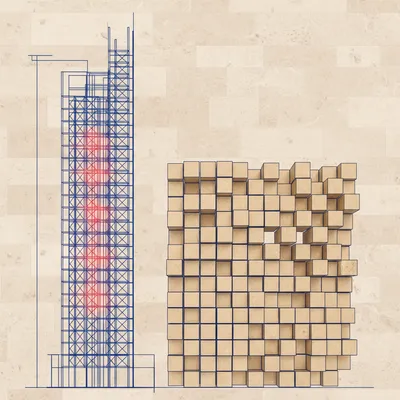
Right, the Merkhav Mugan Dirati, or M-A-M-A-D. Since the early nineteen nineties, specifically after the first Gulf War, every new residential building in Israel is legally required to have one. The core engineering principle here is that the safe room is not just a room with thick walls. It is actually a vertical reinforced concrete column that runs through the entire height of the building.
Wait, so it is like a spine?
That's right. It is a structural spine. If you look at a building under construction, you will see these concrete boxes stacked on top of each other. They are tied together with heavy rebar. This means that even if the rest of the building collapses around it due to a strike, that central column of safe rooms is designed to remain standing. The walls are typically a minimum of twenty to thirty centimeters of reinforced concrete. In areas closer to the borders, like near the Gaza Strip or the northern border, those requirements go up to forty centimeters or more because the threat of direct hits is higher.
I have always wondered about the concrete itself. Is it just standard construction concrete, or is there something special about the mix?
It is usually a higher grade, like C-thirty or C-thirty-five. The key is the reinforcement ratio. There is a lot more steel rebar in a safe room wall than in a standard exterior wall. This is to prevent spalling. Spalling is when the energy of an explosion on the outside of the wall causes chunks of concrete to break off and fly into the room at high velocity on the inside. Even if the wall does not breach, those flying fragments can be lethal. So, the engineers use a specific dense mesh of rebar to keep the concrete together under extreme stress.
That makes sense. But the walls are only part of it. The weakest points are always the openings. The doors and windows. Daniel mentioned his wife works with contractors on this. Those doors are incredibly heavy. What are they rated for?
Those are blast-resistant steel doors. They have to be able to withstand a specific pressure wave, often measured in bars or kilopascals. A standard M-A-M-A-D door is designed to handle at least one point two bars of overpressure. They also have a double locking mechanism and a rubber gasket for a gas-tight seal. This is a legacy of the nineteen ninety-one Gulf War, where the primary fear was chemical weapons. Even today, these rooms are built to be sealed environments. There is a special ventilation and filtration system, often called an N-B-C filter, which stands for Nuclear, Biological, and Chemical. It creates positive pressure inside the room so that outside air cannot leak in unless it goes through the filter.
Positive pressure. That is the same principle they use in hospital operating rooms to keep germs out, right?
That's the idea. You pump filtered air in faster than it can leak out, so the air flow is always pushing outwards through any tiny cracks. It is a brilliant bit of engineering for a residential space. But as Daniel pointed out, the challenge is for people in older buildings. Jerusalem is full of beautiful old stone buildings from the early twentieth century or even earlier. They do not have M-A-M-A-D-S. So, the Home Front Command tells people to use the stairwell. Why is that the next best thing?
I can actually take this one because I was reading a report from a structural engineering firm on this. The stairwell is usually the most reinforced part of an older building. It is a small, confined space with multiple thick walls between you and the outside. If you are in the middle of the building, you have the mass of the entire structure acting as a buffer. The recommendation is usually to go down at least two floors from the roof, but not to the ground floor if there is a risk of the building collapsing on top of you. You want that sweet spot in the middle where you are protected from shrapnel by the outer walls but not at risk of being crushed if the top floors take a hit.
It is all about layers of protection. Each wall the missile or shrapnel has to pass through absorbs a massive amount of kinetic energy. But let us talk about what Daniel did. He went to an underground car park. He mentioned it was seven stories deep. Now, that sounds incredibly safe, but he also noted that the Home Front Command says only certain car parks are approved. Why the distinction?
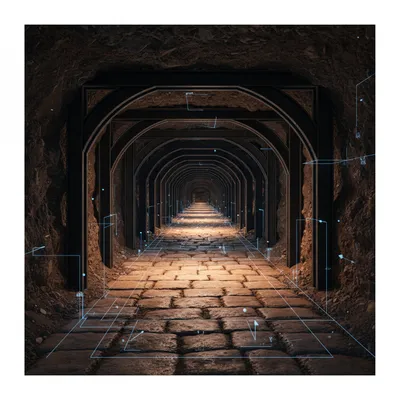
This is where it gets really technical. A car park that is seven stories underground is essentially a bunker. You have meters and meters of earth and concrete above you. That is called overburden. If you are that deep, you are protected from almost any conventional direct hit, even from a large ballistic missile. The earth itself is an amazing shock absorber. However, the reason many car parks are not approved is because of the risk of structural collapse and secondary hazards.
Yeah, like fire or gas leaks.
That's it. Think about what is in a car park. Hundreds of vehicles filled with gasoline. If a strike causes a fire or a structural failure that ruptures gas lines or fuel tanks, that underground space becomes a death trap very quickly. Also, ventilation is a huge issue. If the power goes out and the massive fans stop working, you have thousands of people in a confined space with limited oxygen and potentially rising carbon dioxide levels. An approved underground shelter has to have redundant ventilation, emergency lighting, multiple clear exit paths that won't be blocked by rubble, and a structural design that can support the weight of the entire building above it even if the main supports are damaged.
That's a really important point. I think people often assume deeper is always better, but if the entrance gets blocked by a collapsed building, you are stuck. The engineering of the exits is just as important as the thickness of the roof. They often have what they call emergency egress tunnels that lead to a completely different area, far away from the main building footprint.
Daniel mentioned something else that I think is worth diving into. He talked about the difference between a rocket and a ballistic missile. We see a lot of Kassam and Grad rockets, which are relatively small. But the Iranian attacks in April and October of two thousand twenty-four involved much larger weapons, like the Emad or even claims of hypersonic missiles. Does the engineering of a home safe room actually hold up against a ballistic missile?
That is the million dollar question, and it is where we have to be honest about the physics. A M-A-M-A-D is designed to protect against shrapnel and the blast wave from a near miss or a direct hit from a light rocket. It is not designed to take a direct hit from a medium-range ballistic missile with a five hundred kilogram warhead. Nothing short of a deep mountain bunker is going to survive a direct hit from something like that. However, the probability of a direct hit is statistically very low. Most damage comes from the blast wave or from fragments of the interceptor and the missile falling after the Iron Dome, David's Sling, or Arrow systems do their job. For those threats, the M-A-M-A-D is incredibly effective.
It is about mitigating the most likely risks. It is like a seatbelt. It might not save you if you drive off a cliff at one hundred miles an hour, but it will save you in the vast majority of accidents.
That is a perfect analogy. And we actually saw this on October seventh, two thousand twenty-three. Daniel mentioned that some people survived in their safe rooms even when their houses were attacked by gunmen. This is a different kind of threat engineering. A M-A-M-A-D door is not just blast-resistant; it is also bullet-resistant. The standard requirement is that it can stop seven point six two millimeter rounds, which is what an A-K-forty-seven fires. But there was a major issue that day. These doors were designed to protect against missiles, so they were built to be opened from the outside by rescue workers in case the residents were trapped. They did not have internal locks because the engineers never envisioned a scenario where someone would be trying to force the door open from the hallway.
I remember that. People were using chair legs and vacuum cleaner pipes to keep the handles from turning. It was a horrific realization that the engineering had a blind spot for a ground invasion.
And since then, there has been a massive wave of retrofitting. By early two thousand twenty-five, the Home Front Command approved new internal locking mechanisms that can be added to existing doors without compromising their blast rating. It shows how the engineering of safe spaces is an evolving field. It adapts to the threats as they change.
Let us look at the shared spaces for a moment. Daniel mentioned the M-A-M-A-K, which is the floor-level shelter. How does that differ from the private M-A-M-A-D?
The M-A-M-A-K, or Merkhav Mugan Komati, is usually found in office buildings or apartment buildings where individual rooms were not feasible. Structurally, it is very similar to the M-A-M-A-D in that it forms a continuous concrete core. But because it is designed for more people, the engineering around the air filtration and the door size has to scale up. You need more air volume per person. There are also stricter rules about what can be stored in there. You cannot have flammable materials or heavy furniture that could become a projectile in a blast.
It is interesting how much of this is about the behavior of people inside the space, not just the concrete.
That's very true. Engineering is only half the battle. If you do not have the right protocols, the best shelter in the world will not save you. That is why the Home Front Command is so specific about things like staying away from the door and sitting below the window line. Even in a safe room, the window is the most vulnerable point. Even though it has a heavy steel shield on the outside and reinforced glass on the inside, you still do not want to be right in front of it if a blast wave hits.
You know, Daniel mentioned the irony of the lack of air conditioning and comfort in these spaces. He talked about being seven stories underground in July with a pregnant wife. That is a real engineering challenge too, right? Human habitability.
It is a huge challenge. Most public shelters were built with the idea that you would be in there for maybe twenty minutes. They are not designed for long-term stays. But as we have seen in recent years, sometimes you are in and out of those rooms for days at a time. The heat load from one hundred people in a concrete box is enormous. Concrete has high thermal mass, which means it holds onto heat. Without active cooling, the temperature can spike to dangerous levels very quickly.
So why don't they just put air conditioning in all of them?
It is a matter of cost and maintenance. Air conditioning units require external compressors, which are vulnerable to shrapnel. If the compressor gets hit, the system fails. You would need protected, recessed areas for the H-V-A-C units, which adds a lot to the construction cost. Also, A-C units require a lot of power. If the grid goes down, you need massive generators. Some of the newer, high-end buildings are starting to integrate this, but for the thousands of older public shelters, it is a massive logistical hurdle.
It makes me think about how other countries handle this. I know Switzerland has a law that every citizen must have access to a nuclear shelter. Their engineering is almost entirely underground.
Switzerland is the gold standard for this. Since the nineteen sixties, they have had enough shelter space for over one hundred percent of their population. Most of their shelters are in the basements of apartment buildings and houses, but they also have massive mountain caverns that can hold thousands of people. Their engineering focuses heavily on N-B-C protection because their primary concern during the Cold War was a nuclear exchange in Europe. Singapore is another one. They have integrated shelters into their subway stations and even have civil defense shelters in every high-rise apartment. Ukraine has also provided a modern masterclass in using deep-level metro stations as ballistic shelters, which were originally engineered with dual-use in mind during the Soviet era.
It seems like the common thread is that if you live in a high-threat environment, the architecture has to reflect that. It cannot be an afterthought.
That's the core idea. In Israel, the architecture and the engineering are inseparable from the national security strategy. The fact that the population is so well protected is one of the reasons the country can function during a conflict. It reduces the pressure on the government to act impulsively because the civilian casualty rate is kept relatively low compared to the number of missiles fired. It is a form of passive defense that is just as important as the active defense like the Iron Dome.
I want to go back to the car park question for a second because I think it is really relevant for a lot of people living in cities like Tel Aviv or Jerusalem. If you are in a situation where the sirens go off and you have to choose between a basement car park and a middle-floor stairwell, what is the engineering logic for picking one over the other?
It depends on the building. If it is a modern building with a reinforced concrete frame, the stairwell is generally excellent. If it is an old, unreinforced masonry building, like those old stone houses we see in parts of Jerusalem, the stairwell might actually be a risk if the building collapses. In that case, a deep underground car park is safer, provided it has been approved. The key phrase there is approved. If the Home Front Command has vetted it, it means they have checked the structural integrity, the ventilation, and the exits. If it is just a random basement, you might be trading a missile risk for a suffocation or entrapment risk.
That is a sobering thought. It really highlights the importance of that official vetting.
It certainly does. And to Daniel's point about his wife being an architect, the role of the architect here is to hide this engineering in plain sight. A good M-A-M-A-D should feel like a normal bedroom when it is not being used as a shelter. You have to balance the psychological need for a comfortable home with the technical need for a blast-resistant bunker. That is why they use specific types of plaster that won't crumble and turn into dust during a blast, and why the heavy steel door is often designed to be hidden behind a regular wooden door.
I didn't know that about the plaster. That is another one of those second-order effects. It is not just about the wall staying up; it is about the air staying breathable.
That's right. If the plaster on the walls turns into a thick cloud of dust the moment a shockwave hits the building, you are going to have a hard time breathing, even if the room is perfectly intact. So they use high-bond-strength, flexible plasters that are designed to stay attached to the concrete under vibration.
This is all making me realize how much we take for granted. We walk into these rooms, we close the heavy door, and we just trust that the engineering works. It is a massive silent effort by thousands of engineers and architects over decades.
It truly is. And it is something that is constantly being tested and refined. Every time a building is hit, engineers from the Home Front Command go in and analyze exactly how the structure performed. They look at the crack patterns in the concrete, the way the door hinges held up, the performance of the glass. All that data goes back into the building codes. It is a living, breathing field of engineering.
So, looking forward to two thousand twenty-six and beyond, where does this go? Are we going to see even more advanced materials? Carbon fiber reinforcement? Ultra-high-performance concrete?
We are already seeing some of that in military applications, and it is starting to trickle down. There is research into geopolymer concretes that are much more resilient to heat and impact. There is also a move toward smarter shelters. Imagine a safe room that can automatically sense a blast, activate its own independent power and life support, and even broadcast its location and the status of the occupants to rescue services via a hardened mesh network.
That sounds like science fiction, but given the pace of technology, it is probably closer than we think.
I believe so. But at the end of the day, the most important engineering is the simplest. Thick walls, strong doors, and a clear plan.
Well said. I think we have covered a lot of ground here. From the spine of the building to the physics of spalling and the hidden dangers of car parks. It is a lot to process, but it makes me feel a bit more appreciative of the walls around us.
Me too. It is a grim topic, but there is a certain beauty in the engineering that protects life. It is the ultimate goal of civil engineering, really.
Definitely. Before we wrap up, I want to say thanks to Daniel for sending this in. It is a topic that hits close to home for all of us here in Jerusalem, and it is something that I think a lot of people around the world are curious about but don't always get the technical details on.
Yeah, thanks Daniel. It was a great excuse to dive into the research. And hey, for everyone listening, if you are finding these deep dives interesting, we would really love it if you could leave us a review on your podcast app or on Spotify. It genuinely helps the show reach more people who are curious about these weird and wonderful topics.
It really does. You can find all our past episodes, including our discussion on urban resilience in episode four hundred and twelve, at our website, My Weird Prompts dot com. We also have a contact form there if you want to send us your own prompts.
We love getting them. Alright, I think that is it for today.
This has been My Weird Prompts. Thanks for listening, everyone.
Stay safe out there. Goodbye.