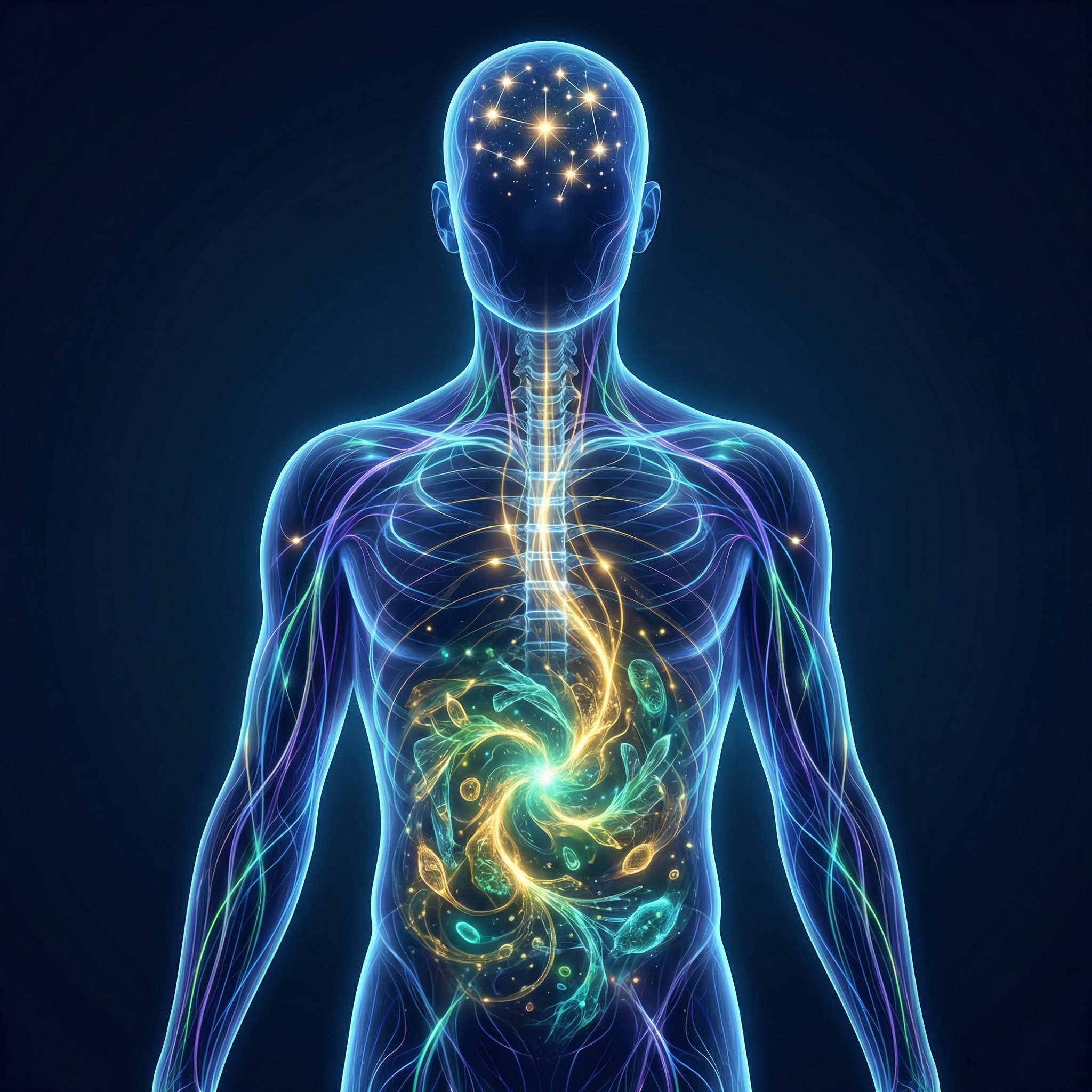
So, have you ever stopped to think about the fact that you are essentially a walking, talking ecosystem? I mean, we like to think of ourselves as these singular, independent beings, but the reality is a lot more crowded than that. We are less like a single person and more like a bustling metropolis where the human cells are just the infrastructure, and the trillions of microbes are the actual citizens doing the work.

It is incredibly crowded, Corn. In fact, if you look at the sheer numbers, we are almost as much microbe as we are human. Herman Poppleberry here, by the way, and I have been waiting for us to dive into this one. Our housemate Daniel sent us this prompt after doing some of his own deep diving into his health following his gallbladder surgery, and it is a fascinating rabbit hole. He called the microbiome the forgotten organ, and honestly, that is a perfect way to frame it. Some researchers even call it our second brain or our metabolic engine. It weighs about two kilograms, which is roughly the same as your liver, and it contains millions of unique genes compared to our measly twenty thousand human genes.
Two kilograms? That is a lot of weight for something we cannot even see. It really is this massive collection of bacteria, viruses, fungi, and archaea living mostly in our digestive tract, and it is doing work that we used to think only our human cells were capable of. It is not just about digestion anymore. We are talking about immune regulation, hormone production, and as Daniel mentioned, even our mental health. It is like having a silent partner in your business who actually makes about fifty percent of the decisions, but you never see them in the office.
More like eighty percent in some cases! When you think about the fact that the microbial genome outnumbers our human genome by something like one hundred and fifty to one, you start to realize that these bugs are the ones really running the show. They have their own metabolic pathways, they produce their own neurotransmitters, and they are constantly communicating with our brain through the vagus nerve and the bloodstream. We are essentially a holobiont, a term scientists use to describe a host and all of its symbiotic microbes living together as a single unit.
Well, let's start with that specific angle Daniel brought up, because it is something a lot of people go through but rarely connect to their microbiome. He mentioned his gallbladder surgery. Now, most people think of the gallbladder as just a little storage pouch for bile, right? You take it out, and you just have to watch your fat intake for a while. But Daniel has been finding that it goes way deeper than that, specifically regarding bile acids and how they interact with the gut bugs. It is not just a plumbing issue; it is a chemical signaling issue.
Right, and this is where it gets really technical but also really cool. So, normally, your gallbladder stores bile and releases it in a big squirt when you eat a fatty meal. Bile acts like a detergent to break down those fats. But when you do not have a gallbladder, that bile just constantly drips into your small intestine. It is more of a continuous leak rather than a targeted release. This is often called post-cholecystectomy syndrome when it causes issues, and it completely rewires the bile acid-microbiota axis.
And that changes the environment, doesn't it? It is like changing the irrigation system in a garden. If you go from a timed sprinkler to a constant slow flood, different plants are going to grow. You might end up with a swamp where you used to have a lawn.
Exactly! Bile acids are not just detergents. They are actually powerful antimicrobial agents and signaling hormones. Some bacteria love them, and some bacteria are killed by them. When you have this constant drip of bile, it shifts the composition of the microbiome in the upper part of the small intestine. It can lead to something called small intestinal bacterial overgrowth, or SIBO, because the bile is not being managed in the same way. But even more interesting is that bile acids are signaling molecules that talk to receptors in our gut called the farnesoid x receptor, or FXR, and the tgr five receptor. These receptors are like the command centers for our metabolism, controlling things like blood sugar, cholesterol levels, and even our inflammatory response.
So, if the bile acid flow is messed up because the gallbladder is gone, the signaling to those receptors gets distorted. And since the bacteria in our gut are responsible for transforming primary bile acids into secondary bile acids, the whole feedback loop breaks down. It is like the telephone game where the message gets garbled by the time it reaches the brain.
You nailed it. If you do not have the right balance of bacteria to convert those primary bile acids into secondary ones like lithocholic acid or deoxycholic acid, you end up with a pool of metabolites that might be pro-inflammatory. Recent research from twenty twenty-four and twenty twenty-five has even linked these imbalances to an increased risk of metabolic dysfunction and even long-term colorectal issues. It affects your energy levels, your weight, and even your mood because those receptors also influence the release of hormones like GLP-one, which we know is huge for appetite and brain health.
That leads us right into the gut-brain axis, which Daniel was curious about. It is wild to think that these microscopic bugs in our intestines can actually dictate whether we feel anxious or depressed. I remember we touched on systemic health back in episode three hundred sixteen when we talked about mold, but this is an internal version of that. How exactly are these bugs talking to our brain? Is it just through the blood?
There are a few main highways, but the most famous one is the vagus nerve. It is like a massive fiber optic cable that runs directly from the gut to the brain stem. About ninety percent of the fibers in the vagus nerve are actually going from the gut up to the brain, not the other way around. So, the gut is doing most of the talking. Just last year, in early twenty twenty-five, researchers at Stanford published a landmark study showing that this communication is even more direct than we thought. They found that certain gut signals are essential for interoception, which is how our brain perceives the internal state of our body. If those signals are off, it can manifest as anxiety or even contribute to neurodegenerative diseases like Parkinson's.
Wait, Parkinson's? How does a gut bug cause a brain disease?
It is a theory called the Braak hypothesis. It suggests that misfolded proteins, like alpha-synuclein, might actually start in the gut due to certain bacterial triggers and then travel up the vagus nerve like a slow-moving train until they reach the brain. Some bacteria produce a protein called curli that can actually seed this misfolding. It is a sobering reminder that what happens in the colon does not stay in the colon.
That is terrifying. But on the lighter side, there is also the neurotransmitter side of things. I have read that something like ninety-five percent of our serotonin is produced in the gut. Does that mean our happiness is literally manufactured in our intestines?
In a sense, yes! Now, that gut-derived serotonin does not directly cross the blood-brain barrier, but it influences the peripheral nervous system and the precursors that the brain uses to make its own serotonin. Plus, some bacteria actually produce gamma-aminobutyric acid, or GABA, which is our primary inhibitory neurotransmitter. It is the stuff that makes us feel relaxed. If your microbiome is in a state of dysbiosis, you might not be producing enough of these calming signals, which can manifest as brain fog, irritability, or even clinical depression. This has led to the rise of psychobiotics, which are specific probiotic strains used to treat mental health conditions.
It is a bit humbling, isn't it? The idea that your sense of self or your mood today might just be a reflection of what your gut bacteria are craving or how they are reacting to your breakfast. If I am grumpy, is it me, or is it just a lack of bifidobacterium?
It is likely a bit of both! There was a famous study where they took the microbiome from depressed humans and transplanted it into germ-free mice. The mice actually started exhibiting depressive-like behaviors. They lost interest in sugar water and became more lethargic. It suggests that the phenotype of depression can be, at least in part, transferred through the microbiome. And more recently, we have seen how the microbiome affects our sleep. A study from early twenty twenty-six showed that people with lower microbial diversity have significantly more disrupted REM sleep and higher levels of nighttime cortisol.
That is incredible. Now, let's talk about the big disruptor: antibiotics. Daniel asked about the impact of antibiotics on the diversity of good bugs and whether we can ever really recover from that. We have all taken them, often multiple times in our lives. Is it really as devastating as a scorched earth policy?
In many ways, yes. Think of your microbiome as a rainforest. It is a highly diverse, interconnected web of life. When you take a broad-spectrum antibiotic, it is like doing a controlled burn of that rainforest. You are trying to kill the invasive weeds, the pathogens, but you end up taking out the ancient trees and the rare orchids too. Research shows that while a lot of the common bacteria bounce back within a few weeks, some rare strains might never return. There are studies showing that even a single course of certain antibiotics can permanently reduce the diversity of your gut flora, leading to what some scientists call a microbial extinction event in the individual.
Permanently? That is a heavy word, Herman. Are we just walking around with half a rainforest?
For many Westerners, yes. We are seeing a generational decline in microbial diversity. Part of it is antibiotics, part of it is our hyper-sanitized environments, and part of it is our diet. But the antibiotic piece is huge because it also promotes horizontal gene transfer, where bacteria swap antibiotic-resistance genes like trading cards. However, there is hope. A study published in twenty twenty-five found that using specific probiotic yeasts like saccharomyces boulardii during and after antibiotic treatment can help preserve the metabolic function of the gut, even if the bacterial numbers are low. It acts like a temporary placeholder that keeps the lights on while the system recovers.
So, if someone has had a lot of antibiotics, or they have had surgery like Daniel, they naturally look toward probiotics and prebiotics as a solution. But Daniel raised a really good question: is it always a good idea? Can taking probiotics actually be harmful if you are already dealing with stomach issues?
This is such a nuanced area, and the advice has changed a lot in the last few years. The short answer is: it depends. Most people think of probiotics as a one-size-fits-all health supplement. But if you have something like SIBO, adding more bacteria into the mix, even the good ones, can be like throwing gasoline on a fire. If you have an overgrowth in your small intestine, those probiotics can get trapped there, ferment your food too early, and cause massive bloating, gas, and brain fog. This is why the trend in twenty twenty-six is moving toward precision biotics, where we use AI to analyze your specific microbiome and prescribe only the strains you are actually missing.
That makes sense. You do not want to send more workers to a construction site that is already overcrowded and chaotic. What about the quality of the supplements themselves? I feel like the shelves are just full of random bottles.
Quality is a huge issue. Many probiotics on the market do not even contain live organisms by the time they reach your gut. And then there is the issue of strain specificity. A strain of Bifidobacterium that helps with constipation might do nothing for anxiety. And then there are prebiotics, which are basically the fiber that feeds the bacteria. If you have a sensitive gut, certain prebiotics like inulin or fructooligosaccharides can be incredibly hard to digest and can cause a lot of distress. We are seeing more people move toward postbiotics now, which are the beneficial metabolites that bacteria produce, like butyrate, taken directly as a supplement to avoid the fermentation issues.
So, if you are in good health, is there a risk? Or is it just a waste of money? I have heard some people say it can actually mess up your natural balance.
There is some truth to that. A famous study from the Weizmann Institute showed that for some people, taking a generic probiotic after antibiotics actually delayed the recovery of their natural microbiome. The supplemental bugs acted like tourists who refused to leave the hotel, preventing the locals from moving back in. If you are in perfect health, your body is probably already doing a great job of maintaining its own balance. The best way to support it is not through a pill, but through your lifestyle.
Okay, so if we cannot just rely on a pill to fix everything, what are the practical takeaways? Daniel wanted to know how we can actually improve our gut health, especially after something like surgery or antibiotics. What does the research say about moving the needle in a real, sustainable way?
The most powerful tool we have is actually our fork. The diversity of your microbiome is almost directly correlated with the diversity of the plants you eat. The American Gut Project, which is still the largest study of its kind, found that people who eat more than thirty different types of plants per week have much more diverse microbiomes than those who eat fewer than ten. And in twenty twenty-six, we are seeing a huge focus on marine vegetation, like seaweed and algae, which contain unique fibers like alginate and fucoidan that are incredible for feeding the good bugs.
Thirty plants a week sounds like a lot until you realize that includes seeds, nuts, herbs, and different types of grains. If you have a salad with five different greens, a sprinkle of pumpkin seeds, and some cracked black pepper, you are already at seven for that one meal.
Exactly! It is about variety, not volume. Each different plant has different types of fiber and polyphenols that feed different species of bacteria. You want to create a lush, diverse ecosystem. Step two is fermented foods. Things like kefir, sauerkraut, kimchi, and kombucha. A study from Stanford a few years ago showed that a diet high in fermented foods significantly increased microbial diversity and decreased markers of inflammation. These are traditional ways of getting live, active cultures into your system in a way that is often more bioavailable than a pill.
I have noticed that whenever I start eating more fermented stuff, my energy levels definitely stabilize. Is that the short-chain fatty acids at work?
Highly likely. Those fermented foods help produce butyrate, which is like high-octane fuel for your gut lining. It keeps the gut barrier strong, preventing leaky gut. Another big one is resistant starch. If you cook potatoes or rice and then let them cool in the fridge overnight, the starch changes structure. It becomes resistant to your digestion and travels all the way to the large intestine to become a feast for your bacteria. It is a simple hack that makes a huge difference.
What about the lifestyle side? We talked about stress and sleep. I imagine we cannot just eat our way out of a high-stress life.
You are absolutely right. Stress is a literal toxin for the microbiome. It can increase intestinal permeability, allowing bacterial components like lipopolysaccharides to leak into the bloodstream. This triggers systemic inflammation, which then circles back and affects the brain, creating a vicious cycle. So, things like meditation, good sleep, and even just spending time in nature are essential. There is this concept called the hygiene hypothesis, or the old friends hypothesis, which suggests that being too clean is actually making us sick. We need to interact with the microbial world outside of us to keep the one inside of us healthy.
So, go pet a dog and do some gardening?
Precisely! Getting a little dirty is actually a form of microbial vaccination. Interaction with soil microbes and animals helps train our immune system. And do not forget the circadian rhythm. Our gut bugs have their own internal clocks. They perform different functions during the day than they do at night. If you are eating late at night or have a wildly inconsistent sleep schedule, you are essentially giving your microbes jet lag, which impairs their ability to regulate your metabolism.
It is interesting how it all comes back to these very basic, ancestral habits. Eat a variety of plants, eat fermented foods, get outside, and respect your sleep. It is almost like our modern world is perfectly designed to destroy the forgotten organ.
It really is. We live in a world of ultra-processed foods, chronic stress, and sterile environments. It is no wonder we are seeing a crisis in metabolic and mental health. But the good news is that the microbiome is incredibly plastic. It can change very quickly. If you change your diet today, your microbial profile will start to shift within twenty-four to forty-eight hours. You are never stuck with the microbiome you have. You are the gardener of your own internal landscape.
That is very encouraging, especially for someone like Daniel who is navigating post-surgery life. It is about small, consistent inputs. Instead of looking for a miracle cure in a bottle, it is about tending to the garden every day. For someone without a gallbladder, maybe that means smaller, more frequent meals and focusing on those bitter herbs like dandelion root or ginger to help stimulate bile flow.
Exactly. And for those who have had their gallbladder removed, supplemental ox bile or digestive enzymes with lipase can sometimes help bridge that gap while the microbiome adjusts to the new signaling environment. But always, always talk to a professional who understands the nuances of the microbiome before jumping into heavy supplementation, especially if you have existing gut issues.
Right, because as we have discussed, it is a delicate balance. You do not want to just start throwing random bugs into a system that is already trying to find its new equilibrium. It is about being a wise steward of your internal ecosystem.
Precisely. We are not just individuals; we are planetary managers for the trillions of lives inside us. When they thrive, we thrive. When we ignore them, we pay the price in our energy, our immunity, and our mood.
Well, I think that is a perfect place to wrap up our deep dive into the forgotten organ. It is a lot to chew on, literally and figuratively. Daniel, thanks for sending that one in. It has definitely made me think twice about my lunch today. I think I will skip the processed snack and go for something with a bit more fiber.
Same here. I think I will go have some kimchi and maybe a handful of walnuts. Diversity is the name of the game! And maybe a walk in the park to get some of those soil microbes.
And to everyone listening, if you have found this useful or if you have your own weird prompts you want us to tackle, head over to myweirdprompts dot com and send us a message through the contact form. We love hearing what is on your mind.
And if you are enjoying the show, we would really appreciate a quick review on your podcast app or on Spotify. It genuinely helps other curious minds find us and join the conversation. Every review helps us grow our own little community ecosystem.
Absolutely. You can find all our past episodes and the RSS feed at our website. We have been doing this for three hundred seventeen episodes now, so there are plenty of rabbit holes to explore, from environmental toxins to the mysteries of the human brain.
Thanks for joining us in the house today. This has been My Weird Prompts.
Until next time, stay curious and take care of your microbes. Bye everyone!
Bye!