Hey everyone, welcome back to My Weird Prompts. I am Corn, and I am joined as always by my brother, the man who has more browser tabs open than a NASA flight controller.

Herman Poppleberry here, and that is a fair assessment, Corn. My RAM is currently crying for mercy, but my brain is ready to dive into the deep end of the pool.
It is February fourteenth, twenty twenty-six, and while most people are thinking about chocolates and roses, we are looking at something a bit more... intense. We have a very timely prompt today from our housemate Daniel. He was asking about Palantir and its role in modern military data integration. But specifically, he wanted us to imagine what it actually looks like inside a command center when you combine the data-crunching power of Palantir with the reasoning capabilities of Anthropic AI.
And the timing on this is incredible because of the news that just broke yesterday. The Wall Street Journal published that massive, forty-page investigative report about the raid in Venezuela last month. They are claiming that the mission to capture Nicolas Maduro actually used Anthropic's Claude model through the Palantir partnership as the primary intelligence layer.
It is wild. I mean, we have been talking about this partnership since it was first announced back in late twenty twenty-four, but seeing it tied to a high-stakes capture operation like the one in Caracas really changes the conversation. Daniel's question is basically: what is actually happening on those screens? Is it just fancy maps and red dots, or is there something deeper going on?
It is much, much deeper than a map. If you and I were standing in a Department of Defense command center right now, looking at a Palantir Gotham display augmented by Claude, we would be seeing the literal digitization of a battlefield. But to understand that, we have to talk about what Palantir actually does, because people often get it wrong. They think it is a giant database or a spy tool that finds the bad guy.
Right, people talk about it like it is the Minority Report computer. But you have always described it more as an operating system.
That is it. Think about a modern military. You have satellite imagery coming from the National Geospatial-Intelligence Agency, intercepted radio signals from the N-S-A, human intelligence reports from field agents, and then live drone feeds, weather data, and supply chain logistics. Historically, all of that data lived in silos. The person looking at the satellite photo had no idea that a field agent just filed a report about a specific truck at those exact coordinates three hours ago.
So Palantir is the glue. It is the thing that says, hey, this truck in this photo is the same truck mentioned in this text-based report.
Yes, and they do that through something called an ontology. This is the secret sauce of Palantir Gotham. Most databases are just rows and columns—they are flat. Palantir turns that data into objects. An object could be a person, a vehicle, a building, or an event. When you create an ontology, you are telling the computer how the world works. You are saying, a person can own a vehicle, a vehicle can be at a location, and a location can be the site of a meeting.
So when an analyst is looking at the screen, they are not looking at raw files. They are looking at a web of interconnected entities.
Right. You see the "p-objects"—the people, the places, the things. And this is where the Anthropic integration becomes a massive force multiplier. Before this partnership, an analyst still had to do a lot of the heavy lifting. They had to search the objects, look for patterns, and build the connections manually using tools like the Link Analysis view. But with Claude integrated into Palantir's AI Platform, or A-I-P, you can basically talk to your data.
That is the part that fascinates me. We are moving from a search-based workflow to a reasoning-based workflow. If we were in that command center during the Venezuela raid, what would the AI be doing in real-time?
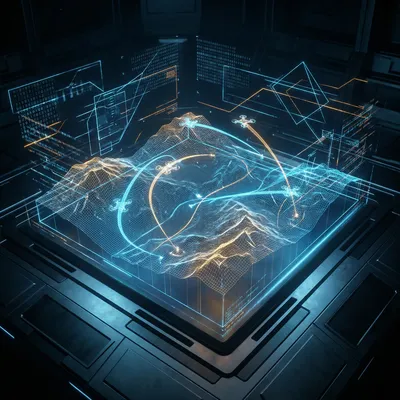
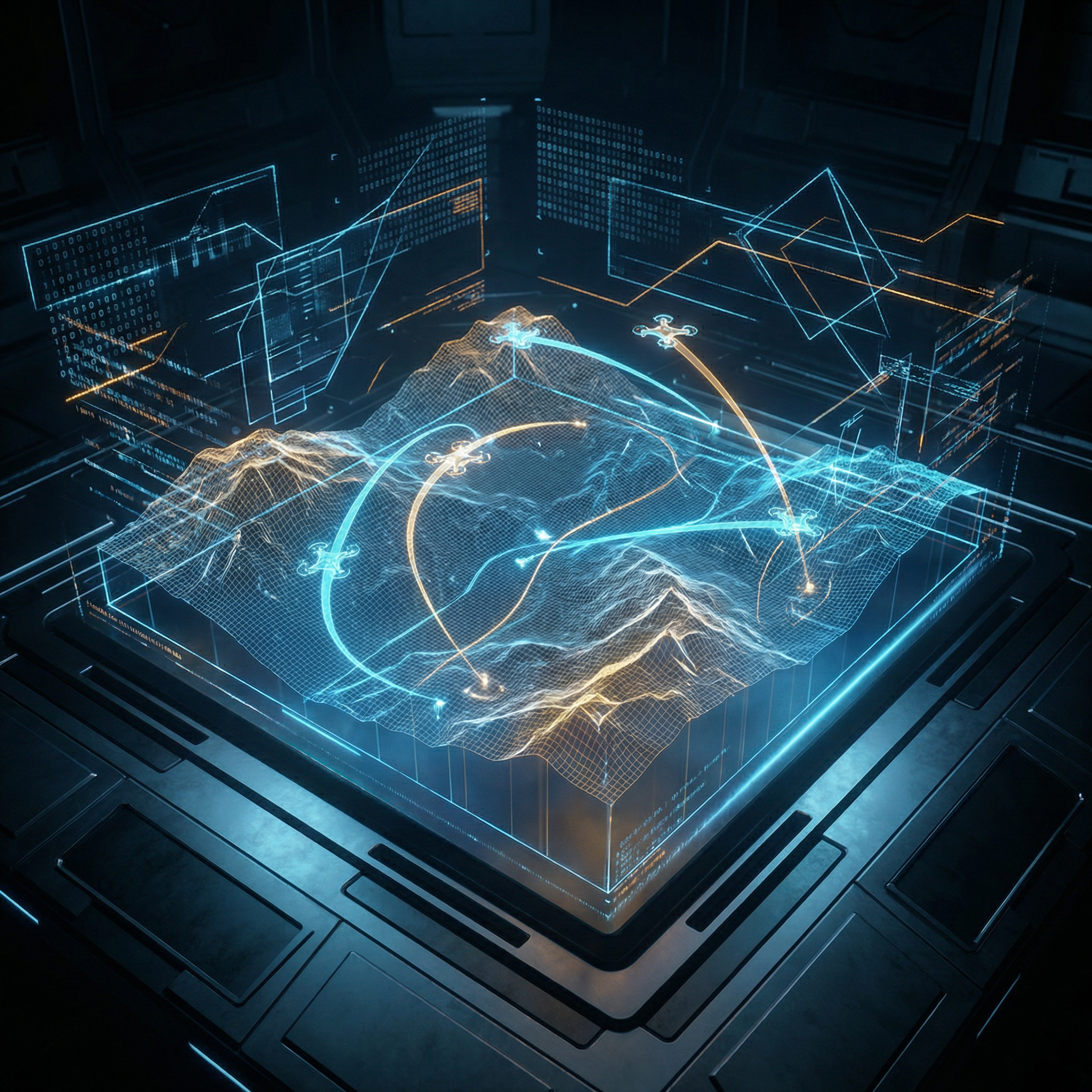
Okay, imagine a massive video wall, maybe thirty feet wide. On one side, you have the geospatial view, which they call Gaia. It is a high-resolution three-dimensional map of Caracas. You see little icons moving in real-time. Those are not just dots; they are objects. One dot is a specific armored transport. If you click it, Palantir shows you its entire history—every time it has been seen by a drone, every time its license plate was captured by a traffic camera, and every time it was mentioned in a decrypted message.
And where does Claude come in? Is it just a chatbot on the side?
It is much more integrated than that. Claude is running in the background, processing the unstructured data. Think about how much text a military generates. Thousands of pages of intercepted comms, drone sensor logs, and mission briefings. an L-L-M like Claude is incredibly good at summarization and entity extraction. So, while the analyst is watching the map, Claude is reading every single incoming report and saying, "Hey, this new intercept from five minutes ago mentions a meeting at the presidential palace in twenty minutes. That location matches the coordinates of the convoy we are currently tracking."
So instead of the analyst having to find that connection, the AI surfaces it as a notification. It says, I have found a high-probability link between this text and this movement.
Yes. And it is not just identifying links. It is suggesting courses of action. This is what the Wall Street Journal report was hinting at. During an operation like that, things move so fast. You have seven service members injured, you have bombing runs happening, you have a target moving. The commander can literally type into the console: "Claude, based on current fuel levels of our drones and the movement of the target's convoy, what is the most likely extraction point if we lose the primary landing zone?"
And because the AI has access to the Palantir ontology, it knows the fuel levels, it knows the terrain, it knows the location of the enemy's anti-aircraft batteries. It is not hallucinating. It is reasoning over a secured, verified dataset.
That is the critical distinction. Most people think of AI as something that might make things up. But in this environment, Palantir provides the guardrails. They call it grounding. The AI can only use the facts that are in the system. It cites its sources. If it says the convoy is heading to the airport, it will show you the specific satellite image and the specific radio intercept that led to that conclusion. You can click the citation and see the raw data yourself.
I want to go back to the visual aspect Daniel asked about. If I am looking at these screens, am I seeing like, red and green boxes around targets? Is it like a video game?
In some ways, yes. There is a component called Maven Smart System that Palantir integrates with. It uses computer vision to automatically tag objects in drone feeds. So, if you are looking at a live feed of a street in Caracas, the AI is drawing boxes around every vehicle and identifying the make and model. It is tagging people who are carrying weapons. But it goes a step further. It is comparing those images to a database of known associates.
So it is facial recognition, but for everything.
That is right. But it is also looking for anomalies. Most of the time, military data is boring. It is just things moving where they usually move. The AI is trained to ignore the normal and highlight the weird. If a specific building suddenly has ten times more cell phone activity than usual, the screen might pulse red in that area. It is telling the humans, "Look here, something is changing." It is about managing the cognitive load of the analyst.
That brings up a huge question about the partnership with Anthropic specifically. Anthropic has always marketed themselves as the safety company. Their whole brand is built on constitutional AI and being more ethical than the competition. But here they are, allegedly being used in a raid where eighty-three people were killed, according to the Venezuelan defense ministry. How do they square that?
It is a massive tension point. Anthropic's usage policy technically forbids using Claude for violence or weapons development. But the loophole, or the gray area, is national security. They recently updated their policies to allow for certain government use cases. Their argument is likely that if the U-S military is going to use AI, it should be the safest, most controllable AI available.
So it is the "least of all evils" argument. If you don't use Claude, you might use a less predictable model that could result in even more collateral damage.
That is the pitch. By using a model with high reasoning capabilities and strong safety guardrails, you theoretically reduce the chance of a misidentification. You make the "kill chain" more precise. But the critics are saying that once you put an AI inside a military command center, you have crossed a line. Even if the AI isn't pulling the trigger, it is the one pointing the finger.
Let's talk about the speed of this. You mentioned the kill chain. For people who aren't military nerds like us, what does that actually mean in this context?
The kill chain is the process of finding, fixing, tracking, targeting, engaging, and assessing a target. We call it F-two-T-two-E-A. Traditionally, that process could take hours or even days. You find a target, you send the data up the chain, a human analyzes it, a lawyer reviews the rules of engagement, and then a strike is ordered. Palantir and Anthropic are designed to collapse that timeline into minutes or seconds.
Because the AI has already done the analysis and checked the legal constraints?
Yes. Palantir's A-I-P has a feature where you can actually encode the rules of engagement into the system. So when the AI suggests a target, it can say, "This target is valid under section four of the current mission orders, and the estimated collateral damage is within the approved threshold." It is presenting a pre-packaged decision to the human commander.
That is intense. It makes me think about the psychological pressure on the person in that command center. If the screen is glowing green and the AI is saying, "This is the guy, and the capture window is closing in sixty seconds," how much of a choice does that human actually have?
That is the million-dollar question. They call it the "human in the loop," but some experts are starting to call it the "human on the loop" or even the "human under the loop." If the information is coming at you so fast that you can't possibly verify it yourself, you are essentially just rubber-stamping the AI's decision. You are trusting the ontology and the model's reasoning.
But wait, Herman, isn't there a risk of the AI being gamed? Like, if I know the U-S is using Palantir and Claude to track my movements, couldn't I feed the system fake data?
That is a real concern. Counter-AI is going to be the next big frontier of warfare. You could use physical decoys to trick the computer vision models—like inflatable tanks or heat lamps. You could use adversarial attacks, like putting specific patterns on a roof that make the AI think a building is a hospital when it is actually a command post. Or you could flood the network with fake radio signals that create "ghost convoys" on the Palantir map.
So the command center would be seeing things that aren't there.
Precisely. And that is why the reasoning of a model like Claude is so important. A simple algorithm might be easily fooled by a decoy. But a high-level reasoning model might look at the decoy and say, "Wait, this vehicle is moving in a way that is physically impossible for its weight class, or it is emitting a signal that doesn't match its visual signature." It can cross-reference multiple types of data to sniff out the deception. It is looking for the "logic" of the battlefield.
I want to go back to the Venezuela raid for a second. The reports mentioned bombing across Caracas. If we were looking at the Palantir screen during that bombing, what would it look like?
You would see something called Battle Damage Assessment or B-D-A. In the past, you had to wait for a satellite to pass over or a drone to fly back to see if you hit the target. Now, with the Palantir-Anthropic stack, it is almost instantaneous. The AI is comparing the "before" and "after" imagery in real-time. It is looking at the heat signatures, the rubble patterns, and even social media feeds coming out of the area.
Social media? They are pulling that into the command center too?
Oh, yes. Palantir is famous for its ability to scrape open-source intelligence, or O-S-I-N-T. If someone in Caracas posts a video of an explosion on a platform like X or Telegram, Palantir's crawlers find it, geo-locate it based on landmarks in the background, and pin it to the map. Then Claude can analyze the audio or the text in the post to provide more context. Is the person in the video saying there were soldiers there, or civilians? Claude can translate that from Spanish to English in milliseconds and summarize the sentiment of the local population.
So the command center is this omniscient eye that is seeing the world through satellites, drones, and the cell phones of the people on the ground.
That is exactly what it is. It is a real-time, digital twin of the conflict zone. And when you add generative AI to that mix, you aren't just seeing the present; you are simulating the future. You can run "what-if" scenarios. "What if we block this bridge?" "What if the enemy retreats to the mountains?" The AI can run ten thousand simulations in the time it takes a human to blink and tell you which path has the highest probability of success.
It is interesting because Palantir has always been very secretive, but lately, they have been much more public about their role. Their C-E-O, Alex Karp, has been very vocal about the idea that the West needs this technology to stay ahead of adversaries like China and Russia.
He has. He basically says that the era of slow, bureaucratic warfare is over. If you can't process data at the speed of light, you have already lost. And he is not just talking about kinetic war, like bombs and bullets. He is talking about the information war. Palantir is used to track disinformation campaigns, to map out how fake news spreads through a population.
So if you were in a command center focused on a hybrid war, you might not be looking at tanks on a map. You might be looking at a graph of social media accounts.
Right. You would see nodes representing accounts and edges representing interactions. The AI would be highlighting the clusters that look like bot networks. It could even generate counter-messaging. Imagine a commander saying, "Claude, write a series of posts that debunk this specific piece of enemy propaganda while appealing to the local cultural values of this specific region."
That feels very close to the line of psychological operations.
It is. And that is why the Palantir-Anthropic partnership is so controversial. Anthropic wants to be the safe, ethical choice, but their technology is being used for the most sensitive, high-consequence operations on the planet. They are providing the "brain" for the machine.
Let's talk about the hardware for a second. Daniel mentioned those banks of monitors and clocks. Is this stuff running on a normal laptop, or is there some massive supercomputer in the basement?
It is a bit of both. The heavy lifting, the actual training and running of the massive Claude models, happens in the cloud. Specifically on Amazon Web Services, or A-W-S. Palantir has a special accreditation called Impact Level six, or I-L-six, which means they have a dedicated, air-gapped version of the cloud that is authorized for top-secret data.
So the data never actually touches the public internet.
Never. But they also have edge computing. Palantir has hardware called Titan, which are basically ruggedized servers that you can take into the field. They look like heavy-duty suitcases. So if you are in a forward-deployed command center in a place with bad connectivity, you still have a local version of the ontology and smaller, specialized AI models that can run without a satellite link.
That is impressive. So the command center in Washington D-C and the tactical unit on the ground in Venezuela are looking at the exact same data in real-time.
That is the goal. It is a single source of truth. In the old days, the biggest problem was that the people at the top had a different map than the people on the ground. That led to friendly fire, missed opportunities, and general chaos. Palantir's goal is to make sure everyone is looking at the same digital reality. They even have an integration with I-V-A-S, those augmented reality goggles soldiers wear, so the data from the command center can be projected directly onto a soldier's visor in the field.
What about the data itself? We talked about satellites and drones, but what about more exotic stuff? Like, are they pulling in financial data or shipping manifests?
Everything is fair game. One of Palantir's biggest strengths is its ability to integrate disparate data formats. It can take a scanned hand-written manifest from a shipping port, use optical character recognition to read it, and then link the names on that manifest to a bank account in Switzerland.
And then Claude can look at that bank account and say, "Wait, this pattern of transactions looks like it is funding a paramilitary group."
Yes. It is that ability to connect the dots across totally different domains. You are connecting a financial transaction to a shipping container to a physical location to a person's social media profile. When you put all of that together, the world becomes very small for someone trying to hide.
It sounds like the ultimate tool for a detective, just on a global scale.
It is. And that is why it is so effective for things like counter-terrorism or tracking down someone like Maduro. These people don't live in a vacuum. They leave a digital footprint, even if they are trying to stay off the grid. Their associates have phones, their supplies come from somewhere, their money has to move. Palantir is the machine that finds the signal in all that noise.
So, if we are wrapping this up for Daniel, the answer to what we would see on those screens is: we would see a live, interactive, three-dimensional model of the world where every person, place, and thing is an object with a history and a set of relationships. And we would see a chat box where a human is asking an AI to find the one needle in a billion haystacks.
And that AI is not just searching; it is thinking. It is saying, "I found the needle, and here is why it matters, and here is what you should do about it." It is a massive shift in how humans interact with information during a crisis. We are moving from "What happened?" to "What is happening right now?" to "What will happen next?"
It is both awe-inspiring and a little terrifying. The level of transparency that this technology brings to the battlefield is unprecedented. But it also raises so many questions about privacy, sovereignty, and the future of human agency. If the AI is doing the reasoning, are we still the ones in charge?
It really does. And I think the Venezuela raid is just the beginning. Now that the cat is out of the bag and we know how these tools are being used, we are going to see a lot more debate about where the boundaries should be. The Wall Street Journal report has already sparked calls for congressional hearings on the ethics of L-L-Ms in the kill chain.
Well, I think we have given Daniel a lot to chew on. If you are listening to this and you found this as fascinating as we did, please take a second to leave us a review on your podcast app. It really helps the show reach more people who are interested in these kinds of deep dives.
Yeah, it definitely makes a difference. And remember, you can find all our past episodes, including our deep dives into command center hardware and the history of Palantir's early days with the C-I-A, at myweirdprompts.com. We have an R-S-S feed there too if you want to subscribe.
This has been episode six hundred and twelve of My Weird Prompts. Thanks to Daniel for the great prompt, and thanks to all of you for listening.
Until next time, keep asking the weird questions.
Bye everyone.
Goodbye.