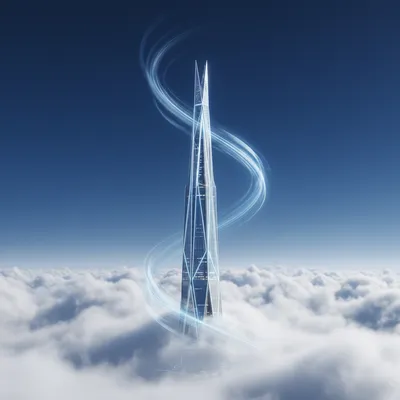
You know Herman, I was looking out toward the center of the city the other day, and it really hit me how much the Jerusalem skyline has changed just in the last few years. It used to be this very low-slung, stone-heavy horizon, and now we have these glass needles poking up everywhere. Especially around the entrance to the city, it looks like a forest of cranes.

Herman Poppleberry at your service, and you are not wrong, Corn. It is a massive shift. We are witnessing what planners call the Jerusalem Gateway project. It is a multi-billion shekel transformation that is going to put about twenty-four towers, some up to forty stories high, right at the western entrance. And it is actually perfect timing because our housemate Daniel sent us a prompt about exactly this. He has been watching these luxury high-rises go up while the city struggles with affordable housing, and his wife, Hannah, who is an architect, has been giving him the earful about why these towers might not be the density solution everyone thinks they are.
I love that we are getting the architect perspective through Daniel. It is such a counter-intuitive idea, right? Because if you ask the average person how to fit more people into a city, they will say, well, build up. It is the only way to go. But Hannah is arguing that they are actually inefficient and expensive. So, Herman, I want to dig into this. Is the skyscraper a lie when it comes to density?
It is not necessarily a lie, but it is definitely a specialized tool that people try to use as a universal hammer. There is this fundamental tension between height and efficiency that most people do not see because they are just looking at the building from the outside. When you look at a forty-story tower, you think, wow, that is a lot of floor space. But what you do not see is how much of that floor space is being eaten up by the building just trying to exist.
What do you mean by just trying to exist? Like the walls?
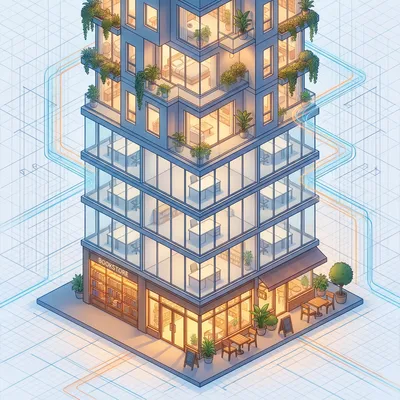
Exactly. And the elevators. Think about it this way. If you have a five-story building, you might need one elevator and a staircase. The amount of space taken up by the core of the building is tiny. But as you go higher, you need more elevators to move people efficiently. You need express elevators, local elevators, and freight elevators. And those elevator shafts run through every single floor below them. By the time you get to a sixty-story building, a massive percentage of the lower floors is just elevator shafts, mechanical rooms, and structural bracing to keep the thing from swaying in the wind.
So you are building more total square footage, but a smaller and smaller percentage of that square footage is actually livable space as you go higher?
Precisely. Architects call this the net to gross ratio. In a mid-rise building, say six to eight stories, your efficiency might be eighty-five or ninety percent. That means ninety percent of the building is space you can actually use. In a super-tall skyscraper, that ratio can drop to seventy percent or even lower. You are literally building a mountain of concrete just to hold up a few penthouses at the top. In fact, studies show that as height increases, the core-to-floor area ratio can jump from around thirteen percent to over thirty percent. You are losing a third of your building to the vertical commute.
That is fascinating. It is like the rocket equation for buildings. The more fuel you add, the more weight you have, so you need more fuel just to lift the fuel.
That is a perfect analogy, Corn. I am definitely stealing that. It is the skyscraper rocket equation. And it is not just the space. It is the cost. Daniel mentioned that these are often luxury developments. There is a reason for that. It is not just that developers are greedy, though that is a factor. It is that building high is exponentially more expensive per square foot. You need specialized cranes, high-strength concrete, and sophisticated wind dampening systems like tuned mass dampers—those giant weights at the top that counter-balance the sway. You cannot build a fifty-story building and sell the units at affordable housing prices because the construction cost alone would put you in the red.
So, by choosing to build a skyscraper, you are almost forcing the development into the luxury category just to break even on the engineering.
Usually, yes. Especially in a city like Jerusalem where the land is expensive, but the construction logistics are also a nightmare. You have these narrow streets, historical preservation rules, and the Jerusalem stone requirement.
Oh, right! The stone. Does that apply to the skyscrapers too?
It does. Since the British Mandate, almost every building in Jerusalem has to be faced with that specific pale limestone. Hanging heavy stone on a forty-story steel frame is an engineering headache. It is expensive, it is heavy, and it requires incredibly complex anchoring systems. If you are going to go through the trouble of building a tower here, you are going to make sure every unit is a high-margin luxury apartment. Which leads to exactly what Daniel was complaining about—those ghost towers where the lights are only on in three windows because the owners are international investors who visit once a year.
And that brings us to the density question. If the goal is to house the population of Jerusalem, which surpassed one million around 2023, and we are building towers that are mostly empty or mostly elevator shafts, we aren't actually solving the density problem. We are just creating a vertical bank vault for the wealthy.
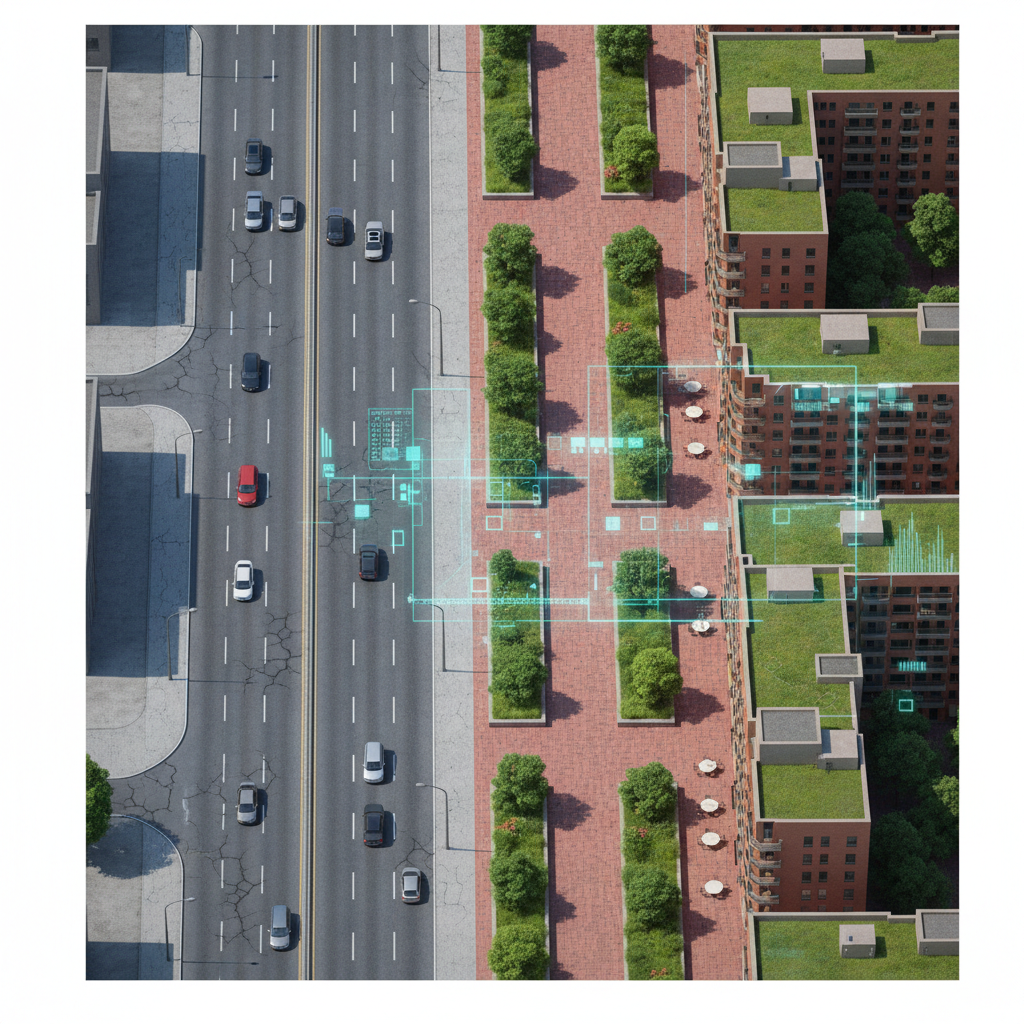
Right. And this is where Hannah's point about the six-story development comes in. There is this concept in urban planning called the missing middle. It refers to housing that is more dense than a single-family home but less intense than a high-rise. Think of the classic apartment blocks in Paris, or Barcelona, or even older parts of Tel Aviv. These are usually five to eight stories tall.
I have always loved the feel of those neighborhoods. They feel vibrant, not overwhelming.
There is a mathematical reason for that. You can actually achieve incredibly high density with six-story buildings if you build them in a consistent fabric across a neighborhood. Paris is one of the densest cities in the western world, and it is almost entirely mid-rise. When you have a six-story building, you don't need massive setbacks for light. You don't need giant plazas at the base to manage wind tunnels. You can have shops on the ground floor and people living right above them. It creates a continuous street wall that is very efficient for land use.
Wait, help me visualize the trade-off. If I have one city block, and I put a single forty-story tower in the middle of it, versus filling that same block with six-story buildings that touch each other, which one actually houses more people?
In many cases, the six-story block wins or comes very close, and it does it at a fraction of the cost. When you build a tower, you usually have to leave a lot of empty space around it. Part of that is for light and air, and part of it is because the sheer scale of the building requires a large footprint for its foundations. You end up with a tower in a park or, more often, a tower in a parking lot. The actual density of the whole block—the number of people per hectare—might not be higher than a dense European-style neighborhood of six-story walk-ups.
That is the part that feels like a magic trick. We see the height and assume density, but we don't see the wasted space at the ground level.
Exactly. And then there is the operational side. Daniel mentioned his wife says they are expensive to operate. Think about water. In a six-story building, municipal water pressure can often get the water to the top floor, or you need a very simple pump. In a skyscraper, you have to pump thousands of gallons of water hundreds of feet into the air every single day into intermediate storage tanks. That takes a massive amount of energy. Then you have the elevators, the pressurized hallways for fire safety, and the cooling systems for glass walls that are baking in the sun. The carbon footprint of a resident in a high-rise is often much higher than a resident in a mid-rise, even if they both live car-free lives.
So if we are looking at sustainability, the high-rise is losing on construction energy, operational energy, and space efficiency. Why are we so obsessed with them then? Is it just the prestige?
Prestige is a huge part of it. For a city, a skyline is a brand. It says, we are a global player, we are modern, we are an economic hub. For a developer, it is about the view. You can sell a view of the Old City for a lot more than you can sell a view of the street. But there is also a policy failure here. In many cities, the zoning laws make it very hard to build the missing middle.
How so?
Well, often you have areas zoned for single-family homes and then specific tiny zones where you are allowed to build high density. If you are a developer and you finally get your hands on a piece of high-density land, you want to squeeze every possible square inch out of it. You go as high as the law allows because you don't know when you will get another chance. Our zoning is often all or nothing. We don't have enough zones that encourage that sweet spot of six to eight stories. In Jerusalem, we are seeing this in neighborhoods like Kiryat Yovel and the Katamonim. They are doing these urban renewal projects called Pinui Binui, where they tear down old four-story blocks and put up thirty-story towers. It is a massive jump that completely changes the neighborhood's social fabric.
It sounds like we are incentivizing the extremes. We get urban sprawl on one end and luxury towers on the other, and the actual functional city for regular people gets squeezed out.
That is exactly what is happening. Daniel pointed out the geography. Jerusalem is surrounded. We have political boundaries to the north and south, and a protected green belt of forest to the west. We can't really sprawl anymore. So the pressure to build up is immense. But if we only build luxury towers, we aren't actually housing the people who live and work here. We are just building empty boxes. Interestingly, recent reports indicate over tens of thousands of unsold new apartments across Israel. Many of these are in high-end projects that regular families just can't afford.
Okay, so let's play devil's advocate for a second. Is there any scenario where the skyscraper is actually the right answer for density? Or should we just cap everything at eight stories and call it a day?
That is a great question. There is a place for them, but it is usually tied to transit. If you have a major subway hub or a train station where tens of thousands of people arrive every hour, building very high right on top of that hub makes sense. It concentrates the density where the infrastructure can handle it. That is the logic behind the Jerusalem Gateway project near the Navon train station. The problem is when we build these towers in residential neighborhoods that aren't transit-accessible, which forces everyone in that tower to own a car, which then requires six floors of underground parking, which makes the building even more expensive and inefficient.
Right, the parking podiums. I see those everywhere now. The first four floors of a building are just a giant concrete block for cars, and then the actual building starts above it. It kills the street life.
It is a total death knell for the sidewalk. You walk past a block and it is just a blank wall or a garage entrance. No shops, no cafes, no people. It makes the city feel hostile. Compare that to the older streets in Rehavia or Nahlaot. The buildings are lower, they are right on the street, and there is a sense of community. Hannah is right—from an architectural and social perspective, the mid-rise model is almost always superior for the people actually living in the city.
So if the mid-rise is better for the environment, better for the budget, and better for the community, why aren't we seeing a massive movement to build them? Is it just the profit margin?
It is the profit margin, but it is also the complexity of land assembly. To build a whole neighborhood of six-story buildings, you often need to coordinate across many different small plots of land. It is much easier for a large developer to buy one big plot, hire one big firm, and build one big tower. It is a more centralized, corporate way of building. The European model of dense mid-rise development often happened organically over centuries, or it was part of a massive, state-led master plan like Baron Haussmann's renovation of Paris in the nineteenth century.
It feels like we have lost the art of building the middle. We either do tiny or we do massive.
We really have. And it is a shame because the technology for mid-rise has actually gotten much better. We have things like mass timber now—engineered wood that is as strong as steel but much lighter and more sustainable. It is perfect for that six-to-ten story range. You can build these beautiful, carbon-sequestering buildings that feel warm and human-scaled. But our building codes and our financial systems are still geared toward either suburban houses or steel-and-glass towers.
I want to go back to something Daniel mentioned in his prompt. He talked about the social cohesion. He felt that luxury towers are a bad idea for a city like Jerusalem. Beyond just the housing supply, what does a skyline of luxury towers do to the psyche of a city?
Oh, it is deeply polarizing. When you have a city where people are struggling to pay rent—and Jerusalem housing prices have been rising significantly—and they see these gleaming towers that are mostly dark at night, it sends a message that the city is not for them. It creates a sense of displacement even for people who haven't moved. The city starts to feel like a playground for people who don't actually live there. And from a practical standpoint, those luxury residents don't contribute much to the local economy if they are only there two weeks a year. They aren't going to the local bakery, they aren't sending their kids to the local schools, they aren't participating in the community.
It is a hollowed-out version of urbanism. It looks like a city, but it doesn't function like one.
Exactly. True density is about the number of people per acre who are actually interacting with each other. A luxury tower might have high nominal density, meaning there are many units on a small piece of land, but its functional density is near zero if the units are empty. A six-story apartment building full of families, students, and workers has massive functional density. It supports the bus lines, the parks, and the small businesses.
So, if we were the kings of Jerusalem for a day, how would we fix this? What is the practical takeaway for a city that needs density but is getting ghost towers?
Step one would be a vacancy tax. If you own an apartment in a high-density zone and it is empty for more than nine months of the year, you should be paying a massive premium. That money should go directly into a fund for affordable housing. That would discourage the ghost tower phenomenon and maybe push those units onto the rental market.
I like that. Make the empty space work for the people who are actually here. What about the building side?
We need to change the zoning to favor the missing middle. Instead of saying you can build forty stories here and nothing there, we should say the default for the whole city center is six to eight stories. Make it the easiest thing to get a permit for. If you want to go higher, you have to prove a massive public benefit, like being directly on a light rail station—like the new Green Line that is supposed to open in summer twenty-twenty-seven—and including forty percent affordable units. We should make the high-rise the difficult exception, not the default goal.
And we should probably address the Jerusalem stone requirement, right? I know it is a sacred part of the city's identity, but does it make high-rise construction even more difficult?
It does. As I mentioned, it is an engineering nightmare. On a skyscraper, it is basically a costume. It is a very heavy, very expensive costume that doesn't fit the building's soul. We should allow for more modern, lightweight, and sustainable materials on towers while keeping the stone for the human-scaled buildings where it actually makes sense structurally and aesthetically.
I love that. A costume for a building. So, we have the efficiency problem, the cost problem, the social problem, and even the aesthetic problem. It seems like Hannah, Daniel's wife, has a very strong case.
She really does. And it is something that urbanists all over the world are starting to realize. There was a study in London recently that found that mid-rise developments were actually more dense in terms of people per hectare than many of the new luxury high-rises because they used the land more efficiently and had higher occupancy rates. We are realizing that the twenty-first-century city doesn't need to look like a science fiction movie to be successful. It might actually need to look a bit more like the nineteenth-century city, just with better plumbing and internet.
It is a back-to-the-future approach to urban planning. But how do we get people to buy into it? People love the idea of the penthouse. They love the status. How do you make a six-story building feel aspirational?
You make the street the amenity. In a high-rise, the amenities are all inside the building. You have a private gym, a private pool, a private theater. You never have to leave. In a mid-rise neighborhood, the amenity is the park down the street, the cafe on the corner, the vibrant public life. We have to sell the idea that a great life isn't about how high you are above the city, but how connected you are to it.
That is a powerful shift. It is the difference between being a spectator of the city and being a participant in it.
Exactly. And I think people are starting to crave that. Especially after the last few years, we realized that isolation, even in a luxury box, is still isolation. People want to be where the action is. They want to see their neighbors. They want to be part of a human-scaled environment.
You know, it reminds me of when we were kids. We lived in that apartment block that was maybe four stories tall. We knew everyone in the building. If you needed a cup of sugar, you just knocked on the door. I can't imagine that happening in a forty-story tower where you have to take two different elevators just to see a neighbor.
You are absolutely right. The social friction in a high-rise is actually higher, even though the people are physically closer. You are more likely to ignore someone in an elevator than someone you pass on a shared staircase or a small lobby. The scale matters for human connection.
So, to summarize the Poppleberry-Hannah thesis: the skyscraper is an engineering marvel but an urban planning failure for most residential needs. It is less efficient with space, more expensive to build, costlier to run, and less conducive to a healthy society. The six-story building is the unsung hero of the modern city.
That is it in a nutshell. It is the goldilocks zone of urbanism. Not too low, not too high, just right for humans.
I think we have thoroughly explored the nuances here. It is definitely not as simple as building up to fit more people. In fact, building up might be the very thing that is making our cities less livable and less affordable.
It is a classic case of looking at the symptom rather than the cause. We think we have a land shortage, so we build high. But we actually have a land-use problem, and building high often makes that problem worse by concentrating wealth and wasting space.
Well, I for one am going to look at those new towers in the center of town with a much more critical eye now. Every time I see a new one going up, I am going to think about the elevator shafts and the empty penthouses.
And the wind tunnels! Don't forget the wind tunnels. If you've ever tried to walk past one of those towers on a blustery day in Jerusalem, you know exactly what I'm talking about. They literally suck the air out of the street. It is called the Venturi effect—the building redirects high-altitude winds down to the sidewalk. It is another gift from the skyscraper to the pedestrian.
I have noticed that! It feels like you are walking into a gale force wind for ten feet and then it just disappears. Just what we needed. More wind in the winter. Well, Herman, this has been an eye-opener. I think we have given Daniel plenty to talk about with Hannah. Maybe he can tell her she was right all along.
Oh, I'm sure she knows she's right. Architects usually do. But it's good to have the data to back it up.
Absolutely. Well, before we wrap up, I want to say a huge thank you to everyone who has been listening. We have been doing this for over two hundred episodes now, and the community that has grown around My Weird Prompts is just incredible. We love hearing from you.
We really do. And if you have a second, leaving a review on Spotify or your favorite podcast app really does help the show. It is the best way for new people to find us and join the conversation.
Yeah, it makes a huge difference. And remember, you can always find our full archive of episodes, including some of the ones where we touched on high-rises in the past, at our website, myweirdprompts.com. There is a searchable index there if you want to dive deeper into any of the topics we have covered over the years.
And if you have a prompt of your own, something that has been bugging you or a topic you want us to nerd out on, there is a contact form on the site as well. We are always looking for new ideas.
Thanks again to Daniel for this one. It really changed how I think about the city.
Definitely. Until next time, stay curious and maybe keep your eyes on the sixth floor instead of the sixtieth.
This has been My Weird Prompts. We will see you in the next one.
Take care, everyone.