Hey everyone, and welcome back to My Weird Prompts. I'm Corn, and I'm sitting here in our living room in Jerusalem, looking out at a very quiet street. It is that specific kind of stillness you only get here on a Saturday afternoon.

And I'm Herman Poppleberry. It is quiet, isn't it? Though I have to say, the house feels a bit different today because our housemate Daniel is stuck in his room feeling under the weather. He sent us a prompt earlier that really captured that specific feeling of being stuck inside on Shabbat when you can't just reach for your phone to kill the time.
Yeah, he mentioned feeling that fluish, sickly drag. And for someone like Daniel, and really for a lot of us, that is when the temptation to scroll through a screen is at its peak. You want that mental stimulation, especially if your brain is wired for constant input, like with ADHD. But Daniel is trying to stick to that digital disconnect, that twenty-five hour break from the glow of the smartphone.
It is a fascinating challenge. He wants to print out long-form reports, deep-dive articles, maybe some technical white papers, so he has something substantive to chew on while he's resting. But he's hitting this wall of environmental guilt. Two hundred pages a week is a lot of paper. That is about ten thousand pages a year if you do it every weekend.
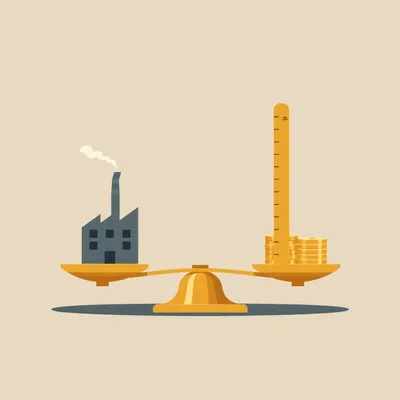
It is a classic conflict between mental health needs and ecological responsibility. He looked into the specialized eco-inks and the high-end sustainable papers, but they are expensive and hard to find here in Israel. So today, we are going to see if there is a middle ground. How do you feed a hungry, curious brain without leaving a trail of deforestation in your wake?
I love this because it forces us to look at the entire lifecycle of a piece of paper. Most people think of paper as just this disposable commodity, but the chemistry and the logistics behind it are actually pretty wild. If we can optimize the process, maybe we can get Daniel his reading material without the guilt.
Let's start with the scale of the problem. Herman, when we talk about printing two hundred pages a week, what are we actually looking at in terms of environmental impact? Is it really as bad as it feels?
Well, let's break down the numbers. A standard ream of paper has five hundred sheets. If Daniel is printing two hundred sheets a week, he is going through a ream every two and a half weeks. Over a year, that is about twenty reams. Now, the typical estimate is that one tree produces about eight thousand to ten thousand sheets of paper. So, Daniel's reading habit would consume roughly one whole tree every year.
One tree per year doesn't sound like a catastrophe on its own, but I suppose if everyone did it, we'd have a problem. But it is not just the tree, right? It is the water and the energy used in the pulping process.
Exactly. That is where the real footprint lives. To make a single ton of virgin paper, you need about seven thousand gallons of water and a significant amount of electricity. Plus, there are the chemicals used for bleaching. Most standard white paper is bleached with chlorine derivatives, which can produce dioxins.
So, if he just goes to the local stationery store and buys the cheapest bright white paper he can find, he is essentially supporting a very resource-intensive industry. But what about recycled paper? That is the obvious first step, but I've noticed it is often more expensive and sometimes even harder on the printer.
That is a common concern, but recycled paper technology has really improved in recent years. The key is looking for something called post-consumer waste, or PCW. If you can find one hundred percent PCW, you are significantly reducing the need for new timber and using about forty percent less energy during production.
But Daniel mentioned that sourcing this stuff in Israel can be a headache and it is pricey. I wonder if there is a second-order effect we're missing here. What if the paper isn't the only way to be sustainable? What about the ink?
Ink is a huge part of the toxicity equation. Standard printer ink and toner are often petroleum-based. They contain volatile organic compounds, or VOCs, and heavy metals. When you recycle that paper, those chemicals have to be processed out.
I remember reading about soy-based inks. Is that something a person can actually use in a home printer?
For a standard home inkjet? Not really. But here is where we can get clever with the hardware. If Daniel is serious about this, he might want to look at a different kind of printer altogether. Have you ever heard of heat-free ink tank printers?
I've heard of ink tanks, but what is the heat-free part?
It is a technology that uses pressure instead of heat to eject the ink. It uses much less electricity than a laser printer, which has to heat up a fuser to melt plastic toner onto the page. And with the tank systems, you aren't throwing away plastic cartridges every month. You just refill the reservoirs from bottles. It reduces plastic waste by about ninety percent.
Okay, so if Daniel switches to a tank printer, he is saving money and reducing plastic. But we're still stuck on the paper itself. If he can't find high-end recycled paper, are there other ways to minimize the impact of those two hundred pages?
This is where we talk about the power of the layout. Most people just hit print and accept the defaults. But if you're reading for information, you can do a lot with formatting. I'm talking about things like eco-fonts.
Wait, eco-fonts? Like, fonts that use less ink?
Precisely. There is a font called Ecofont Sans that actually has tiny little holes in the letters. You can't see them at normal reading sizes, but it uses up to fifty percent less ink. Or even just switching from a bold font like Arial to something thinner like Garamond can save a significant amount of toner over two hundred pages.
That's a great tip. And then there's the obvious one: duplexing. Printing on both sides of the page. That immediately cuts your paper use in half. So Daniel's two hundred pages become one hundred sheets.
And if you go even further, you can do two-up printing. You put two pages of text on one side of a sheet of paper. If your eyesight is good, you can fit four pages of a report onto a single sheet of paper using both sides. Suddenly, Daniel's two-hundred-page deep dive is only fifty sheets of paper.
Fifty sheets. That is a huge difference. That is only ten percent of a ream. Now we're talking about a tree lasting him ten years instead of one. That seems like a very reasonable trade-off for the mental health benefits of staying off his phone.
It really is. And we should talk about why he's doing this in the first place. There is actually some fascinating research from the Eco Institute of Freiburg that came out recently. It suggests that in many cases, reading a physical document actually has a lower carbon footprint than reading it digitally.
Wait, really? I thought digital was always greener.
We often have a blind spot for the environmental impact of electronics. The mining for rare earth metals, the energy-intensive manufacturing of silicon chips, and the massive carbon footprint of the data centers hosting the files... it all adds up. The study found that for long-form reading, the lifecycle of a printed page can be one-fifth the footprint of the digital equivalent when you factor in the device's manufacturing and the energy to keep a high-definition screen glowing for hours.
That is a perspective shift. For someone with ADHD, the paper also provides what you called the haptic representation of text. It helps the brain create a mental map of the information. On a screen, everything is fluid and the physical location of the words disappears.
Exactly. So printing these reports isn't just a luxury; it is a tool for cognitive processing. But he's still worried about what happens to that paper afterward.
Well, we have the grey recycling cylinders here in Jerusalem, but is there a way to use it even more directly?
There are some very cool at-home uses. If he is using non-toxic ink from a high-quality tank printer, that paper is actually compostable. You can shred it and use it as the carbon-rich layer in a compost bin. It balances out the nitrogen-rich food scraps.
I can just imagine Daniel's face if we told him he had to start a worm farm to justify his reading habit. But actually, paper is great for mulch in a garden too.
Or, if he wants to get really nerdy, he could use the shredded paper as a substrate for growing oyster mushrooms. They love cellulose. You can turn your technical white papers into dinner.
Okay, that might be a bit of a stretch for a weekly habit, but I love the mindset. It is about seeing the paper as a carrier of information first, and then as a physical resource second.
Exactly. And Daniel mentioned this idea of a network of people circulating printed reports. I think that's a brilliant second-order solution. Imagine a small group of friends who all have similar interests. Daniel prints a report on AI ethics, reads it on Saturday, and then passes it to a neighbor on Sunday.
It is like a decentralized library. Instead of five people printing the same fifty-page report, one person prints it and it rotates through the group. You could even have a little drop box in a building or a neighborhood center. Weekend Long-Reads: Take One, Leave One.
It solves the single-use problem immediately. And it builds community. You could even leave notes in the margins for the next reader.
I really like that. But let's get back to the practicalities. If Daniel is listening and he's still stuck with standard paper and a standard printer, what is his best effort move right now?
If I were him, I would focus on three things. First, the two-up duplexing trick. That is the single most effective way to reduce volume. Second, look for paper that is FSC certified. That stands for Forest Stewardship Council. You can find it in almost any office supply store in Jerusalem.
And the third thing?
The third thing is the ink-saver mode. Almost every printer driver has a draft or toner save setting. For reading a report, it is perfectly legible, and it can extend the life of your ink by thirty or forty percent.
That's a solid, actionable plan. It doesn't require finding some mythical eco-ink. It is just about using the tools you have more intelligently.
Right. And I think we should also mention the scrap paper market. A lot of offices and schools go through massive amounts of paper where only one side is used. If Daniel has any friends who work in an office, he could ask them to save the one-sided scrap paper for him.
Oh, that's perfect! He could just print his reports on the blank side of used office paper. It is effectively zero-waste because that paper was headed for the bin anyway.
It is the ultimate sustainable hack. It costs zero dollars, uses zero new trees, and it actually helps the office reduce their waste volume. He just needs a printer that can handle slightly used paper without jamming.
You know, this whole discussion makes me think about how we've been conditioned to think that digital is always the greener option. But the break-even point for an e-reader is often twenty-five to fifty books. If you replace your tablet every two years, you might never actually reach the point where it is more sustainable than paper.
Exactly. So, if Daniel is printing on the back of scrap paper and then composting it, he is likely having a much lower impact than someone who is constantly refreshing a high-definition screen.
That takes away that initial layer of guilt. Printing isn't bad and digital isn't good. It is all about the lifecycle and the intention behind it.
And for Daniel, the intention is mental clarity and spiritual rest. That has a value that is hard to put into a carbon calculator. If those two hundred pages prevent him from burning out, then those sheets are doing very important work.
Plus, there is something to be said for the offline nature of it. In this day and age, we are so constantly tethered to the grid. Stepping away from that is a radical act of reclaiming your own attention.
It really is. I'm actually feeling inspired to print out a few things myself now. Maybe not two hundred pages, but there is a long paper on decentralized energy grids I've been meaning to get through.
Oh, I'd love to read something like that! If you print it, let me know. I'll be the second person in your circulating network.
Deal. We'll start the My Weird Prompts reading circle right here in the living room.
But wait, we should probably address the local context here. We don't have the same massive recycling infrastructure for specialized products that you might find in Europe, but we do have a lot of sun.
We do! And there is actually some interesting work being done here with agricultural waste paper. Instead of using trees, some companies are starting to use the leftovers from harvests, like straw. Because Israel has such a strong agricultural sector, there is a lot of potential for that kind of upcycled paper.
So maybe the sustainable way to print isn't just one thing. It is a combination. It is using the back of scrap paper. It is using draft mode and thin fonts. It is duplexing and four-up printing. And then it's finding a way to pass that information along.
It turns the act of printing from a mindless action into a deliberate, thoughtful process. And for someone with ADHD, that kind of intentionality can actually be really satisfying. It is a ritual. You're preparing your Shabbat fuel.
I love that. Shabbat fuel. It is the mental nourishment for the day of rest. It is funny how a question about paper can lead us into a discussion about cognitive psychology and the philosophy of attention.
That is why I love these prompts. Daniel always manages to find these friction points in daily life that reveal much bigger systems.
He really does. Even when he is stuck in bed with the flu, he is thinking about how to optimize his brain and the planet at the same time.
It is impressive. I should probably go check on him and see if he needs some tea. Or maybe I'll just bring him a stack of reports printed in Garamond ten-point font, two-up, double-sided.
He'd probably love that. Here Daniel, I've saved half a tree for you. Get well soon.
Exactly. And honestly, for anyone else out there who is feeling that digital fatigue, this is a great experiment. Try printing out one long article this week. Sit in a comfortable chair, far away from your phone, and just read the paper. See how your brain feels afterward.
I bet people would be surprised at how much more they remember. The paper makes you slow down and actually digest the ideas.
And if you're worried about the waste, just remember: that paper is basically just captured sunlight and carbon. If you handle it right, it is not a burden on the earth; it is just a temporary carrier for some ideas.
Well said, Herman. I think we've given Daniel a lot to think about. And hopefully, we've helped some other people find a way to balance their need for information with their desire to be good ancestors.
That is the goal. Small changes in how we use our everyday tools can have a huge cumulative effect.
Before we wrap up, I want to say thanks to everyone who's been listening and supporting the show. We've been doing this for a while now, and it is the community that keeps us going.
It really is. If you're finding these discussions helpful, we'd really appreciate it if you could leave us a review on Spotify or whatever podcast app you use. It genuinely helps other curious people find the show.
Yeah, it makes a big difference in the algorithms. And if you want to see our full archive or get in touch with us, you can head over to myweirdprompts.com. We have a contact form there, and we love hearing from listeners.
We really do. Even the weird questions. Especially the weird questions.
Definitely. Well, I think that is it for today. I'm going to go find some of that scrap paper and see if I can get that energy grid report ready for the weekend.
And I'm going to go see if I can find some non-toxic ink for my imaginary heat-free printer.
Good luck with that. This has been My Weird Prompts. Thanks for joining us.
Until next time, stay curious and keep exploring those friction points.
See ya!
Bye!
You know, Herman, I was thinking about that Ecofont thing again. Could you actually make a font that was just outlines? Like, no fill at all?
You could, but it would be a nightmare to read. Your brain would have to work twice as hard to recognize the letterforms. There is a sweet spot between saving ink and saving your eyesight.
Right, cognitive load versus toner load. It is all about the trade-offs.
Exactly. Everything is a trade-off. But that is what makes it interesting.
True. Alright, let's go get that tea for Daniel.
On it.
Thanks again, everyone. Find us on Spotify and at myweirdprompts.com. We'll be back soon.
Peace!