Hey everyone, welcome back to My Weird Prompts! I am Corn, and I am sitting here in our living room in Jerusalem with my brother. It is Sunday, February first, twenty twenty-six, and the winter sun is actually hitting the stone walls outside quite nicely today.

Herman Poppleberry, at your service. It is a beautiful day, Corn, but as you know, we have a topic today that has been a major thorn in the side of anyone trying to navigate this city lately. It is a local issue with massive global implications for how we think about the future of our cities.
It really is. Our housemate Daniel actually sent us this prompt. He has been living in the Jerusalem city center for a few years now, and he has been thinking a lot about the friction points in public transport. Specifically, the ticket inspectors here. Daniel mentioned a personal record that sounds like a nightmare: he was ticketed four times in forty minutes. Not because he did not pay, but just because of the sheer density of the enforcement.
Four times in forty minutes. That is not just enforcement; that is a gauntlet. And it raises a profound question about urban design. If we want people to ditch their cars for buses and light rails to save the planet, why are we making the experience so stressful? Daniel used a phrase that I think is going to be the theme of today's episode: he called it policing shekels and losing dollars.
It is a perfect summary. We are talking about the trade-off between strict, almost military-style enforcement and the overall health and attractiveness of a transit system. Today, we are going to look at why these inspections feel so aggressive, the actual math behind them, how cities like Berlin or New York are struggling with the same issues in twenty twenty-six, and whether this is actually a barrier to green urban living.
Let us start with the local context because it is what sparked this. Jerusalem has a very specific setup. It is a semi-privatized system. You have companies like Egged, which is the giant, but also Superbus and Electra-Afikim. The government sets the fares, but the operations are private. And about three years ago, we saw this massive shift toward open-boarding. You do not pay the driver anymore; you validate your own ticket at a machine or on an app like Moovit or the national Zuz app.
Which, in theory, is great. The bus moves faster because the driver is not fumbling with change. But it created what Daniel calls the marauding packs of inspectors. Herman, you were looking at the numbers on this. Is it actually profitable for these companies to have five guys in neon vests jumping on every bus?
That is the irony, Corn. Recent data from twenty twenty-four and twenty twenty-five shows that for many of these operators, the cost of the inspection system actually exceeds the revenue from the fines. For example, one of the light rail operators in the center of the country reported spending about five hundred thousand shekels a month on supervision, while only collecting about seventy-five thousand shekels in fines. They are losing money to catch people who are not paying.
So why do it? If you are losing four hundred thousand shekels a month just to police the system, why not just... not do it?
Because the state requires it. The government funds about seventy percent of public transport costs in Israel, and they want to ensure that the remaining thirty percent from fares is actually collected. But here is where Daniel's point about incentives comes in. He spoke to an inspector off the record who said they are incentivized for every ticket they check. While the companies often officially deny a per-fine commission, the performance metrics for these private security firms are often tied to the volume of interactions. If you are a private contractor, you justify your contract by showing how many people you caught or how many tickets you scanned.
And that leads to the high-cortisol environment. You are a student, or a grandmother, or a tourist, and suddenly five men block the exits and start demanding your phone or your card. It feels predatory. And the fines are not small. A bus fine is one hundred shekels, which is about twenty-seven dollars. On the light rail, it is one hundred and eighty shekels. If you are a tourist who did not realize you had to hit a second confirm button on an app, that is a very expensive mistake.
And that is the losing dollars part. If a tourist has that experience on day one, they are done with the bus. They will spend the next week in Ubers and taxis. The city collects twenty-seven dollars in a fine but loses hundreds of dollars in potential transit revenue and, more importantly, they lose the reputation of being a world-class, welcoming city.
It is a narrow-minded view of success. But let us look abroad. Daniel mentioned Germany. For a long time, Germany was the poster child for the trust-based system, the Ehrenwort or word of honor. How is that holding up in twenty twenty-six?
It is in a state of transition. Germany introduced the Deutschlandticket in mid-2023, which was a huge hit. It started at forty-nine euros for unlimited travel nationwide. But as of January twenty twenty-six, the price has climbed to sixty-three euros a month. Because the price is rising, there is more pressure to ensure people are actually paying. However, the philosophy is still fundamentally different from Jerusalem. In Berlin or Munich, there are still no turnstiles. You just walk onto the U-Bahn. The friction is zero.
But if the price is sixty-three euros, and there are no gates, what stops everyone from just riding for free?
It is a mix of social contract and math. German planners have historically argued that the capital cost of installing and maintaining physical barriers like gates is higher than the loss from fare evasion. If your evasion rate is five percent, but the gates cost ten million euros to install and a million a year to fix, you are better off just accepting the five percent loss. It is a more mature way of looking at a public good.
Contrast that with New York City. I was reading about their new fare gates. They spent over a billion dollars on these high-tech barriers to replace the old turnstiles, and the news this month is full of people just jumping over them anyway. They are calling it the Fare Evasion Olympics on social media.
Exactly! The MTA in New York has reported significant losses to fare and toll evasion. Their response was to build a fortress. But when you build a better wall, people just build a better ladder. In New York, fare evasion remains a substantial problem. And yet, they are pouring money into police and private security for the subways while the buses struggle with similar challenges. It is the definition of a system in crisis.
So you have Jerusalem with aggressive human inspectors, New York with billion-dollar gates that do not work, and Germany trying to maintain a trust system while prices rise. Is there a middle ground? What about the ambassador model?
San Francisco is the interesting case study there. They have had a Transit Ambassador program for years. The idea is that the person in the vest is not a bounty hunter; they are a helper. Their job code—nine one six six in the city system—is about assisting passengers, giving directions, and helping people use the payment machines. If they see someone who did not pay, the interaction is educational rather than punitive. They realized that the legal cost of processing a fifty-dollar fine often exceeded the fifty dollars. So they shifted the goal from punishment to compliance through kindness.
I love that. It changes the whole vibe of the city. Instead of feeling like a potential criminal, you feel like a customer being served. But let us get to the green aspect of this. Daniel's prompt asked if this aggressive enforcement is turning people off from making greener decisions. If I have a car in the driveway, and I know the bus involves a potential confrontation with a pack of inspectors, why would I ever take the bus?
You hit on the psychological concept of the modal shift. To get people out of cars, the alternative has to be better, not just cheaper. A car is a private, low-stress environment. If the bus is a high-stress environment where you are constantly looking over your shoulder to make sure your app did not glitch, you will choose the car every time. There was a study in Europe showing that while heavy inspection does lower fare evasion, it also lowers overall ridership. You are essentially cleaning the guest list by burning down the house.
It is the atmosphere of suspicion. It breaks the relationship between the citizen and the state. If the city treats me like a thief, I stop feeling like a stakeholder in the city. I stop caring about the bus, I stop caring about the transit lanes. It becomes us versus them.
And we have to talk about the digital divide. In Jerusalem, and many other cities, we have moved to a digital-first payment system. But what if your phone dies? What if the GPS on the bus is off and the app cannot find your location? In a high-trust system, the inspector says, oh, I see the system is down, no worries. In the Jerusalem system Daniel described, where they are incentivized by the check, they do not care if the app glitched. They just see a red screen and issue a fine.
It is the valley of frustration. We have the technology to track everything, but we do not have the wisdom to use it for the benefit of the passenger. We use it to make the trap more efficient. So, Herman, what about the nuclear option? Free public transport. Luxembourg did it, Tallinn did it. Is that the only way to truly lose the friction?
It is the ultimate friction-free model. In Luxembourg, public transport has been free for the past six years, since March 2020. No tickets, no inspectors, no gates. The results are fascinating. It did not magically solve traffic congestion overnight because people still love their cars, but it massively increased the mobility of lower-income residents and students. More importantly, it completely removed the administrative cost of enforcement. You do not need to pay a thousand inspectors ten thousand shekels a month if there is no fare to collect.
That is a huge point. In Jerusalem, we have nearly a thousand inspectors. If each one makes ten thousand shekels a month, that is ten million shekels a month just in salaries. That is one hundred and twenty million shekels a year. You could buy a lot of electric buses with one hundred and twenty million shekels.
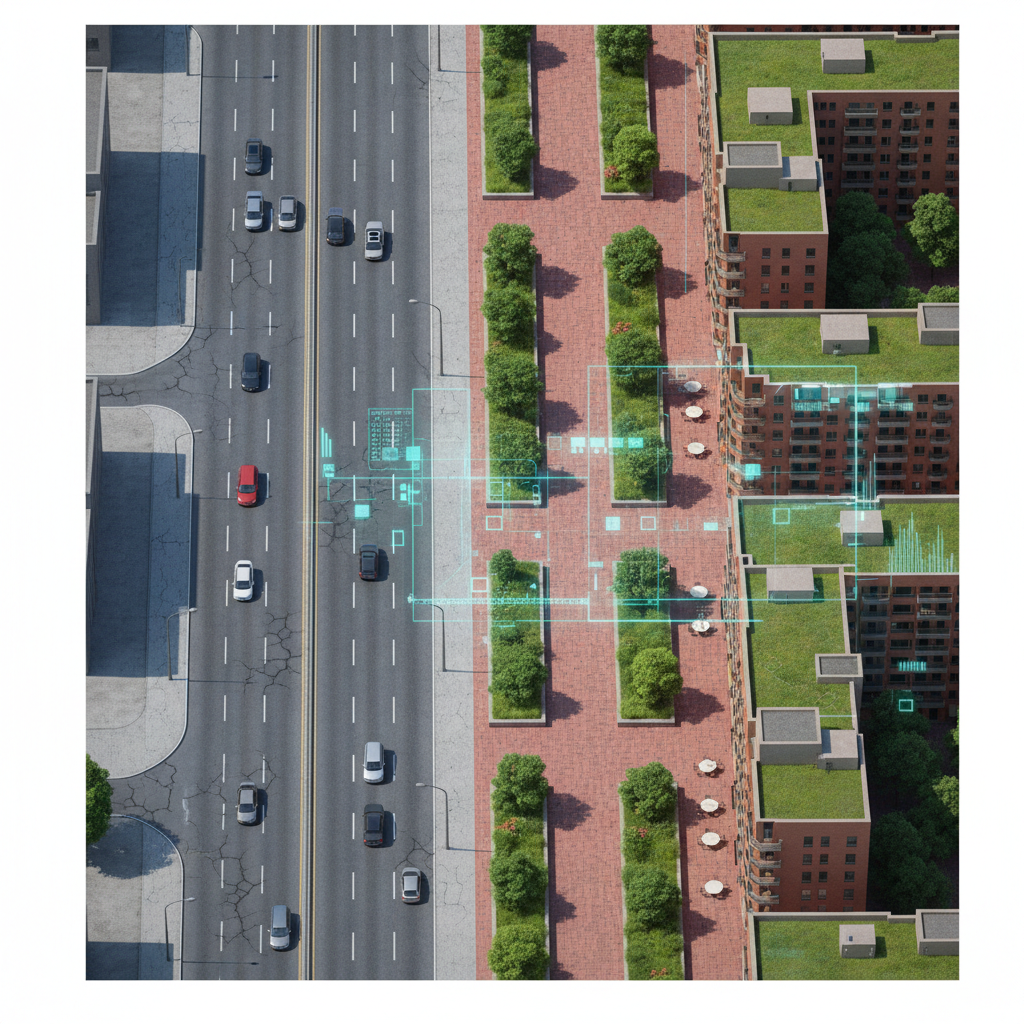
Exactly! This is the policing shekels and losing dollars math. We spend a fortune to protect a relatively small stream of revenue, and in doing so, we make the service less attractive to the very people we need to attract to meet our climate goals. Jerusalem is actually planning to have all new buses be electric by this year, twenty twenty-six. But an electric bus that is empty because people are afraid of the inspectors is not helping the environment.
So, if we are looking for a solution that is not just making everything free—because we know the political hurdles there are huge—what does a better system look like? How do we fix the Jerusalem model?
First, you change the incentives. You stop rewarding inspectors for the number of fines or checks. Instead, you reward them for the validation rate of the bus as a whole. If an inspector gets a bonus because ninety-eight percent of the people on their route paid, their goal becomes helping that last two percent pay, rather than catching them. They become teachers. They show the tourist how to use the app. They help the elderly person tap their card.
Second, you make the payment invisible. We are seeing this in London with contactless payment. You do not need an Oyster card or an app; you just tap your credit card or your watch on the way in. It removes the excuse of I did not know how to pay. If the friction is zero, the evasion rate naturally drops because most people are not looking to steal a five-shekel ride; they are just frustrated by a bad interface.
And third, you have to have a human-centric appeal process. Right now, if you get a fine in Jerusalem, the process to appeal it is famously opaque and difficult. It feels like the system is designed to make you just give up and pay the one hundred shekels. A city that cares about its citizens would make it easy to say, look, my phone died, here is my history of paying every other day for three years. A little bit of grace goes a long way in building civic trust.
It really does. It is about the philosophy of the city. Do we want a city of control or a city of trust? The most successful cities in the world, the ones that consistently top the quality-of-life charts—places like Vienna or Zurich—tend to have these seamless, trust-based systems. There is a direct correlation between how a city treats you on the bus and how you feel about your life in that city.
It is a feedback loop. Trust breeds trust. If the city treats you like a valued passenger, you want to support the system. You want to pay your fare because you see the value. But if you are checked four times in forty minutes, you start to view the city as an adversary. You start looking for ways to beat the system because the system is trying to beat you.
I think about Daniel's experience every time I see those neon vests now. It is such a waste of human energy. Those thousand inspectors could be transit ambassadors, they could be helping with urban greening, they could be doing literally anything else that adds value to the city instead of just creating stress.
It is a choice we make as a society. We choose what to prioritize. Right now, we are prioritizing the shekel at the expense of the dollar—or the euro, or the pound. We are so focused on the immediate revenue that we are ignoring the long-term cost of a car-dependent, high-stress, low-trust urban environment.
Well, this has been a much deeper dive than I expected when Daniel first sent that text. Herman, I am glad we looked into the global context. It makes our local frustrations feel like part of a much bigger conversation about what it means to live in a twenty-first-century city.
Absolutely. And for our listeners, we want to hear from you. What is the vibe in your city? Are you living in a transit utopia, or are you dodging inspectors in your own version of the Fare Evasion Olympics? Let us know.
You can reach out to us through the contact form at myweirdprompts.com. We love getting these specific, local prompts that open up into these massive topics. And if you are enjoying the show, please leave us a review on Spotify or Apple Podcasts. It really helps us grow and keep these deep dives going.
It really does. And a huge thanks to Daniel for the prompt. Hopefully, your next bus ride is a bit more peaceful.
I am going to head out now. I have to catch the bus to the other side of town. I have my Rav-Kav ready, my app is open, and my phone is at one hundred percent charge. I am as ready as I can be.
Good luck, Corn. May the inspectors be in a teaching mood today. Until next time, everyone.
This has been My Weird Prompts. Thanks for listening!