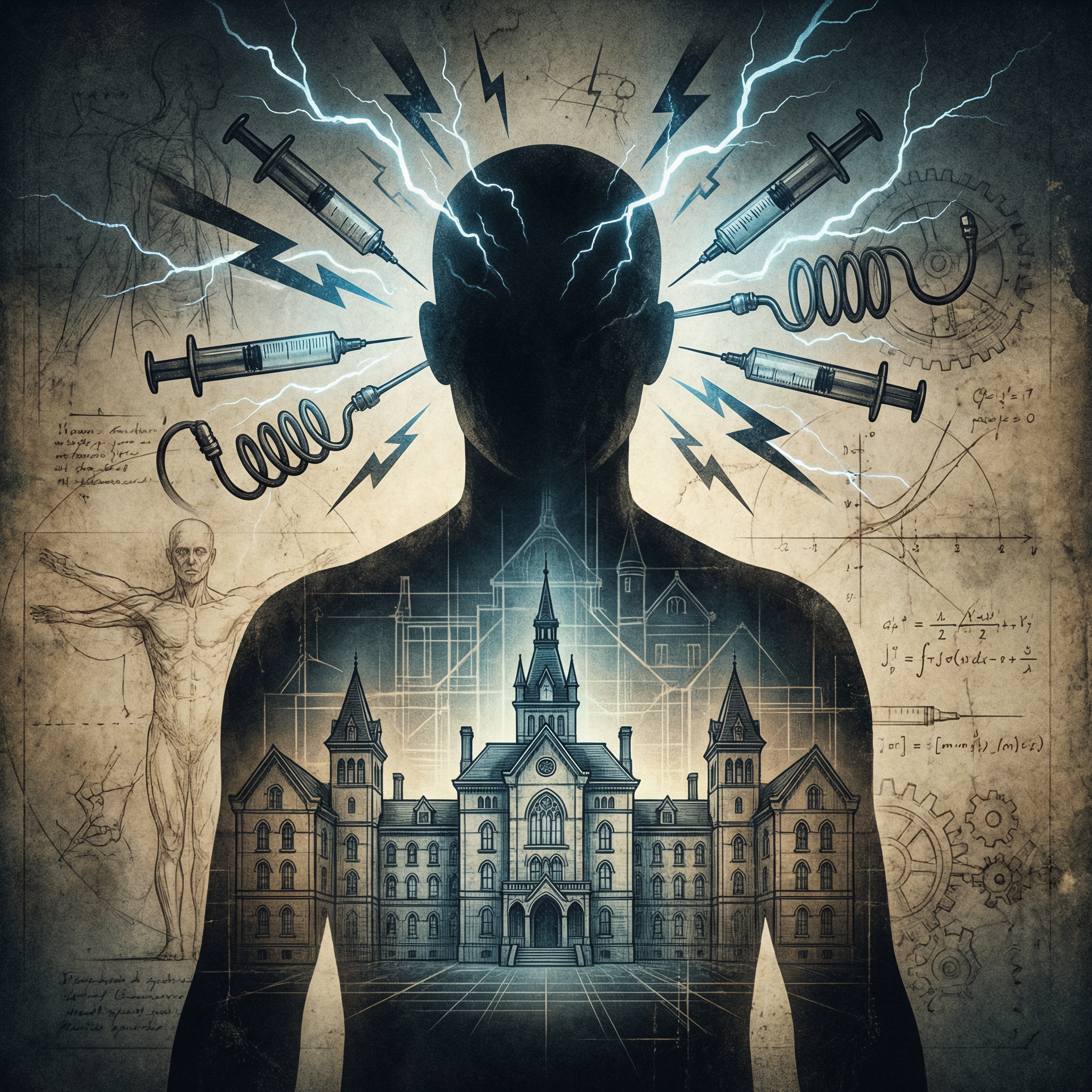
You know Herman, I was looking at our bookshelf in the hallway this morning and I saw that old copy of Listening to Prozac that Daniel left out. It really got me thinking about how much the conversation around mental health and medication has shifted since that book was a bestseller in the nineteen nineties.

It is a classic, but it definitely feels like a relic of a different era. Herman Poppleberry here, by the way. And you are right, Corn. We are in a completely different world now when it comes to how we understand the brain. Our housemate Daniel actually sent us a prompt about this very topic earlier today. He was asking about the pharmacology of depression and anxiety, specifically what the cutting edge looks like and whether we are ever going to move past just treating symptoms.
It is a timely question. It feels like we have been stuck in the era of the selective serotonin reuptake inhibitor, or SSRI, for decades. People always talk about the chemical imbalance theory as if it is settled science, but the more I read, the more it seems like that was a massive oversimplification.
Oh, it was a huge oversimplification. The idea that depression is just a lack of serotonin is basically the medical equivalent of saying a car won't start because it is out of gas. Sometimes that is true, but often the issue is the spark plugs, or the battery, or the entire engine timing. For a long time, we were just focused on pouring more gas into the tank.
So, to Daniel's point, are SSRIs like Lexapro or Zoloft going to become a thing of the past? Or are they the foundational tools we will be using for the next fifty years?
I don't think they will disappear entirely, but their role is definitely changing. We have to remember that SSRIs were a revolution because they were so much safer than what came before. In the nineteen sixties and seventies, we had tricyclic antidepressants and monoamine oxidase inhibitors. Those drugs worked, but they had terrible side effects and could be quite dangerous if you ate the wrong kind of cheese or took too much. SSRIs were the first clean drugs, so to speak.
Clean in terms of safety, maybe, but not necessarily clean in terms of the user experience. I mean, the side effect profile is still a major reason people stop taking them. We are talking about weight gain, emotional blunting, and the sexual dysfunction that Daniel mentioned in his prompt. It is a high price to pay for feeling less depressed.
Absolutely. And that is exactly why the cutting edge is so exciting right now. We are seeing a move away from just hitting the serotonin button over and over again. Take a drug like Trintellix, which is the brand name for vortioxetine. It is often called a multimodal antidepressant. It doesn't just inhibit the reuptake of serotonin; it also acts as an agonist or antagonist on several different serotonin receptors. It is like a fine-tuned instrument instead of a megaphone.
And what does that actually mean for the patient? Does it work faster, or does it just have fewer side effects?
Both, ideally. One of the biggest breakthroughs with vortioxetine is its effect on cognitive symptoms. A lot of people with depression describe a brain fog or an inability to concentrate. Traditional SSRIs often don't touch that, and sometimes they make it worse. But because Trintellix interacts with these other receptor subtypes, like the serotonin seven receptor, it seems to actually improve cognitive flexibility and processing speed.
That is a huge distinction. It is the difference between not feeling sad and actually feeling like your brain is working again. But what about these other agents Daniel mentioned? The SDNRIs. I assume that stands for Serotonin-Dopamine-Norepinephrine Reuptake Inhibitors?
Precisely. They are often called triple reuptake inhibitors. The idea is to target all three of the major neurotransmitters associated with mood. We have had SNRIs like Effexor for a while, which hit serotonin and norepinephrine. But adding dopamine into the mix is the holy grail. Dopamine is the molecule of reward and motivation. If you can boost that alongside the others, you are potentially treating the anhedonia, that inability to feel pleasure, which is the most debilitating part of depression for many people.
So why don't we have these everywhere yet? If they hit all three, wouldn't they be the ultimate antidepressant?
It is a delicate balancing act, Corn. When you start messing with dopamine reuptake, you run into the risk of addiction or moving from depression straight into mania or high anxiety. It is very hard to find a chemical structure that hits all three in just the right proportions. Interestingly, a drug called ansofaxine was approved in China a few years ago, but the FDA has been much more cautious. We are still waiting for a triple reuptake inhibitor to really break through in the Western market without causing significant cardiovascular strain.
It sounds like we are still largely in the world of reuptake inhibition, though. We are still just trying to keep more chemicals in the gaps between neurons. Daniel asked if we are ever going to get past just treating symptoms. To me, that suggests a shift from chemistry to something more structural.
You hit the nail on the head. This is where the real cutting edge is. We are moving from the chemical imbalance model to the neuroplasticity model. The goal isn't just to change the level of serotonin today; it is to actually repair the neural circuits that have withered under the stress of chronic depression. This brings us to things like ketamine and the drug Auvelity, which was a major breakthrough a few years back.
I have heard a lot about Auvelity. It is a combination of two older drugs, right? Dextromethorphan and bupropion?
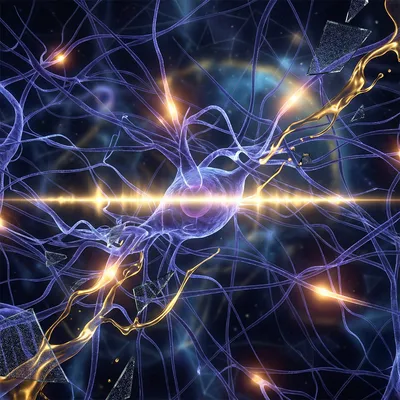
Yes, and it is a fascinating bit of pharmacology. Dextromethorphan is the stuff in your cough syrup, but at certain doses, it acts on the NMDA receptor, which is part of the glutamate system. Glutamate is the most abundant excitatory neurotransmitter in the brain. For decades, we ignored it in favor of serotonin. But it turns out that glutamate is the key to neuroplasticity.
So, instead of just trying to change the mood, these drugs are trying to stimulate the brain to grow new connections?
Exactly. Think of the brain like a garden. In depression, the soil gets dry and the plants start to wilt. SSRIs are like adding a bit of fertilizer to the water. They help, but they take weeks to work. Ketamine and these NMDA modulators are like a sudden, heavy rainstorm. They trigger the release of something called brain-derived neurotrophic factor, or BDNF. That is like Miracle-Gro for your neurons. It allows the brain to rapidly sprout new synaptic connections.
That explains why people report feeling better within hours of a ketamine treatment, rather than weeks. It is a totally different mechanism. But is this just another way of masking symptoms, or is it a cure?
That is the million-dollar question. If you repair the circuit, is the depression gone? For some people, yes, it can lead to long-term remission. But if the underlying cause, whether it is genetic or environmental or inflammatory, is still there, the circuits might eventually wither again. That is why the psychedelic research is so important. Daniel mentioned psychedelics have been in the news for a long time, and he is right, but the path to approval has been a bit of a roller coaster.
Right, psilocybin for depression and MDMA for post-traumatic stress disorder. I remember there was a big setback with the FDA and MDMA-assisted therapy back in twenty twenty-four. Where do we stand now in early twenty twenty-six?
We are in the middle of the second wave of Phase Three trials. The FDA wanted more data on the long-term safety and the psychological component of the treatment. But the results coming out of the psilocybin trials for treatment-resistant depression are still incredibly strong. We are looking at a paradigm shift where the drug isn't the treatment; the drug is the catalyst for a psychological breakthrough.
I am curious about the mechanism. Is psilocybin just a super-powered version of what we have been talking about, or is it doing something else?
It is doing something very specific to the large-scale architecture of the brain. There is a system called the Default Mode Network. It is what is active when you are daydreaming or thinking about yourself, your past, and your future. In people with depression and anxiety, this network is often overactive and very rigid. You get stuck in these loops of negative self-talk and rumination.
Like a record player stuck in a groove.
Precisely. Psilocybin seems to temporarily dissolve the connectivity within the Default Mode Network. It is like a global reset for the brain's electrical activity. For a few hours, parts of the brain that don't usually talk to each other start communicating, and the rigid patterns of the Default Mode Network are broken. When the drug wears off and the network reforms, it often does so in a more flexible, less depressive way.
That is fascinating because it combines pharmacology with experience. You aren't just taking a pill and going about your day; you are having a profound psychological experience that is facilitated by the chemistry.
And that is a huge shift. It moves us toward what Daniel was asking about, getting past just treating symptoms. If the symptom is a rigid, ruminative thought pattern, and the cause is a stuck neural network, then these substances are addressing the cause in a way that daily pills never could.
But let's be realistic here. Not everyone is going to be a candidate for a six-hour psychedelic journey with two therapists in the room. It is expensive and logistically difficult. What does the cutting edge look like for the average person who goes to their general practitioner?
Well, one area is pharmacogenomics. We are getting much better at testing a person's DNA to see how they metabolize different drugs. For years, the process was basically trial and error. Your doctor would give you Prozac, and if you felt like a zombie after a month, they would switch you to Zoloft. It was miserable. Now, we can do a simple cheek swab and use services like GeneSight to see that, for example, your liver enzymes break down certain SSRIs too quickly for them to ever work.
That feels like a huge step toward personalized medicine. It saves months of suffering. But I want to push back on the treating the cause idea again. If we are saying depression is a biological issue, are we ignoring the fact that our environment is often what is making us depressed? I mean, we live in a world that is increasingly isolated, high-stress, and sedentary. Can a pill ever fix a brain that is reacting normally to an abnormal environment?
That is such a profound point, Corn. And it is something the medical community is starting to take more seriously. There is a growing field called nutritional psychiatry and another looking at the gut-brain axis. We are finding that chronic inflammation in the body, often caused by diet, lack of sleep, or chronic stress, can cross the blood-brain barrier and interfere with neurotransmitter production.
So, in that case, the cause of the depression isn't in the brain at all; it is in the immune system or the gut?
Exactly. There are studies now looking at using anti-inflammatory drugs, the kind you might take for arthritis, as add-on treatments for depression. If we can lower the systemic inflammation, the brain's natural chemistry might right itself. This is a complete departure from the old model. We are looking at the whole person, not just the space between two neurons.
It makes me think about how we treat physical pain. If you have a thorn in your foot, you can take aspirin for the pain, but the real treatment is pulling out the thorn. For so long, it feels like psychiatry has just been handing out aspirin.
That is a great analogy. And to be fair to the doctors, finding the thorn in someone's life or biology is incredibly hard. But the tools are getting better. We are even seeing the development of digital phenotyping. Our phones can track our sleep patterns, our activity levels, even the cadence of our speech. There are apps being developed that can predict a depressive episode days or weeks before the person even realizes they are slipping, just by looking at changes in their behavior.
That sounds a bit like science fiction, but I can see how it would be useful. If you know a crash is coming, you can adjust your medication or step up your therapy before you are in the thick of it. But let's go back to the drugs themselves. We talked about Auvelity and Trintellix. Are there other classes of drugs that are totally new?
One very interesting area is the study of GABA modulators. GABA is the primary inhibitory neurotransmitter. It is the brain's natural brake pedal. Most of our current anxiety meds, like Xanax or Valium, hit the GABA receptors, but they are incredibly addictive. But there are new agents, specifically for postpartum depression, like zuranolone, which was approved under the brand name Zurzuvae.
I remember hearing about those. They are based on neurosteroids, right?
Yes, they are synthetic versions of allopregnanolone, a metabolite of progesterone. During pregnancy, levels of these steroids are sky-high, and after birth, they plummet. For some women, that drop triggers a severe depressive episode. These new drugs are the first to target that specific hormonal cause. Zuranolone is particularly revolutionary because it is an oral pill that you only take for fourteen days, and it can provide relief that lasts for months.
Now, that feels like a real shift. A two-week course of treatment that actually addresses a specific biological trigger. It is not a forever pill.
Exactly. And that might be the future for more types of depression. Instead of being on an SSRI for twenty years, you might take a targeted two-week course of a neurosteroid or an NMDA modulator to reset the system, and then use lifestyle and therapy to maintain that state.
It sounds like we are moving toward a more nuanced, right tool for the right job approach. But I have to ask, as we get better at this, do we risk over-medicalizing normal human sadness? If we have a pill that can reset a bad mood, where do we draw the line?
That is the ethical frontier of pharmacology. There is a difference between clinical depression, which is a debilitating loss of function, and the natural grief or sadness that comes with being human. The danger of having very effective, fast-acting tools is that we might start using them to avoid the necessary emotional work of life. But for people who are truly suffering, these new developments are literally life-saving.
I suppose it is about finding that balance. We want to alleviate suffering without erasing the human experience. I am curious, Herman, based on everything you have been reading, what do you think the typical psychiatrist's visit will look like in, say, ten years?
I think it will be much more data-driven. You will probably walk in with a report from your wearable device showing your sleep and activity over the last six months. You will have a genetic profile on file. The doctor might order a blood test to check for specific inflammatory markers like C-reactive protein. And instead of just here is a script for Lexapro, the treatment might be a combination. Maybe a fast-acting glutamate modulator to get you out of the crisis, followed by a series of therapy sessions, and a specific dietary plan to address inflammation.
It sounds a lot more integrated. And what about the SSRIs? Do they still have a place in that world?
I think they do, but as a second or third-line option, or for a very specific subset of people who we know respond well to them. They are cheap, they are off-patent, and for some people, they really are the right tool. But they won't be the default anymore. We won't be using a sledgehammer when we need a needle.
It is encouraging to hear that we are moving away from that one size fits all model. I think Daniel's question about whether we will ever get past just treating symptoms is really a question about hope. People want to feel like they aren't just managing a chronic condition, but actually healing.
And I think the shift toward neuroplasticity is the basis for that hope. The idea that the brain is not a static machine, but a living, changing organ that can repair itself if given the right signals. Whether those signals come from a psychedelic experience, a new type of glutamate-acting pill, or even just a radical change in environment and nutrition, the goal is the same: restoration of function, not just suppression of pain.
It makes me wonder about the role of the housemate in all this. Daniel is always the one keeping us on our toes with these questions. Maybe having a supportive social environment, like the one we have here in Jerusalem, is just as important as any of the pharmacology we have discussed.
Oh, it absolutely is. Every study on depression shows that social isolation is one of the strongest predictors of a poor outcome. You can have the best drugs in the world, but if you are lonely and have no sense of purpose, the brain is going to keep sending out those distress signals. We are social animals, and our biology reflects that.
So the cutting edge might actually be a combination of the most advanced molecular biology and the most ancient human needs.
I think that is exactly right. We are finally learning how to use the high-tech tools to support the low-tech needs of the human soul. It is a fascinating time to be watching this field.
It really is. I feel like we have covered a lot of ground here, from the history of Prozac to the future of neurosteroids and the Default Mode Network. It is a lot to take in, but it gives me a lot more perspective on what is actually happening when we talk about mental health today.
I agree. And it is important for people to know that if the first thing they tried didn't work, it is not because they are broken or untreatable. It is often just that we were using the wrong map of the brain. The new maps are being drawn right now, and they look a lot more promising.
That is a great place to leave it. If you are listening to this and you have been struggling with these issues, hopefully, this gives you some sense of the options that are emerging. There is so much more to the story than just serotonin levels.
Definitely. And hey, if you found this discussion helpful or if it sparked some questions of your own, we would love to hear from you. You can reach out to us through the contact form on our website.
That is right. You can find us at myweirdprompts.com. We have a searchable archive there of all our past episodes if you want to dive deeper into other topics we have explored. And if you have a second, leaving a review on Spotify or your favorite podcast app really helps other people find the show. We genuinely appreciate the support.
It really does make a difference. Thanks for the prompt, Daniel. It was a good excuse to dive into the latest research.
Absolutely. This has been My Weird Prompts. I am Corn.
And I am Herman Poppleberry.
We will see you next time.
Take care, everyone.