Hey everyone, welcome back to My Weird Prompts. We are coming to you from our apartment here in Jerusalem, and I have to say, the air feels a bit different this week. It is February eighteenth, twenty twenty-six, and if you have been looking at the horizon or just scrolling through your feeds, you know exactly what I am talking about. There is a lot of noise in the news, a lot of movement in the skies, and it is definitely one of those times where you want to have your boots laced up and your head on straight. I am Corn, and joining me is the man who probably has a spreadsheet for every possible geopolitical outcome, including a few I am pretty sure he made up just to stay sharp.

Herman Poppleberry here. And you are not wrong, Corn. My spreadsheets have spreadsheets at this point, and my "Probability of Escalation" tab is currently glowing a very bright shade of amber. It is a fascinating, if somewhat sober, time to be watching the region. We are seeing movements that we haven't seen on this scale in years, and the strategic signaling is becoming incredibly loud.
It really is. And that leads us directly into today’s prompt from Daniel, which is about the current escalation between Iran, Israel, and the United States. He is looking at the massive military buildup we are seeing right now, like those electronic warfare aircraft being moved into Spain and the fighter jets flooding into the Central Command area of responsibility. Daniel wants us to dig into what this means for actual preparedness. Specifically, if this turns into something more protracted than the twelve-day war we saw previously, how do we handle the logistics of go-bags and readiness without completely burning out from the stress of being on high alert?
It is a great prompt because it touches on both the macro-level military strategy and the micro-level human experience. We often talk about these things as separate entities, but they are deeply intertwined. The reason the United States is moving assets so conspicuously, like the Boeing E A eighteen G Growlers and those attack fighter squadrons, is partly about deterrence. It is about making sure the other side knows exactly what is on the table. But for those of us living under that table, so to speak, the transparency of that force can be very rattling.
Exactly. It is not a dark maneuver, as Daniel pointed out. It is very loud and very public. When you see the Department of Defense releasing photos of F-twenty-twos landing in the region, they aren't trying to be sneaky. They want everyone to see them. And when things are that public, it creates this sense of "any minute now." But "any minute now" can stretch into weeks or even months. So, Herman, let’s start with the military side of this. Why is this buildup different from what we have seen in previous cycles of escalation, like back in twenty twenty-one or even twenty twenty-four?
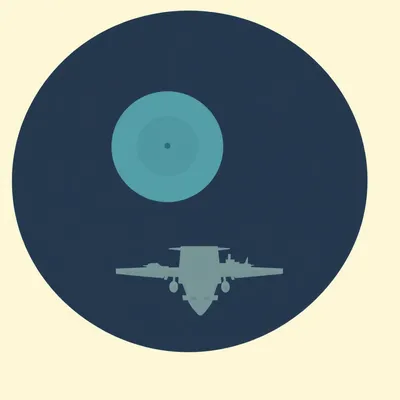
Well, the scale and the specific types of assets are key. When you see the United States moving significant electronic warfare capabilities like the Growlers to places like Spain, they are positioning for a multi-theater contingency. They are not just worried about a single exchange of missiles; they are preparing for a scenario where they might need to suppress integrated air defense systems over a wide area. The Growler is a specialized beast—it is designed to jam enemy radar and disrupt communications. Moving them to Spain suggests they are creating a "bridge" or a staging point that can support operations in both the Mediterranean and the Persian Gulf.
And the sheer volume of fighter jets moving into the Central Command region?
That suggests a high-tempo, sustained operation capability. We are talking about multiple squadrons of F-fifteen Es, F-sixteens, and even A-ten Warthogs. In previous escalations, we saw more of a "surge and retreat" pattern. You’d see a carrier strike group move in, stay for a week, and then move to a safer distance. This looks more like a "fortify and sustain" pattern. They are building the infrastructure for a long-term presence that can absorb a first strike and immediately retaliate with overwhelming force.
And that "sustain" part is what makes people nervous. If the military is preparing for a longer haul, it suggests the risk of a protracted conflict is higher than it was in previous cycles. So, if we are looking at a potential conflict that lasts longer than twelve days—maybe thirty, sixty, or even ninety days—our traditional "wait it out in the shelter" strategy might not be enough.
Precisely. A twelve-day war is a sprint. You can live on protein bars and adrenaline for twelve days. You can ignore the fact that your back hurts from sleeping on a thin mat. But if you are looking at a conflict that involves a total shift in the regional status quo, you have to transition from a "survival" mindset to a "sustainment" mindset. You have to think about your home and your go-bag not as emergency kits, but as secondary living spaces.
Let’s talk about that transition in terms of the go-bag and home readiness. Daniel mentioned his experience in previous escalations, where the shelters weren’t well-lit, didn’t have internet, and were incredibly hot because it was August. What are the practical upgrades we should be thinking about for a protracted scenario?
Let’s start with the most basic but often overlooked element: lighting. In a protracted conflict, power grids are often the first things to become unreliable, either through direct kinetic strikes or cyberattacks. If you are spending hours or days in a reinforced room or a communal shelter, darkness is your enemy. It increases stress, disrupts your circadian rhythm, and makes every task harder. I recommend moving away from just having a single flashlight. You want hands-free, area-wide illumination. High-quality L E D headlamps are essential. Look for ones that have a red-light mode to preserve your night vision and reduce the "interrogation" feel of a bright white light in a small space.
I love those inflatable solar lanterns, too.
Those are incredible for ambient light. They weigh almost nothing, they are waterproof, and they can provide a warm glow for an entire room for eight to twelve hours. If you are in a shelter for a month, you don't want to feel like you are in a cave. You want to be able to read, play cards, or just see your family's faces without blinding them.
I remember in the last round, one of the biggest frustrations was the lack of communication. People were huddled in shelters, and because those rooms are essentially Faraday cages with thick concrete and rebar, cell signals were non-existent. If you are in there for a long time, that isolation is a huge psychological burden. You feel like the world is ending and you have no way to verify it. How do we fix that?
That is a tough one, but there are solutions. If you are in a private shelter in your home, you really should consider running a hardwired ethernet cable into that room. You can’t rely on Wi-Fi penetrating those walls. If the infrastructure is still up, a physical cable is your best friend. For a more protracted or "off-grid" scenario, we are looking at things like mesh networks. Devices like the GoTenna or Meshtastic allow you to send text messages and share G P S locations without a cell tower or internet, as long as other people nearby have them too. It creates a local network.
What about Starlink? We see that used in every conflict zone now.
Starlink is a game-changer, but it requires a clear view of the sky, which you don’t have in a basement or a reinforced room. You’d need to mount the dish on the roof and run the cable down into the shelter. In a protracted conflict, that dish might become a target or get damaged by shrapnel. So, you need a backup. I always recommend a high-quality S S B or shortwave radio. Being able to listen to international broadcasts like the B B C World Service or Voice of America can give you a perspective that isn't filtered through local panic.
Let's address the heat. Daniel mentioned the shelters being boiling. In February, it’s not as bad, but if this drags into the spring or summer, and the power is out, those concrete rooms become ovens.
This is where we get into the "nerdy" side of thermodynamics. Each person in a room is essentially a hundred-watt heater. You need airflow. Portable, rechargeable fans are a must. Look for the ones with large lithium-ion batteries—specifically Lithium Iron Phosphate or LiFePO4 batteries, because they are safer and last for thousands of charge cycles. And here is a pro-tip: cooling towels. You soak them in water, wring them out, and they stay significantly cooler than the ambient air through evaporation. If you are in a crowded shelter, a cooling towel around your neck can literally be the difference between a panic attack and staying calm.
Let’s talk about the go-bag itself. Most people have a "seventy-two-hour bag." But if we are talking about a protracted conflict, or the possibility of having to relocate because of infrastructure collapse, seventy-two hours isn't going to cut it. How do we pack for a month without needing a trailer?
It is all about caloric density and multi-use gear. For food, you want to move away from heavy cans and toward dehydrated or freeze-dried meals. They are light, they last twenty-five years, and you just need boiling water. But more importantly, you need a way to treat water. In a protracted conflict, you cannot assume the tap will always work or be safe. A high-quality water filter, like a Sawyer Squeeze or a Katadyn, is worth its weight in gold. One filter can provide thousands of liters of clean water.
And what about the "digital go-bag"? I feel like that is something people often forget until they are standing in a line at a border or a government office and realize they don't have their birth certificate.
Oh, absolutely. Your physical documents are important, but you should have encrypted digital copies of everything: passports, property deeds, insurance policies, and medical records. Keep them on a rugged, encrypted U S B drive. Also, download offline maps of your entire region on apps like Organic Maps or Google Maps. If the G P S satellites are jammed—which the Growlers are very good at doing, by the way—or the data networks are down, you still need to know how to get from point A to point B. And don't forget a physical "contact sheet" with phone numbers and addresses. We are so used to our phones remembering everything for us, but if your phone dies or gets lost, do you actually know your brother’s phone number by heart?
I actually do, but I suspect I am in the minority there. Now, let’s pivot to the second part of Daniel’s prompt, which I think is actually the harder part: the psychological toll. How do we manage the stress of staying on high alert without burning out? We have been in this "waiting" phase for a while now, and you can see people getting ragged. People are snapping at each other in the grocery store, they are driving more aggressively... the tension is palpable.
This is a phenomenon known as "alarm fatigue" or "hyper-vigilance burnout." The human brain is not designed to stay in "fight or flight" mode for weeks at a time. It is an emergency system, not an operating system. When you stay on high alert, your body is constantly flooded with cortisol and adrenaline. Over time, this leads to cognitive decline, irritability, and eventually, total emotional exhaustion. You stop being able to make good decisions because your prefrontal cortex—the part of the brain responsible for logic—is being bypassed by the amygdala, which only cares about immediate survival.
I have noticed it in myself. You find yourself checking the news every five minutes, jumping at every loud noise, and by the end of the day, you are completely drained, even if nothing actually happened. It’s like running a car engine at redline while it’s parked in the garage. How do we break that cycle while still staying prepared?
The key is to move from "active monitoring" to "passive readiness." This is why having your gear ready is so important. If you know your go-bag is packed, your water is stored, and your shelter is prepped, you can give your brain permission to step down from the ledge. You don't need to scan the horizon if you have a reliable alarm system in place.
So, it is about trusting your systems?
Exactly. Think of it like a pilot. They don't spend the entire flight white-knuckling the controls and staring out the window for other planes. They trust their instruments and their radar. We need to build our own "personal radar." That means setting up specific, reliable notification systems and then turning off the general noise. Pick two or three trusted sources for news and check them at set times—maybe once in the morning and once in the evening. Turn off the "breaking news" push notifications that are ninety percent speculation anyway.
That is a great point. The "doom-scrolling" is a huge part of the burnout. It feels like you are doing something productive by staying informed, but you are actually just feeding the anxiety loop. In twenty twenty-six, with A I-generated news and deepfakes, that loop is even more dangerous. You could be looking at a video of an explosion that never happened, and your body will react as if it’s real.
Exactly. There is also the concept of the "Window of Tolerance." This is a term used in psychology to describe the zone where we can effectively manage our emotions and stress. When we are hyper-vigilant, we are pushed out of the top of that window into a state of hyper-arousal. To get back into the window, we need grounding exercises. Physical activity, even just pacing in the room or doing some pushups, can help process that excess adrenaline. Deep, rhythmic breathing—like box breathing, where you inhale for four, hold for four, exhale for four, hold for four—is a proven way to manually override your nervous system and tell your brain that you are safe for the moment.
I also think routine is a powerful weapon against burnout. Even if things are chaotic, maintaining small, mundane rituals can be a huge anchor. Making coffee in the morning, reading a physical book before bed, or even just keeping a clean living space. It sends a signal to your brain that life is still happening, not just survival.
You are spot on, Corn. In long-term survival situations, the people who fare the best are often those who maintain a sense of normalcy and purpose. This is something military planners actually think about. They don't want soldiers sitting around just waiting for the next attack; they keep them busy with maintenance, training, and routine tasks. It keeps the mind occupied and prevents the "nervous wait" from turning into a breakdown.
Let’s talk about the "protracted" part again. If this conflict stretches out, we are going to see a lot of social friction. People are going to be tired, scared, and frustrated. We’ve already seen how supply chains can get wobbly when people start panic-buying. How do we manage the "human" element of preparedness?
Community is your greatest asset and your biggest challenge. In a protracted conflict, you cannot be a lone wolf. You need neighbors you can trust, people to take shifts watching the street, or someone to share resources with. If you have a generator and your neighbor has a water filter, you are both better off if you work together. But you also have to be prepared for the fact that everyone is going to be on edge. Patience is a survival skill. We need to be intentional about being kind to each other, even when we are stressed. It sounds "soft," but social cohesion is what keeps a society from crumbling under pressure.
It is also about managing expectations. If we expect a twelve-day war and it lasts three months, the psychological blow of that "missed deadline" can be devastating. We saw this during the pandemic, where the "two weeks to flatten the curve" turned into years, and people just snapped.
That is the "Stockdale Paradox," named after Admiral James Stockdale, who was a prisoner of war in Vietnam for over seven years. He noted that the optimists—the ones who said "we will be home by Christmas"—were often the ones who didn't make it. They died of a broken heart when Christmas came and went, and then Easter came and went. The survivors were the ones who had the discipline to confront the most brutal facts of their current reality—"I am a prisoner, and I might be here for a long time"—while simultaneously maintaining an unwavering faith that they would prevail in the end.
So, the message is: prepare for the worst, hope for the best, but don't put a date on the end.
Exactly. Don't tell yourself "this will be over by next Tuesday." Tell yourself "I am prepared for as long as it takes." That shift in mindset is what prevents the burnout. It turns a sprint into a marathon. If you think you are running a hundred-meter dash and you find out at the finish line that it’s actually a twenty-six-mile race, you are going to collapse. But if you start the race at a marathon pace, you can keep going.
I want to go back to something Daniel mentioned—the "conspicuous buildup" of forces. He noted that the United States is moving assets in a very transparent way. From a strategic standpoint, what is the "endgame" of that kind of transparency? Is it just about deterrence, or is there more to it?
It is a high-stakes game of signaling. By being transparent, the United States is trying to remove the possibility of "miscalculation." In international relations, miscalculation is often what leads to full-scale war. If one side thinks the other is weak or unprepared, they might take a risk. By showing the Growlers, the fighter jets, and the carrier strike groups, the United States is saying, "We are here, we are ready, and we have specific capabilities that you cannot easily counter." It is an attempt to force the other side to recalculate their cost-benefit analysis.
But does that always work? Or can it backfire and cause the other side to feel like they have to "use it or lose it"?
That is the classic "security dilemma." One side builds up for defense, but the other side sees it as a preparation for offense and builds up in response. It can lead to an escalatory spiral. However, in this specific case, the transparency is also aimed at domestic and allied audiences. It is about reassuring allies in the region—like Israel, Jordan, and the Gulf states—that the United States is committed to their security. It is a multi-layered message.
It is a lot to process. We are talking about everything from high-altitude electronic warfare to how many liters of water you have under your bed. But I think that is the reality of the world we are living in right now. It is all connected. Your personal readiness is a tiny part of the larger strategic picture.
It really is. And I think the most important takeaway for our listeners, especially those in the region, is that preparedness is not about fear. It is about agency. When you take these practical steps—when you fix the lighting in your shelter, when you pack that digital go-bag, when you set up your communication systems—you are taking back control from a situation that feels uncontrollable. You are moving from being a victim of circumstances to being a participant in your own survival.
That is a powerful point. Fear comes from the unknown and the feeling of helplessness. Preparedness replaces that with a plan. Even if the plan has to change, just having one makes a massive difference for your mental health. It gives your brain something to do other than worry.
And let’s not forget the "weird" side of these prompts. Daniel always pushes us to look at the angles others miss. The idea of the "shelter as a living space" is something we really need to take seriously. If you have to spend a significant amount of time there, make it as comfortable as possible. Bring some books, bring some games, bring some comforts of home. If you have kids, make sure they have things that make them feel safe. It is not just a bunker; it is your home for the duration.
I am thinking about those motion-activated L E D strips. You can get them for very cheap, they run on A A A batteries, and you can just stick them along the baseboards of a shelter. If the power goes out and you need to move around in the middle of the night, they just light up. It is such a small thing, but it removes that moment of panic when you are fumbling in the dark.
Or even better, the ones that are rechargeable via U S B. You can use your power banks to keep them going. And speaking of power banks, don't just get the small ones for your phone. If we are looking at a protracted conflict, you want a "portable power station"—one of those larger Lithium Iron Phosphate battery units. They can run a small fan, charge multiple devices, and even power a small L E D light for days. Some of them even have solar panels you can put on a balcony or roof during the day. That is the kind of "sustainment" thinking we need. It is not just about surviving the first hour; it is about living through the first month.
And what about the "noise hygiene" you mentioned to me off-air?
Oh, that is huge. In a conflict, there is a lot of noise—sirens, explosions, planes, drones. It is physically and mentally exhausting. A good pair of noise-canceling headphones or even just high-quality earplugs can be a godsend. They allow you to carve out a little bit of quiet for your brain to rest. If you can sleep better, you can think better. If you can think better, you can make better decisions for yourself and your family.
So, let’s recap some of the big practical takeaways for our listeners who might be feeling the weight of this escalation. First, upgrade your shelter's infrastructure: think lighting, airflow, and hardwired communication. Second, move from a seventy-two-hour go-bag to a sustainment kit: prioritize water filtration, caloric density, and digital records. Third, manage your "alarm fatigue" by trusting your systems and limiting your news intake to trusted, scheduled windows. And finally, maintain routine and community as a defense against psychological burnout.
And remember the Stockdale Paradox. Acknowledge the reality of the situation, no matter how grim, but don't lose sight of the fact that you have the tools and the resilience to get through it. Don't let the "conspicuous buildup" of forces paralyze you; let it be a reminder to do your own "conspicuous buildup" of readiness.
That is a solid plan, Herman. It doesn't make the situation any less serious, but it makes it more manageable. And I think that is what we all need right now. We need to feel like we are doing something productive rather than just waiting for the other shoe to drop.
Agreed. It is about being a "prepared realist." You aren't ignoring the danger, but you aren't letting it paralyze you either. You are lacing up your boots, just like you said at the beginning, Corn.
Well, this has been a pretty intense deep dive, but a necessary one given the headlines. I want to thank Daniel for the prompt. It really forced us to look at the intersection of military strategy and personal survival in a way that feels very relevant right now.
Absolutely. And to all our listeners out there, especially those of you who are in the thick of it, stay safe, stay prepared, and remember to take those deep breaths. We are all in this together.
Definitely. And hey, if you are finding these discussions helpful or if they are giving you a new perspective on the "weird" world we are living in, we would really appreciate it if you could leave us a review on your favorite podcast app. Whether it is Spotify, Apple Podcasts, or wherever you listen, those ratings really help other people find the show.
They really do. We see every one of them and we truly appreciate the support of this community. It keeps us going, especially during times like these.
You can find all our past episodes—all six hundred and seventy-seven of them—at myweirdprompts dot com. We have covered everything from A I ethics to urban survival, so if you want to search our archive, that is the place to do it. You can also find our R S S feed there if you want to subscribe directly.
And if you have a prompt of your own, or if you just want to reach out and let us know how you are handling things, you can use the contact form on the website or email us at show at myweirdprompts dot com. We love hearing from you, and your stories often help us shape future episodes.
This has been My Weird Prompts. We are going to keep watching the skies and the spreadsheets, and we will be back with another episode soon.
Until then, keep your head up and your go-bag ready.
Bye everyone.
Goodbye.