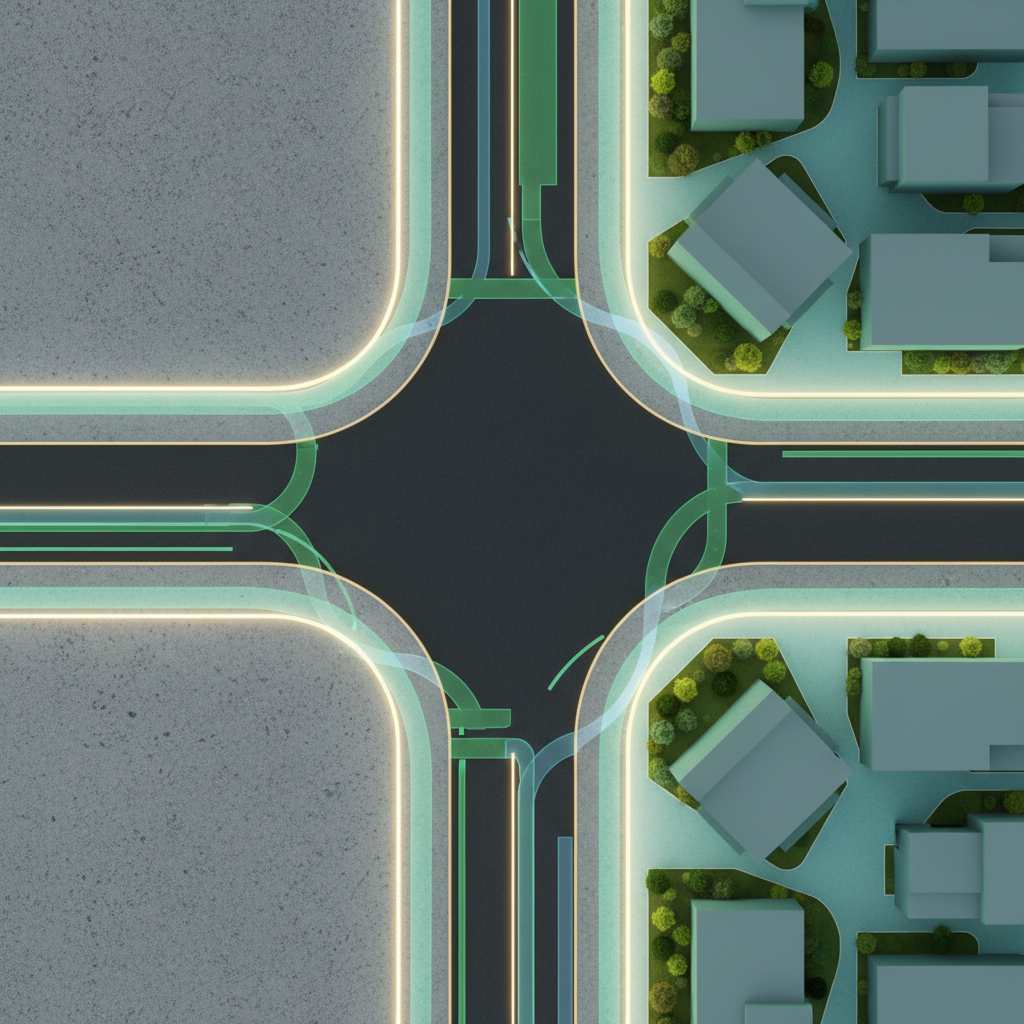
You know, it is one thing to talk about urbanism in the abstract, but it is quite another to hear it happening in real time. That audio Daniel just sent us from King George Street... you can practically feel the grit in the air and the frustration in his voice.

It is the sound of a city at war with its own infrastructure, Corn. And I am Herman Poppleberry, by the way, for those of you joining us for the first time. Daniel, our housemate, really captured the essence of the Jerusalem struggle there. That specific brand of chaos where the sidewalks just... stop. Or they become an obstacle course of barriers and heavy machinery with no one actually operating the machinery.
It is a perfect starting point for today because we are on episode four hundred ninety of My Weird Prompts, and we have spent a lot of time talking about how cities should work. But Daniel’s prompt today is a direct challenge. He is tired of the mismanagement, the over-policed public transit, the endless construction, and that soul-crushing honking. He wants a counterpoint. He wants to know if there is a city out there that actually gets this right... a city that does the opposite of the Jerusalem experience he just described.
It is a fair request. Jerusalem is a city of incredible history and beauty, but as an inhabitant, the day to day friction can be exhausting. When he mentioned King George Street, I immediately thought of the Blue Line light rail construction. It has been a saga. We talked about this a bit back in episode four hundred six when we looked at the transit friction crisis. But Daniel is pointing to something deeper... a lack of coordination. It is that feeling that the city is being built for someone else, or perhaps for no one at all, while the people living here just have to navigate the ruins.
Right, and the point about the sidewalks is huge. If you are thirty-six, or thirty-seven as Daniel mentioned he is becoming tomorrow... happy birthday by the way, Daniel... you can hop over a curb or navigate a narrow pass. But if you are in a wheelchair or pushing a stroller, a closed sidewalk without a clear, safe detour is not just an inconvenience. It is a total blockage. It says, this space is not for you.
Exactly. It is a failure of basic municipal empathy. And then you add the noise. We covered the honking crisis in episode one hundred fifty, but it has only intensified. That cycle of stress he described is a real psychological phenomenon. High-density urban environments already put our nervous systems on edge. When you add constant, high-decibel auditory assault, you increase cortisol levels, you decrease patience, and you get... well, you get more honking. It is a feedback loop of misery.
So, Herman, I know you have been diving into urban planning models lately. Daniel asked for a counterpoint. Is there a city that handles these specific challenges... the construction, the transit, the economy, the noise... in a way that feels human-centric rather than bureaucratic?
There is one city that consistently tops the charts for liveability, and for good reason. If we want to look at the opposite of the Jerusalem urban friction, we have to talk about Vienna, Austria.
Vienna. Okay, I was expecting maybe a hyper-modern city in East Asia or something. Why Vienna?
Because Vienna has mastered what I like to call gentle urbanism. It is a city that functions with a level of coordination that makes Jerusalem look like a game of SimCity being played by someone who has lost the manual. Let’s start with the construction and management issue Daniel mentioned. In Jerusalem, we often see the same stretch of road dug up three times in six months because the water department, the electric company, and the light rail team do not seem to have each other’s phone numbers.
It is infuriating. You see the fresh asphalt, and you think, finally, it is done. And two weeks later, there is a jackhammer back at it.
In Vienna, they use a centralized coordination system for infrastructure projects called Baustellenmanagement. They have a long-term integrated plan where if a street is being opened for a new sewer line, the telecommunications providers and the power grid managers are required to complete their upgrades at the same time. They do not just look at the pipes; they look at the pedestrian flow. If a sidewalk is closed, there is a standardized, high-quality temporary walkway that is often better than the original sidewalk. It is not an afterthought; it is a requirement of the permit.
So you do not just get a sign that says use other sidewalk and then a four-lane road with no crosswalk?
Not in Vienna. They prioritize the most vulnerable users first. There is a concept called the hierarchy of road users where pedestrians and cyclists are at the top, then public transport, and private cars are at the bottom. In Jerusalem, it often feels like the car is king, even when the car is stuck in traffic and honking at a bulldozer.
That leads directly to Daniel’s point about public transport. He mentioned the over-zealous inspectors in Jerusalem. We talked about this in episode four hundred six... that feeling of being treated like a criminal for a one-dollar fare. How does Vienna handle the transit experience?
This is where it gets really interesting. Vienna has one of the highest rates of public transit usage in the world. And they did it through two things: radical affordability and high trust. For years, Vienna offered a three hundred sixty-five euro annual pass. Now, I should note that as of January first, twenty twenty-six, they finally adjusted that price to four hundred sixty-seven euros to keep up with inflation, but that is still only about one euro and twenty-eight cents a day for unlimited access to the subway, trams, and buses.
Even with the hike, that is incredible. In Jerusalem, a single ride on the light rail just jumped to eight shekels, which is over two dollars now. If you are a daily commuter, that adds up fast.
And the experience is totally different. They do have inspectors, but the system is designed to be low-friction. Because it is so reliable... the intervals between trains are often just two or three minutes... there is a social contract. People pay because it is a service they value and respect. It is not a predatory relationship. They do not have turnstiles in the subway. It is an open system. It feels dignified.
That dignity seems to be what is missing here. When Daniel talked about the inspectors, he was talking about the unpleasantness of the interaction. If you make the experience of trying to be green and use public transit more stressful than driving, people will choose the car if they can afford it.
Exactly. And when more people choose the car, you get the congestion that leads to the honking. Vienna has actively reduced car parking and narrowed roads to make more room for trees and benches. And because the public transit is so good, people do not revolt. They realize that a city with fewer cars is actually a quieter, wealthier, and more pleasant place to be.
Let’s talk about the economic side. Daniel mentioned that Jerusalem feels like a museum or a provincial town focused on religious tourism, rather than a thriving capital. He wants job creation and affordable housing. How does Vienna avoid that museum trap?
Vienna is the world leader in social housing. This is the bedrock of their economy. About sixty percent of the population lives in some form of subsidized or municipal housing, like the famous Karl-Marx-Hof. But here is the key: it is not the low-quality project housing people imagine. It is high-quality, architecturally significant, and integrated throughout the city. Because the city owns so much land and housing, they can keep rents stable. In twenty twenty-three, the average rent for a two-bedroom was around five hundred forty-two euros. Compare that to the skyrocketing prices in Jerusalem.
How does that affect the economy, though? Does it not just cost the city a fortune?
It is a massive investment, but the second-order effects are huge. When people are not spending fifty or sixty percent of their income on rent, they have more disposable income to spend in local businesses. It creates a stable middle class. It also prevents the ghost apartment phenomenon we talked about in Jerusalem in episode three hundred sixty. You know, those luxury towers that sit empty while locals are priced out. Vienna has strict regulations on short-term rentals and vacant properties. They treat housing as a fundamental infrastructure, like water or roads, rather than just a speculative asset.
That is a huge shift in perspective. If you treat the city as a place to live first and a place to visit second, the tourism actually becomes more authentic. Daniel’s frustration with the focus on the old city and religious sites is that it ignores the needs of the people who are actually trying to build a life here.
Right. Vienna has a massive tech sector, a huge research community, and it is a hub for international organizations. They have balanced the history with a modern, productive economy. They do not just lean on the Hapsburg palaces; they build world-class laboratories and business hubs like Aspern Seestadt. And they make sure those hubs are connected by that affordable transit.
I want to go back to the noise. Daniel mentioned the honking. Is Vienna quiet? It is still a major European capital.
It is significantly quieter than Jerusalem. Part of it is cultural, but a huge part of it is design. Noise is often a symptom of frustration. If the traffic flow is managed properly, and if there are fewer cars on the road to begin with, there is less reason to honk. But Vienna also enforces its regulations. They have noise maps of the city. They use sound-absorbing asphalt, often called Flüsterasphalt or whispering asphalt.
Whispering asphalt? I did not even know that was a thing.
Oh, it is fascinating. It is a porous asphalt that absorbs the sound of tires on the road rather than reflecting it back. It can reduce road noise by several decibels, which feels like a fifty percent reduction to the human ear. It is about taking the problem seriously at an engineering level, not just telling people to be quiet.
It sounds like the common thread here is intentionality. In Jerusalem, it feels like things happen to the city, and the municipality is just trying to react. In Vienna, it feels like the city is being steered.
That is exactly it. It is the difference between reactive management and proactive urbanism. Daniel mentioned the mismanagement of digging up streets repeatedly. That is a symptom of a fragmented administration. In Vienna, the departments actually talk to each other. They have a shared vision of what the city should be in twenty years.
So, if we were to take the Vienna model and apply it to Jerusalem, where would we even start? It feels so far away from our current reality.
You start with the small wins. You start with the sidewalks. Daniel is right... that is the most basic unit of urban life. If you cannot walk safely from your house to the grocery store, the city has failed you. You implement a rule that no construction permit is issued unless there is a certified, barrier-free pedestrian bypass. You make it expensive for contractors to block the sidewalk.
And the transit? Could we ever have a one-shekel-a-day pass here?
Why not? We already subsidize the roads to the tune of billions. If we took a fraction of the budget spent on highway expansion and put it into making the light rail and buses free or nearly free, the economic return would be massive. You would reduce the need for parking, which frees up land for that affordable housing Daniel wants. You reduce pollution, which lowers healthcare costs. It is all connected.
I think Daniel’s point about the inspectors is a good place for a quick win, too. You change the culture from enforcement to service. If someone’s card did not scan, you help them fix it instead of slapping them with a sixty-dollar fine. You build trust.
Trust is the invisible infrastructure of a great city. When you feel like the city is on your side, you take better care of it. You do not honk as much because you are not as stressed. You support local businesses because you can actually get to them without feeling like you are navigating a war zone.
It is interesting that Daniel mentioned he did not want to be overly critical because of the current situation... you know, post October seventh. There is a lot of tension and a lot of focus on security. But his point that things only improve if we address what is wrong is so vital. You cannot use a national crisis as an excuse for why the sidewalk ends in a pile of dirt for three years.
In fact, you could argue that during times of high stress, the quality of the urban environment is even more important. People need spaces where they can breathe, where they can move freely, and where the daily friction of life is minimized. A well-managed city is a resilient city. If Jerusalem wants to be a true global capital, it has to be a place where its own citizens can thrive, not just a place where tourists come to look at stones.
That museum versus living city distinction is really powerful. If you treat a city like a museum, you freeze it. You make it precious and fragile. If you treat it like a living organism, you have to feed it, you have to let it grow, and you have to keep the pathways clear.
And you have to listen to the people living in it. Daniel’s frustrations are shared by so many people we talk to. The lack of signage, the abrupt end of sidewalks, the feeling of being an afterthought in your own neighborhood... those are not just gripes. They are data points showing where the system is breaking down.
What about the job creation aspect? Daniel mentioned that Jerusalem should be a thriving capital with more focus on business. How does the urban environment affect that?
It is huge. Talented people, especially in the tech and creative sectors, are mobile. They can choose where to live. They choose cities that offer a high quality of life. If Jerusalem is loud, expensive, and hard to navigate, those people will move to Tel Aviv or Berlin or... Vienna. By fixing the urban management issues, you are actually creating an economic development strategy. You are making the city a place where people want to start businesses and raise families.
It is the second-order effect of a good sidewalk. A good sidewalk leads to a pleasant street, which leads to a thriving cafe, which becomes a meeting place for entrepreneurs, which leads to a new startup. It all starts with that basic infrastructure.
Exactly. And it requires a move away from the provincial mindset. Jerusalem has to stop thinking of itself as just a holy city and start thinking of itself as a functional city that happens to be holy. The holiness does not exempt you from needing a coherent transit plan or a coordinated construction schedule.
I love the idea of the noise detectors Daniel mentioned. He suggested the city put in noise sensors to enforce regulations against excessive honking. Is that something they actually do in other places?
Yes, it is becoming the new standard. Paris has been rolling out noise cameras called Meduses that can identify the specific vehicle making noise above eighty-five decibels and automatically issue a ticket. They are expected to be fully operational across France this year with fines of one hundred thirty-five euros per offense. It is just like a speed camera but for sound. It is a very effective deterrent because it removes the need for a police officer to be right there at the moment of the honking.
Imagine that on King George Street. The city could fund its entire budget just from the first week of fines.
It would be a gold mine. But more importantly, it would change the behavior. People honk because they know there are no consequences. If you make it expensive to be a nuisance, people will find other ways to express their frustration... or better yet, the city will fix the traffic issues that are causing the frustration in the first place.
It really comes back to that coordination. If the construction is managed properly, the traffic flows better. If the transit is reliable and cheap, there are fewer cars. If there are fewer cars, there is less honking. It is a virtuous cycle instead of the vicious one Daniel is living through right now.
And it is possible. That is the most important takeaway. Vienna was not always this way. In the early twentieth century, it was overcrowded, dirty, and had a massive housing crisis. They made a conscious, political decision to change the way the city was managed. They called it Red Vienna because of the social democratic policies of the time, and they built those massive housing blocks that are still the envy of the world today. It took decades of consistent, coordinated effort.
So there is hope for Jerusalem. It just requires a shift in priorities. We need to move from the museum-and-monument mindset to the citizen-and-sidewalk mindset.
Precisely. We need to stop digging up the same street three times and start digging into the municipal code to make coordination mandatory. We need to treat our transit riders like valued customers instead of potential fare-evaders. And we need to realize that silence is a public good, just like clean air and clean water.
I think Daniel’s birthday wish for a better Jerusalem is something we can all get behind. It is not about being negative; it is about having a vision for what is possible. Hearing about Vienna makes the frustrations here feel less like an inevitable part of life and more like a problem that can be solved.
It is a solvable problem. It just takes the will to prioritize the human experience over the bureaucratic convenience. If Vienna can do it with all its history and complexity, Jerusalem certainly can too. We have the talent, we have the resources... we just need the coordination.
Well, Herman, I think we have given Daniel a lot to think about for his thirty-seventh year. From sound-absorbing asphalt to affordable transit passes, the counterpoint is clear. A city can be a place of history and a place of modern, effortless living at the same time.
It can. And I hope we see a bit more of that Vienna spirit on King George Street soon. Maybe start with a sidewalk that actually goes somewhere.
That would be a great start. Before we wrap up, I want to say a huge thank you to everyone who has been listening. We have been doing this for four hundred ninety episodes now, and your feedback and your prompts are what keep us going.
Absolutely. We love diving into these topics with you all. And hey, if you are enjoying the show and you find these deep dives useful, we would really appreciate it if you could leave us a review on your podcast app or on Spotify. It genuinely helps other people find the show and join the conversation.
It really does. You can find all our past episodes, including the ones we mentioned today about transit and housing, at our website, myweirdprompts.com. There is a search bar there, so you can look up any topic we have covered over the years. And if you have a prompt of your own, like Daniel did, there is a contact form right there on the site.
We are always looking for new ideas to explore. Whether it is urbanism, technology, or some weird corner of history, send it our way. We live for this stuff.
Thanks again to Daniel for that audio. It really set the scene for a great discussion. Happy birthday, man. I hope the honking is a little quieter tomorrow.
One can dream. Until next time, I am Herman Poppleberry.
And I am Corn. This has been My Weird Prompts. Thanks for listening, and we will talk to you in the next one.
See you then. Keep those prompts coming.