
How humans communicate — and how often we fail at it. This channel dives into the science of language, from phonetics and syntax to translation challenges and the weird quirks that make every language uniquely beautiful and impossible.
#5488: How Emoji Went From 176 Characters to 3,600
From a 176-character set built for Japanese pagers to a 3,600-character Unicode standard — and why your emoji breaks in production.
#5486: Why Hebrew URLs Turn Into Percent-Sign Gibberish
Hebrew renders fine in the domain but explodes into percent-hex in the path. Two different standards explain the split.

#5466: Hebrew Words Hidden in English Text
Daniel wants a classifier that spots Hebrew written in Latin letters — and it turns out nobody's built one.

#5442: When Do LLMs Suddenly Get Good at Things?
New capabilities seem to appear out of nowhere as models scale. Whether that's real — or just how we measure — is still an open fight.
#5438: Why Linguists Left the AI Room
Large language models grew out of linguistics — so why aren't linguists in the room where they're built?
#5437: Hunting the Tells That Vanish When Named
There's no tool for finding an LLM's verbal tics — you have to build one. Here's how keyness analysis works.

#5342: When "Politically Correct" Flipped Sides
From Marxist party discipline to campus flashpoint to pejorative — how "politically correct" changed hands, and why "woke" repeated the pattern.

#5306: The Trump Interview Playbook: A Filing Job, Five Rhetorical Patterns
What happens when a rally-style rhetorical machine gets aimed at a beige cubicle and a filing job? A touchpoint-by-touchpoint playbook.
#5228: Why Israeli Road Signs Still Spell It "Tiqwa
Israel's Academy of the Hebrew Language is finally standardizing how place names get written in English — but the Q on the signs has survived every...

#5227: Who Decides What Hebrew Words Mean?
Israel's Academy of the Hebrew Language can coin words the state must use — but it can't make anyone say them. Why 10 million speakers might be the...

#5187: Translation Is Not a Pipe: What Machines Miss
Rubrics rate machine translation above human work — until readers pick side-by-side. What translators know that metrics can't see.

#5172: Who Decides When a Dialect Becomes a Language?
Languages fork like codebases — and the merge button doesn't exist. Who actually decides when a dialect becomes its own language?
#5171: Yiddish Was Never a Pidgin
Yiddish isn't a pidgin or corrupted German — it's a four-component fusion language, and its story is more political than you'd think.

#5170: How Many Languages Sit in the Middle?
Roughly 250 of the world's 7,000 languages have 100,000+ speakers. What's it like living in one of them?

#5169: Fine-Tuning vs From-Scratch for Minor Languages
What 774 experiments and a new Armenian model reveal about the tradeoff between fluency and knowledge in low-resource languages.
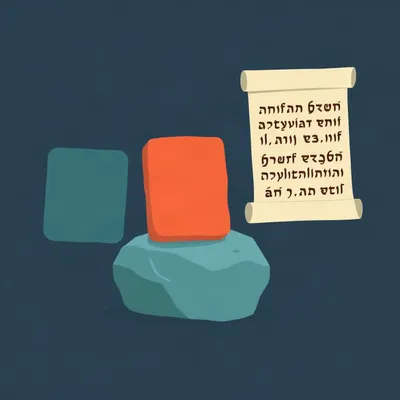
#5079: When Hebrew and Phoenician Were the Same Writing
Before square script, Hebrews and Phoenicians shared the same letters. How did that change?
#4986: How to Weaponize Small Talk (Anti-Guide)
Turn "How are you?" into a weapon. An escalatory ladder from honest answers to full conversational catastrophe.

#4961: Can You Learn to Be Good at Small Talk?
Why "just be curious" fails anxious people — and what actually works for better conversations.
#4876: How Hebrew Lived and Irish Died: Language Revival Lessons
Why one national language experiment created native speakers and the other created a school subject.
#4677: Beyond the Itinerary: Travel Writing That Actually Works
Bill Bryson made travel writing feel alive. Who's carrying that torch to places he never explored?