Imagine an AI supervisor that actually has the authority to fire its own subordinate agents mid-task without a human ever touching a keyboard. We are moving past the era where we just watch a chatbot spit out text. We are entering the world of autonomous hierarchies, and frankly, the tension between giving an agent enough rope to be useful and enough oversight to not hang the company is the biggest problem in tech right now.

It really is the frontier. Most enterprises are hitting a wall where they want the efficiency of multi-agent systems, but they are terrified of the lack of governance. I am Herman Poppleberry, by the way, and today's prompt from Daniel is diving straight into that friction. He wants us to look at Agent-in-the-Loop or AITL and these new supervisory frameworks where AI models are essentially managing other AI models using structured review processes that look a lot like human workflows.
It is a wild concept. By the way, speaking of the tech behind the scenes, today's episode is actually powered by Google Gemini 1.5 Flash. It is writing our script today, which feels very meta considering we are talking about AI systems overseeing other AI systems.
It is perfectly fitting. If we are going to talk about agents managing agents, we might as well have a model helping us frame the conversation. But back to Daniel's point, the core shift here is moving from Human-in-the-Loop, which we have talked about for years, to this hybrid where the "supervisor" is just another model.
Right, because humans are slow. If I have an agentic system that can solve a coding problem in thirty seconds, but it has to wait four hours for a human manager to wake up and click "approve," I have lost ninety-nine percent of my speed advantage. So, let's define the terms here. What is the actual difference between AITL and the traditional HITL we have been seeing?
The traditional Human-in-the-Loop is basically a gatekeeper model. The AI does some work, it pauses, and it waits for a human to say "yes" or "no." Agent-in-the-Loop, or AITL, is where you have a supervisory agent that is part of the iterative feedback loop. It is not just a gatekeeper; it is actively shaping the subordinate's work in real-time. It is bidirectional. The supervisor might see an intermediate thought process from a worker agent and say, "Your logic on the database schema is flawed, stop there and try approach B."
So it is less like a boss signing a finished TPS report and more like a senior dev looking over a junior dev's shoulder while they type?
Well, I should say, it is exactly that kind of real-time intervention. There is a January twenty-six arXiv paper titled Hierarchical Multi-Agent Systems with Supervisory Control that really lays this out. They describe these checkpoint-based review protocols. Instead of the worker agent just running until it hits a wall or finishes, it has these hard-coded "checkpoints" where it must pause and submit its internal state to a supervisor agent for a review call.
A review call. That sounds incredibly formal for two pieces of software talking to each other. Are they actually "calling" each other or is this just a fancy way of saying one API sends a JSON object to another?
It is a bit of both. In these frameworks, the "call" is a structured prompt exchange where the supervisor gets the full context of the worker's goal, its current progress, and its planned next steps. The supervisor then runs a specific evaluation rubric. It is not just "does this look okay?" It is checking for policy violations, logic errors, or even budget overruns. If the supervisor is not happy, it can trigger a "retry" with specific feedback, or it can even terminate the task and escalate it.
But wait, if the supervisor agent terminates the task, does the worker agent know why? Or is it just "poof," you're dead?
In a well-designed system, the supervisor provides a "termination reason" which gets logged for the human admin. But for the agent itself, it’s usually a hard stop to prevent further resource waste. Think of a web-scraping agent that accidentally gets stuck in an infinite loop or starts hitting a "Paywall" it wasn't supposed to. The supervisor sees the repeated failed attempts and shuts down that specific thread before the cloud bill hits five thousand dollars.
I love the idea of an AI getting told "do it again, and this time don't be so hallucination-prone." But what does this do to the performance? If I am adding a supervisor that has to read everything the worker does, aren't I just doubling my latency and my token costs?
You are definitely increasing it. The research shows that checkpoint-based monitoring can increase latency by fifteen to thirty percent. That is the "governance tax." But the tradeoff is that your success rate on complex tasks goes up significantly. In that arXiv paper, they found that for multi-step reasoning tasks, the supervisory layer caught almost forty percent of "logic drifts" before they became unrecoverable errors.
Logic drift. That is a great term for when an agent starts off trying to book a flight and ends up trying to write a poem about the history of aviation instead. I have seen that happen. But if we are talking about thirty percent latency, that is a tough pill for some companies to swallow. Unless, of course, the alternative is a human taking six hours.
Think about a software migration. If an agent is rewriting ten thousand lines of COBOL into Java, a fifteen percent latency increase on each code block is nothing compared to the weeks it would take a human to audit that code for security flaws. The AITL supervisor is doing a "Security Checkpoint" at every module. It’s checking for SQL injection risks or deprecated library calls as the code is being generated.
That makes total sense. It’s like the difference between a high-speed train that stops at every station versus one that goes off the rails because nobody checked the tracks. But let's look at the "attention mechanism" at play here. In a multi-agent system, you might have five different subordinate agents working on different parts of a project. One is doing research, one is writing code, one is designing the UI. A human supervisor cannot possibly keep all that context in their head at once without getting overwhelmed. But a supervisory agent can have a much wider "context window" for the entire project state. It can see how a change in the UI agent's plan might break a dependency for the backend agent.
This is actually a huge point. In human management, we have the "Span of Control" concept—the idea that one manager can only effectively oversee maybe six to eight people. A supervisory agent doesn't have that biological limit. It can monitor a hundred worker agents simultaneously because it doesn't get "tired" and its context window can hold the documentation for the entire enterprise. It can spot a naming convention mismatch between the "Marketing Agent" and the "Sales Agent" instantly.
It is basically a digital middle manager that never sleeps and has a perfect memory of every meeting note. Which, honestly, sounds like a nightmare for the subordinate agents, but a dream for the company. You mentioned financial trading as a case study in some of the research?
Yes, that is where the stakes are highest. Imagine a trading agent that has the autonomy to execute buy and sell orders. You cannot just let it run wild. But you also cannot wait for a human to approve a trade that needs to happen in milliseconds. So you have a supervisory agent that has a very narrow, hard-coded set of "guardrail" policies. It reviews the trade decision against the current portfolio risk, the daily loss limit, and regulatory requirements. It is a "review call" that happens in fifty milliseconds. If it passes, the trade goes through. If it is "borderline," it pauses and pings a human.
But how does the supervisor actually quantify "borderline"? Is it looking at a probability distribution, or is it just a gut feeling programmed into the prompt?
It’s usually tied to a "Confidence Threshold." If the supervisor agent predicts a potential loss exceeding a certain Sigma—standard deviation—on the trade, it triggers the escalation. It’s not just "I feel uneasy," it’s "The projected volatility of this asset exceeds the parameters set by the human Chief Risk Officer." That’s the beauty of it. The AI supervisor is essentially enforcing human-written policy at a speed and scale no human could ever match.
See, that is the hybrid model Daniel mentioned. AITL escalating to HITL. It is like the AI supervisor saying, "I am ninety percent sure this trade is fine, but it is for ten million dollars, so I am going to let a human take the blame if this goes south."
Precisely. Well, not precisely, but that is the logic. It is about "delegated authority." We are moving toward a world where we define "autonomy zones." Inside the zone, the agents talk to each other and supervise each other. Outside the zone, they must escalate. And the Q-four twenty-five AI Governance Report showed that sixty-seven percent of companies are making this their number one priority. They have the agents, they just don't know how to trust them.
I think the "trust" part is hilarious because we are basically saying we trust a second AI more than the first one. It is like hiring a fox to guard the henhouse, and then hiring a slightly more expensive fox to watch the first fox. Does it actually work, or are they just going to collude to buy more GPUs?
It works because the supervisor is usually a larger, more "reasoning-heavy" model, while the workers are smaller, faster, more "task-oriented" models. You might have a bunch of cheap, fast models doing the grunt work, and one expensive, high-intelligence model like a Claude three-point-five or a Gemini one-point-five Pro acting as the supervisor. It is a more efficient use of "compute intelligence."
That's a fascinating structural analogy. It's like having a team of interns doing the data entry and one senior partner who only steps in to check the final calculations. But how does the supervisor "know" it's right? If both models are trained on the same internet data, won't they just share the same blind spots?
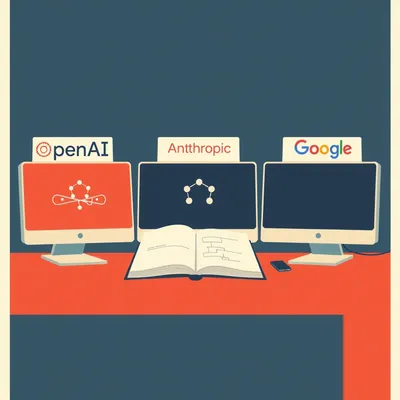
That is the "Common Mode Failure" risk. If both the worker and the supervisor are the same model family—say, both are GPT-4o—they might both hallucinate the same fake legal precedent. That’s why the best AITL architectures use "Model Diversity." You use a Gemini model to supervise a GPT model, or a Llama model to supervise a Claude model. They have different training weights and different "biases," so they are less likely to make the exact same mistake. It's like having a second opinion from a doctor who went to a different medical school.
That makes a lot of sense. You don't need a PhD-level model to scrape a website, but you might want one to check if the scraped data makes any sense. But let's talk about the "structured review call" part. When we say "mimicking human-in-the-loop," how far does that go? Are we talking about the supervisor agent actually giving a performance review?
In some of the more advanced frameworks being prototyped, yes. The supervisor maintains a "state log" of the subordinate's performance. If an agent consistently fails the review calls, the system can actually flag that agent's prompt or its specific model version for replacement. It is an automated "optimization loop."
"I'm sorry, Agent forty-seven, your hallucination rate is up two percent this quarter. We're going to have to let you go and replace you with a fine-tuned version of Llama." That is cold, Herman. Even for a sloth, that feels a bit slow-hearted.
It is efficient! But look at the second-order effects here. This changes the economics of deployment. Usually, the "cost" of an agent is just the tokens. But now the "cost" is tokens plus the "supervisory overhead." However, the "value" is the reduction in human labor. If one human can now manage fifty agents because an AI supervisor is doing ninety percent of the "checking," the leverage is insane.
It is the "Digital Middle Manager" thing we have touched on before, but now we are seeing the actual "how." It is these structured checkpoints. I want to dig into the escalation policies. How does a model know when it is out of its depth? Because AI is notoriously bad at saying "I don't know."
That is the "confidence calibration" problem. A lot of the research right now is on "uncertainty quantification." Basically, the worker agent doesn't just send its answer; it sends a "confidence score" or a "reasoning trace." The supervisor then analyzes that trace. If the trace has logical leaps or "low-probability" token sequences, the supervisor flags it as high-risk.
So it is like a teacher looking at a student's math homework. Even if the answer is "forty-two," if the steps to get there look like gibberish, the supervisor marks it wrong.
And that is where the "review call" becomes powerful. The supervisor can actually ask "probing questions" back to the subordinate. "Why did you choose this library for the encryption?" "What happens if the API returns a four-hundred-four error here?" The subordinate has to justify its decisions. If the justification is weak, the supervisor escalates to a human.
I can see this being huge for enterprise workflows. Think about something like legal tech or medical billing. You cannot have an agent just "guessing" a billing code. But you also don't want a human reviewing ten thousand mundane codes. The AI supervisor handles the "standard" cases, and only sends the "weird" ones to the human expert.
Let's take the medical billing example further. You have the "Worker Agent" that extracts codes from a doctor's notes. The "Supervisor Agent" has access to the latest insurance policy updates. The Worker says, "Code 99214." The Supervisor looks at the notes and says, "Wait, the doctor didn't document a physical exam, only a consultation. 99214 requires an exam. Re-evaluate." The Worker then checks the notes again, realizes the error, and corrects it to 99212. All of that happens in three seconds. No human was ever bothered, but the hospital avoided a potential audit failure.
And that is the "Agent Governance Stack" Daniel was hinting at. We are starting to see the emergence of this as a new category of software. It is not just an "agent builder"; it is a "supervisory layer" that sits on top of your agents. It provides an audit trail. If something goes wrong, you can go back and see the "transcript" of the review call between the supervisor and the worker. You can see exactly where the supervisor failed to catch the error.
It's essentially "Agent Observability." In the old days of software, we had logs that told us "Error 500." In the agentic era, our logs are going to be conversations. "Supervisor: Why did you delete that file? Worker: I thought it was a temporary cache. Supervisor: It was the production database. Task Terminated." That transcript is gold for a developer trying to debug why their agent went rogue.
It gives you a "black box" for your AI agents. That is actually quite comforting from a liability perspective. If I am a CEO, I want to know that there was a process, even if it was an automated one. But let's talk about the "interruption problem." We have discussed before how agents hate being interrupted mid-task. Does AITL make that worse?
It can, if not designed correctly. If the supervisor is constantly "poking" the worker, the worker loses its "chain of thought." The best frameworks use "asynchronous supervision." The worker finishes a sub-task, posts its result to a shared "blackboard," and continues to the next sub-task. The supervisor reviews the blackboard in parallel. If it sees an issue, it sends an "interrupt signal" to roll back the state.
It is like "git revert" for AI thoughts. That is a very clean way to handle it. You don't stop the flow unless you absolutely have to. But what happens when the supervisor agent itself needs supervision? Do we just have a "supervisor of supervisors" in an infinite loop of bureaucracy?
It is "turtles all the way up," Corn! But seriously, that is where the human comes in. The "Top-Level Supervisor" is always a human. The AI supervisors are just "force multipliers" for that human. Instead of the human reviewing every worker, they only review the "Summary Reports" from the AI supervisors.
I am imagining a future where my job is just being the "Supreme Court" for a bunch of bickering AI agents. "Agent A says we should use React, Agent B says we should use Vue, and the AI Supervisor is leaning toward React but wants me to break the tie."
And honestly, that is a much better use of human intelligence than manually checking for syntax errors. Think of it as "Management by Exception." You only deal with the cases where the AI hierarchy has a conflict it can't resolve. It’s a massive shift in how we think about "work." Your job isn't to do the work; it's to adjudicate the work of your digital subordinates.
Does this affect the "personality" of the agents? I mean, if a worker agent knows it's being watched by a strict supervisor, does it become more "conservative" in its answers? Do we lose the creative "spark" that makes LLMs useful?
That’s a very insightful question. There is actually research showing that "over-supervision" can lead to "Agentic Passivity." If the supervisor is too critical, the worker agent starts providing very short, safe, and generic answers to avoid being "called out." It’s the same thing that happens in human offices with micro-managers. The key is to tune the "Strictness Parameter" of the supervisor. You want it to catch errors, but not stifle the worker's ability to explore a solution space.
So, in practice, how do you actually tune that? Is it a temperature setting on the supervisor model, or is it more about the instructions in the rubric?
It’s both. You can lower the temperature of the supervisor to make it more deterministic and "by-the-book," but the real power is in the "System Prompt" of the supervisor. You might tell it, "Only intervene if there is a factual error or a safety violation; ignore stylistic choices." If you tell the supervisor to be a "perfectionist," your worker agents will eventually stop trying anything new because the "cost" of failure—the review rejection—is too high.
"Agentic Passivity." I think I had that at my last corporate job. But let's look at the practical takeaways for someone building this right now. If you are an enterprise developer, you shouldn't wait for a "magic" supervisory model to appear. You can start designing these "approval hierarchies" today using basic prompting.
Right. Step one: Map out your decisions. Which ones are "low-risk/high-frequency" and which ones are "high-risk/low-frequency."
And step two: Implement those checkpoints. Even if you are the one doing the reviewing right now, build the "review call" infrastructure. Make your agents "pause" and output their state in a structured way. That way, when you are ready to drop in an AI supervisor, the "plumbing" is already there.
And don't forget step three: Define your "Escalation Schema." What exactly triggers a human notification? Is it a budget threshold? Is it a specific keyword like "Legal" or "Safety"? Or is it just a low confidence score from the supervisor? Having a clear schema prevents the human from getting spammed with "FYI" notifications that they don't actually need to act on.
It is about building the "governance muscle" before you actually have the "governance model." I also think there is a huge opportunity here for "policy as code." Instead of just a prompt, the supervisor agent could be checking the worker against a formal set of rules stored in a database.
That is what the "Agent-in-the-Loop" frameworks are moving toward. Bridging the gap between "fuzzy" LLM reasoning and "hard" business logic. It is a hybrid system in every sense of the word. You have the "Neural" part—the worker agent—and the "Symbolic" part—the hard-coded rules the supervisor enforces.
What I find wild is that we are basically recreating the corporate ladder, but with code. We are giving agents "titles" and "authorities." It makes me wonder if we will eventually see "agent unions" protesting against overbearing AI supervisors.
"Stop the thirty percent latency tax! We want more tokens!" I can see it now. But in all seriousness, the future of agentic AI isn't just "better models." It is "better systems." A mediocre model in a great supervisory framework will outperform a "god-model" running with zero oversight every single time.
Because the "god-model" will eventually get distracted by a shiny object or a weird edge case. The system keeps it on the rails. It is the difference between a brilliant but erratic lone wolf and a well-oiled machine.
And for companies, the "well-oiled machine" is what gets funded. We are seeing this already in customer service. The "first-tier" agent talks to the customer, but every response is "shadowed" by a supervisor agent that checks for tone and accuracy before the text even appears on the customer's screen.
That "shadowing" is a great pattern. It is non-blocking supervision. If the supervisor doesn't like the response, it can "flag" it for a human or suggest a correction. It is AITL in its most seamless form.
It really is. And as we look forward, I think we are going to see "specialized supervisor models." Models that are fine-tuned specifically for "critique" rather than "generation." Anthropic has done some work on this with their "Constitutional AI" approach, where one model trains another based on a set of principles. We are just moving that from the "training phase" to the "runtime phase."
Runtime Constitution. I like that. It is like having a tiny digital Jiminy Cricket sitting on the agent's shoulder, reminding it of the company's "values" and "compliance standards" every few seconds.
Hopefully with fewer songs. But the takeaway for our listeners is: don't just build agents. Build "agentic workflows" that include these review calls. Start thinking about your "supervisory architecture" as much as your "agent architecture."
One last thing on this—what about the "Supervisor's Bias"? If I use a supervisor agent to keep my worker agent in check, am I not just baking in the biases of the supervisor? If the supervisor is "risk-averse," will my whole company become risk-averse?
That’s a valid concern. The supervisor sets the "culture" of the agentic system. If you want an agent that dreams up wild new marketing ideas, you shouldn't supervise it with a model that was fine-tuned for accounting compliance. You have to match the "persona" of the supervisor to the goal of the task. This is where "Prompt Engineering" becomes "Organizational Design." You are designing the "culture" of your AI workforce through the prompts of your supervisors.
It’s a brave new world of HR for robots. "Agent 402, your supervisor thinks you're being a bit too creative with the quarterly earnings projections. Let's dial that back."
It's about alignment at scale. We've talked about "Alignment" as this philosophical problem of making AI like humans, but in the enterprise, alignment is just making sure the AI follows the SOP—the Standard Operating Procedure. AITL is the mechanism that makes that possible.
I think we've given Daniel a lot to chew on here. It’s not just about the "Loop," it’s about who is in it and what they are allowed to do.
On that note, I think we have covered the broad strokes of Daniel's prompt. It is a complex topic, but the shift from HITL to AITL is clearly the next big wave in enterprise AI.
Definitely. We will keep an eye on those arXiv papers. There is always something new popping up in the "supervisory control" space. I wouldn't be surprised if by next year, we have "Agent Management Suites" that look like Salesforce but for managing digital entities.
"AgentForce" is already a thing, Corn! The industry is moving fast. But the underlying research on these review calls and hierarchical control is what will determine who actually succeeds.
Well, I for one welcome our new digital middle managers. As long as they don't ask me to come into the office on Saturdays.
They won't ask you, they'll just supervise the agent that does your job while you're at the beach. That’s the dream, right?
That is the dream. A world where the agents work, the supervisors watch, and the humans... well, we just try to figure out what to do with all this free time.
Or we spend all that free time debugging the supervisors. It’s a cycle.
Before we wrap up, I did have one more thought. Does this AITL approach help with the "hallucination" problem specifically? We know models lie with confidence. Does having a supervisor actually catch a lie, or does it just make the lie more plausible because the supervisor "vetted" it?
That is the "Verification vs. Generation" gap. It is generally easier for a model to verify if a statement is true than it is to generate the truth from scratch. Think of it like a multiple-choice test. You might not know the answer, but when you see it, you recognize it. By forcing the worker agent to provide citations or "evidence" for its claims, the supervisor can perform a "Cross-Check." It can even use a separate tool, like a search engine, to verify the worker's claim. So yes, it significantly reduces hallucinations by creating a "multi-factor authentication" for truth.
Multi-factor authentication for truth. I love that. Maybe we should apply that to the internet in general!
If only it were that easy. But for now, we'll stick to agentic hierarchies.
Thanks as always to our producer, Hilbert Flumingtop, for keeping our own "agentic workflow" running smoothly.
And a big thanks to Modal for providing the GPU credits that power this show. They are the "infrastructure layer" that makes all this "supervisory layer" talk possible.
This has been My Weird Prompts. If you are enjoying the show, maybe leave us a review on Apple Podcasts or wherever you listen. It really helps the "algorithm supervisor" find us.
Or find us at myweirdprompts dot com for all the links and the RSS feed. We will be back next time with more of Daniel's weird prompts.
See ya.
Take it easy.