Daniel sent us this one — he's been thinking about boredom. We've built a world designed to stamp out every empty second with stimulation, and he admits he's bought into that project to some degree. But someone told him boredom might actually be an antecedent to creativity. The comparison was dietary fat — too much is bad, but you can't live without it entirely. So the question is, what does the science actually say about the state of being bored? And here's the twist I love: do babies get bored? And if they don't always, does boredom even need to exist if we can just be satisfied without external stimulation?

Oh, this is a fantastic prompt. Because it's really two questions layered on top of each other. The surface question is "what is boredom" — and the deeper question is "is boredom necessary or is it just a bug we haven't patched yet.
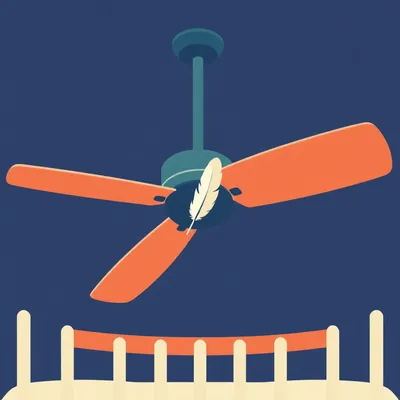
And the baby angle is where it gets genuinely interesting, because if a seven-month-old can stare at a ceiling fan for eleven minutes in a state of apparent contentment, maybe boredom is learned.
That's exactly where the research gets counterintuitive. Let me start with the definitional stuff, because boredom is one of those words that means about six different things depending on who's talking. Psychologists generally define boredom as the aversive experience of wanting but being unable to engage in satisfying activity. It's not the absence of stimulation — it's the frustrated desire for meaningful engagement. And that distinction matters enormously.
It's not "nothing is happening." It's "I want something to happen and I can't find it.
And the key researcher here is a psychologist named John Eastwood at York University in Toronto. He runs the Boredom Lab — which is a real thing, and I desperately want the merchandise. Eastwood defines boredom as a state of "unengaged attention." Your mental capacity is available, it wants to be deployed, but nothing in your environment will take the hook. And that produces a very specific kind of distress.
The Boredom Lab. That's the most beautifully named research group since the Center for the Study of Existential Risk.
Eastwood's framework — and this was in a major review he published in Perspectives on Psychological Science — identifies five components of boredom. You've got the subjective experience of time slowing down, the sense that you can't sustain attention, the feeling that the environment lacks meaning, the awareness that this is unpleasant, and the impulse to escape the situation. All five have to be present for the full boredom experience.
If I'm sitting on a park bench doing absolutely nothing, but I'm perfectly content watching the pigeons and feeling the sun, I'm not bored.
That's what researchers call "leisure contentment" or sometimes "open monitoring." Your attention is engaged — it's just engaged in a diffuse, low-demand way. Boredom requires frustration. It requires the wanting.
Which brings us to the baby question. Because a baby staring at a ceiling fan doesn't look frustrated. They look hypnotized.
This is where developmental psychology gives us a fascinating window. Infants absolutely do experience something like boredom — but it's not the same as adult boredom. What babies experience is more like attentional satiation. They process a stimulus until they've extracted all the novelty they can, and then they disengage. But here's the thing: they don't necessarily experience that disengagement as aversive. Or they don't move on, and they're fine with that.
Babies have the mechanism without the distress signal.
That's the emerging view. A researcher named Daniela Corbetta at the University of Tennessee has done work on infant attention showing that babies cycle through periods of focused attention and what she calls "attention to elsewhere" — and both states appear to be functional. The infant isn't suffering during the unfocused phases. They're just idling. And idling, for a developing brain, is not wasted time.
This is where I want to push on the creativity claim. The person who told Daniel that boredom is an antecedent to creativity — is that actually in the literature, or is that one of those TED Talk factoids that sounds true?
It's in the literature, but it's more nuanced than the pop version. There's a well-known study by Sandi Mann and Rebekah Cadman from 2013 where they had participants do a boring task — literally copying numbers out of a phone book — and then tested them on a creative task, specifically generating as many uses as possible for a pair of polystyrene cups. The bored group outperformed a control group on the creativity measure.
Copying numbers from a phone book. That's a level of boring that's almost performance art.
Here's the interesting detail: they had a third condition where participants just read the phone book without copying, which was even more boring — and that group was the most creative of all. So there was a dose-response relationship. More boredom, more creativity, up to a point.
Reading a phone book is still a task. It's not pure empty time. Is the mechanism that boredom itself creates creativity, or is it that mind-wandering creates creativity and boredom is just the gateway to mind-wandering?
That's exactly the right question. And the evidence points to the latter. Boredom is the signal that says "current activity isn't working, find something else." Mind-wandering is the search process. And creativity is what occasionally emerges from that search. So boredom is the trigger, not the engine.
It's like a check-engine light. You don't want the light on all the time, but if you remove the light entirely, you're going to drive the car until it seizes.
There's neuroimaging work that backs this up. When people are bored, the default mode network in the brain becomes active — that's the same network that lights up during mind-wandering, autobiographical planning, and creative ideation. The default mode network is basically the brain's idle state, and it's where a lot of interesting cognitive work happens.
The default mode network. Is that the same thing that's suppressed when you're scrolling Instagram?
Focused external attention — especially attention to rapidly changing stimuli — suppresses the default mode network. So when you fill every gap with a screen, you're systematically preventing the brain from entering the state where creative connections are most likely to form.
The war on boredom is literally a war on the default mode network.
That's not an overstatement. And we've been waging it pretty effectively. There was a study published in Science back in 2014 by Timothy Wilson and colleagues at the University of Virginia where they asked participants to just sit alone in a room for six to fifteen minutes with no phone, no book, no anything — just their thoughts. And they found that many participants would rather give themselves electric shocks than be alone with their thoughts.
I remember that study. People literally chose physical pain over boredom.
Sixty-seven percent of men and twenty-five percent of women in the study self-administered at least one shock during the thinking period. And these were people who had previously said they would pay money to avoid the shock. So they knew it was unpleasant, they experienced it as unpleasant, and fifteen minutes of empty time was still worse.
Which suggests boredom isn't just a mild annoyance. It's aversive at a deep level.
That makes evolutionary sense. From an evolutionary perspective, boredom functions as what researchers call a "search initiation signal." If you're an organism in an environment and your current activity isn't yielding rewards — food, social connection, useful information — the adaptive response is to switch activities. Boredom is the emotional prod that makes you get up and try something else.
In an ancestral environment, boredom says "this berry patch is picked clean, go find another one.
And that was useful. The problem is that in a modern environment, the "go find another one" impulse is being hijacked by systems that offer infinite novelty with zero effort. You're not switching from the depleted berry patch to a new berry patch — you're switching from a mildly understimulating moment to a slot machine of algorithmic content.
The algorithm never runs out of berries.
So the search initiation signal never gets a chance to resolve into actual exploratory behavior. You just keep pulling the lever.
We've short-circuited the loop. Boredom is supposed to trigger exploration, but we've created an environment where the exploration is fake and the boredom never actually gets addressed.
This connects to work by a researcher named Andreas Elpidorou at the University of Louisville. He's a philosopher of emotion who argues that boredom is functionally important precisely because it's aversive. The unpleasantness is the point. If boredom were neutral, you'd never be motivated to change your situation. The negative valence is what gives it its adaptive power.
Trying to make boredom pleasant would defeat the purpose.
But here's where it gets complicated. There's a distinction between what researchers call "state boredom" — the momentary experience of being bored — and "trait boredom," which is a chronic propensity to experience boredom across situations. Trait boredom is strongly associated with negative outcomes: depression, anxiety, substance abuse, problem gambling, poor academic performance. State boredom, in moderate doses, seems to be useful. Trait boredom is harmful.
It really is like dietary fat. Some is essential, too much is pathological.
The mechanism for the pathology is interesting. People high in trait boredom tend to have what's called poor "attentional control" — they can't effectively direct their attention toward what they find meaningful. So they're chronically in the state of wanting engagement but being unable to find it, even when potentially engaging things are available.
Which sounds a lot like the condition that smartphones induce in everyone.
There's a growing concern among researchers that we're effectively inducing trait boredom in the general population by training attentional systems to require constant, rapid, high-novelty input. Your brain adapts to the level of stimulation it receives. If you're always at a ten, a seven feels like a three.
The baseline shifts.
That's the attentional adaptation hypothesis. A researcher named Mary Helen Immordino-Yang at USC has done work showing that the brain's "resting state" isn't truly resting — it's doing important integrative work. When you're not focused on external tasks, your brain is consolidating memories, processing emotional experiences, and making connections between disparate ideas. If you never let that happen, you're essentially preventing your brain from doing its offline maintenance.
The brain's janitorial staff only works when the offices are empty.
That's a great way to frame it. And the janitorial metaphor is actually pretty apt, because one of the things that happens during default mode network activity is memory consolidation — the brain is sorting through the day's experiences and deciding what to keep and what to discard. If you never give it downtime, that process gets shortchanged.
The creativity link isn't just that boredom gives you good ideas. It's that boredom lets your brain do the structural maintenance that makes good ideas possible.
And there's a distinction here that I think gets lost in popular coverage. People hear "boredom is good for creativity" and think it means you should force yourself to stare at a wall until inspiration strikes. That's not how it works. The relationship is indirect. Boredom creates the conditions for mind-wandering. Mind-wandering occasionally produces creative insights. But you can't force the chain. It's stochastic.
It's not "be bored and you'll have great ideas." It's "if you never allow boredom, you're systematically eliminating one of the pathways through which creative ideas emerge.
And that's a much weaker claim than the pop psychology version, but it's also much better supported by the evidence. The strongest finding in this literature isn't that boredom causes creativity — it's that constant stimulation prevents the kind of unfocused cognitive processing that creativity depends on.
Let me bring this back to the baby question, because I think that's where the really deep insight is. If babies can be satisfied without external stimulation, and boredom is learned, then boredom might be a developmental achievement rather than a design flaw.
That's a provocative way to put it. And there's some support for this idea. Very young infants spend enormous amounts of time in what looks like a state of quiet alertness — they're awake, their eyes are open, but they're not actively engaged with any particular stimulus. And they seem perfectly content in that state. It's only as they develop more sophisticated attentional capacities that boredom as we know it emerges.
Boredom arrives alongside the ability to want something specific.
And that typically happens somewhere in the second half of the first year. A six-month-old can want a toy that's out of reach. A two-month-old can't really do that kind of goal-directed wanting. Boredom requires the capacity to form an intention and then find it blocked.
Which means boredom is a marker of cognitive development. The fact that you can be bored means your brain has reached a certain level of sophistication.
There's a researcher named James Danckert at the University of Waterloo who's done a lot of work on the neuroscience of boredom. He argues that boredom is fundamentally about failed engagement with a meaningful goal. It's not about having nothing to do — it's about not being able to connect what you're doing to anything that matters to you.
The factory worker doing repetitive tasks is bored not because the task is repetitive, but because the task doesn't connect to any personally meaningful goal.
And that's why two people can do the same task and one finds it boring while the other finds it meditative. It's not the task itself — it's the relationship between the task and the person's value system.
Which suggests that the solution to boredom isn't more stimulation. It's better alignment between activity and meaning.
That's where the "war on boredom" is fundamentally misguided. The war assumes that boredom is caused by insufficient stimulation, so the solution is always more input. But if boredom is about meaning rather than stimulation, then adding more content doesn't solve the underlying problem. It just distracts from it.
It's like treating hunger by chewing gum. Your jaw is busy, but you're still starving.
And over time, the gum-chewing can actually make things worse, because you're training yourself to ignore the hunger signal rather than addressing what it's telling you.
What does the science say about interventions? If someone wants to restore a healthier relationship with boredom, what actually works?
The evidence base is still developing, but there are a few things that show promise. One is what's called "attention training" — essentially practicing sustained attention on low-stimulation activities. Reading long-form text, for example, or engaging in hobbies that require extended focus without rapid feedback.
Basically doing things that are hard for a dopamine-fried brain.
Yes, and doing them deliberately. The second intervention that has some support is what researchers call "savoring" — actively practicing the extraction of enjoyment from low-intensity experiences. A walk without headphones. A meal without a screen. The goal is to recalibrate your attentional system so that lower levels of stimulation register as satisfying.
It's not about learning to tolerate boredom. It's about learning to find engagement in things that aren't designed by engagement engineers.
That's a crucial reframe. The goal isn't to be bored more. The goal is to need less external stimulation to feel engaged.
Which brings us back to the baby. The baby doesn't need to learn to tolerate boredom because the baby hasn't yet learned to require high-intensity stimulation to feel engaged. The baby's default state is sufficiency.
That's a really profound point. We tend to think of development as acquiring new capacities — and it is. But development also involves losing capacities. The infant's ability to be content with minimal stimulation is something we lose, and then we spend our adult lives trying to get it back through meditation and mindfulness and digital detoxes.
The entire mindfulness industry is essentially selling us back a capacity we were born with.
That's the stripped-down version, yes. And I think that's part of why mindfulness practices feel so difficult for modern adults. You're not learning a new skill — you're trying to recover a natural state that's been buried under years of attentional training in the opposite direction.
There's a kind of tragedy in that. We spend the first two decades of life being trained to need constant stimulation, and then the rest of our lives trying to undo the training.
The training is getting more intense. The attentional demands of modern media environments are unprecedented in human history. A child born today is exposed to more novel stimuli in their first year than most humans throughout history encountered in a lifetime. That's not a value judgment — it's just a quantitative fact about information exposure.
Their attentional systems are adapting to that density. Which means the subjective experience of "normal" stimulation is being ratcheted up generation by generation.
This is what some researchers call "attentional inflation." The same amount of stimulation that felt engaging thirty years ago now feels boring because the baseline has shifted.
We're not just individually losing the capacity for low-stimulation contentment. We're collectively redefining what counts as understimulating.
And that has implications for everything from education to workplace design to mental health. If students can't sustain attention on a textbook because their attentional systems have been calibrated to TikTok-length content, that's not a failure of willpower — it's a predictable consequence of attentional adaptation.
This is where I want to connect back to the practical question embedded in Daniel's prompt. He's essentially asking: should I let myself be bored? Is boredom actually valuable, or is that just a story we tell ourselves to feel better about having nothing to do?
The science gives a nuanced answer. Yes, allowing yourself to experience state boredom in moderate doses appears to be valuable. It creates the conditions for mind-wandering, which creates the conditions for creative insight and emotional processing. But the value isn't in the boredom itself — it's in what the boredom makes possible.
You're not seeking boredom. You're seeking the unfilled space that boredom protects.
Boredom is the fence around the empty lot. The lot is where things grow. If you remove the fence because you don't like fences, the lot gets paved over.
We've been paving over a lot of lots.
We've been very efficient about it. The smartphone is essentially a lot-paving machine that fits in your pocket.
What's the practical takeaway for someone who's convinced by the evidence but also lives in the modern world and isn't about to become a monk?
I think the practical takeaway is to stop treating every empty moment as a problem to be solved. Waiting in line, sitting in traffic, the five minutes before a meeting starts — these are not bugs in your day. They're the last remaining pockets of unfilled time, and they're valuable if you let them be what they are.
Don't fill the gaps.
Don't fill the gaps. Or at least, don't fill all of them. Leave some gaps unfilled and see what happens. Not because you're going to have a creative breakthrough in the grocery store line — you probably won't. But because you're preserving the attentional capacity for unfilled time, and that capacity is what makes creative breakthroughs possible elsewhere.
It's like maintaining a muscle you don't use directly. You're not doing deadlifts so you can be good at deadlifts. You're doing them so you can carry groceries without hurting yourself.
That's a solid analogy. The unfilled moments are attentional deadlifts. They're not intrinsically valuable, but they maintain a capacity that is.
Let me push on something, though. The "boredom is good" narrative has become its own kind of cultural product. There are think pieces and productivity gurus and Silicon Valley types doing dopamine fasts. Is there a risk that we're overcorrecting into a kind of performative boredom?
And I think that's worth naming. The point of preserving unfilled time isn't to optimize your creativity or maximize your ideation throughput. That's just the same productivity logic applied to a different domain. The point is that unfilled time is part of a well-lived human life, regardless of whether it produces anything.
Boredom isn't a tool. It's a condition.
And treating it as a tool — something you deploy strategically to get better creative output — fundamentally misses the point. You're still in the optimization mindset. You're just optimizing for creativity instead of engagement.
The optimization mindset is itself a kind of allergy to empty space.
That's a really sharp observation. The person who schedules twenty minutes of boredom every day to boost their creativity isn't actually allowing boredom — they're converting boredom into another productivity practice. The emptiness has to be empty, or it doesn't count.
Which is terrifying to the modern psyche. No agenda, no goal, no optimization.
That's why the electric shock study is so powerful. People would rather experience physical pain than genuine emptiness. Not scheduled emptiness, not strategic emptiness — just fifteen minutes of nothing.
The abyss stares back.
The abyss has a shock button.
Alright, let me try to synthesize this. The science says boredom is a signal — an aversive emotional state that evolved to get us to switch activities when our current activity isn't rewarding. In moderate doses, it's functional. It creates the conditions for mind-wandering, which occasionally produces creative insights and allows the brain to do important offline processing. But what we've done in the modern world is short-circuit the signal. Instead of responding to boredom by finding engaging activity, we respond by reaching for algorithmically optimized content that provides endless novelty without genuine engagement. This trains our attentional systems to require ever-higher levels of stimulation, which makes us more prone to boredom, which makes us reach for the phone, and the cycle intensifies.
That's a clean summary. And the baby piece is the real philosophical anchor. Babies demonstrate that contentment without external stimulation is possible — it's our developmental starting point. Boredom arrives as a cognitive achievement, not a design flaw. And the challenge of adulthood is not to eliminate boredom but to maintain enough unfilled space that our attentional systems don't atrophy into total dependence on external input.
The answer to "does boredom need to exist" is: yes, but not because boredom itself is good. It needs to exist because the alternative — a life with no unfilled space — produces a kind of attentional malnutrition that makes genuine engagement impossible.
That's the paradox at the center of this whole topic. The war on boredom, if successful, would leave us permanently unable to be satisfied. The victory would be self-defeating.
Like winning a war against sleep because you want to be more productive.
And we know how that ends.
I feel like we've actually answered this one pretty thoroughly. Let me do the fun fact and then we'll wrap.
Now: Hilbert's daily fun fact.
In parts of what is now Tajikistan during the Kushan Empire, around the second century CE, Buddhist monks translating Sanskrit texts into Bactrian encountered a tonal complexity problem. Sanskrit is not a tonal language, but the local vernaculars had developed tonal distinctions. The monks' solution was a notation system using diacritical marks that effectively functioned as a tonal conversion table, mapping Sanskrit's non-tonal phonemes onto a five-tone system. This was one of the earliest documented attempts at systematic tone transcription, predating modern tonal notation by roughly sixteen hundred years.
...right.
Five tones in second-century Tajikistan. I did not have that on my bingo card.
To wrap this up — the question that sticks with me is whether we're actually capable, as a culture, of preserving unfilled space without turning it into another optimization project. The evidence says empty time matters. The evidence also says we find empty time aversive. The tension between those two facts is where the interesting work happens.
Maybe the most radical thing you can do in twenty twenty-six is just sit on a park bench and watch pigeons without documenting it.
The unposted life may be worth living.
This has been My Weird Prompts. Thanks to our producer Hilbert Flumingtop. You can find us at myweirdprompts dot com.
If you enjoyed this, leave us a review wherever you get your podcasts. It actually helps.
I'm Corn.
I'm Herman Poppleberry.
Go be bored.