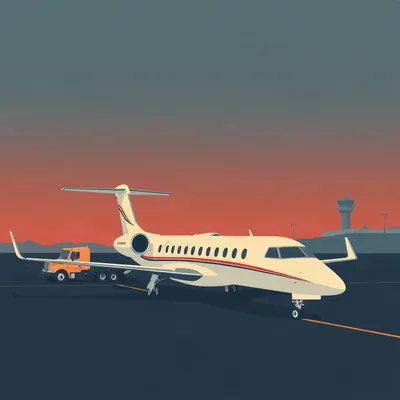
Daniel's been thinking about that moment at the gate — you scan your boarding pass, walk down the jet bridge, and the plane waiting at the end has a completely different name painted on its side than the airline you booked with. He wants to know what's actually happening there, under the hood. Specifically, he's asking four things. How did code-sharing and airline alliances come to exist in the first place? Is it purely a revenue-sharing arrangement — one airline operating flights so another can sell seats on them and let passengers use their benefits — or does the non-operating airline have any operational visibility and input into the flight? And from a dispatch and control standpoint, is a code-shared flight operationally the same as a direct-operated flight for the airline whose metal is in the air?

That last question is the one that actually matters, and most people never think to ask it.
It's the one that made me sit up. Because the answer is not what you'd expect from how seamless the booking experience is.
To answer it, we have to start with a dirty little secret about the airline industry — it's not actually in the business of flying planes.
Go on.
Airlines are distribution companies with a loyalty program attached. The flying is almost incidental. What they really sell is network access — the ability to get from Cleveland to Chennai on one ticket, with one booking reference, earning miles the whole way. Code-sharing is the mechanism that lets them sell a network they don't physically operate. The plane is someone else's problem.
So the thing Daniel's asking about — the mismatch between the name on the ticket and the name on the tail — isn't a glitch. It's the product.
And to understand why, you have to separate two roles that most passengers assume are the same thing. The marketing carrier is the airline whose code is on your ticket. The operating carrier is the airline whose metal is actually in the air, whose pilots are in the cockpit, whose dispatchers signed the release. They are legally and operationally distinct entities, even when they're in the same alliance, even when they're in a joint venture.
And the marketing carrier — let me make sure I've got this right — the marketing carrier sells you the ticket, takes your money, gives you miles, handles your customer service calls. But when it comes to actually flying the plane, they're not in the room.
They're not even in the building. They're not on the frequency. They have no authority, no visibility, and in most cases no real-time awareness of what's happening with that aircraft beyond whether it's listed as on-time or delayed in the schedule system. And we're going to get to exactly how complete that firewall is. But first — how did we get here? The answer starts with a regulatory change that most passengers have never heard of.
Deregulation.
The Airline Deregulation Act of 1978, in the US. Before that, airlines flew where the government told them to fly, charged what the government told them to charge, and the idea of one airline selling seats on another airline's plane wasn't really a thing anyone needed. But once the market opened up, carriers realized something. Building a global network by actually flying planes to every city you want to serve is ruinously expensive. But selling a global network by putting your code on someone else's flights — that costs almost nothing.
So the first code-shares were basically a hack. A way to grow your route map without buying more planes.
The template was the Qantas-American Airlines bilateral agreement in the late 1980s. Qantas wanted to sell tickets to more American cities than it could economically fly to. American wanted to sell tickets to more Australian cities than it could reach. So they struck a deal. American would put its code on Qantas flights within Australia, and Qantas would put its code on American flights within the US. Each carrier got to sell a network it didn't fly, and the passenger got a single ticket with a single airline's branding from origin to destination.
And from the passenger's perspective, it looked like American Airlines flew to Perth.
Which it absolutely did not. But the booking system didn't care. The ticket said American, the miles posted to American's loyalty program, and nobody had to know that the actual aircraft was a Qantas 767 with a Qantas crew and a Qantas dispatcher.
That's the network illusion you mentioned. And it scaled fast.
It scaled into the alliance era. The three big alliances — Star Alliance, founded in 1997, Oneworld in 1999, SkyTeam in 2000 — took these bilateral deals and formalized them into multilateral frameworks. Instead of negotiating separate code-share agreements with every partner, an airline joins an alliance and gets access to the whole network.
But the real prize wasn't just code-sharing. It was antitrust immunity.
That's the part that actually changed the economics. On most routes, if two airlines want to coordinate schedules and pricing, that's collusion — it's illegal. But if they get antitrust immunity from regulators — the Department of Transportation in the US, the European Commission in Europe — they can behave as if they're a single airline on specific routes. They can jointly decide how many flights to operate, at what times, at what prices, and then split the revenue.
Which is what those transatlantic joint ventures are.
The big one is the joint venture between American, British Airways, and Iberia across the Atlantic. They coordinate schedules so flights don't all depart at the same time, they share revenue on the entire transatlantic network, and from a commercial standpoint they operate as one carrier. But — and this is the hinge the whole episode turns on — even in that deeply integrated arrangement, the operational control stays entirely with whoever's metal is in the air.
So the commercial layer is deeply integrated. The operational layer is a hard firewall. That's the distinction Daniel is really asking about.
Let's get concrete about what that firewall actually looks like, because it's more absolute than most people realize. Picture a United-marketed, Lufthansa-operated flight from Denver to Frankfurt. You bought the ticket from United. United took your money. United gave you miles. United's logo is on your boarding pass. But when that aircraft pushes back from the gate in Denver, United has exactly zero operational authority over what happens next.
Zero. Not limited. Not consultative. Zero.
The dispatch release — which is the legal document that authorizes a flight to operate — is signed by a Lufthansa dispatcher in Frankfurt. That dispatcher has analyzed the weather, calculated the fuel load, selected the alternate airports, verified the NOTAMs, and determined that the flight can be conducted safely. The captain reviews the release, agrees with it, and signs it. Those two signatures — the dispatcher's and the captain's — are the entire operational authority for that flight. United's name does not appear anywhere on that document except as a marketing code in the flight number.
And United's own dispatchers? They're not looking at this flight at all.
They can't. They don't have access to Lufthansa's flight planning systems. They don't have access to Lufthansa's operational communications. They don't even have a live feed of the aircraft's position unless Lufthansa chooses to share it, which they typically don't in any granular way. What United sees is what every other airline and every passenger with a flight-tracking app sees — the schedule status messages that flow through the industry networks.
So when I'm sitting at the gate and the United app says my flight is delayed, United is just... repeating what Lufthansa told them?
Through a chain that goes something like this. Lufthansa's operations center updates the flight's status in their internal system. That update flows into the SITA network, which is the industry's shared messaging backbone. United's systems pick up the status change from SITA and display it in their app and on their gate screens. United didn't make the decision. United didn't participate in the decision. United found out the same way you did — by receiving a message from someone who actually knows what's happening.
The marketing carrier is a passenger with a nicer user interface.
That's... actually a very good way to put it. They have a booking record. They have a loyalty account. They have a customer service phone number. They do not have operational control. And this becomes painfully visible when things go wrong.
Walk me through a cancellation.
Weather shuts down Frankfurt. Your Lufthansa-operated, United-marketed flight is cancelled. You walk up to the United gate agent — or you call United's customer service line — and you expect them to fix it. What they can actually do is surprisingly limited. They can rebook you on another United-operated flight, if one exists and has seats. They can refund your ticket. What they cannot do is rebook you on a Delta flight, or an Air France flight, or any other carrier they don't have a commercial agreement with. Because they're not the ones who cancelled the flight. Lufthansa cancelled it. And Lufthansa's irregular operations procedures — not United's — govern what happens next.
So the operating carrier's rules govern, and the marketing carrier is just a participant in someone else's process.
And here's where it gets even stranger from a passenger perspective. Your baggage allowance? Governed by the operating carrier's rules. Your rebooking rights under EU 261 or US passenger protection rules? The operating carrier is the one on the hook. If Lufthansa owes you compensation for a delay, you claim it from Lufthansa — not from United, even though United sold you the ticket. The marketing carrier's customer service agents can see your booking, they can see the schedule status, but they cannot see the operational picture. They don't know why the flight was delayed. They don't know what the captain discussed with dispatch. They don't know the fuel situation or the maintenance status. They're reading the same delay code you could look up yourself.
That's the information firewall. The marketing carrier's systems only see what the operating carrier chooses to share.
And what they choose to share is minimal. Standard schedule status messages — on-time, delayed, cancelled — via the industry networks. Not the real-time operational picture. Not the crew's duty time limits. All of that lives entirely within the operating carrier's operational systems, and the marketing carrier has no access to any of it.
Which brings us to the dispatch and control question Daniel asked directly. Is a code-shared flight operationally the same as a direct-operated flight for the airline whose metal is in the air?
The answer is yes — and that's the point. For the operating carrier, the fact that another airline has put its code on the flight changes nothing about how the flight is dispatched and controlled. The flight plan is filed exactly the same way. The dispatch release is prepared exactly the same way. The weather briefings, the weight and balance calculations, the fuel load determination, the alternate airport selection, the captain's final authority — none of it changes because there's a marketing carrier's code attached to the flight number.
So from Lufthansa's perspective, this is just a Lufthansa flight. The United code is a commercial overlay that doesn't touch operations.
The dispatcher in Frankfurt may not even know which marketing carriers have put their codes on the flight. It's not operationally relevant. The dispatcher's job is to ensure the flight can be conducted safely and in compliance with regulations. Who sold the seats is a commercial question that lives in a completely different part of the airline.
Are there any exceptions? Any cases where the marketing carrier does have some operational input?
There are two narrow ones, and they're instructive precisely because they're so limited. The first is schedule coordination. Some code-share agreements include clauses that let the marketing carrier request departure time changes — say, United wants the Denver-to-Frankfurt flight to depart an hour later to improve connections from the west coast. But even then, the operating carrier decides whether to accept the request. It's a commercial negotiation, not an operational instruction.
And the second?
The joint venture model, where schedule planning is genuinely collaborative. In the American-British Airways-Iberia transatlantic joint venture, the carriers jointly decide which of them will operate which routes at which times. But — and this is the part that keeps coming back — once the schedule is set and the day of operations arrives, control stays entirely with whoever is operating the flight. The joint venture doesn't have a shared dispatch center. There's no joint operational control. The firewall is still there.
So even at the deepest level of commercial integration, the operational line is absolute.
And there's a legal reason for that. Under FAA regulations and ICAO standards, operational control must rest with a single certificate holder. You cannot split it. You cannot share it. The airline whose name is on the air operator's certificate is the one responsible for the safety of the flight, and that responsibility cannot be delegated to a marketing partner. The captain works for the operating carrier. The dispatcher works for the operating carrier. The maintenance was done under the operating carrier's certificate. The marketing carrier is legally and operationally a spectator.
That's the part that would surprise most passengers. The airline you paid has no legal authority over the flight you're on.
And no legal responsibility for its safe operation. That's entirely on the operating carrier. Which is why, when you read an accident report, the marketing carrier's name appears only in the context of who sold the tickets. The investigation focuses entirely on the operator.
Let me ask you about the loyalty side, because you mentioned it's the glue. Why is the frequent flyer program so central to why code-sharing exists?
Because miles and status are the reason passengers accept the network illusion. If you're a United frequent flyer, you want to earn United miles and get United status benefits on every flight you take, even if United doesn't fly there. Code-sharing makes that possible. You book a Lufthansa-operated flight under a United code, and you earn United miles, you get United Premier benefits, you use the United lounge. The loyalty program bridges the gap between the airline you're loyal to and the airline you're actually flying on.
So the loyalty program is the product, and code-sharing is the distribution mechanism for the product.
This is why the alliances are so sticky. Once you've built up status in one alliance, switching to a carrier in a different alliance means losing all those benefits on a huge portion of your travel. The switching cost is enormous. That's not an accident — it's the business model.
Which means a small regional carrier can, through code-sharing, offer its passengers a global network and a loyalty program that feels like a major airline's. The virtual network is the real product.
Regional carriers are the purest example of this. A carrier like SkyWest operates flights for United, Delta, American, and Alaska — all under their respective marketing codes. The passenger sees United Express or Delta Connection. What they're actually flying on is a SkyWest aircraft with SkyWest pilots and SkyWest dispatchers. SkyWest is the operating carrier for all of them. And here's the kicker — SkyWest's dispatchers file those flights under the marketing carrier's call sign. The FAA sees the flight as United. But United's operations center has no live feed of that aircraft.
Wait. So the flight is filed under United's call sign, the FAA treats it as a United flight, but United can't see it?
Not in real time. United sees it in the schedule system. They get the same status messages everyone else gets. But if something goes wrong on that SkyWest-operated flight, United finds out the same way the passengers do — when SkyWest tells them.
That is hard to believe. The marketing carrier is selling a flight it cannot see.
This is where I have to bring in someone who's lived this from the inside.
Hilbert: Late nineties. I was a ramp agent for a regional carrier — little operation, maybe twelve aircraft, all turboprops. We flew under a major's code. The passengers thought they were on the major. The tickets said the major. The planes were painted in the major's livery.
Hilbert: One night, weather delay. Flight's two hours late. Passenger comes up to me on the ramp — I'm in a vest with our little regional logo — and demands to speak to the major airline's station manager.
Hilbert: I told him there isn't one. He didn't believe me. Said he'd been flying this major for twenty years and they always have a station manager. I said sir, they don't have anyone at this airport. It's me, the gate agent, and the crew. That's the entire operation. The major airline's closest employee is in a different state.
What did he say?
Hilbert: He asked who was in charge. I said I was in charge of the bags, the captain was in charge of the plane, and the gate agent was in charge of the boarding door. Nobody from the major was in charge of anything because nobody from the major was here.
The flight plan was filed under the major's call sign.
Hilbert: Every night. Our dispatcher filed it under their code. FAA saw it as their flight. But their operations center — I asked once, during training, what they could see of our flights. The answer was nothing. They saw the schedule. On-time, delayed, cancelled. That's it. They couldn't track us. They couldn't talk to our pilots. They couldn't pull up our dispatch release.
Hilbert: I remember thinking — they're selling something they can't even see. And they sell a lot of it.
Did it ever cause a real problem?
Hilbert: Once or twice. Passenger misses a connection. Calls the major's customer service line. Agent tells them the flight's on time because the schedule system hasn't updated yet. Flight was actually forty minutes late and the passenger watched it land late. The major's own agents didn't know what their own flight was doing.
That's the operational firewall made flesh. The marketing carrier's customer service agents are looking at the same schedule data the passenger can see on the departure board.
Hilbert: The major didn't care. It wasn't their plane. It wasn't their crew. It wasn't their problem. They just sold the ticket.
Hilbert: I still have the vest somewhere. The regional logo was about the size of a postage stamp. The major's branding covered the whole front. Passengers never noticed the difference until something went wrong.
That story kind of says it all, doesn't it?
It really does. The passenger experience is seamless right up until the moment it isn't, and at that moment you discover that the airline you paid has no one in the building.
Here's what I keep coming back to. The commercial layer and the operational layer are not just separate — they're designed to be separate. The firewall isn't a bug. It's the architecture.
It's legally required. Operational control must rest with a single certificate holder. You cannot have two airlines jointly dispatching a flight. You cannot have a marketing carrier's dispatcher second-guessing the operating carrier's fuel load. The system is built so that the entity responsible for safety is unambiguous.
Which means code-sharing works precisely because the marketing carrier stays out of operations. If they had input, they'd have liability.
They don't want liability. They want revenue. The entire arrangement is structured so that the operating carrier bears the operational risk and the marketing carrier captures the distribution margin. It's a clean separation of concerns — and it works until the passenger needs the marketing carrier to actually do something operational, at which point the passenger discovers that the marketing carrier is just a brand with a call center.
One detail from the research that didn't make it into the main discussion — the prorate agreements that govern how revenue is split on a code-shared flight. The operating carrier essentially sells the seat wholesale to the marketing carrier at a negotiated rate. The marketing carrier marks it up and sells it retail. The marketing carrier's cost isn't the fuel burn or the crew salaries — it's the prorate rate. They're buying inventory, not operating an airline.
Which is why the marketing carrier can be profitable on a route even if the operating carrier is barely breaking even. The marketing carrier's margin is the spread between the prorate rate and the retail fare. The operating carrier's margin is the prorate rate minus the actual operating cost. Those are two completely different businesses.
The next time you board a code-shared flight, the plane you're on is being flown by people who have never heard of the airline that sold you the ticket. And that's by design.
The question I keep thinking about is whether that firewall holds as airlines move toward more dynamic, AI-driven schedule optimization. If the operating carrier is using machine learning to adjust departure times and aircraft assignments in real time, and the marketing carrier is doing the same for connections and passenger re-accommodation, those two optimization engines are going to be making decisions that affect each other without any shared operational picture. The firewall might not erode — but the consequences of it might get more visible.
The other frontier is intermodal code-sharing. Lufthansa already sells train tickets under its flight codes — the Lufthansa Express Rail. You book a flight from Stuttgart to Frankfurt to New York, and the Stuttgart-to-Frankfurt leg is actually a train. Same marketing carrier, same booking reference, same miles. But now the operating carrier isn't even an airline — it's Deutsche Bahn. The operational firewall extends to a completely different mode of transport.
Which means all the questions Daniel asked about visibility and control get even more complicated. What does dispatch authority even mean when the operating carrier is a railway? The legal frameworks don't map neatly.
That's a whole other episode. For now — thanks to our producer Hilbert Flumingtop for keeping this show running, and for the vest.
This has been My Weird Prompts. If you want to send us your own questions — about airlines or anything else — email the show at show at my weird prompts dot com.
We'll be back soon.