Welcome back to My Weird Prompts. I am Corn, and I am sitting here in our living room in Jerusalem with my brother, the man who probably has more medical journals on his nightstand than actual novels.

Herman Poppleberry, reporting for duty. And you are not wrong about the journals, Corn. There is something endlessly fascinating about the evolving nature of what we think we know. It is a constant process of revision.
It is a good thing you find it fascinating, because our housemate Daniel sent us a prompt today that really gets into the messy intersection of trust, intuition, and the history of scientific error. He has been thinking a lot about the weight of evidence, which is a phrase we use on the show quite a bit. But he is grappling with a difficult question. If we look back at history and see all the times mainstream medicine was confidently, disastrously wrong, how do we reconcile our support for Western medicine with that nagging feeling that we might be doing something today that will look barbaric in eighty years?
It is such a profound question. It hits on what I like to call the humility of the present. We always think we are at the peak of human knowledge, but history suggests we are just on a very long, very winding staircase. Daniel specifically mentioned his experience with gallbladder removal, suspecting we might be doing that a bit too flippantly. And honestly, he is touching on a very real tension in modern surgical practice.
Right, and he mentioned things like lobotomies and doctors recommending cigarettes. It is easy to look back and scoff, but people at the time were following the consensus. So, Herman, let us start there. How does a system that prides itself on evidence-based practice end up endorsing something like a lobotomy? Because that was not some fringe back-alley procedure. It won a Nobel Prize.
That is the part that really haunts the history of medicine. Antonio Egas Moniz won the Nobel Prize in Physiology or Medicine in nineteen forty-nine for the development of the prefrontal leucotomy. At the time, the weight of evidence, or at least what passed for it, suggested that this was a revolutionary treatment for severe mental illness in an era before effective antipsychotic drugs. The mistake was not necessarily a lack of evidence, but a lack of long-term, rigorous follow-up and the total absence of what we now call double-blind, randomized controlled trials.
So it was a failure of the methodology itself?
That's the key thing. Medicine used to be much more focused on what we call clinical observation. A doctor tries something, it seems to work for ten patients, and they write a paper. Other doctors try it, it seems to work for them, and suddenly it is the standard of care. But we did not have the statistical tools to realize that seeming to work is not the same as actually being effective and safe in the long run. The lobotomy era was a period where the desperation to treat overcrowded psychiatric hospitals overrode the caution that should define medical progress.
It feels like there is a pattern there. The desperation to find a solution leads to a shortcut in the evidence. But what about the smoking thing? Daniel mentioned doctors recommending cigarettes. That feels less like a failure of science and more like a failure of integrity.
It was a bit of both. In the nineteen thirties and forties, tobacco companies actually paid for studies that they then used in advertisements. You would see ads saying more doctors smoke Camels than any other cigarette. They were not necessarily saying cigarettes are healthy, but they were using the image of the doctor to suggest safety. At the same time, the link between smoking and lung cancer was not statistically solidified until the work of Richard Doll and Austin Bradford Hill in the early nineteen fifties. There was a lag between the intuition that inhaling smoke was probably bad and the hard data required to change public policy.
And that lag is exactly what Daniel is worried about. He is looking at his own experience with his gallbladder and wondering if we are in one of those lags right now. He had his removed seven years ago and feels like it has been a rough ride. Herman, what is the current consensus on cholecystectomies, and why might someone like Daniel feel like medicine is getting it wrong?
This is a great example of a contemporary debate. Every year in the United States alone, about seven hundred thousand people have their gallbladders removed. It is one of the most common elective surgeries. The standard thinking is that if you have gallstones and they are causing pain, the gallbladder has to go. It is seen as a disposable organ. But there is a growing body of research into what is called post-cholecystectomy syndrome. Between ten and forty percent of patients continue to have symptoms like abdominal pain, bloating, or diarrhea after the surgery.
Wait, forty percent? That is a huge number for a procedure that is supposed to be a definitive fix.
That's right. And it points to what Daniel is sensing. We have a tendency in surgery to look for a mechanical fix. There is a stone, there is inflammation, so remove the part. But the gallbladder plays a role in regulating bile flow and interacting with the gut microbiome through bile acid signaling. When you remove it, you change the entire digestive chemistry. We are starting to realize that for some patients, the cure might be creating a new set of chronic issues. The weight of evidence is shifting toward being more conservative with surgery, but the momentum of the established practice is very hard to slow down.
So how does a non-professional navigate this? If you are sitting in a doctor's office and they say you need surgery, but you have this intuition or you have read some conflicting reports, how do you handle that without becoming a Dr. Google who just cherry-picks information to support their own fears?
I think the key is moving from being a passive recipient of care to being an active, informed participant. You do not have to be a doctor to ask about the quality of the evidence. One of the best things you can do is ask about the N-N-T, or the number needed to treat. This is a statistical measure that tells you how many people need to receive a treatment for one person to experience the intended benefit.
That is a great tool. So if a doctor says this surgery will help you, you ask, for every hundred people who get this, how many actually see their symptoms disappear?
Right. And you also ask about the number needed to harm, or N-N-H. Every intervention has a risk profile. If the number needed to treat is ten, but the number needed to harm is also ten, that is a very different conversation than if the number needed to harm is ten thousand. When you start asking for these specific metrics, you move the conversation away from anecdotes and toward the actual statistical reality.
But even those stats can be based on flawed studies. How do we account for the fact that the consensus itself might be built on a house of cards? I am thinking of the replicability crisis we have talked about before, where a lot of foundational studies in medicine and psychology cannot be reproduced.
You are hitting on the deep structural problem. There is a concept called the half-life of facts, coined by Samuel Arbesman. He found that in many fields, including medicine, about half of what we think is true will be proven wrong or significantly modified within forty-five years. It is a terrifying thought, but also a liberating one. It means that science is working. It means we are constantly pruning the tree of knowledge.
But if I am the one getting the surgery today, I do not care if science will figure out it was a mistake in forty-five years. I care about my health right now. So how do you reconcile that?
You look for the Lindy Effect. This is the idea that the future life expectancy of a non-perishable thing, like an idea or a practice, is proportional to its current age. If a medical treatment has been around for fifty years and is still the standard of care, it is much more likely to be valid than a flashy new treatment that was introduced three years ago. New is not always better in medicine. In fact, many of the disasters Daniel mentioned, like lobotomies, were the hot new thing of their time.
That is an interesting perspective. So, sticking with time-tested interventions while being skeptical of the latest trends might be a safer path for the layperson. But let us look at the other side of Daniel's question. He wants us to look ahead to the year twenty-one hundred. If we are standing there, looking back at February of twenty-six, what are the things we are doing today that will make us look like the bloodletters of the past?
Oh, I have a list. And I think the first one on that list is going to be our current approach to cancer treatment, specifically systemic chemotherapy.
You think chemotherapy will be seen as barbaric?
I think we will look back at it as a very blunt, very violent instrument. We essentially poison the entire body in the hope that the cancer cells die slightly faster than the healthy ones. It is effective for many, but the collateral damage is immense. By twenty-one hundred, I imagine we will have highly targeted, personalized nanotherapies or gene-editing techniques that neutralize cancer cells with surgical precision, leaving the rest of the body untouched. We are already seeing the beginning of this with antibody-drug conjugates, but the idea of losing your hair and destroying your immune system to treat a localized tumor will seem like the dark ages.
That makes sense. It is a brute force solution. What else? What about surgery itself?
I suspect a lot of our common orthopedic surgeries will be viewed with high skepticism. We are already seeing this with things like knee arthroscopy for degenerative wear and tear. Multiple large-scale studies, like the Fidelity trial, have shown that for many people, a sham surgery, where they just make the incisions but do not actually do anything inside the knee, has the same outcome as the real surgery.
Wait, seriously? A placebo surgery is just as effective?
In many cases, yes. The body is incredible at healing, and sometimes the mere belief that we have been fixed, combined with the forced rest and physical therapy that follows surgery, is what actually does the work. I think by twenty-one hundred, we will realize that we were cutting into people far too often for things that could have been managed through biological signaling, targeted exercise, or regenerative medicine.
I wonder if we will also look back at our use of antibiotics with a sense of horror. Not because antibiotics are bad, but because of how flippantly we have used them, effectively nuking our internal ecosystems and creating superbugs.
Without a doubt. The disruption of the microbiome is going to be a huge theme in the medical history books of the future. We are only just beginning to understand that the bacteria in our gut are essentially a secondary organ that regulates our mood, our immune system, and our metabolism. We have spent the last eighty years treating them like an optional extra or even a threat. In the future, I think every course of treatment will be designed to protect or enhance that microbial balance. The idea of a broad-spectrum antibiotic given for a minor ear infection will seem incredibly reckless.
It is funny, because Daniel mentioned bloodletting, which was based on this idea of balancing the humors. It sounds ridiculous now, but it was a theory of systemic balance. In a weird way, the focus on the microbiome is bringing us back to a systemic view, just with much better data.
That is a brilliant observation, Corn. History often moves in circles, but hopefully each circle is a bit higher than the last. The humors were a primitive attempt to understand homeostasis. We moved into a very reductionist era where we looked at every organ and every cell in isolation. Now, we are moving back toward a holistic view, but grounded in molecular biology and complex systems theory.
What about mental health? Daniel mentioned lobotomies. Do you think our current reliance on S-S-R-Is or other psychiatric medications will be looked at as a mistake?
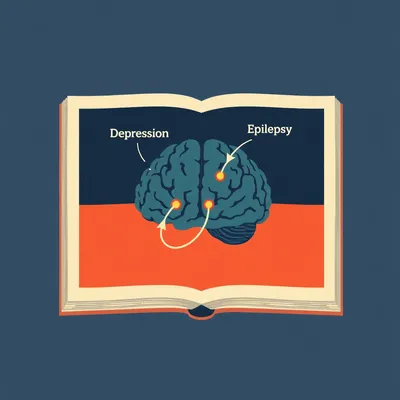
I think we will look back at the chemical imbalance theory as a gross oversimplification. We have already seen major reviews, like the one in Molecular Psychiatry in twenty-twenty-two, that found no consistent evidence linking low serotonin to depression. We have been treating the brain like a soup where you just need to add a little more of one ingredient. But the brain is a high-speed electrical and chemical network with trillions of connections. Throwing a pill at it that affects the entire system is, again, a very blunt tool. By twenty-one hundred, I hope we are looking at neural circuits and using things like deep brain stimulation or precisely timed neuro-feedback to treat the specific patterns of the illness.
It seems like the common thread here is that we are currently in an era of blunt instruments. We are using hammers where we need scalpels. And the reason we do it is that we do not yet have the scalpels, but the problems are urgent.
That's the core of it. And that brings us back to Daniel's dilemma. How do you trust the hammer when you know it is a hammer? I think the answer is to have a high degree of intellectual humility. We have to accept that our current medical consensus is the best guess we have right now, but it is not the final truth.
So, for someone like Daniel, who feels like the gallbladder removal was a mistake for him personally, how does he process that without losing faith in the entire system?
I think he has to realize that he is part of the evidence. His experience is a data point that suggests the current consensus has blind spots. He can support Western medicine while also recognizing its limitations. Western medicine is not a static set of rules; it is a process of inquiry. Being a skeptic is actually a more scientific position than being a blind follower. The key is to be a skeptical participant, not a cynical outsider.
That's a crucial distinction. Cynicism says the whole system is corrupt and useless. Skepticism says the system is trying to find the truth but is prone to error, so I need to look at the data myself and ask hard questions.
Precisely. And for a non-professional, that means looking for consensus, yes, but also looking for the strength of that consensus. Is it based on one study funded by a drug company, or is it a meta-analysis of fifty independent trials? There are resources like the Cochrane Library that specialize in these high-level reviews of medical evidence. They are written for professionals, but a persistent layperson can get a lot of value out of their plain language summaries.
I think there is also something to be said for the intuition Daniel mentioned. We often dismiss intuition as unscientific, but for someone who lives in their own body twenty-four seven, that intuition is often a synthesis of thousands of tiny signals that a fifteen-minute doctor's visit can never capture.
That's a great point. In the medical world, we call that patient-reported outcomes. For a long time, they were ignored in favor of hard labs or imaging. But we are realizing that how a patient feels is often a more accurate predictor of their health than a blood test. If your intuition is screaming that a treatment is wrong for you, that is a data point that deserves to be explored. It does not mean you are always right, but it means you should seek a second or third opinion until you find a doctor who can explain the evidence in a way that addresses your concerns.
It feels like we are moving toward a more democratic version of medicine, where the authority of the doctor is balanced by the agency of the patient. But that requires the patient to be much more informed than they used to be.
It is a burden, for sure. It is much easier to just do what you are told. But as Daniel's experience shows, the stakes are too high for that. We have to be the C-E-Os of our own health. The doctor is a highly specialized consultant, but we are the ones who have to live with the results of the decisions.
So, looking back from twenty-one hundred, what do you think will be the biggest surprise for people? Not just a mistake we made, but something we are doing now that they will find completely baffling?
I think they will be baffled by our lack of preventive focus. We spend ninety percent of our healthcare dollars on treating people who are already sick. In twenty-one hundred, I suspect the idea of waiting for a tumor to grow or a heart to fail before you intervene will seem insane. They will likely have continuous, real-time monitoring of our biomarkers. If your inflammation levels spike or your glucose metabolism shifts slightly, your system will adjust your diet or your medication automatically. We live in a world of reactive repair; they will live in a world of proactive maintenance.
Like a car that tells you exactly when the oil needs changing before the engine starts smoking.
Precisely. We are still in the era where we wait for the engine to catch fire and then try to put it out with a bucket of water. It is a miracle it works as well as it does, honestly.
It really is. I think about the progress we have made just in our lifetimes. Even if we are using blunt instruments, they are much better than the blunt instruments of our grandparents' time. We might look back at twenty-twenty-six and cringe, but we should also recognize that we are doing the best we can with the tools we have.
That is the balance. We can be grateful for the life-saving power of modern medicine while remaining eyes-wide-open about its flaws. Daniel, your skepticism is not a betrayal of science; it is the engine of it. Your experience with your gallbladder is exactly the kind of feedback that eventually leads to better standards of care for the next generation.
It is a tough role to play