
#medical-history
36 episodes

#5449: The Neurotic Jew: Where the Stereotype Came From
The anxious, overthinking Jewish personality — where did it actually come from? The answer isn't what you'd expect.
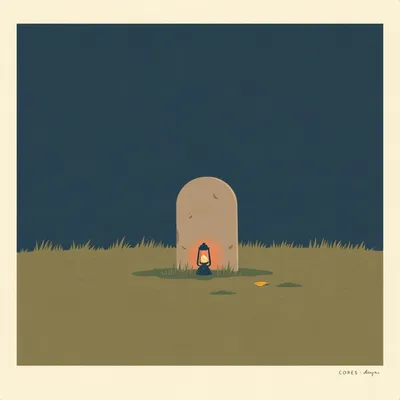
#5446: The Potter's Field: Who Buries the Unclaimed Dead?
From Hart Island's million graves to the met mitzvah, how societies bury the unclaimed — and why the shame of a pauper's funeral is surprisingly mo...
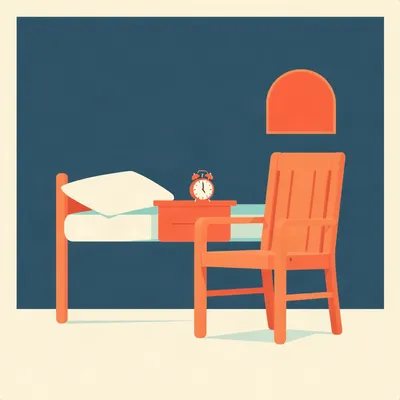
#5432: What Hospice Workers See at the Deathbed
A UK survey found 97% of palliative care staff witnessed deathbed phenomena. What they see — and why 92% never makes it into the chart.
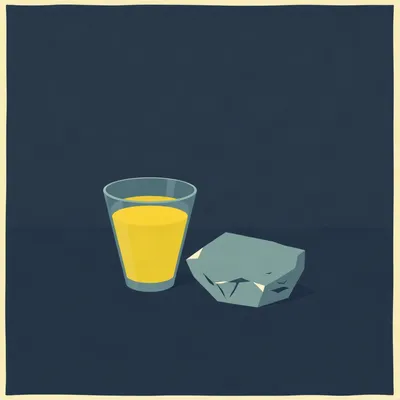
#5231: Uranium: From Yellow Glass to Little Boy
Connecticut well water, Roman glass, and the isotope that changed the world — the strange story of element 92.
#5210: How the Placebo Trial Became the Gold Standard
Control groups, placebos, blinding, randomization — four inventions across 250 years, assembled into medicine's most trusted method.
#5209: Sensitivity, Specificity & the Numbers Doctors Use
A field guide to the numbers in a medical paper — what sensitivity, effect size, and risk ratio actually answer, and when they mislead.
#5168: Ten Inventors You've Never Heard Of
From the yellow traffic light to the geoid model behind GPS — ten inventors whose quiet work reshaped daily life, and why we forgot them.
#5167: The Stethoscope Isn't Dead, It's Getting AI Ears
Two centuries of the stethoscope — and why AI is now making it more useful than ever, not obsolete.

#5145: What Life Expectancy Really Meant in the 1600s
That "people died at 35" statistic? It's mostly measuring dead children, not short adult lives.
#5144: What Medieval Peasants Actually Ate From the Pot
A cauldron on a chain, a fire that never quite goes out, and the real Tuesday of perpetual pottage — minus the four-hundred-year broth myth.
#5126: The Volunteers Who Let Science Shock Them
Charles Dalziel's volunteers endured muscle-locking shocks to create the safety standards we rely on today. What do we owe them?
#5121: Measuring Bloating: Photos, Tape, and What's Normal
Is your bloating normal? One man's quest to document abdominal distension reveals what doctors actually know — and don't.
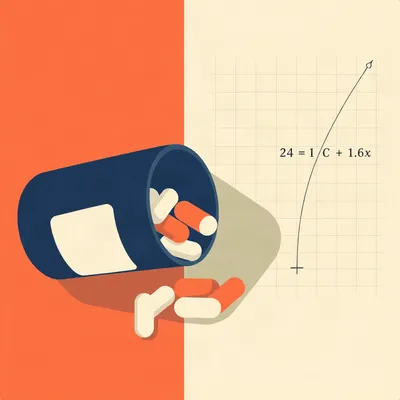
#4835: How Math Took Over Your Prescription Bottle
Dosing wasn't always science. Before 1937, it was guesswork. Here's how equations conquered medicine.
#4535: Gilbert's Syndrome to Rare IEMs: A Metabolic Spectrum Tour
One elevated lab value leads to a tour of 1,450 inborn errors of metabolism, from benign quirks to treatable disorders.
#4249: Gender Diversity Across Millennia
Exploring transgender history across cultures and the politics of gender confirmation care.
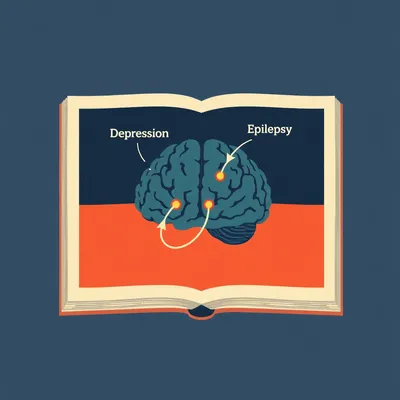
#3523: The Truth About Epilepsy: Seizures, Depression & IQ Myths
Epilepsy isn't binary. One seizure doesn't always mean epilepsy, and the link to depression is stronger than the link to genius.
#3489: How Battlefield Medicine Transformed Civilian ERs
From Larrey's flying ambulances to TCCC — how combat medicine evolved and reshaped civilian trauma care.
#3474: How to Actually Use a Tourniquet
Most people own a tourniquet but couldn't use one effectively under pressure. Here's what you need to know.
#3359: Can We Build a Bionic Gallbladder?
Engineers have tried for decades to replace the gallbladder. Here's what they've built so far.
#3254: When a Single Patient Changes Medicine: Case Reports That Matter
Why do doctors write case reports for free? And how have single-patient observations sparked drug approvals?
#3113: Baby Vital Signs: What Actually Works for Home Monitoring
Pulse oximeters, thermometers, and stethoscopes for infants — what's accurate and what's dangerously misleading.

#2919: How CPR Guidelines Actually Get Updated
The surprising data loop that turns a single study into what millions learn to do with their hands.
#2906: How Much Bone Do You Actually Get From Palatal Expansion?
A landmark RCT reveals that only 23-32% of screw activation actually separates bone — the rest is dental tipping.

#2739: When Hoofbeats Are Zebras: How Doctors Learn to Think
How family doctors develop clinical judgment—pattern recognition, Bayesian reasoning, and the cognitive traps that lead to diagnostic errors.