OpenAI dropped GPT-6 today, and the headline isn't the model. It's the three letters attached to it. AGI. Not "a step toward," not "approaching" — Aidan Clark, their VP of research, told reporters this may be the landmark. Daniel's prompt this week is really two questions folded into one. First, what is Stargate LLC, the consortium that's been getting Manhattan Project comparisons since it was announced? And second, should we take the AGI claim seriously when the evidence being offered is mostly a number — over a hundred thousand GPUs pretraining at the Stargate site in Texas, which Clark says is by far their largest run ever.

And the number is the interesting part. A hundred thousand GPUs is not a bigger version of the last thing. It's a different category of thing.
That's where I want to land, but before we can even evaluate whether GPT-6 Astra is what Clark says it is, we have to understand the physical machine that produced it. Because the AGI claim and the Stargate consortium are not separate stories. One is the marketing for the other.
Right. Stargate LLC was announced in January 2025 with a fanfare that felt a little... let's say, presidential. OpenAI, SoftBank, Oracle, and MGX — that's Abu Dhabi's tech investment arm — standing in a room, promising five hundred billion dollars over four years to build AI infrastructure in the United States. SoftBank holds the financial responsibility. OpenAI runs operations. Oracle provides the cloud layer. MGX brings capital from the Gulf.
So it's a joint venture, not a company in the traditional sense. Four parties with very different incentives, tied together by a shared bet that compute is the bottleneck.
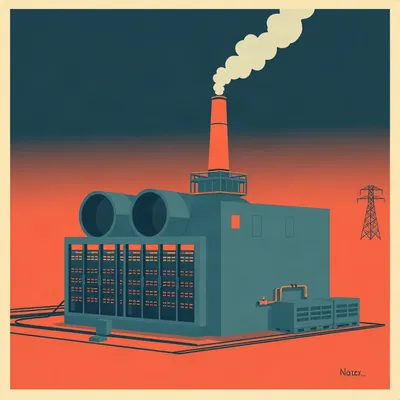
And the first major build-out is in Abilene, Texas. That's the site Clark referenced. That's where GPT-6 Astra's training run happened. A hundred thousand plus GPUs, sitting in West Texas, drawing power on a scale that the local grid cannot actually provide on its own.
Which is why the Abilene site reportedly includes plans for its own gas-fired power generation. They're not just building a data center. They're building a power plant with computers attached.
And that detail is the one that makes the Manhattan Project comparison both tempting and wrong. But let's actually test it, because I think there's something real in the analogy and something that falls apart the moment you look at the structure.
The Manhattan Project comparison gets at something genuine. You have an unprecedented concentration of resources aimed at a single goal. You have government-adjacent strategic urgency — the US government has been explicit that keeping frontier AI on American soil is a national priority. You have secrecy around actual capability. Nobody outside OpenAI knows what GPT-6 Astra can actually do, and the benchmarks are saturated enough that "can it do the thing" is hard to measure.
And you have a single national goal, sort of. The framing is "the United States must not lose the AI race." That's the stated purpose of Stargate — to keep frontier development on US soil, explicitly framed against the Chinese alternative.
But here's where the comparison breaks. The Manhattan Project was a government program. The Army Corps of Engineers ran it. The deliverable was unambiguous — a bomb before the Nazis got one. Everyone involved had the same success condition.
Stargate is a private consortium. SoftBank's incentive is return on capital. Oracle's incentive is cloud revenue and hardware utilization. OpenAI's incentive is model capability and, increasingly, the valuation that comes with AGI claims. MGX wants to diversify Abu Dhabi's sovereign wealth away from oil and into the thing everyone agrees is the next thing. Those incentives overlap, but they are not the same incentive.
And there's no single enemy with a deadline. The Manhattan Project had a very specific fear — German physicists were ahead, and every month mattered. Stargate's urgency is more diffuse. It's a race against a competitor you can't see clearly, with no defined finish line.
The comparison I keep reaching for is the transcontinental railroad. Private capital, government land and political support, a national strategic purpose, and a whole lot of infrastructure built before anyone was sure the economics would work. Or Apollo, which was a government program but with massive private contracting and commercial spillovers that nobody predicted.
The railroad is closer. The Manhattan Project was a sprint with a single deliverable. Stargate is a build-out with no obvious endpoint. You just keep laying track.
And the five hundred billion figure is where the railroad comparison really bites. That number was announced in January 2025 with enormous ceremony. But the actual structure is staged. The first hundred billion was committed upfront. The remaining four hundred billion is contingent on milestones, investor appetite, and whether the early results justify continued spending.
So the headline number is a commitment, not a spend. And there's a meaningful gap between "we have pledged five hundred billion" and "we have deployed five hundred billion." That gap is where the fragility lives.
The energy question is the real bottleneck, and it's the part of this story that gets the least attention. A hundred thousand GPU training run draws on the order of hundreds of megawatts continuously. That's not a data center problem. That's a utility-scale power generation problem.
Which is why Texas. The ERCOT grid is deregulated, which means faster permitting, direct power purchase arrangements, and the ability to build your own generation without the kind of regulatory friction you'd hit in, say, California or the Northeast. Texas has available land, cheap natural gas infrastructure already in place, and a political environment that is not going to ask too many questions about a private company building its own power plant.
It's infrastructure arbitrage. The AI capability is the glamorous part, but the actual engineering challenge is getting hundreds of megawatts to a building in Abilene and keeping it cool. That's the part that determines whether any of this works.
And the Abilene site is the concrete case. Announced, permitted, built, and operational fast enough to host a hundred thousand GPU training run within roughly a year and a half of the consortium's launch. That is fast for infrastructure of this scale.
The speed tells you something about how much political and financial capital is behind this. Nobody builds a gas plant and a GPU cluster that size in eighteen months without every permitting door being opened.
So the Manhattan Project comparison — what it gets right is the concentration and the strategic framing. What it gets wrong is the structure. This is not a unified national program with a single deliverable. It's a supply chain consortium with divergent commercial interests, and its fragility is baked into the deal.
Which brings us to the scale. Because the structure matters, but the number Clark gave is the story. A hundred thousand GPUs.
Let's put that in context. GPT-4 was reportedly trained on around twenty-five thousand A100s. That was the state of the art in early 2023, and it was already an enormous undertaking. GPT-5 class models scaled further, but the publicly known numbers stayed in the tens of thousands.
A hundred thousand is a four to ten times jump in a single generation. That is not incremental scaling. That's a step change. And Clark's phrasing — "by far" our largest training run — tells you the previous runs were meaningfully smaller. This isn't OpenAI gradually inching up. This is them deciding that scale is still the primary driver of capability and betting the farm on it.
The economics are staggering. At current prices, a hundred thousand H100-equivalent GPUs represents roughly two and a half to four billion dollars in hardware alone. Before power. Before cooling. Before networking. Before the building they sit in.
And the electricity bill for a training run at this scale is on the order of hundreds of millions of dollars. Just for the run. That's before you factor in the cost of building the gas plant, the grid interconnects, the water for cooling, the people to run it.
So when Clark says "we pretrained on more than a hundred thousand GPUs," what he's really saying is "we spent somewhere in the neighborhood of three to five billion dollars on a single training run, and we're betting it was worth it."
And that bet tells you OpenAI believes scale is still the lever. Not architectural innovation. Not some clever new training paradigm. Scale. More GPUs, more data, more compute, more power.
Which is a claim about the nature of intelligence that deserves scrutiny. If you need a hundred thousand GPUs to get to AGI, what does that say about the thing you've built? Is it a general intelligence, or is it a very large pattern matcher that's finally big enough to fool the tests?
OpenAI's own charter historically defined AGI as "highly autonomous systems that outperform humans at most economically valuable work." That's a moving target. It's also conveniently vague — who decides what counts as "most economically valuable work"? Who decides what "outperform" means?
And there's no agreed test. The benchmarks are saturated. Every new model beats the old benchmarks, so the field invents new benchmarks, and the new model beats those too, and the cycle continues. When a lab claims AGI, the honest response is to ask what specific capability they're pointing at.
What can GPT-6 Astra do that GPT-5 couldn't? What task, what domain, what kind of reasoning? "AGI" as a label doesn't answer that question. It just attaches a very large word to a very large training run.
The strategic function of the claim is not subtle. If OpenAI says "we may have achieved AGI," that justifies the capital raise. It justifies the Stargate investment. It justifies the continued concentration of compute in the hands of a few companies. It tells SoftBank and MGX that their money is buying the future.
It also tells Washington that the export controls on Nvidia chips to China are working, and that the US needs to keep building. The geopolitical dimension here is direct. Stargate is explicitly a US strategic project. The consortium's stated purpose includes keeping frontier AI development on American soil. This is an infrastructure arms race, and Stargate is the US response.
Which means the AGI claim is not just a technical claim. It's a geopolitical claim. It's a message to Beijing: we got there first, and we did it with a hundred thousand GPUs in Texas.
A message to investors: the next round of funding is going to be even bigger, because the next training run is going to need even more compute.
That's the part that makes me pause. If the AGI claim is real, then the next question is what the next training run looks like. Two hundred thousand GPUs? Five hundred thousand? A million? Where does the scale curve end?
If the claim is not real — if GPT-6 Astra is a very good model that still fails at the kinds of tasks that would actually demonstrate general intelligence — then OpenAI has a different problem. They've spent billions on a run that didn't get them there, and the consortium's structure means that failure strains the partnership.
SoftBank's money, OpenAI's technology, Oracle's infrastructure. If the technology underdelivers, the money gets nervous. If the money gets nervous, the infrastructure build-out slows. The Manhattan Project had a clear success condition. Stargate's success condition is undefined, and that's the fragility.
The AGI claim is, in some ways, an attempt to define the success condition retroactively. "We spent all this money, we built all this infrastructure, and look — we got AGI." It's a narrative that makes the spending look inevitable.
The thing I keep coming back to is that the infrastructure is real regardless of whether the claim is true. The power plants are being built. The GPUs are installed. The cooling loops are running. That physical reality doesn't care whether GPT-6 Astra is actually AGI or just a very expensive language model.
That's the more reliable signal. The AGI debate will rage for months. People will argue about definitions and benchmarks and whether the model can actually reason or just pattern match. But the physical build-out is happening either way. The power plants, the GPU clusters, the cooling systems — that's the bet made concrete.
Let's actually talk about what a hundred thousand GPUs means in practical terms. Because I think most people hear that number and don't have a reference point.
A single H100 draws about seven hundred watts at full load. A hundred thousand of them is seventy megawatts just for the chips. Add networking, storage, cooling overhead, and you're looking at well over a hundred megawatts of continuous draw. That's roughly the output of a mid-sized power plant, running flat out, just for one training run.
The Abilene site is reportedly building its own gas generation because the ERCOT grid can't deliver that reliably. So they're not just a customer of the grid. They're becoming their own utility.
The cooling is the other part nobody talks about. A hundred thousand GPUs generate an enormous amount of heat. You need chilled water loops, massive air handlers, and a design that can handle the failure of any single component without taking down the whole cluster. At this scale, the engineering challenge is not the chips. It's everything around the chips.
That's where I want to bring in someone who actually knows what that looks like from the inside.

The cooling loop on our Dallas facility depended on one valve. One. If that valve failed, the whole building went down. We found it during an audit in ninety-nine, and I remember standing there looking at it thinking, this is a forty-dollar part that's going to take out forty million dollars of equipment.
Wait.
I was facilities coordinator for a telecom outfit that built one of the first carrier hotels in Dallas. Late nineties. The glamour was in the fiber — everyone wanted to talk about the fiber. But the money and the risk were in the diesel generators and the UPS systems and the chillers. The boring stuff. The stuff nobody writes about.
You're watching the Stargate coverage and seeing the same dynamic.
They keep calling Abilene a data center. It's not a data center. A data center is a building with servers in it. What they're building out there is a power plant with computers attached. The real expertise isn't in the GPUs. Anybody can buy GPUs if you've got SoftBank's money. The expertise is in the power distribution, the cooling loops, the failure domains. The boring infrastructure.
The single point of failure audit. That's the thing you're wondering about.
I've been watching the coverage, and nobody's asking whether anyone is doing that audit at a hundred thousand GPU scale. Because at that scale, the failure modes multiply. One valve becomes a hundred valves. One chiller becomes fifty chillers. And if any one of them fails at the wrong moment during a training run, you don't just lose the run. You lose hundreds of millions of dollars.
The training run itself is the thing. A hundred thousand GPUs running for months. If the power dips for half a second, the whole thing crashes. So you need the UPS systems, the backup generation, the redundant everything.
We had a generator fail during a storm in two thousand one. The UPS held for forty-five seconds. That's all the time we had to get the second generator online. Forty-five seconds. And that was a building with maybe two hundred racks of telecom equipment. Scale that up by a factor of a thousand and you start to understand what they're actually managing out in Abilene.
When you hear "a hundred thousand GPUs," your first thought isn't the AI.
My first thought is the guy who has to sign off on the generator installations. And whether he's sleeping.
That's the part the Manhattan Project comparison misses entirely. The Manhattan Project had the same dynamic — the physicists got the headlines, but the actual project was pipefitters and electricians and people managing the Oak Ridge facility. The invisible workforce that made the thing possible.
The invisible infrastructure. The valve. The generator. The cooling loop. The stuff that doesn't make the press release but determines whether the whole thing works.
The AGI claim might be real, might be hype, but the physical plant is real either way. And the physical plant is the story.
The physical plant is always the story. Nobody wants to write about it because it's boring. But it's where the money goes and where the risk lives.
At this scale, the risk is new. Nobody has built a facility like this before. The largest known prior training runs were a quarter of this size. The power infrastructure, the cooling infrastructure, the failure domains — this is uncharted territory.
Which raises the question the AGI claim is trying to distract us from. If the infrastructure is the real story, then the real question is whether the infrastructure can keep scaling. Can you build a two hundred thousand GPU cluster? Five hundred thousand? What happens to the grid? What happens to the gas supply? What happens to the water?
That's where the fragility comes back in. The consortium is betting that scale is the path to AGI. If that bet is wrong — if the next model needs not just more GPUs but a fundamentally different architecture — then the five hundred billion dollar commitment becomes a stranded asset. All that infrastructure, built for a bet that didn't pay off.
If the bet is right, we're at the beginning of a build-out that makes the Manhattan Project look small. Not a sprint to a single deliverable, but an ongoing infrastructure project with no defined endpoint. Just keep building, keep scaling, keep spending.
The AGI claim will be debated for months. But the physical reality — the power plants, the GPUs, the cooling systems — that's the more reliable signal of where this is heading. The infrastructure is being built either way.
The open question I'm left with is this. If GPT-6 Astra is the AGI landmark, what would falsify that claim? What test, what task, what demonstration would convince us it's not? And if it isn't AGI, what does the next training run look like? Two hundred thousand GPUs? Five hundred thousand? Where does the scale curve end?
The deeper question underneath that — Stargate represents a bet that scale is the path to AGI. If that bet is wrong, the consortium's five hundred billion dollar commitment becomes a stranded asset. If it's right, we're at the beginning of an infrastructure build-out that makes the Manhattan Project look small.
The cutting room floor detail I keep thinking about is that the Abilene site's gas generation plans are not just for backup. They're for primary power. The grid literally cannot deliver what this facility needs, so they're building their own utility. That's not a data center. That's a new kind of industrial facility.
It's the part of the story that will still matter when the AGI debate is forgotten. The physical build-out is the more concrete and consequential story. Next episode, we should look at what happens when the energy grid meets AI demand — the ERCOT strain, the gas plant build-outs, and whether the grid can keep up.
If you want to dig into this with us, email us at show at my weird prompts dot com. Or check out the website at my weird prompts dot com.
Thanks to our producer, Hilbert Flumingtop, for keeping the show running. And for reminding us that the valve is more important than the chip.
This has been My Weird Prompts. We'll be back soon.