Imagine you are at home and you really want a specific loaf of sourdough bread. Now, in the old version of the internet, every single person who wanted that bread had to drive all the way to a single central bakery in San Francisco, pick it up, and drive all the way back to wherever they lived. If you are in London or Tel Aviv, that is a very long drive for a piece of toast. But the modern internet works more like a local supermarket. One person, the distributor, drives a massive truck to that bakery, grabs a thousand loaves, and drops them off at the shop right down the street from you. When you want the bread, you just walk five minutes. You get your toast faster, the roads are less congested, and the bakery does not have a line of ten million cars wrapped around the block.

That is a perfect way to frame the physical reality of what we call the cloud. My name is Herman Poppleberry, and today we are diving into the guts of the internet. Today's prompt from Daniel is about the shift from traditional hosting to this world of serverless and edge computing. He is specifically asking about how the internet physically delivers content closer to us than we realize, using the heavy hitters like Netflix as the primary example. It is a transition from managing a box in a room to managing the flow of data across the planet.
It is funny because the term serverless is such a lie, right? It is like saying a restaurant is chef-less just because you cannot see the kitchen from your table. There are definitely servers. We are just not the ones worrying about whether they have been dusted or if the fans are spinning. By the way, today's episode is powered by Google Gemini 3 Flash. It is the brain behind the script today, or at least the one helping us organize these thoughts on distributed architecture.
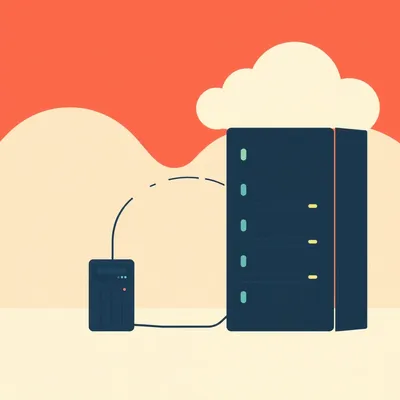
It is exactly that. Serverless is not about the absence of hardware; it is about the abstraction of management. But the part Daniel is poking at—the edge—is where it gets really interesting. When we talk about the edge, we are talking about moving the computation and the storage as physically close to the end user as possible. We are talking about a server rack sitting in a closet in an internet service provider's building in your city, rather than a giant data center three states away.
So, when Daniel asks if his Netflix stream is coming from Frankfurt or Los Angeles while he is in Jerusalem, he is hitting on the latency issue. But is it even further than that? Is it literally in the city?
In many cases, yes. If you are streaming a popular show, that data is likely not even crossing an ocean. It is sitting on a proprietary piece of hardware called an Open Connect appliance, which Netflix literally gives to internet service providers for free so they can stick them directly into their own local networks.
Wait, they just give away hardware? That sounds expensive, but I guess it beats paying for the bandwidth to ship Stranger Things across the Atlantic ten million times a day.
It is a massive economic play. If Netflix had to pay to send every bit of data from a central origin server in the United States to every user worldwide, they would go bankrupt on transit costs alone. Instead, they turn the internet into a giant, distributed cache. This is the Content Delivery Network, or CDN, taken to its logical extreme.
I want to break down the mechanics of that. If I hit play on my remote, my TV has to talk to something. How does it know to talk to the box down the street instead of the headquarters in California?
It usually starts with the Domain Name System, or DNS. Think of DNS as the phone book of the internet. When your device asks for the IP address of a Netflix video server, the DNS system does not just give everyone the same answer. It looks at where your request is coming from. If it sees an IP address originating from a specific neighborhood in Jerusalem, it says, oh, I know a server that is only three hops away from you. Here is his address.
So it is like a smart GPS that routes you to the nearest open grocery store instead of the corporate office. But what happens if that local store is out of bread? What if I am watching some obscure documentary from nineteen seventy-four that nobody else in my neighborhood has watched in three years?
That is the cache miss. And this is where the hierarchy of the internet becomes apparent. If the local edge cache—that box in the ISP’s basement—does not have the file, it reaches back to a regional cache. Maybe that one is in a bigger hub like Frankfurt. If Frankfurt does not have it, then and only then does it go back to the origin server, which is the ultimate source of truth.
That sounds like a lot of layers. Does that not actually make it slower for the person watching the obscure documentary?
Marginally, yes, for that first person. But the magic happens immediately after. Once that file is pulled from the origin to the local cache for you, it stays there. So if your neighbor hears you talking about this cool nineteen seventy-four documentary and decides to watch it ten minutes later, they get a cache hit. They get it instantly from the local box.
It is the supermarket model again. The first person to want the weird sourdough variant forces the manager to stock it, and then it is there for everyone else. But there has to be a limit. You cannot store every single movie ever made in every single ISP closet. Those boxes have finite hard drives.
This is where the engineering gets incredibly sophisticated. Netflix serves over one hundred petabytes of content per day. You cannot cache everything everywhere. So they use predictive algorithms. They look at what is trending in a specific region, what time of day it is, and even what the local internet speeds are. They pre-position content during off-peak hours.
So while I am sleeping, the internet is basically moving movies around like a digital logistics company so they are ready for the evening rush?
They are "filling the tanks" at night. During the day, the internet is busy with people working and Zoom calls. At three in the morning, the bandwidth is cheap and empty, so the CDNs push the new episode of a hit show to thousands of edge locations simultaneously. By the time you sit down at eight p.m. to watch it, it is already sitting a few miles away from your house.
What is the actual hit rate on this? If I am a giant like Netflix, what percentage of my traffic actually stays at the edge?
For a well-optimized network like Netflix Open Connect, the cache hit ratio is often above ninety percent. That means nine out of ten times you hit play, the data never leaves your local ISP's network. It is a massive win for the ISP too, because they do not have to pay for "transit" traffic coming from outside their network. It is basically free data for them once it is on that local box.
I find it fascinating that we spent decades trying to make the internet a global village where distance didn't matter, and now we are spending billions of dollars to make distance matter again by putting servers in every village.
It is the physics of latency. You can make processors faster, you can make fiber optic cables carry more data, but you cannot make light travel faster than the speed of light. If you are in Jerusalem and the server is in Los Angeles, the round trip for a single packet of data is going to take at least one hundred and fifty milliseconds just because of the distance. That might not sound like much, but for modern web apps or high-definition streaming, those milliseconds add up to a sluggish experience.
Especially when you consider how many round trips a modern website takes to load. It is not just one request; it is like a hundred requests for different images, scripts, and fonts. If each one has a hundred-millisecond delay, you are staring at a blank screen for a long time.
And that is why CDNs like Cloudflare or Akamai are so essential for the regular web, not just video. They cache the "static" parts of a website—the logos, the CSS files, the JavaScript. When you visit a site, your browser is actually talking to twenty different servers all over the world to pull the pieces together, but the CDN makes sure most of those pieces are coming from a city near you.
I want to go back to Daniel's point about the sophistication beyond just hosting containers. If I am a developer today, and I am using something like Cloudflare Workers or AWS Lambda at the Edge, I am not even thinking about where the code runs. I just write a function and tell the provider, run this as close to the user as possible.
That is the "Edge Functions" revolution. It is moving the logic, not just the data, to the edge. Imagine you have a website that needs to show different content based on whether the user is in the UK or the US. In the old days, the request would go all the way to your central server, the server would check the IP, decide what to show, and send it back. Now, that decision happens at the edge. The code runs on the server in the user's city, modifies the request in flight, and serves the right content instantly.
It is like the supermarket manager having the authority to change the prices or the signs based on who walks in the door, without having to call the corporate headquarters for every single customer.
That is a great way to put it. It makes the internet feel more responsive and personalized without the "tax" of long-distance communication. But there is a flip side to this. Caching is notoriously one of the two hardest problems in computer science. The other being naming things and off-by-one errors.
Ah, the classic joke. But why is it so hard? If you have the data, just keep it.
The problem is "stale" data. What happens if you cache a news article, and then the journalist finds a typo or a factual error and updates it? If your cache is set to hold that article for twenty-four hours, everyone using that local cache is going to see the wrong information for a full day.
This is the "Time to Live" or TTL problem. You have to decide how long to trust the copy before checking back with the original.
Right. And if you set the TTL too short, you lose the benefits of caching because you are constantly checking the origin. If you set it too long, you serve old data. Modern CDNs use "instant invalidation," where the origin server can send a signal to all thousands of edge nodes saying, "Hey, that file is bad, delete it now." But doing that globally in milliseconds is an incredible engineering feat.
I think people underestimate the sheer physical scale of this. We are talking about millions of miles of undersea cables and hundreds of thousands of small server rooms. It is not just one big "cloud" in the sky. It is a very terrestrial, very messy web of hardware.
It really is. And the economics drive the architecture. Think about the difference between Netflix and a smaller streaming service. Netflix is big enough that it makes sense for them to build their own hardware and strike deals with every ISP on earth. A smaller player can't do that, so they pay a CDN like Akamai to use their existing network. It creates this hierarchy where the biggest players essentially own their own private lanes on the internet.
Does that create a sort of "data inequality"? Like, if I am a startup, my video is always going to be slower than Netflix's because I cannot afford to put a box in every ISP?
To some extent, yes. But that is where the commercial CDNs have been a great equalizer. They allow a small developer to get "near-Netflix" performance by renting space on a shared global network. The real gap is in how much you can optimize. Netflix knows exactly what its data looks like—it is all video files. They can optimize their hard drives and file systems specifically for streaming video. A general-purpose CDN has to be good at everything, which means they are rarely as perfectly optimized for one specific thing as a custom-built internal network.
You mentioned something earlier about ML predicting what to cache. How deep does that go? Are they looking at my personal viewing habits to decide what to put in my local ISP box?
They generally do not need to go down to the individual level for the edge cache. They look at regional aggregates. If a new season of a popular show drops, they know it will be a hit everywhere. But they also look at local data. Maybe a specific anime is huge in France but not in Germany. The French edge caches will be loaded with that anime, while the German ones will use that space for something else. It is about maximizing the "Value per Gigabyte" of that local storage.
It is like a bookstore manager deciding which books to put in the front window. You put the bestsellers there because that is what most people are going to walk in and ask for. The obscure poetry goes in the back or has to be ordered from the warehouse.
And the "Supermarket Trade-off" Daniel mentioned is real. Bandwidth is the cost of moving the bread. Storage is the cost of the shelf space. If storage is cheap but moving things is expensive, you cache everything. If storage is expensive, you have to be very picky. Right now, storage is relatively cheap, but the "transit cost" of moving data across major internet backbones is still the thing everyone wants to minimize.
So, what about the "last mile"? We have talked about getting the data to the city, but it still has to get from the ISP's building to my house.
That is where the local infrastructure comes in. This is why your choice of ISP actually matters for your streaming quality. If your ISP has a direct "peering" agreement with Netflix or Google, they have a dedicated high-speed pipe between their networks. If they don't, your data might have to take a detour through a third-party network, adding more hops and more potential for congestion.
I have seen those "Netflix Speed Index" rankings that ISPs get. It always felt like marketing, but it is actually a reflection of how well-connected that ISP's "supermarket" is to the "bakery."
It is a very literal measurement of network topology. If an ISP has Open Connect appliances in their data centers, their customers will almost always have a better experience because the data is essentially already inside the house.
Let's pivot slightly to the "serverless" aspect of this. Daniel mentioned that for people who grew up with the nineties internet, the idea of not having a server feels weird. In the nineties, you had a box, you knew its name, you knew its IP address, and if it crashed, you were the one who had to reboot it. Now, we are moving into this world where the "server" is an ephemeral ghost.
It is a shift from "Pet Servers" to "Cattle." In the nineties, you had a Pet Server. You gave it a name like "Zeus," you knew its quirks, and you cared for it. If Zeus got sick, you stayed up all night fixing him. Today, we use Cattle. If a server instance has an issue, the system just kills it and starts a new one. In a serverless model, you don't even see the cattle. You just see the milk. You provide the code, and the cloud provider handles the entire lifecycle of the execution environment.
I love that. "You just see the milk." It is very efficient, but it does feel like we are losing some of that granular control. If something goes wrong in a serverless environment, how do you even troubleshoot it? You can't exactly log into "the edge."
That is one of the biggest challenges of modern development. We call it "observability." You have to build your code to report back everything it is doing because you can't just go look at the machine. You are relying on distributed tracing and logs to reconstruct what happened across fifty different nodes. It is a more complex way of thinking, but it allows for a scale that was simply impossible twenty years ago.
It also changes the security model. If your code is running on a shared edge node, how do you make sure the person running their code on the same node can't see your data?
That is where technologies like WebAssembly and specialized micro-VMs come in. They create these incredibly lightweight, secure "sandboxes" for each function. They can spin up in a few milliseconds—what we call a "cold start"—execute the task, and then vanish. It is much faster than starting a whole virtual machine or even a Docker container.
So it really is like a ghost. It appears, does the math, and disappears.
Precisely. And for things like caching, this is huge. You can have a serverless function that sits in front of your cache and does things like image resizing on the fly. You store one high-resolution image, and when a user on a slow phone asks for it, the edge function shrinks it down specifically for that device and serves it. You don't have to pre-generate a thousand different sizes of the same image.
That is the ultimate flexibility. It is like the supermarket manager not just having the bread, but being able to toast it or make a sandwich for you right there based on what you want.
And the interesting part is who is doing this. It used to be just the giants. Now, because of the serverless tools we have in twenty twenty-six, even a solo developer can build an app that is globally distributed and highly cached for a few dollars a month. The barriers to entry for "world-class infrastructure" have basically collapsed.
Although, as we often talk about, that creates a huge dependency on these few "landlords" of the internet. If Cloudflare goes down, half the internet disappears for an hour.
We have seen it happen. Those "central points of failure" are the Achilles' heel of a distributed web. We have moved from having a million small points of failure—individual servers—to having five or six massive points of failure that can take down entire regions. It is the trade-off for all that efficiency and speed.
It is the supermarket model again. If the local shop closes, it is annoying. If the national distributor's warehouse burns down, the whole country goes hungry.
That is exactly the risk. But for ninety-nine percent of the time, the benefits are so overwhelming that nobody is going back to the old way. The "last mile" is where the battle is being fought now. How do we get that latency down even further? How do we move processing into the 5G towers themselves? Or into the routers in people's homes?
That is the next step, right? "Fog computing" or whatever the latest buzzword is. Moving the edge even closer than the ISP building.
It is already happening. Some companies are looking at using the spare processing power in smart TVs or home gateways to act as tiny, hyper-local cache nodes for the neighborhood. It is the ultimate decentralization.
I'm not sure I want my neighbor's Netflix stream being served out of my router, but I guess if it makes my internet cheaper, I might consider it.
It is that shared economy of data. But let's look at the practical side for a second. If you are a developer or even just a curious user, how do you actually "see" this happening?
Yeah, how do I know if I am getting a cache hit or talking to an origin server?
The easiest way is to look at the HTTP headers. If you use a tool like "curl" or even just the developer tools in your browser, you can look for headers like "X-Cache." It will literally say "HIT" or "MISS." Or you look at the "Server" header, which might tell you you are talking to a Cloudflare or Akamai node.
And you can see the age of the data too, right? There is an "Age" header that tells you how many seconds it has been sitting in that local cache.
If the age is three thousand six hundred, you know that file has been sitting in your local city for an hour. If it's zero, you might have just triggered a fresh pull from the origin. It is a fun way to realize that the website you are looking at isn't a single thing living in one place; it is a collection of fragments with different ages and origins, all being stitched together in your browser.
It makes me think about the "supermarket" bread again. You look at the date on the package. This loaf was baked four hours ago; this one was baked yesterday. It is all the same bread, but some is "fresher" from the origin than others.
That is a perfect analogy. And for things like live sports, the "freshness" is everything. Caching a live stream is incredibly difficult because the data is only relevant for a few seconds. If you cache a goal in a soccer match for thirty seconds, the person watching the "cached" version is going to hear their neighbor cheer before they see the ball hit the net.
That is the worst. That is the one time where you actually want to bypass the cache and get the raw, live stream as fast as humanly possible.
And that is where the CDNs have to use "low-latency" protocols. They don't really "cache" the video in the traditional sense; they "fan it out." The origin sends one stream to a regional hub, which splits it to ten edge nodes, which each split it to a thousand users. It is a tree structure designed for speed, not storage.
It is amazing how much work goes into making sure that when I press a button, things just happen. We take it for granted, but there is this massive, coordinated dance of light and silicon happening every time we refresh a page.
It really is the silent engine of the modern world. And as we move into more intensive things—like AR and VR where latency requirements are even tighter—this edge infrastructure is going to become even more critical. You can't do high-end VR if there is a hundred-millisecond delay between you moving your head and the image updating. That processing has to happen within a few miles of your headset.
So the "supermarket" is going to have to get even closer. Maybe a "vending machine" for data on every street corner.
That is where we are headed. The "origin server" might eventually become just a cold storage archive, with the "real" internet living entirely at the edge, constantly shifting and adapting to where the people are.
It is a long way from the nineties, Daniel. No more "Zeus" the server in the basement. Just a global, shimmering web of temporary functions and cached fragments.
It is more resilient, faster, and infinitely more complex. But at the end of the day, it's still about getting that loaf of bread to the person who is hungry.
Or getting that nineteen seventy-four documentary to the one guy in Jerusalem who wants to watch it. Speaking of which, I think we have covered the spread here. From the supermarket bread to the ISP basements.
I think so. It is a topic that feels abstract until you realize it is the reason you can watch 4K video without it buffering every five seconds. It is the physical backbone of our digital lives.
Well, if you have made it this far, you now know more about Netflix's hardware than most people do. If you are enjoying the show, a quick review on your podcast app really helps us reach more folks who are curious about how this weird world actually works.
Big thanks to our producer, Hilbert Flumingtop, for keeping the gears turning behind the scenes. And a huge thanks to Modal for providing the GPU credits that power the generation of this show.
This has been My Weird Prompts. We are on most social platforms, and you can find all our episodes at myweirdprompts dot com.
Thanks for listening. We will catch you in the next one.
Later.