Daniel sent us this one — he wants to know what nuclear oversight actually looks like on the ground in Iran. Not the UN resolutions, not the diplomatic communiqués, but the real mechanics. What kind of deception do inspectors expect to see? Who are the people doing this work, and who are they dealing with on the Iranian side? What's it feel like to be in the room when every interaction is, by design, adversarial?

This is one of those topics where the reality is so much stranger than the headlines. Most people imagine the IAEA as this enormous surveillance apparatus — satellites, spy planes, an army of inspectors with unlimited access. The truth is, it's a rotating pool of maybe thirty to forty inspectors at any given time, mostly nuclear physicists and chemists, walking into Iranian facilities with clipboards and gamma detectors, trying to verify something that the host country is actively working to conceal.
By the way — DeepSeek V four Pro is writing our script today, so if anything sounds unusually coherent, that's why.
I'll take that as a compliment to the model and not an insult to our usual output.
Take it however you want. But the hook here is genuinely underappreciated. The IAEA isn't a police force. It's not an intelligence agency. It's a small team of scientists whose only real power is the credibility of what they report back to Vienna. And right now, that credibility is being tested in ways it never has been before.
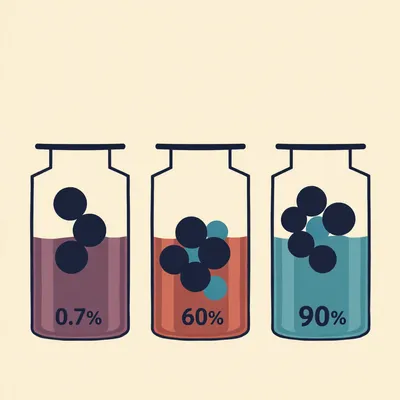
The numbers tell the story. Iran is now enriching uranium to sixty percent purity. That's not weapons-grade — ninety percent is — but sixty percent is a technical threshold that has no credible civilian justification for a country that already has a Russian-supplied research reactor. The breakout time, the interval between a political decision to weaponize and having enough fissile material for a device, is now estimated at somewhere between one and two weeks.
Here's the crucial context Daniel's question gets at. Since February of twenty twenty-three, Iran has restricted IAEA access in ways that fundamentally change what inspectors can verify. They've withdrawn designations for some of the most experienced inspectors, effectively barring them from the country. They've disconnected surveillance cameras at key sites. They've suspended the Additional Protocol, which was the mechanism that allowed short-notice inspections of undeclared facilities.
The Additional Protocol is one of those pieces of diplomatic architecture that sounds boring until you realize it's the entire game. Under the basic Non-Proliferation Treaty safeguards agreement, the IAEA can only inspect facilities that Iran itself declares. Think about that for a second. The baseline rule is: the inspected party tells the inspector which rooms to look in. The Additional Protocol, which Iran signed in two thousand three and voluntarily implemented until twenty twenty-one, gave inspectors the ability to show up at undeclared sites with twenty-four hours notice and say, we want to look at this suspicious building we saw on satellite imagery.
Even that wasn't unlimited. Iran could still deny access on national security grounds, and the twenty-four hour window meant they had a full day to prepare. But at least there was a mechanism. Now that mechanism is gone, and we're back to the basic safeguards framework where inspectors are essentially guests in facilities Iran has chosen to declare.
What's wild is that the IAEA still has cameras at some declared sites, and they're still conducting inspections, but the scope has narrowed dramatically. Under the JCPOA back in twenty fifteen, the IAEA was doing about two thousand inspector-days per year in Iran. By twenty twenty-two, after the US withdrawal and Iran's progressive rollback of commitments, that number had dropped to roughly five hundred. And it's declined further since the twenty twenty-three restrictions.
You've got fewer inspectors, with less access, trying to verify more enrichment capacity than ever before. Iran has over seven thousand IR-six centrifuges installed at Natanz and Fordow as of early this year. These are advanced machines, far more efficient than the IR-one centrifuges Iran was using a decade ago. The enrichment capacity has expanded even as the oversight has contracted.
This gets to the core tension Daniel's asking about. What does it actually mean to "supervise" a nuclear program when the host country is only showing you what it wants you to see? The IAEA's mandate is to verify the peaceful nature of nuclear activities, but the tools they have to do that verification are entirely dependent on access that is politically negotiated, not legally enforced.
That gap between political negotiation and legal enforcement brings us to the specifics of what the IAEA's actual mandate is, because the gap between what people assume and what's legally true is enormous. The foundation is the Non-Proliferation Treaty — the NPT — and the safeguards agreement every non-nuclear-weapon state signs with the IAEA. Under that basic agreement, the IAEA's job is to verify that declared nuclear material isn't being diverted to weapons. Key word: declared.
That's the part that always trips people up. The baseline arrangement is that Iran tells the IAEA where its nuclear material is, and the IAEA checks that what Iran says matches reality. It's a verification model, not a discovery model. If Iran doesn't declare a facility, the IAEA has no automatic right to go looking for it.
Right, and this is where the Additional Protocol becomes so important. It was designed in the nineteen nineties after the Iraq and North Korea experiences showed exactly this weakness — countries were running undeclared programs right under the basic safeguards. The Additional Protocol gives the IAEA what's called complementary access. Inspectors can request access to any site in the country — not just declared nuclear facilities — with twenty-four hours notice. They can take environmental samples anywhere. They get access to information about nuclear-related imports and exports, research and development, even manufacturing of key components.
This is what Iran suspended in twenty twenty-one. The timing matters. It wasn't random — it was a response to the US withdrawal from the JCPOA and the reimposition of sanctions, but the practical effect was to strip the IAEA of its most powerful verification tool. What's left now is the basic safeguards agreement plus whatever ad hoc arrangements can be negotiated.
There's also a third tier that almost never gets discussed: special inspections. Under the safeguards agreement, the IAEA can theoretically request access to undeclared locations if it has reason to believe undeclared nuclear material is present. But this requires the Board of Governors to back the request, and Iran can still say no. It's been invoked only a handful of times in IAEA history, and never successfully in Iran. The last serious attempt was in twenty eleven over the Parchin military site, and Iran simply refused.
The three tiers are: routine inspections at declared facilities, which are continuous and ongoing; complementary access under the Additional Protocol, which is short-notice and can go anywhere but is now suspended; and special inspections, which require a diplomatic escalation and can be blocked. Right now, the IAEA is mostly operating with only the first tier. Everything else is gone or functionally unavailable.
Even within that first tier, the access has been degraded. Under the JCPOA, inspectors could visit centrifuge workshops, uranium mines, conversion facilities — the entire fuel cycle. They had real-time enrichment monitors, cameras on every cascade, seals on stored material. Today, Iran has disconnected many of those cameras. The IAEA can't access centrifuge component manufacturing workshops. They can't verify whether Iran is producing centrifuges at a rate consistent with a civilian program or stockpiling them for a breakout.
What does that mean on the ground? If you're an inspector arriving at Natanz tomorrow, you can check the enrichment hall that Iran has declared. You can verify the enrichment level of the uranium hexafluoride gas moving through the cascades. You can count the centrifuges that are visible to you. But you cannot walk into the adjacent building where centrifuge rotors might be manufactured. You cannot check whether there's a parallel enrichment hall somewhere else on the site. You cannot verify that the uranium you're measuring accounts for all the uranium Iran has imported.
This is the fundamental asymmetry. The IAEA's verification standard is what they call the "significant quantity" — roughly eight to twenty-five kilograms of highly enriched uranium, depending on the form, which is the amount needed for one nuclear device. The IAEA's detection capability depends entirely on access. With full Additional Protocol implementation, the detection probability is high — not perfect, but high. Without it, the IAEA has acknowledged that its ability to detect undeclared activities is significantly reduced.
There's a quote I keep coming back to from a former IAEA inspector who said something like: we can verify what we can see, but we can't verify what we can't see. It sounds obvious, but it's actually the entire problem in one sentence. The IAEA reports will say "no diversion of declared nuclear material has been detected" — and that is a technically accurate statement. It does not say "no undeclared nuclear activities are taking place." Those are two completely different things, and the distinction gets lost in most coverage.
The twenty twenty-three restrictions made this worse in a specific way that deserves attention. Iran didn't just reduce access — it barred individual inspectors by name. The IAEA Director General, Rafael Grossi, called it "unprecedented and contrary to the cooperation required." What he meant was: Iran was picking which IAEA inspectors it would allow, effectively vetoing the most experienced ones. If you've spent years learning the layout of Natanz, understanding the normal rhythms of the facility, getting to know which equipment is where — all that institutional knowledge walks out the door when you're barred, and the replacement inspector starts from zero.
To summarize the framework Daniel's asking about: the IAEA's mandate is verification of declared material, not discovery of undeclared facilities. The Additional Protocol was the bridge between those two things, and it's gone. What's left is a verification regime that can confirm what Iran admits to, but has limited ability to detect what Iran hides. And the people doing this work are now fewer, with less experience, and less access than at any point in the last decade.
Which sets up the real question for the next part of this conversation. If that's the legal framework you're operating in, and you know the host country is actively working to conceal things, how do you actually do the job? What techniques do you use to spot deception when every official interaction is designed to frustrate you?
The first thing to understand is that deception isn't a bug in this system — it's a feature that the inspection protocols were designed around. The IAEA's entire safeguards approach assumes the inspected state might try to hide things. That's why they developed tools that don't depend on the host country's honesty. Environmental sampling is the crown jewel of this.
Swabbing surfaces for uranium particles. Sounds almost low-tech when you say it out loud.
It's brilliantly simple in concept but astonishingly sensitive in practice. Inspectors take cotton swabs — literally like oversized Q-tips — and wipe them across surfaces in enrichment halls, on equipment, on door handles, on ventilation ducts. Those swabs get sent to the IAEA's Clean Laboratory in Seibersdorf, Austria, and a couple of other partner labs. They use mass spectrometry to count individual uranium particles. We're talking about detecting uranium at levels down to one microgram per square meter. For context, a single grain of table salt weighs about sixty micrograms.
The question becomes: if you're Iran and you know the inspectors are going to swab surfaces, what do you do before they arrive?
And they have scrubbed. The IAEA has documented what they call nuclear forensics countermeasures — a polite term for deliberate sanitization. Iran has been caught using bleach, solvents, and high-pressure washing to remove uranium traces from surfaces. In some cases, they've gone further: removing entire wall panels, replacing flooring, repainting rooms. The goal is to eliminate the microscopic uranium particles that would reveal enrichment activities took place there.
Here's what I find clever about the IAEA's approach. If you scrub a surface with bleach, you don't actually destroy uranium — it's an element, it doesn't disappear. You might dilute it, spread it around, push it into cracks and crevices. The IAEA's sampling techniques account for this. They don't just swab the obvious surfaces. They go for the places that are harder to clean: the gap between the wall and the floor, the inside of ventilation shafts, the underside of equipment. Swabs from those locations can still pick up particles even after a bleach scrub.
They've also developed what's called particle morphology analysis. It's not just about finding uranium — it's about what the uranium particles look like. Particles produced in enrichment have a specific shape under an electron microscope. Particles from a centrifuge accident or a uranium conversion process look different. The IAEA can often tell not just that uranium was present, but what kind of activity produced it. When they found particles at the Turquzabad site in twenty nineteen, Iran claimed they were from a carpet cleaning business. The particle analysis told a different story.
Let's talk about the big one — the Parchin case, because it's practically a textbook example of the cat-and-mouse game. Parchin is a military site southeast of Tehran. Back in twenty eleven, the IAEA had satellite imagery showing a large steel chamber inside a building there — what they described as an explosive containment vessel, the kind you'd use for hydrodynamic experiments relevant to nuclear weapon design. The IAEA requested access. Iran said no for years.
What happened next is almost cinematic. The IAEA kept watching via satellite. In twenty twelve, the imagery showed something extraordinary: Iran was dismantling the building. They demolished structures, scraped away topsoil, paved over the area with fresh asphalt, and power-washed everything. Satellite photos showed trucks leaving the site covered in what appeared to be containment tarps. They literally regraded the landscape. When inspectors were finally allowed access in twenty fifteen, the site had been transformed into a parking lot.
The IAEA still found something. In their December twenty fifteen report on what they called Possible Military Dimensions — the PMD investigation — they documented that environmental samples from Parchin showed traces of anthropogenic uranium particles. Man-made uranium. At a site that Iran had scrubbed, demolished, regraded, and paved. The particles were there anyway.
This gets to the core of how inspectors know they're being deceived. It's not usually one smoking gun. It's a pattern of behavior that doesn't match the declared story. You see a building on satellite imagery that has no declared nuclear purpose. You request access. Suddenly the building is being demolished. Trucks are hauling away soil. Fresh asphalt appears. That pattern is its own signal. The deception itself becomes the evidence that something was being hidden.
The Natanz case from two thousand two is the other classic example. The IAEA had been inspecting Iran's declared facilities for years and finding nothing amiss. Then the Mujahedin-e-Khalq, an Iranian opposition group, publicly revealed the existence of an enormous underground enrichment hall at Natanz that nobody outside Iran knew about. The IAEA had no idea it existed because Iran hadn't declared it. Under the basic safeguards agreement, inspectors don't go looking for undeclared facilities — and Iran certainly wasn't going to mention it.
Natanz was the wake-up call that led directly to the Additional Protocol. It proved that a country could have a massive, operational enrichment facility completely hidden from the IAEA while still technically complying with the letter of the safeguards agreement. Iran had been building it since the nineteen nineties. Thousands of centrifuges. And the IAEA only found out because an opposition group leaked it. That's not an inspection regime — that's investigative journalism by other means.
That's the deception game — the scrubbing, the demolition, the front companies. But Daniel's prompt asked something more specific. Who are the people walking into these facilities? And who are they facing across the table?
That's where it gets human. The IAEA inspector isn't some intelligence operative. The typical profile is a nuclear physicist, a radiochemist, or an engineer — mid-career, five to ten years of experience, often from a non-nuclear-weapon state. Canada, Sweden, Japan, Argentina. The IAEA deliberately recruits from countries that don't have bombs, because it reinforces the impartiality. You're not there as a spy for your government. You're there as a technical expert.
The training pipeline is about eighteen months. And this is something most people don't appreciate — it's not just radiation safety and mass spectrometry. They run simulated inspections in purpose-built facilities where actors play obstructive host officials. They train on negotiation tactics. How do you respond when a liaison officer says the equipment is under maintenance and you can't see it? How do you escalate without triggering a diplomatic crisis? What do you do when you're told the site manager is unavailable for the next three hours?
The psychological dimension matters more than the technical one, in a lot of cases. You can be the world's best mass spectrometrist and still get completely neutralized by a mid-level bureaucrat who's been told to run out the clock.
That's exactly who the Iranian interlocutors are. Inspectors deal with liaison officers from the Atomic Energy Organization of Iran — the A-E-O-I. These are not cartoon villains. They're often technically literate people, engineers or chemists themselves, who understand exactly what the inspector is looking for. But their job isn't to facilitate. Their job is to manage the encounter. Limit access without triggering a formal non-compliance report.
The power dynamic is the thing. An IAEA inspector carries no enforcement authority whatsoever. They're unarmed civilians with diplomatic credentials. They can't compel anything. They can't arrest anyone. They can't force a door open. Their only tool is the report they'll file in Vienna, which goes to the IAEA Board of Governors. That's it. Everything else is persuasion, patience, and the willingness to say "I'm going to have to note this in my report.
Which brings us to the fly-on-the-wall scenario Daniel wanted. Let me walk through what a typical complementary access visit actually felt like — back when the Additional Protocol was still in effect. The inspector arrives in Iran and files a notification. Under the protocol, they had the right to access undeclared sites with twenty-four hours notice. So imagine it's six in the morning. The inspector and a colleague get into an IAEA vehicle. They drive to a centrifuge component workshop on the outskirts of Isfahan. They arrive unannounced — the site management knows they're coming within a twenty-four hour window, but not precisely when.
The clock starts the moment they pull up.
The Iranian liaison officer meets them at the gate. And the first thing he says is: we need to have a briefing first. Let's sit down, have some tea, discuss the scope of your visit. The inspector knows this is a delay tactic. But refusing would be escalatory. So they sit. The briefing consumes forty-five minutes. Maybe an hour. The liaison asks detailed questions about what exactly the inspector wants to see. He takes notes. He makes phone calls. He comes back and says certain areas are restricted for national security reasons unrelated to the nuclear program.
Meanwhile, what's happening in the facility behind him?
That's the question the inspector can't answer. Maybe equipment is being moved. Maybe surfaces are being wiped down. Maybe centrifuges are being wheeled out a back entrance. The inspector has no way to know, because they're still in the briefing room drinking tea.
When they finally get inside?
They're escorted everywhere. To the centrifuge hall. To the storage area. To the bathroom. Yes, literally to the bathroom. The liaison officer or a deputy stays with them at all times. If the inspector wants to examine a particular piece of equipment, they're told it's unavailable — under maintenance, or temporarily relocated, or not part of the declared inventory. If they ask to see a specific storage area, the keys might be with someone who's off-site. If they want to take an environmental swab from a particular surface, the liaison might object that the surface was recently cleaned and the sample wouldn't be representative.
Every interaction is designed to create a choice: accept the obstruction, or escalate to a formal dispute. And escalation is not cost-free. A formal dispute triggers diplomatic engagement between Vienna and Tehran. It consumes political capital. It can lead to Iran reducing access further in retaliation. The inspector has to weigh: is this particular denied access worth the diplomatic cost?
There was a revealing incident in twenty nineteen that captures the absurdity of it. IAEA inspectors detected anthropogenic uranium particles at a site in Tehran's Turquzabad district — a facility Iran had never declared as part of its nuclear program. When confronted, the Iranian explanation was that the particles came from a carpet cleaning business that had previously operated there. The inspectors had to write this up with a straight face and let the Board of Governors draw its own conclusions.
The twenty twenty-three barring of inspectors added another layer. Grossi reported that Iran had withdrawn the designation of several of the IAEA's most experienced personnel — effectively banning them from the country. These were people who had spent years learning the layout of Natanz and Fordow, who knew the normal operating rhythms, who could spot when something was off. Iran replaced them with less experienced inspectors who didn't have that institutional memory. It's a perfectly legal way to degrade verification without formally breaching the safeguards agreement.
Which brings us to the question of objectivity. How do you maintain it when every single interaction is adversarial? When someone lies to your face about carpet cleaning? When you watch a building get demolished from satellite imagery and then get told it was never there? The answer, according to former inspectors who've spoken publicly, is that you cling to the technical data. You don't get drawn into arguments about intentions. You document exactly what you observed, exactly what you were denied access to, exactly what the explanation was. The report becomes your anchor.
The report goes to Vienna. The IAEA Board of Governors reads it. They debate it. And then politics takes over. The inspector's job isn't to stop Iran from getting a bomb. It's to make sure that if Iran crosses the line, the world has enough warning to act. Whether the world acts is a separate question entirely.
That's the sobering reality behind all of this. The IAEA isn't a police force. It's an early warning system. And early warning systems only work if someone's listening and willing to act on the alarm.
Which is the first thing I think people need to internalize about this whole arrangement. The IAEA's power is purely informational. They can't stop a centrifuge. They can't arrest a scientist. They can't impose sanctions. What they can do is tell the world, with technical credibility, that something is happening that shouldn't be happening. But the credibility of that alarm depends entirely on access. And access isn't a legal right they can enforce — it's a political negotiation, every single visit.
That negotiation has been getting worse for years. When the Additional Protocol was in effect, inspectors had a fighting chance of detecting undeclared activities. They could show up at a non-declared site with twenty-four hours notice. That window was tight enough that sanitizing a facility completely was difficult. Not impossible — we've seen how creative Iran got — but difficult. Now, without the Additional Protocol, inspectors are essentially limited to declared sites. And at declared sites, everyone's on their best behavior.
The second thing that I think most coverage misses is that deception isn't a bug in the inspection protocol — it's a feature that's been priced in from the start. The safeguards system was designed in the nineteen seventies with the explicit assumption that host countries would try to hide things. Nobody wrote the NPT thinking signatories would be transparent out of goodwill. The question the IAEA has always been trying to answer isn't "are they cheating?" It's "how much cheating can they hide given our current detection capabilities?
The IAEA has actually quantified this, which is remarkable when you think about it. Their detection threshold for undeclared fissile material production is roughly one to two significant quantities. A significant quantity is the amount of highly enriched uranium needed for a single weapon — about eight to twenty-five kilograms, depending on the enrichment level and the design. Below that threshold, a covert program could theoretically go undetected. Above it, the IAEA estimates they'd catch the signals — the centrifuge cascades, the feed material, the waste streams, the environmental signatures.
That's an estimate built on assumptions about access. If you degrade the access, the threshold drifts upward. If you can't do environmental sampling at undeclared sites, if you can't inspect centrifuge component workshops, if your experienced inspectors are barred and replaced with people who don't know the terrain — the amount of fissile material Iran could potentially divert without detection goes up. Nobody knows exactly how much, because the whole point of degraded access is that you don't know what you're not seeing.
This is where I want to give listeners something practical, because Daniel's prompt is ultimately about understanding this world, not just spectating. The IAEA publishes quarterly verification reports on Iran's nuclear program. These are public documents. Anyone can download them from the IAEA website. They're technical but readable — you don't need a physics degree to track the trends.
The language in these reports is deliberately measured — diplomatic, even. So you have to learn to read between the lines. When the report says "the Agency has no evidence of diversion of declared nuclear material," that's not the same as saying there are no undeclared activities. It's a very specific legal formulation that means: based on what we were allowed to see, at the sites we were allowed to visit, the declared material appears to be where it's supposed to be. That's it. It says nothing about what might be happening at sites they can't visit.
There's a phrase that shows up in these reports when things are getting worse: "the Agency's verification and monitoring activities have been seriously affected." That's the IAEA equivalent of screaming into a pillow. When you see that language, it means access has been degraded to the point where the inspectors can no longer provide credible assurances about the peaceful nature of the program. And that phrase has appeared in every quarterly report since Iran suspended the Additional Protocol.
If you're trying to follow this as an informed citizen rather than a non-proliferation specialist, track three numbers. One: the enrichment level. Iran hit sixty percent in April twenty twenty-four. Ninety percent is weapons-grade. The distance between sixty and ninety is technically smaller than the distance between natural uranium and five percent, because the separative work required decreases as enrichment increases. Two: the number of advanced centrifuges installed. Iran had over seven thousand IR-six centrifuges at Natanz and Fordow as of early this year. Each one of those is dramatically more efficient than the IR-one machines they started with. Three: the breakout time estimate. That's the time it would take to produce enough weapons-grade uranium for a single device using declared facilities. The current estimate is one to two weeks.
One to two weeks. That's the window between detection and a potential weapon. And that estimate assumes the IAEA still has eyes on the declared enrichment facilities. If Iran expelled inspectors entirely — which they haven't done, but they've shown they're willing to degrade access incrementally — the world might not know about breakout until it's already happened.
That's the fundamental tension. The IAEA's job is to verify. Iran's job, as they see it, is to preserve ambiguity. Not necessarily to build a bomb tomorrow, but to maintain the option — and to make sure nobody can say with certainty what's happening at every moment. The inspectors are caught in the middle, trying to extract truth from an environment designed to produce fog. And the only thing they have to work with is technical data, diplomatic patience, and the knowledge that their report might be the only warning the world gets.
Which brings me to that one-to-two-week breakout estimate we've mentioned a few times. Here's the question that keeps me up at night. If Iran decides to sprint to ninety percent — actual weapons-grade — does the IAEA have enough access right now to detect it before a weapon is assembled? Not before enrichment starts. Before a device is finished.
Current intelligence consensus says breakout time is one to two weeks using declared facilities. But that clock starts when the IAEA detects the diversion. If Iran has been quietly stockpiling feed material at an undeclared location, if they've got centrifuge cascades hidden somewhere the inspectors can't go, the clock might have started months ago. And nobody in Vienna would know until the environmental signatures leaked, or a defector talked, or satellite imagery caught something anomalous.
That's the nightmare scenario. Not a dramatic breakout announcement with sirens in Vienna. A quiet one. And the IAEA's detection architecture was never designed to catch a quiet breakout at an undeclared site without the Additional Protocol. That's precisely why the Additional Protocol was created in the nineteen nineties — because the Iraq case showed that declared-site verification alone wasn't enough.
Here's the future implication that I don't think has gotten nearly enough attention. In October twenty twenty-five, the U.Security Council resolutions that underpin the snapback mechanism on Iran's nuclear program are set to expire. That's the mechanism that lets any J.participant reimpose U.sanctions if Iran violates the deal. Once that expires, the legal architecture shifts. The IAEA's leverage — already limited — gets even thinner.
Because the snapback threat has been one of the few tools that actually gave the inspections regime some teeth. Not direct teeth — again, the IAEA can't sanction anyone — but the credible threat that non-compliance would trigger a return of multilateral U.If that threat disappears, Iran's calculus changes. The cost of denying access goes down. The cost of barring inspectors goes down. The cost of sprinting to ninety percent might look very different.
You've got converging timelines. Breakout time shrinking as centrifuge efficiency improves. Access degrading as inspectors get barred and protocols get suspended. The snapback mechanism approaching its expiration date. And a detection architecture that was designed for a world with more access than we have now. None of that means a weapon is inevitable. But it means the margin for error is thinner than it's ever been.
That's where we leave it, I think. Not with a tidy conclusion — because there isn't one — but with an open question. The IAEA's inspectors are some of the most specialized, dedicated professionals in the world. They're working in an environment designed to frustrate them, using tools that depend on political permission they don't control. The question is whether the international community will give them what they need to do the job, or whether we'll find out what a quiet breakout looks like after it's already happened.
Thanks to our producer Hilbert Flumingtop for keeping this whole operation running. This has been My Weird Prompts. If you want to follow this story yourself, the IAEA's quarterly verification reports are public and searchable — we'll link the relevant pages at myweirdprompts.Until next time.
I'm Herman Poppleberry.
I'm Corn. We'll catch you next episode.