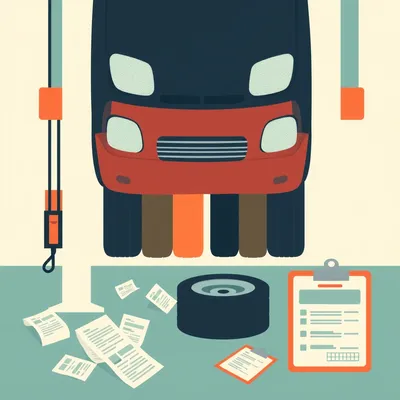
Daniel sent us this one, and I think every person who's ever tried to buy anything used in Israel is going to feel it in their bones. You walk into a restaurant, you see a stack of storage dollies gathering dust in the corner, and you think — I could actually use one of those. But the owner never listed it anywhere. It's just... And meanwhile you go on Yad2 and the same dolly, beat to pieces after five years of kitchen abuse, is listed at ninety-five percent of what it costs brand new. So Daniel's question is basically: what is this invisible second-hand market, why does it exist, and how do you actually tap into it if you've got the nerve to walk in and ask?

This is one of those topics where the economics are genuinely fascinating once you pull it apart. You've got two parallel markets operating completely differently. The visible one — Yad2, Facebook Marketplace, the classifieds — it's broken in a very specific way. And then you've got this whole invisible economy of stuff that changes hands without a single listing, without a photo, without a price tag. The tension between them is where all the opportunity lives.
The numbers are kind of absurd when you lay them out. New equipment in Israel is already inflated by thirty to fifty percent just from import taxes and shipping. So a pallet jack that costs four hundred dollars in the States lands here at six hundred plus. Then you look at used ones on Yad2 and they're asking five hundred and fifty. For something that's been hauling flour sacks around a bakery for four years. You just say, what's the point?
Right, and that's not an exaggeration. Daniel mentioned the ninety-five percent figure, and honestly that tracks with what you see. Durable equipment — dollies, pallet jacks, euroboxes, shelving — the used listings cluster right up against retail. It's not a market, it's a museum of optimistic pricing.
The museum of optimistic pricing. I'd visit that museum. Admission is free but everything in the gift shop is inexplicably full retail.
The gift shop sells used gift shop items at ninety-three percent of new.
What's actually going on here? Why is the visible market so broken, and what's the alternative?
We're talking about transactions that happen without any public listing at all. No Yad2 post, no Facebook ad, no sign in a window. It's word of mouth, it's walking in and asking, it's noticing surplus in a business and making an offer on the spot. The item was never "for sale" in any formal sense — it just changes hands because someone asked.
The reason this market exists at all is that businesses accumulate stuff. A restaurant opens, buys eight storage dollies, five years later they really only use five. The other three are in a corner somewhere. The owner's not thinking about them as inventory to sell — they're just... They have almost zero marginal utility. But the friction of photographing them, writing a listing, fielding fifteen phone calls from people who want to haggle in shekels over something listed for two hundred shekels — it's not worth the hassle.
That's the transaction cost problem in a nutshell. Listing costs — the time, the effort, the exposure to tire-kickers — exceed the expected gain for the seller. So the item sits unused. It's not that the owner wouldn't sell it. It's that the mechanism for selling it is too annoying to bother with for a single item.
This is where the visible market's dysfunction actually creates the invisible market's opportunity. If Yad2 were functioning properly — if used goods were priced at, say, forty to sixty percent of new — then walking into a restaurant and offering to buy a dolly would be less compelling. But when the visible market is pricing used goods like they're collector's items, the gap between "what you'd pay on Yad2" and "what a business owner would happily accept in cash right now" becomes enormous.
Daniel's experience with the industrial moving equipment is a perfect case study. He needed pallet jacks, dollies, euroboxes. New is punishingly expensive because of those import markups. Used on Yad2 is barely cheaper. So the rational move isn't to negotiate harder on Yad2 — it's to look where no one is looking.
That's the thing — most people don't even consider it. The assumption is: if it's not listed, it's not for sale. But that assumption is wrong, and it's wrong in a way that creates a real advantage for anyone willing to question it.
Let's dig into the economics of why sellers on Yad2 price the way they do, and why businesses leave money on the table. Because the psychology here is as important as the numbers.
The Yad2 seller — let's say someone who bought a pallet jack three years ago for fourteen hundred shekels. They paid that price, and in their head, that's what the item is "worth." They're anchoring to their original cost. And in Israel, that original cost already included thirty to fifty percent in import taxes and shipping. So their anchor point is inflated to begin with.
Anchoring bias is powerful everywhere, but Israel's import structure supercharges it. The seller thinks: I paid fourteen hundred. It's only three years old. It still works fine. Twelve hundred is a fair price. They're not thinking about what a buyer would actually pay for a three-year-old pallet jack with unknown maintenance history. They're thinking about what they paid.
There's an emotional component too. People remember the day they bought it, the business they were building, the investment they made. Selling it for five hundred shekels feels like admitting it was never worth what they paid. It's the sunk cost fallacy with a side of pride.
The sunk cost fallacy amplified by Israel's import taxes is basically the Yad2 business model. And here's the thing — buyers sometimes pay these prices. Not because they're happy about it, but because they lack alternatives, or they need the item urgently, or they assume negotiation will bring it down to something reasonable. But negotiation on Yad2 typically yields ten, maybe fifteen percent off. So that twelve-hundred-shekel pallet jack becomes a thousand shekels. Still high relative to new, still not a great deal.
Meanwhile, the warehouse down the street has three pallet jacks. Two are in constant use. The third has been sitting in a corner since they reorganized their layout in twenty twenty-three. If you walked in and offered five hundred shekels cash, they'd probably say yes in ten seconds. But they're never going to list it.
That's the key insight about the invisible market. It's not a supply problem — there's plenty of surplus equipment out there. It's a transaction cost mismatch. The seller's cost of listing exceeds the expected gain, so the item stays invisible. Your job, as a buyer, is to absorb that transaction cost yourself — do the legwork, make the approach, handle the awkwardness — in exchange for a price that actually reflects the item's utility rather than the seller's sunk costs.
There's also a cultural angle here that works in your favor, and I think this is worth naming because it's specific to Israel in a way that doesn't get talked about much. Israeli communication style — what's often called "dugri" speech — is direct to the point of bluntness. In a lot of Western cultures, walking into a business and asking to buy their equipment would be seen as weird, pushy, maybe even rude. In Israel, a direct, respectful offer is often just... The owner says yes or no and everyone moves on.
There's actual cross-cultural business research on this. Israeli negotiation culture tends to be low-context, direct, and relatively comfortable with what outsiders might perceive as confrontation. That makes cold approaches more socially viable here than in, say, the UK or Japan, where indirect communication norms would make the same ask feel much more transgressive.
You've got this perfect storm. Import taxes inflate new prices. Anchoring bias inflates used listings. Transaction costs keep surplus equipment invisible. And the local culture actually makes it easier to walk in and ask than it would be almost anywhere else. The invisible market isn't just an interesting quirk — it's practically an invitation.
It extends beyond personal use. Once you start seeing these opportunities, you realize there's an arbitrage layer. If one restaurant will sell you a dolly for a hundred shekels and another restaurant down the street would happily pay two hundred for the same dolly — which is still way below Yad2 prices — you've just made a hundred shekels for fifteen minutes of effort. Some people build genuine side hustles this way.
The eurobox arbitrageur. That's a job title that doesn't exist but absolutely should.
Daniel's prompt mentioned having "the gall" to do this, and I think that's the right word. This isn't complicated. It doesn't require special knowledge or connections. It requires being willing to walk in, be direct, and risk a no. That's the whole barrier to entry.
A no costs you nothing. The owner says "sorry, we need those" and you say "no problem, thanks anyway" and you leave. You've lost thirty seconds. The upside is you get a piece of equipment for a third of what you'd pay on Yad2. The expected value of asking is massively positive.
We know the invisible market exists and we know why it exists. The real question is: how do you actually find and close these deals? Because there's a skill to it — knowing where to look, when to ask, how to phrase the offer.
The first thing to understand is where surplus actually accumulates. Restaurants are the classic example — they buy equipment in batches, they reconfigure their kitchens, they close for renovations and suddenly have more dollies and shelving units than they know what to do with. But it's also small warehouses, construction sites, moving companies. Any business that handles physical goods tends to accumulate a shadow inventory over time.
The rhythm of it matters. A restaurant replaces equipment every three to five years, but they almost never throw the old stuff out. It goes into a storage room, or gets shoved into a corner "just in case." That just-in-case thinking is the invisible market's best friend. The owner's not actively trying to sell — they're just keeping options open. Which means they're not anchored to a price the way a Yad2 seller is.
That's a crucial distinction. The Yad2 seller has already made the mental switch from "this is my equipment" to "this is an asset I'm selling." They've done the emotional accounting. The restaurant owner with surplus dollies hasn't made that switch at all. They're not thinking about the dolly as a financial asset. It's just... So when someone offers them cash for it, the frame isn't "am I getting market value" — it's "someone wants to give me money for something I forgot I owned.
Which is why the prices in the invisible market are so much lower. You're not negotiating against a listed price. You're creating a transaction that didn't exist before you walked in. The seller's reference point isn't "what did I pay for this" — it's "what's the alternative," and the alternative is the dolly continuing to gather dust.
There's a weird paradox here. The visible market is overpriced because sellers are anchoring to what they paid. The invisible market is underpriced because sellers aren't anchoring to anything at all. You've got the same item, same city, same economy — and the price can vary by a factor of three or four depending entirely on whether anyone bothered to list it.
Which brings us to the practical question Daniel's really asking. How do you actually do this? It's not enough to know the invisible market exists — you need a framework for spotting opportunities and executing on them.
The invisible market has its own weird inefficiencies. It's not some frictionless utopia. Prices are all over the place because there's no price discovery mechanism. One restaurant sells you a dolly for a hundred shekels. The next one, same neighborhood, same condition, wants three hundred. Neither of them has any idea what the other is charging, and neither do you until you ask.
That's the paradox. The invisible market gives you better prices than Yad2, but it's wildly inconsistent. And inconsistency is opportunity. If you know that dollies trade between a hundred and three hundred shekels in the real world, and Yad2 listings sit at five hundred plus, there's an arbitrage gap. Someone willing to do the legwork can buy from the low end of the invisible market and sell at a markup that still dramatically undercuts the visible one.
The eurobox hustler. Buys surplus boxes from loading docks at fifteen shekels a piece, sells them to moving families at thirty shekels. The family's thrilled because Yad2 has them at sixty. The warehouse is thrilled because someone just handed them cash for boxes they were tripping over. Everyone wins except the Yad2 seller who's been sitting on a listing since February.
This isn't hypothetical. Daniel mentioned euroboxes specifically, and it's a perfect example. Moving companies and warehouses accumulate hundreds of these things. They get scuffed, they lose a lid, they get replaced in batches. The old ones just pile up. A friend of a friend built a tidy weekend side hustle doing exactly this. Buy from one business, sell to another, pocket the spread. Both sides happy.
The arbitrageur as community organizer. Connecting surplus to need, one dusty storage box at a time.
Here's what I think is the real second-order insight. The invisible market doesn't just favor people with connections. It favors a specific personality profile. You need to be comfortable with rejection, you need to read social cues well enough to know when to ask and when to back off, and you need enough domain knowledge to know what a fair offer actually is. That last one is crucial — you can't walk in blind.
The domain knowledge piece is underrated. If you don't know what a pallet jack costs new, what it goes for on Yad2, and roughly what condition matters, you can't make a credible offer. You'll either lowball so hard you insult the owner, or overpay and defeat the purpose. You need to do your homework before you walk through the door.
That's why I'd argue this is a skill, not a personality trait you're born with. You can practice it. Start small — ask a cafe if they sell their old coffee cups. The stakes are basically zero. The rejection is painless. The win, when it happens, is exhilarating. You build the muscle in low-stakes situations and then apply it when you actually need something.
The gateway drug of invisible market trading: used coffee cups.
I'm serious. The first time someone says "sure, take them, fifty shekels for the lot," your brain rewires. You realize how much stuff is just sitting there waiting for someone to ask.
Alright, so let's get concrete. If someone's listening and thinking "I actually want to try this," what are they looking for? What are the tells?
First, surplus indicators. Stacked items, dusty equipment in corners, multiple identical items in a small space. A restaurant doesn't need eight identical dollies unless they're running a dolly museum. If you see three or more of the same piece of equipment in a space where two would do the job, there's probably surplus.
Second, business type matters. Restaurants, small warehouses, construction sites, moving companies — these are the high-yield targets. They replace equipment every three to five years, but they almost never throw the old stuff out. It just migrates to the back corner. The just-in-case instinct is strongest in businesses where margins are tight and equipment is expensive to replace on short notice.
You don't walk into a restaurant at twelve thirty on a Friday and ask to buy their equipment. The owner's in the weeds, they'll say no just to get you out the door. Mid-afternoon, between lunch and dinner — that's your window. For warehouses, end of the week, late morning, when the urgent shipments are done and people are in a slightly more relaxed headspace.
The ask itself has a structure too. Don't just walk in and say "are you selling that?" That puts the owner in a defensive posture — they're not selling it, it's not listed, why are you asking. Instead, lead with an observation that shows you've noticed something specific. "I see you've got a few of these dollies — they look really sturdy." It's a compliment, it's specific, it signals you're not just wandering in randomly.
Then state your need honestly. "I'm moving and I need one, but I can't find a decent used one anywhere." This does two things. It explains why you're asking, and it subtly signals that you've done your research — you've looked at the visible market and found it wanting. The owner immediately understands you're not a tire-kicker.
Then make a specific offer. Not "how much do you want for it" — that puts the burden on them to invent a price, which is awkward and usually leads to a higher number. Say "would you sell one for a hundred and fifty shekels cash?" Specific number, cash emphasized, question that can be answered with yes or no. You've done the hard work of pricing. They just have to decide.
This is where the cash part matters. Cash is psychologically different from a bank transfer or a payment app. It's tangible, it's immediate, it closes the transaction right there. The owner doesn't have to think about whether you'll actually show up with the money. The money's already in your hand.
The final piece — accept no gracefully. "No problem, thanks anyway, have a great day." Don't negotiate, don't push, don't leave your number "just in case." A graceful no builds goodwill. If you're in that neighborhood regularly, you might walk past again in three months, and the owner might remember you as the person who was polite and didn't waste their time.
This is where the system can actually scale. Once you've done this a few times, you start building a mental map. You know which businesses on your regular routes have surplus. You know which owners said yes and which said no. You can revisit every few months — businesses change, surplus rotates, the no today might be a yes in six months when they're renovating.
Some people turn this into a genuine side business. Not just buying for personal use, but buying from one business and selling to another at a markup that still undercuts Yad2. The eurobox example we mentioned — that's not a one-off. There are people who do this systematically with restaurant equipment, with shelving, with moving supplies. The invisible market has enough volume to support it if you're willing to be the one who connects the dots.
I want to address the ethics head-on, because I think some people hear this and feel a little queasy. Am I taking advantage? Am I lowballing someone who doesn't know what their stuff is worth? And I'd argue no — you're solving a problem for both parties. The seller gets cash for something they weren't using and had no plans to sell. You get an item at a fair price. The only loser is the inefficient visible market, and frankly, the visible market had it coming.
The visible market as villain in its own tragedy. It priced itself into irrelevance and then got annoyed when people found a workaround.
Alright, let's boil this down to three things you can do this week. Because we've talked a lot of theory, but Daniel's prompt was fundamentally practical — how do you actually do this?
First one's the mindset shift. Next time you need a physical item — furniture, equipment, boxes, whatever — spend ten minutes thinking about where that item exists in surplus before you open Yad2. Not after you've scrolled through fifty overpriced listings and gotten frustrated. The invisible market should be your first stop, not your last resort.
That ten minutes is productive. You're not just daydreaming — you're mapping. Who handles these items in bulk? Where do they accumulate? If you need euroboxes, think loading docks and moving companies. If you need shelving, think retail stores that are renovating. If you need a dolly, think restaurants and small warehouses. The answer is almost never "someone's living room.
The second one is about building the muscle. Practice the ask in low-stakes situations. Don't wait until you need a fifteen-hundred-shekel piece of equipment and the pressure's on. Start with something tiny. Ask a cafe if they sell their old coffee cups. Ask a bookstore if they're getting rid of old display shelves. The rejection is painless — it's a coffee cup, who cares — and the win, when it lands, is weirdly thrilling.
The first time someone says yes, your whole perception of commerce shifts. You realize how much of the economy is just... Waiting for someone to connect the dots. And once you've done it with a coffee cup, doing it with a dolly doesn't feel that different. It's the same muscle, slightly heavier weight.
The third one is the mental map. Start paying attention to your own neighborhood. That warehouse on the corner you walk past every day. The restaurant with the cluttered back area visible from the street. The construction site that's been there for six months and is finally wrapping up. They all have stuff they'd sell if someone asked. You don't need to be weird about it — just start noticing. File it away.
The mental map compounds over time. You notice that the restaurant on Yehuda Street replaced their outdoor furniture and the old set is stacked by the dumpster — they're probably about to toss it. You notice the warehouse on the industrial strip has had the same pallets of surplus shelving visible through the open bay door for three months. These aren't secrets. They're just things most people don't register because they're not looking.
The invisible market is a reminder that markets are human, not just digital. We've gotten so used to the idea that a transaction starts with a search bar and ends with a payment app. But the most efficient transactions often happen without a single click. Just two people, a handshake, and an item that was never "for sale" changing hands because someone had the nerve to ask.
The nerve is the whole thing. Not connections, not luck, not some secret handshake. Just the willingness to walk in, be direct, and risk a thirty-second rejection. That's the barrier, and it's a barrier most people never cross — which is exactly why it works for the ones who do.
Before we wrap, I want to leave you with one more thought and an invitation. The invisible market is this weird, wonderful proof that the economy is messier than the platforms want us to believe. Every dusty corner of every restaurant and warehouse is a potential transaction waiting for someone with the nerve to ask. And I suspect our listeners have stories we haven't even imagined.
That's the invitation. What's the weirdest or most successful invisible-market deal you've ever made? Did you talk a bakery out of a proofing rack? Did a construction site sell you scaffolding for a hundred shekels and a handshake? We want to hear these stories — email the show at show at my weird prompts dot com, or send us a voicemail. We might read the best ones on air.
It makes me wonder — as more people catch on to this, does the invisible market become more competitive? Do the prices start creeping up as more would-be buyers start knocking on the same warehouse doors? Or does it always remain a niche for the bold, simply because most people will never feel comfortable walking in cold?
My guess is it stays niche. Not because the opportunity shrinks, but because the personality barrier is real and durable. Most people would rather overpay on Yad2 than risk thirty seconds of mild social awkwardness. The invisible market's best protection isn't secrecy — it's human nature.
The awkwardness premium. Keeps the market efficient for everyone willing to be a little uncomfortable.
If you enjoyed this episode, do us a favor — rate the podcast wherever you listen, and tell a friend who's always complaining about Yad2 prices. They need this episode more than they know.
Now: Hilbert's daily fun fact.
Hilbert: In the early fifteen hundreds, Spanish explorers in Guyana observed indigenous people using a vivid red pigment made from crushed fulgurite — glass formed when lightning strikes sand — mixed with plant oils. The resulting paint was so colorfast that examples on pottery shards remain visible five centuries later.
Lightning glass paint. In the fifteen hundreds.
I have so many questions and none of them are relevant to anything we just discussed.
This has been My Weird Prompts. I'm Corn.
I'm Herman Poppleberry. We'll catch you next time.