Daniel sent us this one. He's looking at how countries under heavy international sanctions, specifically Iran, are using cryptocurrencies to get around traditional banking blockades. They've got incredibly cheap electricity, which fuels large-scale crypto mining, but that's hammering their own power grid. He wants us to break down how mining actually creates value, how Iran uses crypto to move money to groups like Hamas, and to really examine what makes any currency — fiat or crypto — valuable in the first place. He's also asking which cryptocurrencies they prefer and if they're using separate, private blockchains.

That is a fantastically layered question. It hits finance, energy policy, computer science, and geopolitics all at once.
A real choose-your-own-adventure of modern weirdness. And by the way, today's script is coming to us courtesy of deepseek-v3.
Always good to have a fresh perspective on the cryptographic brute-force beat. So, to Daniel's point — we're talking about a fundamental shift in how states can operate when they're financially isolated. For decades, if you were cut off from SWIFT, from dollar clearing, your economy was in a stranglehold. Crypto changes the physics of that.
It's like finding a backdoor in the financial architecture of the world. And Iran is the prime case study because they have the one resource you need in absurd abundance to make this work: dirt-cheap power.
We're talking electricity costs as low as half a cent per kilowatt-hour in some cases. That's an order of magnitude cheaper than almost anywhere in the West. When your input cost is that low, the output — in this case, newly minted cryptocurrency — becomes massively profitable.
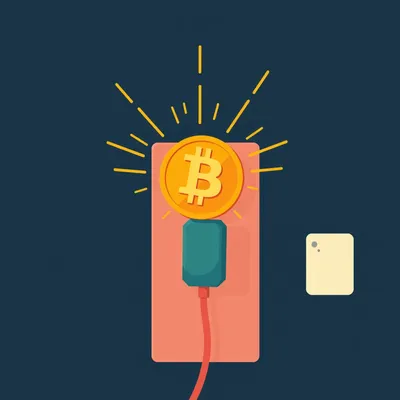
They're literally turning subsidized state electricity into a digital asset they can use on the global market. It's alchemy with a power bill.
And the strain on the grid is very real. There was a Reuters report a few years back noting mining was consuming over two percent of Iran's total national electricity. That's led to blackouts, public anger, and periodic government crackdowns on unauthorized mining farms. It's a constant tension between a lucrative sanctions workaround and basic domestic stability.
Which is a perfect place for us to start digging. So, the prompt is set. Let's get into the weeds.
The core question Daniel's circling is why this? Why would a state, with all the tools of a state, bother with this incredibly volatile, energy-hungry, technically complex scheme?
Because the traditional tools have been systematically taken away. For context, Iran is perhaps the most financially isolated nation on earth. They're banned from SWIFT, the global messaging system banks use to move money. They can't use U.Major international banks won't touch transactions linked to them for fear of massive penalties. This isn't just an inconvenience; it strangles trade, it freezes foreign reserves, it makes buying anything from medicine to machine parts a logistical nightmare of shell companies and middlemen.
The incentive isn't just profit, it's survival. Or at least, regime survival. You need a way to pay for imports, fund your allies, and access the global economy without asking permission from the people who have locked you out.
And cryptocurrency offers a parallel financial rail. It doesn't require a bank's permission. If you have an internet connection and the technical know-how, you can participate. For Iran, the first step is creating the asset itself through mining, which is where that cheap power becomes a strategic commodity, not just a utility.
Which we should probably define, because 'mining' is a terribly misleading metaphor. It's not digging up digital coins. It's more like a global, automated auditing raffle.
In its simplest form, cryptocurrency mining is the process of validating transactions and securing the network. Computers compete to solve a complex cryptographic puzzle. The first to solve it gets to add a new 'block' of verified transactions to the blockchain and is rewarded with newly created cryptocurrency. That's the 'minting' of new value. The puzzle-solving is intentionally difficult and energy-intensive to prevent any single entity from taking over the network.
You're spending real-world resources — electricity, hardware — to earn a digital token that the network agrees has value. It's a conversion. You're burning kilowatt-hours to generate bitcoin.
And when your kilowatt-hours are the cheapest on the planet, your conversion rate is unbeatable. That's Iran's competitive advantage. They're not just using crypto; they're manufacturing it at an industrial scale, turning a national resource into a sanctions-proof financial instrument—which brings us to the mechanics of that manufacturing process.
Right, the mechanics. You mentioned cryptographic puzzles and hardware. What's actually happening inside one of these Iranian mining farms?
Right, so the workhorse for a lot of this, especially for coins besides Bitcoin, is the GPU, or graphics processing unit. Think of the card in a high-end gaming PC. These are incredibly good at performing the specific kind of brute-force, repetitive calculation that mining requires. They're trying to find a specific numerical solution — a 'hash' — that meets the network's target. It's pure guesswork, billions of guesses per second.
It's less like solving a puzzle and more like trying every single key on a ring the size of a planet until one clicks. And you're doing it in a warehouse with ten thousand of these GPUs, all humming away.
And that's where the value creation is fundamentally rooted. The electricity you burn is proof that you expended real-world, costly effort to secure the network. That proof-of-work is what gives the newly minted coin its initial value. It's a digital commodity that required tangible resources to produce. The network rewards that effort with the coin itself.
Which circles back to Iran's killer app: their electricity is almost free. So their cost to produce that proof, and thus the coin, is a fraction of what it is for a miner in, say, Germany or Texas. Their profit margin is built on a state subsidy.
It's a massive arbitrage. And the scale is staggering. At its peak, Iran accounted for nearly four point five percent of the entire global Bitcoin network's computational power, according to the Cambridge Centre for Alternative Finance. More recent estimates from firms like Chainalysis suggest Iran's overall crypto ecosystem is worth around seven point eight billion dollars.
That's not just a few guys in a basement. That's industrial policy.
It absolutely is. There was a case a few years back of a massive operation uncovered near a power plant in Rafsanjan. They'd essentially tapped directly into the grid, bypassing meters, running thousands of machines. The draw was so immense it was causing localized blackouts. That's the constant tension — these operations are hugely profitable for the entities running them, often with state ties, but they directly undermine public infrastructure.
What's the tradeoff for the regime? On one hand, you're printing digital dollars that bypass sanctions. On the other, you're blowing out transformers and leaving citizens in the dark.
It forces a brutal cost-benefit analysis. The economic tradeoff is clear: the foreign exchange earned from selling mined crypto is vital. The environmental and social tradeoff is the strain on a grid that's already struggling with inefficiency and high demand. During peak usage or droughts that affect hydro power, the government routinely cracks down, shutting down licensed farms and raiding illegal ones. But it's a whack-a-mole. The incentive is just too strong.
Because the value isn't just in creating the crypto, it's in what you can then do with it. Which is the next piece of the puzzle. But sticking with the mechanics for a second — this GPU mining process, it's creating something. How does that 'something' go from being a reward for a math problem to being a thing Hamas wants to be paid in?
That's the leap from computer science to monetary theory. The mined cryptocurrency has value because the network consensus says it does, and because there's a market of people willing to trade goods, services, or other currencies for it. For Iran, the value is twofold. First, it's a hard-to-intercept asset they can sell on international exchanges for other currencies. Second, and more directly, it's a transferable asset they can send to a partner who also recognizes its value.
It's a bearer instrument. If you control the private cryptographic key, you control the wealth. No bank account needed.
Which makes it ideal for moving value across borders to groups that also lack access to traditional banking. But to your question about how the value is created — it's that initial transformation of electricity into a cryptographically secured digital token. Iran's advantage is doing that transformation at the lowest possible cost, making them, in effect, the lowest-cost producer in a global market.
Right, and once you've minted this crypto, you've got this digital bearer instrument. The next question is how it moves — say, from an IRGC-controlled mining farm to a weapons procurer in Lebanon or a financier in Gaza. That's the transaction chain Daniel's asking about.
Right, and this is where the common misconception about total anonymity gets dangerous. These transactions aren't invisible. They're recorded on a public ledger, the blockchain. Every transfer from one digital wallet to another is visible forever. The traceability challenge isn't about seeing the transaction; it's about figuring out who owns the wallets on either end.
It's less like a secret tunnel and more like watching numbered Swiss bank accounts shuffle money around. You can see the flow, but attaching a real-world identity to account number X-F-Y-Z is the hard part.
And the techniques to obscure that are called 'chain-hopping' or 'mixing'. Let's walk through a hypothetical but very common chain. Say an Iranian entity wants to send five million dollars' worth of cryptocurrency to a Hamas financial officer.
Step one: They take the mined Bitcoin from their wallet.
Step two: They send it to a centralized exchange, likely one with lax know-your-customer rules, maybe in a permissive jurisdiction. They trade the Bitcoin for a privacy-focused coin like Monero, or more commonly now, for a stablecoin like Tether, USDT.
Step three: That Monero or USDT then gets sent through a 'mixer' service—a pool that jumbles funds from thousands of users—or through a series of intermediary wallets in a pre-programmed, automated dance.
Step four: The now-obscured funds land in a wallet controlled by the recipient, who can then cash them out for local currency through a different exchange or a peer-to-peer network.
At each hop, the forensic link gets weaker. You might know the starting wallet belongs to a known Iranian mining pool, and you might suspect the final wallet is Hamas-linked, but proving the continuous chain of custody through those hops becomes a monumental cryptographic detective task.
Which is why firms like Chainalysis exist. Their entire business is building those links, clustering wallets to real-world entities. And they've had successes. In their twenty-twenty-five report, they traced over two billion dollars in cryptocurrency to networks linked to Iran's Islamic Revolutionary Guard Corps and its proxies. But it's an arms race. For every forensic technique, a new obfuscation method pops up.
How does this compare to the old way? If they were using traditional hawala networks or shell company wire transfers?
Speed and cost. A traditional cross-border wire through sanctioned jurisdictions involves finding a compliant bank, creating layers of fake invoices, and can take days with significant fees. A large cryptocurrency transaction can be confirmed in minutes, for fees that are a fraction of a percent. The trade-off is the permanence and public nature of the record. A wire transfer leaves a trail inside bank servers—hard to get, but deletable if you compromise the bank. A blockchain trail is permanent and public. You're trading secrecy for deniability and speed.
It's not perfectly anonymous, but it's sufficiently deniable and fast. For funding a militia or buying a shipment of parts, that's often enough. You don't need perfect secrecy; you need plausible doubt and timely delivery.
And this gets to the 'why stablecoins?Early on, they used Bitcoin, but its price volatility is a problem. If you're budgeting for a million-dollar arms buy, you don't want the value of your treasury to drop twenty percent overnight. So they've massively pivoted to stablecoins like Tether's USDT, which is pegged one-to-one with the U.
They're using a digital token backed by dollar reserves, the very currency they're sanctioned from using, to circumvent those sanctions. It's the ultimate financial hack.
It's the liquidity. USDT is the most liquid cryptocurrency asset after Bitcoin. You can move massive sums with minimal price slippage. A report from Al-Monitor this year noted the IRGC alone is estimated to control over three billion dollars of Iran's seven point eight billion dollar crypto ecosystem, heavily weighted toward stablecoins. They're not just using crypto; they're managing a digital treasury.
This has moved beyond shadowy transfers. They're now formalizing it. I saw a Fortune piece from just a few weeks ago saying Iran has started demanding cryptocurrency payments—Bitcoin, USDT, or yuan—for tolls in the Strait of Hormuz.
The Strait of Hormuz Management Plan, yes. It's a stunning move. They're essentially creating a state-sanctioned, crypto-based revenue stream for one of the world's most critical oil chokepoints. It institutionalizes the workaround. It tells every tanker company: to pass through here, you must engage with our parallel financial system.
Which circles us right back to the core concept of currency. What makes anything valuable? It's collective belief and utility. For Hamas, crypto is valuable because it's what their paymaster sends. For Iran, it's valuable because it's what buys them what they need on the global market. For a tanker company, it's valuable because it's the toll token the guy with the gunboats says they need. The blockchain is just the ledger. The value is in the network of people who agree to use it—and that agreement is everything.
And that agreement is what makes financial sanctions, for all their power, inherently leaky. They're a tool of the international banking system. If you can step outside that system, or build a parallel rail alongside it, you regain mobility. That's the practical takeaway for anyone watching geopolitics: the era where controlling SWIFT and dollar clearing gave you near-total financial blockade capability is over.
The limitation is that sanctions are a wall around the formal garden. Cryptocurrency is a ladder. It doesn't tear the wall down, but it provides a means over it for those determined enough. The question becomes, how high can you build the wall, or how do you confiscate the ladders?
Confiscating the ladders is incredibly difficult because of the dual-use nature of the technology. The same Bitcoin network that allows an Iranian mining farm to earn revenue also lets a dissident in an authoritarian state receive donations from abroad. The same Monero protocol that can obscure a terrorist financing chain can protect the financial privacy of a law-abiding citizen. You can't ban the cryptographic principles without crushing innovation and personal freedom.
Which is the classic dilemma of any powerful tool. The practical insight for listeners is to judge policies on this not by their stated goal—"stop bad guys"—but by their mechanism. A mechanism that attacks a specific actor's wallets through forensic tracing is targeted. A mechanism that tries to ban or cripple the underlying protocol is a blunt instrument with massive collateral damage.
The effective response isn't a war on crypto, it's an arms race in forensic blockchain analysis and stricter enforcement on the off-ramps—the exchanges where crypto gets converted back to traditional currency. That's the pressure point. If you can make it harder to cash out anonymously, you reduce the utility. We're seeing that with tighter regulations on stablecoin issuers to know their customers.
The ultimate takeaway is about resilience. For a nation like Iran, cryptocurrency provides a resilience layer against financial siege. For the nations imposing the siege, the challenge is building a resilience layer against that resilience layer—without breaking the very open systems that benefit everyone else. It's a shadow game of financial one-upmanship, played with code and electricity.
That arms race leaves us with the big open question: where does this go next? If this is the state of play in twenty-twenty-six, what does twenty-thirty look like?
I think we're heading toward a bifurcated financial world. A formal, regulated system that still handles the vast majority of global trade, and a parallel shadow system of decentralized ledgers, privacy coins, and cross-chain protocols that sanctioned actors and anyone else wanting opacity will operate in. The real frontier won't be mining, but interoperability—making these different blockchains talk to each other seamlessly to further complicate tracing.
The ultimate geopolitical test will be if another major power, facing its own sanctions, decides to officially embrace a cryptocurrency standard for trade. Not just tolerating it, but building state infrastructure atop it. That's the inflection point that would truly rewrite the rules.
Which brings us back to the fundamental question of what money is. It's a story we all agree to tell each other. Cryptocurrency is just a new chapter in that very old book. The technology changes, but the human motives—to store value, to trade, to wield power—those stay constant.
We end where Daniel's prompt began: with the concept of value itself. It's not in the wires or the watts, but in the network of belief. And for now, Iran has found a way to plug its grid directly into that network.
Thanks, as always, to our producer Hilbert Flumingtop for keeping the electrons flowing. And thanks to Modal, whose serverless GPUs power our pipeline—proving, I suppose, that we're all just turning electricity into something we value.
This has been My Weird Prompts. If you found this dive into crypto and sanctions useful, leave us a review wherever you listen. It helps other curious minds find the show.
Until next time.