Alright, we are diving into a heavy one today. Daniel’s prompt is about the strategic calculus of the U.S.-Israel joint military operation against Iran, specifically looking at the mismatch between the actual threat to the American homeland and the scale of the response we have seen over the last month.

It is a massive topic, Herman. And honestly, it is the defining geopolitical question of early twenty-six. We are sitting here just over a month into Operation Epic Fury, which kicked off on February twenty-eighth, and the shift in the narrative from Washington is absolutely jarring. By the way, today's episode is powered by Google Gemini Three Flash.
Which is writing the script while we try to make sense of a war that feels like it is sprinting toward a finish line that nobody has actually defined yet. That is the kicker for me in Daniel’s prompt. He points out that Iran does not even have Intercontinental Ballistic Missile capability. They cannot hit Los Angeles. They cannot hit Chicago. They can barely scratch the edge of Europe. Yet, here we are, in a full-scale joint war.
Corn Poppleberry here, and I have been digging into the CENTCOM briefs on this. The technical reality is exactly what Daniel described. If you look at the Iranian inventory—the Shahab-three, the Sejjil, the Fateh-eleven-hundred—you are looking at ranges between thirteen hundred and two thousand kilometers. That covers the Middle East, it covers Israel, it covers our bases in Qatar and the Emirates, but it doesn't cross the Atlantic.
So if the threat is regional, why is the response global in its political and economic impact? It feels like we are seeing a repeat of a movie we have watched three or four times now, where the U.S. enters a conflict based on a "forward defense" doctrine, but then the American public realizes three weeks in that their gas prices are spiking and they start asking, "Wait, why are we there again?"
That is the paradox. President Trump is now facing a massive buckling of public support. We saw those polls from late March showing a majority of Americans now disapprove of the campaign. And it is not just the isolationist wing; it is a general "war fatigue." We have the memory of Iraq and Afghanistan looming over every decision. But the difference here is that Israel is now potentially facing total isolation if Trump pulls the plug early.
Let’s pull back for a second and look at that "forward defense" logic. You mentioned the range of these missiles. If I am sitting in the White House, and I know Iran can’t hit D.C., what is the internal argument for launching fifteen thousand strikes? Is it really just about the bases, or is there a deeper technical fear about where that missile program was heading?
The argument from the administration was that you don't wait for the ICBM to be bolted together. They were looking at the space launch vehicle program—the Simorgh and the Zuljanah rockets. Technically, if you can put a satellite into orbit, you have the foundational physics for an ICBM. But you are right, the immediate threat was to the "forward" positions. Think about Al-Udeid Air Base in Qatar. We saw those Iranian strikes in January of this year. That was the trigger. It wasn't a threat to the U.S. mainland; it was a direct kinetic challenge to U.S. hegemony in the Gulf.
But that is a hard sell to a guy in Ohio who is paying seven dollars a gallon for gas because the Strait of Hormuz is a no-go zone. It feels like the strategic logic is operating on one plane—the "chess board" of regional stability—and the political reality is operating on the "checkbook" plane. And right now, the checkbook is winning.
It usually does. And Trump is a "checkbook" president at heart. He wants the win, he wants the "Big Boom" of the February strikes which, let’s be honest, were tactically incredible. Ninety percent of Iran’s ballistic capability is gone. Ninety-five percent of their drone production is rubble. From a purely military standpoint, it is a staggering success. But now we are in the "What Now?" phase, and that is where it gets messy.
"What Now?" is the graveyard of American foreign policy. We are great at the "Boom" part. We are terrible at the "Then What?" part. And Daniel’s point about Israel being left isolated is the real nightmare scenario here. If the U.S. exits, does Israel have the logistical tail to finish the job? Because from what I am reading, the regime in Tehran is already moving what is left of their nuclear program into "Pickaxe Mountain" near Natanz. They are literally digging in.
That is the "regime resilience" factor. You can blow up the launchers, but as Admiral Cooper at CENTCOM said, the "ideological infrastructure" is still there. If the U.S. pulls out, Israel is left holding a very hot potato. They see this as a once-in-a-generation chance to end the nuclear threat forever. Trump just sees it as a war that is hurting his approval ratings right before a major political cycle.
You mentioned those January strikes on Al-Udeid. Let’s wargame that for a second. If the U.S. hadn't responded with Operation Epic Fury, would we just be sitting in a "cold war" state in the Middle East? Or was the escalation inevitable? Because it feels like the U.S. used a regional provocation to launch a total war, and now we're surprised that total war has total consequences.
It is the "Escalation Ladder" problem. Iran hit a U.S. base. The U.S. doctrine says you have to hit back harder to maintain deterrence. But once you hit back harder, Iran feels they have to show they aren't broken. We hit their air defenses, they hit a tanker. We hit their drone factories, they try to swarm a carrier. Pretty soon, you aren't "deterring" anymore; you are just in a war. And the mismatch Daniel points out is that we are fighting this war as if our survival depends on it, when in reality, it is our regional posture that is at stake.
And that is a distinction that gets lost in the propaganda, right? The "Forward Defense" doctrine basically says that a threat to a base in Qatar is a threat to a suburb in Virginia. But the American public isn't buying that anymore. We’ve had twenty-five years of being told that "fighting them there so we don't have to fight them here" is the only way, and people are looking at the bill and saying, "I'll take my chances here."
Well, not "exactly," I shouldn't say that. But you're touching on the erosion of the Post-Nine-Eleven consensus. That consensus is dead. It died in the withdrawal from Kabul in twenty-one, and Operation Epic Fury is trying to ressurrect its ghost. Trump is caught between his "Strongman" persona—the guy who takes out the bad guys—and his "America First" persona—the guy who brings the troops home.
It is a classic "Trumpian" struggle. He wants the parade, but he doesn't want the occupation. The problem is, you can't have one without the other in the Middle East. If you degrade ninety percent of a regime's military, you have created a power vacuum. And who fills that? If the U.S. leaves, it is either a chaotic, wounded Iran lashing out, or it's Israel having to go even further into a ground war to secure its borders.
Let’s look at the technical degradation for a moment, because it is important for the "Exit Strategy." If Iran is down to ten percent of its missiles, you could argue—and I bet this is what the isolationists in the GOP are telling Trump—that the mission is "Accomplished." You've neutralized the threat. You've "degraded and destroyed" the capability. Why stay?
Because that last ten percent is the most dangerous ten percent. It is the stuff hidden in Pickaxe Mountain. It is the stuff being moved to Hezbollah in Lebanon. If you stop at ninety percent, you just taught your enemy how to survive a U.S. onslaught. You gave them a masterclass in what they need to harden for next time.
That is the "Sunk Cost" versus "Strategic Goal" debate. If the goal was "Regional Stability," then leaving now is a disaster. If the goal was "Punish the Regime for hitting Al-Udeid," then we've already overachieved. But the public support is the real ticking clock. The economic impact is what is killing the administration. Oil prices are the ultimate "War Fatigue" accelerator.
It’s the "Hormuz Tax." Every time a missile flies, a gallon of gas goes up. And let’s talk about the humanitarian side too. Daniel mentioned the strike on the school in Minab. That was a turning point for the international narrative. When you have three million displaced people in Iran, it becomes very hard for the U.S. to claim the moral high ground, even if we are responding to a legitimate provocation.
The Minab strike was a nightmare. It was supposed to be a command and control node, but the intelligence was stale—or worse, the regime used human shields. Either way, the images on social media have done more to stop the war than any Iranian missile ever could. It’s "Information Warfare" in twenty-six. You can win every kinetic battle and still lose the war on a smartphone screen.
So, let’s wargame the "Withdrawal" scenario. Trump decides, "I’m out. Mission accomplished. Israel, you’ve got this." He pulls the carriers back. He stops the aerial refueling. He stops the real-time satellite intelligence sharing. What happens on the ground on Day One of the U.S. exit?
It is a catastrophic shift for the IDF. People don't realize how much of the Israeli air campaign relies on the "U.S. Umbrella." I’m talking about logistical tail, spare parts for F-thirty-fives, and most importantly, the diplomatic cover at the UN. If the U.S. pulls out, Israel has to shift from a "Precision Strike" campaign to a "Survival" campaign. They probably have to launch a massive ground incursion into Southern Lebanon just to push Hezbollah back, because they won't have the U.S. Navy sitting off the coast to deter a two-front war.
And Hezbollah is the "X-Factor" here. They have been relatively quiet during the initial phases of Epic Fury compared to what they could be doing. If they see the U.S. leaving, they see a green light. They see a "Paper Tiger" moment for the U.S. and a "Vulnerable Moment" for Israel.
Hezbollah has a hundred and fifty thousand rockets. If the U.S. isn't there to map the launch sites and provide the counter-battery fire, Israel's Iron Dome gets saturated in forty-eight hours. We’ve seen the math on this. You can only intercept so many targets before the interceptors run out. And who provides the interceptors? The U.S.
So a U.S. withdrawal isn't just "ending a war." It is essentially handing the keys of the region to the most radical elements of the "Axis of Resistance." It’s the Kurdish situation in twenty-twenty all over again, but on a much, much larger scale. It’s abandoning a strategic partner in the middle of a firestorm.
The comparison to the twenty-twenty drawdown in Syria is actually very apt. Remember how that went? We left, the Turks moved in, the Kurds got squeezed, and Russian influence expanded. In this case, if we leave, Iran rebuilds, Hezbollah engages, and Israel is forced into a "Samson Option" mentality where they feel they have no choice but to go nuclear or at least use their most devastating conventional weapons to prevent being overrun.
That is the "Exit Ramp" dilemma. Trump wants an exit ramp, but the ramp is currently on fire and ends in a cliff. He is looking for a "Divergent Peace Plan," which is a fancy way of saying "a way to declare victory and run." But you can't have a peace plan if the other side—the Iranian regime—feels like they just won by surviving.
Survival is victory for an asymmetric power. If the U.S. leaves and the Ayatollah is still in power, the Ayatollah won. Period. It doesn't matter if his air force is gone and his navy is at the bottom of the Gulf. He outlasted the Great Satan. That is the narrative that will echo through the Middle East for the next fifty years.
It’s the "Vietnamization" of the Middle East. We try to train and equip the regional allies to hold the line so we can go home. But Israel doesn't need "training." They need the "Big Brother" in the room to keep the bullies away. If the Big Brother leaves, the bullies come back with a vengeance.
Let’s talk about the "ICBM Falsehood" that Daniel mentioned. Why was that such a prominent part of the early war justification? I remember the headlines: "Iran’s Growing Missile Threat to the West." If the intelligence communities knew they didn't have ICBMs, why allow that narrative to flourish?
Because "They might hit Israel" doesn't sell a war to a voter in Nebraska as well as "They might hit New York." It’s the same "Yellowcake" rhetoric from two thousand and three. You exaggerate the direct threat to the homeland to gain the political capital for a regional intervention. The problem is, when the truth comes out—that the threat was actually regional—the public feels lied to, and the support collapses even faster.
It’s a short-term gain for a long-term loss in credibility. And Trump is now the one paying the price for that credibility gap. He leaned into the "Protecting America" angle, and now the American public is looking at their bank accounts and saying, "We don't feel protected; we feel broke."
And the economic impact isn't just oil. It’s the supply chain. If the Strait of Hormuz is contested, everything from microchips to sneakers gets more expensive. We are already seeing the "Global Supply Chain Crisis Two-Point-O." And this time, we don't have the "Work From Home" cushion of the pandemic. We just have inflation and angry voters.
I was looking at the maritime data. Insurance rates for tankers in the Gulf have gone up four hundred percent since February. Four hundred percent! You can't run a global economy with those kinds of overheads. So even if we "win" the military war, we are losing the economic war every single day the conflict continues.
This is where the "Forward Defense" doctrine really falls apart. If the goal of forward defense is to protect our interests, but the very act of defending them destroys our economic stability, then the doctrine is self-defeating. It’s like burning your house down to get rid of a termite infestation in the porch.
That is a very Herman observation. And I think it’s what Trump is realizing. He’s a "Deals" guy. He’s looking at the balance sheet of this war and seeing nothing but red ink. He wants to cut his losses. But in geopolitics, you can’t just file for Chapter Eleven and walk away from a war.
Especially not with a nuclear-armed ally like Israel. I mean, they aren't "officially" nuclear-armed, but we all know the deal. If Israel feels it is being abandoned, their strategic calculus changes from "Joint Operations" to "Total Survival." And a "Total Survival" Israel is a very dangerous actor on the world stage. They will do things the U.S. would never sign off on.
Like what? Wargame that for me. If the U.S. withdraws next week, what is the IDF's first move?
They have to take out the nuclear sites. All of them. Not just the ones we’ve been hitting, but the ones buried under five hundred feet of granite. And they have to do it with whatever they have left. They probably use tactical earth-penetrators—maybe even things they’ve been keeping in the "Break Glass in Case of Emergency" box. And then they have to deal with the fallout—literally and politically.
And without the U.S. there to manage the regional response, you probably see a full-scale Saudi-Iranian war break out too. The Saudis have been sitting on the sidelines, letting the U.S. do the heavy lifting. If the U.S. leaves, the Saudis have to decide if they are going to join Israel or try to make their own deal with a resurgent Iran. It is a recipe for a "Thirty Years War" in the Middle East.
It’s the "Vacuum Effect." Whenever the superpower leaves before the job is done, the local powers start a "Battle Royale" for the leftovers. And the "leftovers" in this case are the world’s energy supply and the most volatile religious fault lines on the planet.
So why is the public support buckling so fast? Is it just the gas prices, or is it something deeper? I think there is a "Post-Heroic" shift in the American psyche. We don't believe in "Transformative Wars" anymore. We don't believe we can "fix" the Middle East. So any war that isn't a "Clear and Present Danger" to our actual homes feels like a waste of blood and treasure.
It’s the "Goalpost Shift." First the goal was "Stop the Missiles." Then it was "Protect the Bases." Then it was "Prevent Nuclear Proliferation." When the goals keep shifting, the public stops caring about the goals and starts caring about the cost. And the cost is always higher than advertised.
And the "Unclear End-State" Daniel mentioned is the real killer. What does "Victory" look like? Is it a democratic Iran? Is it just a "weak" Iran? Is it a change in the regime's behavior? Nobody can agree on what the finish line is, so it feels like a "Forever War" after only thirty days.
In the age of TikTok and instant gratification, thirty days is a "Forever War." If it’s not over in a weekend, people lose interest. Unless there is a direct, visceral threat. And that brings us back to the ICBM point. Because there was no direct threat to the U.S. mainland, there is no "Pearl Harbor" or "Nine-Eleven" emotional resonance to keep people engaged. It’s just a "Policy War." And people don't want to die—or pay ten dollars for gas—for a policy.
Especially a policy that feels like it’s being run for the benefit of "Regional Allies" rather than the American family. That is the "America First" tension. Why are we spending billions to protect Israel’s borders when our own border is... well, we won't get into that, but you know the argument.
Oh, I know it. It’s the most potent political argument in the country right now. "Why them and not us?" And Trump is a master at reading that room. If he thinks the "Why them?" sentiment is going to cost him the next election, he will leave Israel high and dry without blinking. He’s done it to allies before.
But the stakes here are so much higher. If he leaves Israel now, he’s not just "re-aligning policy." He’s potentially triggering a regional nuclear exchange. The "Exit Strategy" has to be more sophisticated than just "Leaving." But I don't see any "Sophisticated" plans coming out of the White House right now. I see "Divergent Peace Plans" that look like they were written on a napkin.
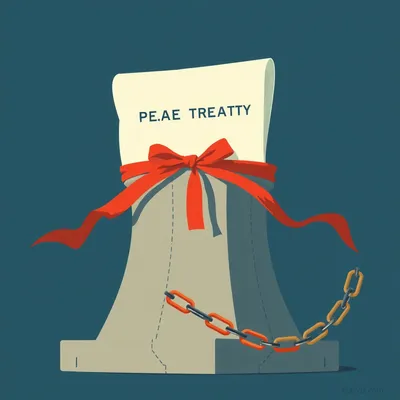
It’s the "Peace Smokescreen." You float a peace plan so you can say, "Well, we tried to be diplomatic, but they wouldn't talk, so now we’re coming home." It gives you a moral "Out." But the reality on the ground is that Iran isn't going to talk while they are being bombed, and Israel isn't going to stop bombing while Iran is still a threat.
So we are at an impasse. A tactical military success meeting a strategic political failure. It’s a classic American war story. We won the battles, and we are losing the war.
And what about the "Iranian Resilience" factor? If we pull out, and they still have ten percent of their capability, how long does it take them to get back to a hundred percent? From what I know about their industrial base, they are incredibly good at "MacGyver-ing" their way around sanctions and damage.
They are the world masters of "Asymmetric Recovery." They have these "Missile Cities" buried deep underground. We’ve hit the entrances, we’ve collapsed some tunnels, but the machinery is still there. If we leave, they will be back to eighty percent capability within twelve to eighteen months. And this time, they will have "Combat-Tested" their systems against our best defenses. They will know exactly what worked and what didn't.
So a U.S. withdrawal is essentially a "Pause" button for Iran, but a "Panic" button for Israel. It’s the worst of both worlds. You don't get the stability of a total victory, and you don't get the peace of a total withdrawal. You just get a more dangerous enemy and a more desperate ally.
And that desperation is what we should be wargaming. If I am the Israeli Prime Minister, and I see the U.S. carriers turning around, I am looking at my "Special Weapons" inventory. I am looking at my "Deep Penetration" teams. I am basically going "All In" before the window closes.
It’s the "Pre-emptive Strike on Steroids." If you know your support is leaving, you have to do as much damage as possible in the next seventy-two hours. It leads to a massive, uncontrolled escalation. It’s the opposite of what Trump wants. He wants a "Quiet Exit," but his exit is going to cause a "Loud Explosion."
The "Loud Explosion" is exactly what the region doesn't need. But when you look at the public opinion data, the American people aren't looking at the "Loud Explosion" in the Middle East. They are looking at the "Loud Explosion" in their own bank accounts. It’s a tragedy of local vs. global interests.
It’s the "Rational Actor" problem. Trump is acting rationally for his political survival. The American voter is acting rationally for their economic survival. Israel is acting rationally for its physical survival. But when all these "Rational" actors clash, the result is total irrationality.
Let’s talk about the "Actionable Takeaways" for people watching this. If you are an analyst or just someone trying to understand the next few weeks, what should you be looking for?
Number one: Watch the "War Powers" debates in Congress. If you see the isolationist wing and the Democratic opposition starting to align on a "Withdrawal Timeline," that is the beginning of the end. When those two groups agree on anything, the policy is dead.
Number two: Watch the "Base Security" levels. If the U.S. starts consolidating its positions—moving troops from smaller outposts to the "Mega-Bases" like Al-Udeid—that’s a sign they are preparing for a drawdown. It’s the "Hunker Down and Get Out" maneuver.
And number three: Watch the Israeli military posture in the North. If they launch a major ground operation into Lebanon, it’s because they know the U.S. is leaving and they have to secure that border now before the U.S. "Umbrella" folds up.
Those are the "Leading Indicators." And for the average person, it’s worth realizing that the "ICBM Threat" was always a bit of a MacGuffin. This war was never about protecting the U.S. mainland from a nuclear strike. It was about who controls the regional order of the Middle East. And right now, the U.S. is deciding that "Control" is too expensive.
It’s a "Price-Sensitive" superpower. We only want to lead the world if it’s on sale. And right now, the price of leadership is seven dollars a gallon and a falling approval rating.
I think the lesson for future policymakers is that you cannot run a "Forward Defense" doctrine without sustained public buy-in. You have to be honest about the costs and the goals from Day One. You can't use "Homeland Defense" as a Trojan Horse for "Regional Hegemony" and then be surprised when the public gets mad when the Trojan Horse starts costing them money.
Honesty in foreign policy? Corn, you’ve been reading too many academic papers. That’s not how it works. You sell the fear to get the war, and then you sell the "Victory" to get the exit. The problem is, this time, the "Fear" was debunked too fast and the "Victory" is too messy.
It’s a "failed sale." And the consequences are going to be felt in Jerusalem, Tehran, and Riyadh for a long time. If the U.S. pulls out and leaves Israel isolated, we are looking at a fundamental redrawing of the global map. It won't just be "The Middle East." It will be the end of the "American Century" in that part of the world.
And maybe that’s what Trump wants. Maybe he thinks the "American Century" was a mistake and we should just be an "American Island." But you can't be an island in a global economy. You can't just ignore the part of the world that powers your cars and your factories.
You can try. But as the saying goes, "You may not be interested in the Middle East, but the Middle East is interested in you." If we leave a power vacuum, someone will fill it. And it won't be someone who likes us.
It’ll be China. Or it’ll be a resurgent, vengeful Iran. Either way, the "Exit Ramp" might just lead to a much bigger war five years down the line. But hey, that’s a problem for the next administration, right? That’s the "Political Calculus" in a nutshell.
"Kick the can down the road, even if the can is a live grenade." That should be the motto of twenty-six.
I’m going to go look at gas prices and sigh. This was a deep one, Corn. Daniel really hit the nail on the head with that "threat mismatch" point. It’s the core of the whole crisis.
It really is. We are fighting a regional war with "Homeland Defense" rhetoric, and the gap between those two is where the support is falling through.
Alright, let’s wrap this up before I get too depressed about the state of the world. Big thanks to our producer, Hilbert Flumingtop, for keeping the wheels on this thing.
And a massive thanks to Modal for providing the GPU credits that power our script generation and the whole pipeline. We couldn't do "My Weird Prompts" without them.
This has been My Weird Prompts. If you are enjoying the show, leave us a review on Apple Podcasts or Spotify—it really does help people find us in the sea of AI-generated content.
Find us at myweirdprompts dot com for the RSS feed and everything else. We’ll be back next time with whatever Daniel throws at us.
Hopefully something lighter. Like... I don't know... the physics of bubble wrap?
Don't bet on it. See ya.
Later.