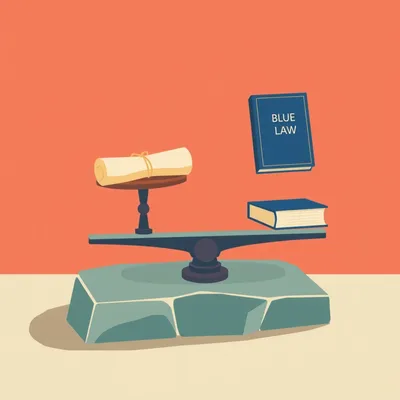
I was looking at the headlines from last September again, specifically that injunction from Judge Charles Breyer in the Newsom versus Trump case, and it struck me how a law from eighteen seventy-eight is still the primary fault line for American federalism. We are talking about the Posse Comitatus Act, which basically tells the federal government it cannot use the military as a domestic police force. It is a fascinating tension because it touches on this fundamental question of who is allowed to point a gun at a citizen and under what authority. Today's prompt from Daniel is about the structural evolution of military police and gendarmeries, looking at how different nations have tried to navigate that messy middle ground between a soldier and a cop.

It is the perfect timing for this, Corn. My name is Herman Poppleberry, and I have been diving into the lineage of these organizations because the history is much older than most people realize. When we see the military on the streets, our modern instinct is to think something has gone terribly wrong, but for most of human history, the distinction between a soldier and a policeman simply did not exist. The modern military police officer is actually a relatively new invention, whereas the gendarmerie model is a direct descendant of medieval royal power. That September second, twenty-twenty-five ruling by Judge Breyer was not just a legal technicality; it was a collision between two very different philosophies of state power that have been evolving since the Middle Ages.
Right, because back in the day, if the king wanted order, he sent the guys with the swords. There was no local precinct to call. But even within those early armies, they needed someone to police the soldiers themselves, which I assume is where the military police side of things started?
That is exactly where the Provost Marshal comes in. If you go back to the Hundred Years War in France, which we are talking the early fourteenth century, the Marshal of France had these provost forces called the Marshalcy. Their job was not to protect the public, at least not primarily. It was to keep the soldiers from deserting, to handle camp followers, and to make sure the army did not just pillage its own territory into a famine. You have to remember, medieval armies were often just groups of mercenaries and feudal levies. If they were not watched, they were as dangerous to their own peasants as the enemy was. What I find fascinating is that the French National Gendarmerie today is a direct institutional descendant of those medieval royal provosts. They have been doing this for nearly a thousand years.
It is wild to think about the continuity there. But for us in the United States, it feels much more fragmented. We did not really have a formal Military Police Corps until quite late, did we? I know George Washington asked for a Provost Marshal in seventeen seventy-six, but that felt more like a temporary wartime necessity than a permanent part of the national fabric.
You are hitting on a major difference in how Anglo-American law treats this versus the Continental European model. Washington definitely saw the need for discipline, especially with a continental army that was, let us be honest, often a disorganized mess of militias. He needed someone to hang the looters and catch the deserters. But after the Revolution, the United States was deeply suspicious of standing armies. We had the General Police duties formalized in eighteen twenty-one under the War Department regulations, but the actual Military Police Corps as a unified, centrally directed branch of the Army did not really solidify until the massive expansion of World War Two. Before that, it was mostly ad hoc units assigned to specific commanders. We did not want a centralized military force that could be turned inward.
Which makes sense given our historical allergy to federal military power. But this brings us to that core conceptual distinction Daniel wanted us to explore. You have the Military Police on one hand and the Gendarmerie on the other. For a lot of people, those terms might sound interchangeable, but legally and operationally, they are worlds apart.
They really are. The simplest way to think about it is jurisdiction. A Military Police officer, or an MP, is generally focused inward. Their world is the military installation, the military personnel, and the specific operations of the armed forces. If an MP pulls you over, it is probably because you were speeding on a base or you are a soldier who went AWOL. They generally do not have standing authority over the civilian population once they step off that federal property. Their mission is to support the combat commander by maintaining discipline and security within the ranks.
Whereas the Gendarmerie is the "third force" solution. They are soldiers by training and status, they wear military uniforms, they have military ranks, but their primary job is policing civilians.
That dual status is the key. In France, the National Gendarmerie is a branch of the armed forces, but they report to the Ministry of the Interior for their daily police work. They handle the rural areas and the small towns, while the National Police, which is a purely civilian force, handles the big cities like Paris or Marseille. It is a way of saying, we need a force that has the discipline and heavy equipment of the military but the legal mandate to enforce civil law. This solves what I call the "weak civilian police" problem. In many countries, a local police force might not have the budget or the training to handle organized crime or major civil unrest. The gendarmerie fills that gap.
I have always wondered why a state would choose that model over just having more civilian cops. Is it just a matter of tradition, or is there a functional advantage to having your rural police be part of the army?
There is a very practical functional advantage, especially in countries with a history of internal instability. If you have a riot in a remote province or a paramilitary group causing trouble, a local civilian police force might be easily overwhelmed or even intimidated. A gendarmerie brings the logistical tail of the military. They have armored vehicles, they have standardized training across the whole country, and they are less likely to be swayed by local village politics because they are part of a national military hierarchy. Italy has the Carabinieri, which is actually a fourth branch of their armed forces. They have over one hundred and ten thousand personnel. Spain has the Guardia Civil. Turkey has the Jandarma. These are all variations on that same theme: a military force that is comfortable in a civilian environment.
It sounds like a "Goldilocks" solution. The regular army is too blunt a tool for civilian crowds; they are trained to destroy targets, not read people their rights. But a local sheriff might be too weak. The gendarmerie is meant to be just right. But that brings up the risk of militarization. If you train a man to be a soldier first, does he not start seeing the civilian population as a potential enemy rather than a community to be served?
That is the big critique, and it is a valid one. When you look at the training of these forces, there is a constant tension between the combat mindset and the de-escalation mindset. However, what is interesting is how these forces are used internationally now. Look at the European Gendarmerie Force, or EuroGendFor, which was set up in two thousand six. It is this multinational body based in Vicenza, Italy, that can deploy to post-conflict zones like Bosnia or parts of Africa. The idea is that in a place where the local police have collapsed, you cannot just send in paratroopers to hand out tickets. You need a force that can survive a firefight but also knows how to secure a crime scene and process evidence. They are the "stabilization bridge" between the end of a war and the return of civilian rule.
It is like a specialized toolkit for the messy parts of the world. But we should talk about the most prominent example of this in our part of the world, which is Israel's Border Police, or Magav. They are often the most visible face of Israeli security, especially in Jerusalem. Most people see the green uniforms and assume they are just another unit of the Israel Defense Forces, but the legal reality is much more complex.
Magav is a classic gendarmerie, though its evolution is unique. It was founded in nineteen forty-nine as the Frontier Corps, or Heil HaSfar. At the start, it actually was under the command of the Israel Defense Forces. Its job back then was rural security and stopping what they called infiltration, essentially Fedayeen coming across the borders from Egypt or Jordan. But by nineteen fifty-three, the state realized that having the army handle what were essentially civilian security issues was not ideal for a variety of legal and diplomatic reasons.
So they moved it under the Israel National Police.
By moving Magav to the police, the state created a force that has military discipline and combat training but operates under the legal framework of civilian law enforcement. If you are a Magavnik, you are a soldier in terms of your draft and your training, but your commander ultimately reports to the Commissioner of Police and the Minister of National Security, not the Chief of Staff of the army. This gives the Israeli government a force that can handle high-intensity riots or counter-terrorism operations without technically "deploying the army" against civilians.
And that gives them a huge amount of flexibility. I was looking at the numbers, and it is roughly six thousand personnel total, but about twenty percent of them are concentrated just in Jerusalem. That tells you everything you need to know about the role they play. They are the ones standing at the gates of the Old City, they are the ones handling the protests, and they are the ones doing the high-risk arrests in places like Jenin or Nablus. We talked about this a bit in episode thirteen hundred and two when we looked at the legal labyrinth of the territories. Magav is the force that exists in the cracks of that labyrinth.
It is that middle-ground role again. In a city like Jerusalem, you have this incredibly dense mix of civilian life and high-stakes security threats. A regular infantry unit from the Israel Defense Forces might not have the crowd control training to handle a religious procession that turns into a riot, while a standard blue-shirt police officer might not be equipped to deal with an armed terrorist attack. Magav is designed to be the force that can do both simultaneously. They are trained in everything from riot gear and tear gas to high-end urban warfare.
But that middle ground is also where the most friction occurs. Because they are military-trained and often deployed in very hostile environments, they face a lot of scrutiny regarding human rights and the use of force. It is that "Gendarmerie Trap" we talked about. If you give a soldier police powers, does the distinction between an enemy and a citizen start to blur? Especially in a place where the legal status of the population is already contested.
That is the fundamental challenge of the model. And it is not just an Israeli or French issue. It is becoming a live debate in the United States, which brings us to the Posse Comitatus Act and the legal drama of the last year. For a long time, Americans felt insulated from this "third force" concept because we have this very strict legal wall between the military and the police. We do not have a national gendarmerie because we are terrified of what one might do.
Until that wall started getting some very visible cracks. The eighteen seventy-eight law was originally passed after the Civil War to stop federal troops from being used to supervise elections in the South during Reconstruction. For over a century, it was the gold standard for keeping the Army and Air Force out of domestic law enforcement. But then the twenty-twenty-two National Defense Authorization Act expanded it to include the Navy, the Marine Corps, and even the Space Force. Why do you think that expansion happened when it did?
I think there was a growing realization that the legal loopholes were getting too large. The original law only named the Army and the Air Force because, well, the Air Force was part of the Army when the law was written, and the Navy was considered a different beast entirely. But as we saw more domestic unrest and more talk of using federal assets for border security or urban patrols, Congress felt the need to codify that restriction across all branches. They wanted to make sure that no president could say, "Well, the law does not mention the Marines, so I am sending them into Chicago."
Which leads us directly to September of twenty-twenty-five. The Trump administration decided to deploy US Marines and federalize National Guard units to assist with law enforcement in California, specifically citing border security and "civil order." Governor Newsom sued, and Judge Charles Breyer issued that injunction on September second. It was a massive moment because it forced a judicial ruling on what "domestic law enforcement" actually means in the twenty-first century.
The legal nuance there is so important. The federal government argued that the military was not "policing" but rather "providing support" for national security. But Judge Breyer's ruling was very clear. He basically said that if you have federal troops performing the functions of a police officer, like making arrests or conducting searches on civilian soil, you are violating the core of the Posse Comitatus Act. You cannot just rebrand policing as "national security support" to get around the law. The National Guard is the interesting exception here, though, and it is where the case got really messy.
Because they wear two hats.
They do. When the National Guard is under the command of a governor, they are state troops. They can do police work, they can help during riots, they can guard buildings. In that mode, they are essentially the state's gendarmerie. But the moment the President federalizes them under Title Ten, they become part of the US military and, in theory, the Posse Comitatus Act kicks in. The twenty-twenty-five case was so explosive because it involved the President trying to federalize them against the will of the governor to perform duties the state did not want them to do. It was a direct challenge to the governor's authority over his own "third force."
It is a total collision of authorities. It makes me wonder if the reason we do not have a formal gendarmerie in the US is simply because the National Guard already fills that niche, just in a very decentralized way. We have fifty different versions of a "third force" instead of one national one.
That is a great way to put it. But notice how we still have that discomfort. Whenever the Guard is deployed on a subway platform or a city street, there is an immediate public outcry about the "militarization of our streets." We are culturally conditioned to be wary of it in a way that someone in Italy or France simply is not. For a Parisian, seeing a Gendarme with an assault rifle at a train station is just part of the landscape. For an American, it feels like a state of emergency. We do not like the "dual-status" soldier. We want our cops to be cops and our soldiers to be soldiers.
Do you think that is changing? As the distinction between domestic crime and international terrorism or hybrid warfare blurs, are we going to see more "gendarmerie-style" units popping up in the West?
I think we are already seeing it, just under different names. Look at specialized SWAT teams or federal agencies like the Department of Homeland Security's rapid response units. They often use military gear, military tactics, and even military recruitment pipelines. They are "civilian" on paper, but operationally, they look a lot like a gendarmerie. The danger, as I see it, is that we are getting the hardware and the tactics of a gendarmerie without the clear, historical legal framework that countries like France have developed over centuries to keep those forces in check. We are drifting into the model without the safeguards.
It is the mission creep that gets you. You start with "border protection" or "high-risk warrants," and before you know it, that force is being used for routine patrol because the local police are underfunded or understaffed. That is the "Gendarmerie Trap" in action. If you have a highly capable, military-funded force sitting there, the temptation for a politician to use them to solve every social problem with a hammer is almost irresistible. It is much easier to deploy a disciplined unit of the Guard than it is to fix a broken municipal police department.
And that is why the Posse Comitatus Act is so vital, even if it feels like an antique from the nineteenth century. It forces a pause. It forces the government to justify why a civilian police force is not enough. When we look at the Israeli case with Magav, you see a society that has decided the threat level is permanently high enough that they need that third force on every corner. They have accepted the trade-offs of having a militarized police as a baseline for daily life because they feel they have no other choice.
It is a different social contract. In Israel, where almost everyone serves in the military, the "us versus them" mentality between the police and the public is slightly different because the Magavnik is often your neighbor or your cousin who just finished their draft. There is a level of societal integration that a professionalized federal gendarmerie in a larger country might lack. We talked about that in episode five hundred and eighty-five regarding the citizen-soldier model. When the army is the people, the "militarization" of the police feels less like an external occupation and more like a collective defense effort.
That is a point people often miss. But that model is incredibly hard to export to a country like the US with a volunteer military and a deep-seated distrust of central authority. For us, a gendarmerie would feel like an "other" coming into our communities. That is why the legal guardrails like Judge Breyer's injunction are so important. They protect that distinction between the citizen and the enemy.
So, if we are looking at the future of these organizations, where do you see the next big evolution? Is it going to be more international cooperation like EuroGendFor, or are we going to see more countries trying to "de-militarize" their gendarmeries?
I think we are actually seeing a move toward more specialization. The old-school gendarmerie that just rode horses around the countryside is gone. Now, they are becoming the primary counter-terrorism and cyber-crime units. Look at the Netherlands' Koninklijke Marechaussee. They are a military force, but they are the ones who handle airport security and high-level financial crimes. They are becoming elite, tech-heavy units that handle the "too hard" pile for the regular police.
Which brings its own set of problems. If your elite military-police units are the only ones with the tools to fight modern crime, the regular civilian police become even more obsolete. It creates a tiered system of justice where the "real" threats are handled by the soldiers and the "minor" stuff is left to a hollowed-out civilian force. That is a recipe for a very fractured society.
That is the real risk of the twenty-first century. We might end up with a gendarmerie model by default because we have let our civilian institutions atrophy. That is why I think the Newsom versus Trump case was so healthy for the country, regardless of which side you are on politically. It forced a conversation about the limits of military power that we have been avoiding since nine eleven. It reminded us that the military is not a "fix-it" button for domestic policy.
It is a reminder that the line between a soldier and a cop is not just a matter of what uniform they wear; it is about who they are accountable to and what laws they have to follow when they interact with you. A soldier's job is to win; a cop's job is to protect rights while maintaining order. Those two things are often in direct opposition. If you are trained to "neutralize" an enemy, it is very hard to switch gears and "protect the rights" of a suspect.
They are. And when you try to merge them into a single person, you are asking for a level of mental and legal agility that is incredibly difficult to maintain over the long term. The history of the Provost Marshal and the evolution of Magav show us that states will always want that third force because it is convenient and powerful. Our job as citizens is to make sure that "convenience" does not come at the cost of the very liberties the military is supposed to be defending in the first place. We have to be the ones who maintain the guardrails.
That feels like the perfect place to wrap the core discussion. We have gone from the battlefields of the Hundred Years War to the courtroom of Judge Breyer in San Francisco. It is all one long, continuous struggle to define the boundary of state force.
It really is. And the more you look into the specifics, the more you realize that these acronyms and legal terms like Posse Comitatus are not just jargon. They are the guardrails of a free society. They are the difference between a citizen and a subject.
Before we get to our final takeaways, I want to make sure we mention the practical side of this for the listeners. When you are traveling or looking at global news, look for that "dual-authority" signature. If you see a police force that uses military ranks or reports to a Ministry of Defense, you are looking at a gendarmerie. Understanding that helps you understand how that state views its own population and its own security needs. It changes the way you look at a man in a green uniform at a checkpoint.
That is a great tip. The Carabinieri in Italy are a great example of that. They are incredibly proud of their military status—they were founded in eighteen fourteen as a royal police force—but they are also the people you call if your car gets stolen. It is a completely different psychological relationship with authority than we have in the US or the UK. In Italy, the military is part of the community's safety net.
So, Herman, what are your big takeaways from this deep dive?
My first takeaway is that the gendarmerie model is not a historical accident. It is a structural response to a specific problem: the gap between a weak civilian police and a blunt military force. Every state faces this gap, and how they fill it tells you everything you need to know about their political priorities. My second takeaway is that the US model of strict separation is actually the historical outlier. Most of the world is much more comfortable with the "third force" concept than we are. And finally, keep an eye on the legal challenges to the Posse Comitatus Act. The twenty-twenty-five injunction was just the beginning of a long legal battle over how the military will be used domestically in an era of political polarization. We are in uncharted territory.
Those are solid. For me, the biggest takeaway is the "Gendarmerie Trap." Once you create a force that blurs the line between soldier and cop, it is almost impossible to un-blur it. Mission creep is the natural state of these organizations. We see it with Magav in Jerusalem and we see it with the tactical evolution of federal agencies in the US. My second takeaway is that history matters. You cannot understand the French Gendarmerie without understanding the Provost Marshals of the fourteenth century. These institutions have long memories. And third, the National Guard is the most important "hidden" gendarmerie in the world. Their dual-hat status is a unique American solution to a universal problem, and we should be very careful about how we change the laws governing their federalization. If we break the Guard's dual-hat model, we might find ourselves with a national gendarmerie we never asked for.
I love that point about the Guard. It is our "safety valve" for these tensions. It allows us to have a military-capable force that is still responsive to local, civilian leadership.
It really is. Well, this has been a fascinating look at a topic that usually stays in the weeds of legal textbooks but is actually playing out on our streets every day. From the frontier of nineteen forty-nine Israel to the California border in twenty-twenty-five, the questions remain the same.
I enjoyed the deep dive, Corn. It is always fun to see how these medieval offices end up in modern court rulings. It proves that nothing in history ever really goes away; it just gets a new uniform.
Thanks as always to our producer, Hilbert Flumingtop, for keeping us on track and making sure the audio sounds better than a medieval provost's camp. And a big thanks to Modal for providing the GPU credits that power the research and generation pipeline for this show.
If you found this discussion useful, you can find the full archive of our thirteen hundred plus episodes at myweirdprompts dot com. You can search for the related episodes we mentioned, like the one on the IDF's citizen-soldier model or our deep dive into the legal status of Jerusalem.
We are also on Telegram if you want to get notified the second a new episode drops. Just search for "My Weird Prompts" there. This has been My Weird Prompts. I am Corn.
And I am Herman Poppleberry.
We will talk to you next time.
See ya.