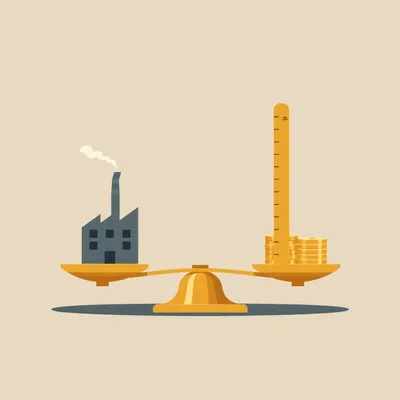
You know, Herman, I was thinking about this the other day while I was looking at some of these new venture capital decks that have been crossing my desk. There is this strange linguistic shift happening where nobody just gives money away anymore. Everything has to be an investment. Everything needs a return profile. It makes me wonder if we have actually forgotten how to be generous without a spreadsheet. It is the philanthropy paradox, really. Can you truly call it giving if you are expecting a five percent internal rate of return at the end of the day? We are witnessing the shift from the charitable donation to the impact asset class as the dominant paradigm for solving the world's problems.

Herman Poppleberry here, and you are hitting on exactly what Daniel was asking us about in his prompt this morning. Our housemate Daniel has been following this trend too, and he sent us a really sharp question about the tension between traditional philanthropy and this rising tide of impact investing. It is basically the question of whether the inclusion of a profit incentive is a contradiction in terms when we talk about doing good. Is impact investing a successor to philanthropy, or is it a complete replacement that might actually be eroding the foundations of what it means to help others?
It is a fascinating paradox. We are moving from an era where you wrote a check to a soup kitchen and felt good about it, to an era where you buy into a fund that builds sustainable housing and expect your principal back with interest. And look, I get why people are excited about it. The numbers are staggering. But it feels like we are trying to redefine the very nature of human kindness into something that fits into a diversified portfolio.
It really is a massive shift. For those who might not be tracking the specific terminology, impact investing is essentially the practice of investing in companies, organizations, and funds with the intention to generate a measurable, beneficial social or environmental impact alongside a financial return. That alongside part is the kicker. It is not just about doing good, and it is not just about making money. It is trying to do both simultaneously. And as Daniel pointed out, the proponents of this model argue that traditional philanthropy is just too small. They call it the scale argument.
Right, the scale argument. That is the big one. They say, look, there is only so much philanthropic capital in the world, maybe a few hundred billion dollars a year in the United States, but there are tens of trillions of dollars in the global capital markets. The United Nations has estimated that we need between five trillion and seven trillion dollars every single year to meet the Sustainable Development Goals by twenty thirty. Traditional charity cannot even touch those numbers. So, the logic goes, if we can just nudge a small percentage of that private capital toward social goals by offering a profit, we can solve problems that charity could never dream of tackling.
That is the pitch. But it raises a really deep philosophical question. We have covered pieces of this before, like in episode four hundred thirty-nine when we looked at the new rules of impact investing, but today I want to really interrogate that scale argument. Is profit actually the necessary evolution of charity, or is it just a semantic rebranding of capitalism to make us feel better about the bottom line? Because if we look at the data, the global impact investing market has ballooned to over one point one six trillion dollars as of late twenty twenty-five. That is a massive pool of capital, but we have to ask: what is it actually doing that a government grant or a billionaire's foundation could not?
Well, let us start right there with that critique of the scale argument. Because on the surface, it sounds mathematically irrefutable. If you want to fix a trillion-dollar problem, you need trillion-dollar capital. But here is my concern, Herman. When you introduce a profit motive, you inherently change the nature of the problem you are willing to solve. You start looking for the problems that have a business model attached to them. You are looking for the low-hanging fruit of social change. What happens to the problems that are just... well, expensive, messy, and fundamentally unprofitable?
That is the fundamental flaw in the market-based solution for non-market problems. We have seen this play out in sectors like for-profit education in low-income regions. There was this huge push for impact investors to fund private schools in places like sub-Saharan Africa or parts of India. The idea was that the government schools were failing, so private enterprise could step in, charge a very small fee, and provide a better education while still making a modest profit. But what actually happened in many cases? To maintain that profit margin, these schools had to cut teacher pay to the bone, use standardized, scripted curricula that lacked any depth, and they ended up cherry-picking the students who were easiest to teach. The most vulnerable children, the ones with learning disabilities or the ones whose parents could not even afford the tiny fee, were left even further behind. The market did not solve the education crisis; it just created a two-tier system where the poor were commodified.
And that is the microfinance trap all over again. Remember when microfinance was the darling of the impact world? The idea was that small loans to entrepreneurs in developing nations would lift entire communities out of poverty. And in the beginning, when it was mostly non-profit and community-based, it did amazing things. But then, it scaled. It became a for-profit asset class. Large banks and private equity firms got involved. Suddenly, the pressure to show returns led to aggressive lending, high interest rates, and in some regions, like Andhra Pradesh in India back in twenty ten, it led to a massive debt crisis. People were taking out new loans just to pay off the interest on old ones. The mission was to empower, but the profit motive turned it into something that looked a lot like predatory lending. When you have to pay back investors, the borrower's well-being becomes secondary to the interest payment.
It is a classic example of mission drift. When you have fiduciary duties to investors, that will almost always win out over the social mission when things get tough. And this leads us to a really interesting technical mechanism that a lot of people do not realize is happening behind the scenes in the impact world. It is called blended finance. This is where you take some public money, maybe from a government aid agency, or some philanthropic money from a foundation, and you use it to de-risk a private investment.
Wait, let me make sure I have this straight. So you are using charitable money—money meant for the public good—to make a private investment safer for a billionaire or a massive hedge fund?
Precisely. They call it catalytic capital. The argument is that this capital draws in the big private players who otherwise would not touch a risky project in a developing nation. It creates a waterfall structure where the non-profit money takes the first loss if things go south. But if you step back and look at the optics of that, it is essentially the public or the charitable sector subsidizing corporate profit under the guise of impact. We talked in episode four hundred thirty-nine about how this market has grown, but if a large chunk of that one point one six trillion dollars is only moving because it is being subsidized or guaranteed by traditional non-profit funds, are we actually creating more total good? Or are we just shifting the cost of doing business onto the taxpayer or the donor while the investor keeps the upside?
It feels like a shell game. And it brings up the question of additionality. In the investment world, additionality is the idea that the positive impact would not have happened anyway without your specific investment. If I invest in a solar farm that was already going to be built because it is highly profitable and the local government is offering huge tax breaks, I am not really creating impact. I am just capturing the return of a green asset. But a lot of impact investing today seems to be just that—claiming credit for things the market was already doing. It is the social version of greenwashing, or what we might call impact washing.
And that is where we get into the realm of ESG, which stands for Environmental, Social, and Governance criteria. A lot of what is called impact investing is actually just ESG risk management. It is companies saying, we are going to avoid getting sued for labor violations or environmental spills, so we are an impact company. But avoiding harm is not the same as actively solving a problem. Traditional philanthropy, for all its flaws and its smaller scale, has the freedom to be truly radical. It can fund the things that have zero chance of a financial return. It can fund basic research, or legal advocacy, or support for the terminally ill. Those things do not scale in a way that generates a dividend. You cannot put a price tag on the dignity of a hospice patient.
Right, and that brings up a really important point about the speed of capital. Impact investing is often much faster. You can move a billion dollars through a fund structure much quicker than you can move a billion dollars through a traditional grant-making process at a foundation. But is speed always a good thing? In social change, speed can sometimes be destructive. It takes time to build trust in a community. It takes time to understand the nuances of a local culture. If you are a fund manager with a five-year exit strategy, you are not going to wait ten years for a community to develop its own leadership. You are going to push for measurable, quantifiable metrics that you can put in your quarterly report to show your LPs that you are hitting your targets.
You are hitting on the difference between outputs and outcomes. An output is something you can count easily, like the number of laptops delivered to a school. An outcome is the actual long-term change, like whether those kids are better prepared for life twenty years later. Impact investing loves outputs because they look great on a spreadsheet. Philanthropy, at its best, is willing to wait for the outcomes. But let us look at the history here, because this is not a new tension. How long has philanthropy actually been a thing? I mean, we use the word all the time, but the concept of giving money to help people you do not know—where does that actually come from?
It is a deep history, Herman. The word itself comes from the Greek philanthropos, which literally means loving humanity. In the ancient world, particularly in Greece and Rome, there was a very robust system of giving, but it looked very different from what we think of as charity today. There was this concept called liturgies in ancient Athens. If you were a wealthy citizen, it was not just expected, it was often legally required that you would fund certain public works. You might pay for the maintenance of a trireme, which is a warship, or you would fund a theatrical production for a festival.
So it was like a tax, but with your name on it?
It was about civic duty and, more importantly, about status. This leads us to the Roman system of patronage. If you were a man of means like Gaius Maecenas, who was a close advisor to Augustus Caesar, you would spend your fortune supporting poets like Horace and Virgil. This is where we get the word maecenas to describe a patron of the arts. But here is the thing: Maecenas was not doing this out of the goodness of his heart in a vacuum. He was doing it to build a cultural legacy for the empire and to ensure that the greatest minds of his time were aligned with the political goals of his friend, the Emperor.
So it was a quid pro quo. I give you the money to write your poetry, and you make sure that the poetry reflects well on me and the state. That sounds a lot like what we discussed in episode nine hundred eighty-seven regarding reputation laundering. The ultra-wealthy using their wealth to edit history and buy social capital. If you look at the patronage systems of the ancient world or even the Renaissance with the Medici family in Florence, they would likely look at modern impact investing and find it incredibly familiar. The Medici did not just give money away; they invested in the beauty and the power of their city to solidify their own political and economic control. They were impact investors in the sense that they wanted a return, but their return was social standing, political stability, and a legacy that would last for centuries.
That is such an important distinction. Ancient philanthropy was often about agape, the Greek word for unconditional love or giving without expectation, but the patronage system was a social contract. Impact investing feels like a move back toward that patronage model, but with a financial contract added on top. If I am an impact investor today, I am not just getting the reputation boost and the social capital, I am also getting my five percent plus my principal back. It is like having your cake and eating it too. I think historical figures like Maecenas or Cosimo de' Medici would actually be jealous of modern impact investors. They had to spend their money and it was gone. They got the status, but the gold stayed with the artist or the architect. Today, we have figured out a way to try and get the status while keeping the gold.
But does that actually work? Can you really buy the same level of social transformation if you are constantly looking at the exit door? I suspect the answer is no. Because when you are a patron, you are committed. You are tied to the success of the person or the institution you are supporting. When you are an investor, you are tied to the performance of the asset. Those are two very different psychological states. And from a conservative perspective, I actually find the honesty of the old patronage system more refreshing. It was a clear exchange. Today, we wrap everything in this language of selfless global problem-solving, but the underlying structure is still very much about wealth preservation and growth.
There is also the question of what this does to our civil society. If we decide that every social problem must have a market-based solution, we are essentially saying that the market is the ultimate arbiter of what is worth solving. In a free society, we need a robust non-profit sector that can act as a check on both the government and the market. If the non-profit sector just becomes an extension of the venture capital world, we lose that independent voice. We lose the ability to advocate for things that are inherently unprofitable but deeply necessary for human flourishing.
Like what? Give me a concrete example of something that impact investing would never touch.
How about prison reform or the defense of civil liberties? There is no business model for making sure that a prisoner is treated humanely or that a marginalized group has their voting rights protected. You cannot generate a dividend from justice. You cannot put a price tag on the freedom of speech. These are things that require pure, unadulterated philanthropy—or government intervention. When we try to force everything into the impact investing mold, we run the risk of ignoring the very foundations of a just society because they do not have an internal rate of return.
That is a powerful point. It is almost like we are trying to outsource our moral responsibilities to the invisible hand of the market. And look, I am a big believer in the power of the market to create wealth and innovation. But the market is a tool, not a deity. It is great at allocating resources for things people want to buy, but it is not always great at protecting the things we all need but no one can own. This brings us back to that scale argument. Proponents say philanthropy is too small. But maybe it is small because we have made it small. If we spent as much time and energy encouraging true, sacrificial giving as we do trying to engineer complex financial instruments that let people feel good while staying rich, maybe the philanthropic pool would be a lot larger.
Instead, we have created this middle ground where we tell people they do not have to choose between doing good and doing well. And when you tell people they do not have to choose, they usually choose to do well and hope the good follows. It is the ultimate comfort for the modern conscience. But I think we need to give our listeners some practical ways to navigate this. Because look, many people listening to this probably have an ESG fund in their retirement account, or they might be looking at putting money into a social impact bond. How do they actually tell the difference between a genuine attempt to solve a problem and just a clever bit of financial engineering?
The first test is the additionality test we mentioned earlier. Ask yourself: would this thing happen without this specific impact capital? If you are investing in a large-cap company that just happens to have a good environmental rating, you are not really doing impact investing. You are just doing smart risk management. True impact investing usually happens at the early stage, in places where capital is scarce. It is where you are taking a risk that others are not willing to take.
And the second test is the trade-off test. Is the fund manager willing to accept a lower-than-market return in exchange for a higher social impact? If the answer is no—if they are promising market-rate returns plus social impact—you should be very skeptical. In the real world, there is almost always a trade-off. If a project were both highly profitable and highly impactful, the traditional market would have already funded it. The whole reason we need impact investing is to bridge the gap where the market fails. If there is no trade-off, there is probably no extra impact.
That is a great rule of thumb. And for those who are looking at their own portfolios, I would say: audit your definitions. Are you looking for ESG-compliant, which is basically just avoiding harm, or are you looking for impact-first, which is actively seeking to solve a problem? Those are two very different strategies. ESG is about protection; impact is about creation. Most of what is marketed to retail investors today is just ESG. It is a set of filters, not a catalyst for change.
I also think it is important for people to keep a portion of their giving as pure, traditional philanthropy. Do not let the investment mindset colonize your entire charitable life. Give some money away where you expect absolutely nothing back—no tax receipt, no reputation boost, no dividend. Just give it because it is the right thing to do. There is a psychological and spiritual health that comes from that kind of giving that an investment can never replicate. We talked about this a bit in episode eight hundred fifty-two, about building a post-capitalist economy—not in the sense of getting rid of markets, but in the sense of recognizing that the market cannot be the only way we relate to each other. We need spaces of pure gift. We need spaces of pure grace.
So, looking ahead, where does this go? If impact investing continues to grow and eventually dwarfs traditional philanthropy, what happens to the unprofitable problems? I think we are already seeing the answer. We are seeing a widening gap between the problems that are fashionable and profitable, and the problems that are messy and expensive. We will have a hundred different apps for mental health because those are scalable and profitable, but we will still have people sleeping on the streets because fixing chronic homelessness is hard, expensive, and does not have a clear exit strategy for a venture capital fund. We will have beautifully designed eco-resorts, but we will still have crumbling infrastructure in rural areas where there is no profit to be made in fixing a bridge.
It is a two-tier system of social care. One for things that can be commodified and one for things that are left to a shrinking and underfunded public sector. And that is a dangerous place to be. It leads to a society where your access to help depends on whether your problem can be turned into a product. When we call impact investing the successor to philanthropy, we are implicitly saying that the old way was a failure. But the old way—the way of Maecenas, the way of the medieval guilds, the way of the local community chest—was based on a different set of values. It was based on solidarity and mutual obligation, not on return on investment.
It is funny, we started by talking about how ancient patrons would be jealous of us, but in a way, maybe we should be jealous of them. They knew exactly what they were doing. They were building a legacy. They were investing in their people. There was an honesty to the patronage system that we have lost in our pursuit of the perfect, frictionless, profitable impact. It really makes you think about the value of the things that cannot be measured. We live in an age that is obsessed with metrics. We want to quantify everything. But you cannot quantify the dignity of a person who is helped without being turned into a data point. You cannot quantify the ripple effect of a teacher who is supported by a community simply because they believe in the power of education, not because they are part of a for-profit chain.
Well, this has been a deep one, Herman. I think Daniel really hit on something fundamental here. It is not just about finance; it is about how we see our responsibility to each other. If you have been following along and thinking about your own approach to giving or investing, we would love to hear your thoughts. It is a conversation that is only going to get more important as more and more of our social life is pulled into the orbit of the financial markets.
And if you are finding these deep dives valuable, do us a favor and leave a review on your podcast app or on Spotify. It really does help other people find the show and join the conversation. We have been doing this for over thirteen hundred episodes now, and it is the support from the listeners that keeps us digging into these weird prompts.
For sure. And remember, you can find our full archive and all the ways to subscribe over at myweirdprompts dot com. We have got an RSS feed there for the purists, and if you are on Telegram, just search for My Weird Prompts to get notified every time a new episode drops. We have covered everything from battery chemistry to the history of reputation laundering, so there is plenty to explore.
Before we go, I wanted to touch on one more thing regarding that historical shift. If you look at the early twentieth century, with the rise of the great American foundations like Carnegie and Rockefeller, they were actually the ones who started this move toward a more scientific philanthropy. They wanted to find the root causes of problems, not just treat the symptoms. In a way, impact investing is the logical conclusion of that scientific approach. It is the ultimate attempt to rationalize and optimize human kindness.
But when you optimize for one thing, you always lose something else. That is the law of trade-offs. If you optimize for scale and efficiency, you lose the local, the personal, and the unconditional. Carnegie famously said that the man who dies rich dies disgraced. He believed in the total distribution of wealth during one's lifetime. But modern impact investing allows you to never actually give the wealth away. You just keep moving it from one impact asset to another. You never have to face that moment of true letting go.
That is the most profound difference of all. Philanthropy is an act of letting go. Impact investing is an act of holding on, just with a different grip. I think that is the perfect note to end on. It is about the grip. How tightly are we holding on to our resources, and what does that do to our ability to actually help?
Well said, Herman. And to our listeners, thanks for sticking with us. We know we went deep today, but these are the questions that define what kind of future we are building. Whether it is a future built on contracts or a future built on community.
And if you want to hear more about the dark side of these financial instruments, definitely check out episode one thousand three hundred twenty-four. It is a great companion piece to what we discussed today, pulling back the curtain on some of the more egregious examples of impact washing.
Yeah, that one is a real eye-opener. Alright, truly signing off now from Jerusalem.
Take care, everyone. This has been My Weird Prompts.
See you next time.
Goodbye.
Talk soon.