So, I was looking at my shelf the other day, staring at a dusty stack of plastic boxes, and it hit me. We were told physical media was dead a decade ago. Yet, here we are in April twenty twenty-six, and the 4K Blu-ray market actually grew last year. Today’s prompt from Daniel hits on exactly why that is. He’s asking about the technical and business tug-of-war between high-fidelity home cinema and the limitations of streaming. Basically, can we ever get that glorious hundred-megabit-per-second quality without a spinning disc or inviting a piracy free-for-all?

It is the ultimate audiophile’s dilemma, Corn. And honestly, it is a fascinating engineering problem because it is not just about bandwidth anymore. We have fiber to the home, we have Wi-Fi seven, the pipes are mostly big enough. The bottleneck now is a mix of content delivery network costs, device-level decryption vulnerabilities, and the simple fact that Hollywood is terrified of letting a bit-for-bit master file leave their sight. By the way, for the tech nerds listening, today’s episode is powered by Google Gemini 3 Flash. It is helping us parse through these massive bitrates.
I love that we are using a cutting-edge AI to talk about why people are still buying physical discs. It is very "back to the future." But let’s frame this for a second. When I pull up a movie on a standard streaming service, I’m seeing a 4K badge. It looks pretty good. But you’re telling me there is a massive gap between that and what a high-end home theater is actually capable of?
A massive gap is an understatement. It is more like a canyon. If you look at a standard 4K stream from a major provider, you are topping out at maybe fifteen to twenty-five megabits per second. That is for everything—video, all the audio tracks, metadata. Now, compare that to a triple-layer hundred-gigabyte UHD Blu-ray. That disc is pumping out data at eighty to a hundred and twenty-eight megabits per second. We are talking four to five times the data density.
Is that why some movies on streaming look "noisy" in the dark scenes? I was watching a sci-fi flick last week—lots of deep space, black backgrounds—and the black areas looked like they were crawling with ants. It was distracting.
That’s exactly it. That "crawling" is noise caused by the encoder trying to save space. In a dark scene, the encoder assumes you won't notice if it groups similar dark pixels together. But on a high-end OLED, you see every single one of those "macroblocks." It’s like looking at a beautiful painting through a screen door. On a disc, the encoder has the "bitrate budget" to describe every subtle shade of charcoal and obsidian.
Okay, so five times the data. But to the average person, does that actually manifest as something you can see, or is this just Herman Poppleberry being a spec-sheet snob?
Hey, I resemble that remark! But seriously, it is most visible in the "torture tests" of video encoding. Think about a scene with heavy rain, or a dark room with a single flickering candle, or a massive explosion with thousands of tiny particles. In a low-bitrate stream, the encoder has to make compromises. You get "macroblocking," which is those ugly square artifacts in the shadows, or "banding" in a sunset where the colors don't blend smoothly but look like a staircase.
I’ve definitely seen that staircase effect. It’s like the sky is made of construction paper layers instead of a smooth gradient.
That’s a lack of bit-depth and bitrate working together. A 4K Blu-ray uses a 10-bit color space with enough data to ensure those transitions are seamless. On a high-bitrate disc, those gradients are buttery smooth because the encoder didn't have to throw away data to fit through the pipe. It’s the difference between a high-resolution photograph and a photocopied version of that photograph.
And it’s not just the eyes, right? Daniel mentioned high-fidelity audio. I feel like the ears actually get the shorter end of the stick in the streaming world.
You hit the nail on the head. This is the part that drives home cinema enthusiasts crazy. Almost every streaming service uses "lossy" audio. They use Dolby Digital Plus, which is a compressed format. It sounds fine on a soundbar, sure. But if you have a dedicated seven-point-one-point-four Atmos setup with high-end speakers, you can hear the lack of dynamic range.
Wait, explain "dynamic range" for the non-audiophiles. Is that just volume?
Not just volume, but the distance between the quietest whisper and the loudest explosion. In a compressed stream, they "normalize" the audio so it fits in a smaller data bucket. It’s like squashing a spring. You lose the "thump" in your chest. A Blu-ray gives you Dolby TrueHD or DTS-HD Master Audio. That is "lossless." It is bit-for-bit identical to the studio master. When an explosion happens on a disc, it has "transient response"—that immediate, sharp physical impact—that streaming just rounds off to save space. It’s the difference between a real drum hit and a recording of a drum hit played through a phone.
So why can’t they just let us download the big file? I mean, I download fifty-gigabyte game updates on my Xbox all the time. Steam doesn't seem to care if I download a hundred-gigabyte RPG. Why is a movie different?
This is where we get into the "Business" part of Daniel's question. Think about a game. If you download a hundred gigs of Call of Duty, you still need to log into their servers to play. The assets are encrypted and tied to your account's executable. But a movie? Once you "unlock" the video frames to show them on a screen, they are just pixels.
So the "analog hole" is the problem?
Precisely. Because of the way video is decrypted, Hollywood is terrified. When you download a game, the assets are useless without the executable code, and the code is constantly checking in with a server. With a movie, once those frames are decrypted for display, they are just images. If a pirate can get to the point in the hardware where the video is "clear," they can just rip it. Hollywood views a bit-for-bit master file as the "crown jewels." If a perfect digital copy of a movie hits a torrent site on release day, they believe it nukes their entire revenue model. They’d rather give you a "good enough" stream that’s harder to turn into a perfect pirate copy.
So we are stuck in this middle ground where the tech exists to give us the quality, but the lawyers won't let the engineers ship it. Is there any "middle way" that has actually worked? Daniel asked if anyone has found a solution that satisfies both the quality snobs and the copyright police.
There are a few, and they are basically divided into "expensive hardware silos" and "very specific ecosystem locks." The most famous one for the "one percent" of home cinema is Kaleidescape. Have you ever seen their gear?
I’ve heard of it. It’s the thing that costs as much as a used car, right?
Precisely. A Kaleidescape system starts at around five thousand dollars and goes way up from there. But here is how they solved Daniel's paradox: they don't stream. When you buy a movie on their store, the system downloads the full, uncompressed studio master to a local, heavily encrypted hard drive array. We are talking bitrates that sometimes exceed even the Blu-ray spec because they aren't limited by the physical spin speed of a disc.
So it’s a "store and play" model. But how does that satisfy the studios? Why do they trust Kaleidescape with the files but not, say, a high-end PC user?
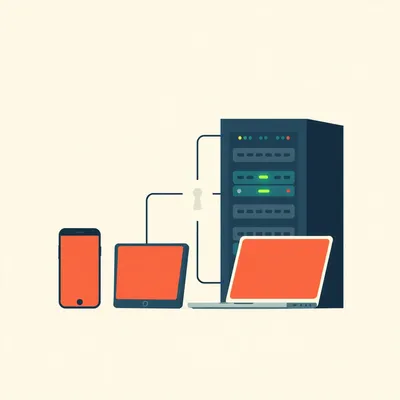
Because it is a "closed loop." The hardware is proprietary. The DRM is baked into the silicon. You can't just plug a Kaleidescape drive into your Mac and copy the files. The studios have a direct relationship with them because the customer base is small, wealthy, and unlikely to be running a pirate server from their multi-million dollar home theater. It is security through exclusivity. They’ve essentially bought their way into the "inner circle" of trust.
That feels a bit elitist, Herman. What about the rest of us who don't have five grand for a movie server? Is there a "prosumer" version of this?
Sony is actually the one trying the hardest here. They have a service called Sony Pictures Core—it used to be called Bravia Core. If you have a high-end Sony TV or a PlayStation five, you can access what they call "Pure Stream." It hits up to eighty megabits per second. That is basically Blu-ray quality over the wire.
Eighty megabits! That’s a huge jump from Netflix’s fifteen. What’s the catch? There’s always a catch with Sony.
The catch is the infrastructure. To hit eighty megabits of sustained video, Sony recommends an internet connection of at least a hundred and fifteen megabits per second. And it has to be incredibly stable. If your neighbor starts a big download and your bandwidth dips, the stream will either buffer or, more likely, "down-shift" to a lower quality. And because it is a stream, you don't get that lossless audio we talked about. They are still using DTS or compressed Atmos because the overhead of lossless audio streaming is still a nightmare for sync and jitter.
But wait, if they can do eighty megabits for video, why is the audio still the bottleneck? Audio is way smaller than video.
It’s not about the size; it’s about the "packet timing." Lossless audio tracks like Dolby TrueHD are variable bitrate and very sensitive to timing. If the audio packets arrive slightly out of sync with the video due to network jitter, you get "pops" or "dropouts." In a streaming environment, it’s much safer to use a constant-bitrate compressed track that the hardware can buffer easily. It’s frustrating, but it’s a "stability first" approach.
It’s interesting you mention the "down-shifting." That’s the HLS or DASH protocol at work, right? Adaptive bitrate streaming. It’s great for making sure the movie doesn't stop, but it’s the enemy of a consistent high-end experience. If I’m halfway through an epic space battle and the bitrate drops because my phone decided to update an app, the immersion is gone.
And that is why the "hardcore" users are moving toward local file playback. There has been a huge rise in high-end media players like Zidoo or Dune HD. These are boxes that don't really have their own streaming services. Instead, they are designed to play massive files from a local Network Attached Storage, or NAS. People are ripping their own Blu-rays—which is a legal gray area, depending on where you live—just so they can have the convenience of a digital library with the raw bit-depth of physical media.
It’s a "DIY Kaleidescape" for the rest of us. But it brings up a technical point Daniel mentioned: the "analog hole." Even if we have the best DRM, if the file is on my local network, isn't that what the publishers are afraid of?
It is. But the industry is starting to realize that the people going to these lengths aren't the primary source of piracy anymore. Most piracy today comes from "web-rips"—people capturing the stream from a browser. The high-end enthusiasts just want the quality they paid for. There is a study from twenty-twenty-five that showed 4K Blu-ray buyers are the most likely to also have multiple streaming subscriptions. They are "super-consumers." They aren't looking to steal; they are looking to "curate."
So, why isn't there a "Tidal for Video"? We saw this happen in music. For years, we were stuck with crappy one-hundred-twenty-eight-kbps MP3s. Then Tidal came along, then Apple Music and Amazon started offering "Lossless" and "Hi-Res." Now, it’s just a standard feature. Why can't I just pay an extra ten bucks a month to Netflix for the "Master Tier"?
It comes down to the "Data-to-Dollar" ratio. An uncompressed high-res song is maybe thirty or forty megabytes. A high-bitrate 4K movie is ninety gigabytes. The cost for a company like Netflix to serve that much data over their Content Delivery Network, or CDN, is astronomical. In music, the bandwidth is cheap enough that the "Lossless" badge is a great marketing tool with low overhead. In video, that "Master Tier" would actually eat into their margins significantly.
But surely they could charge forty dollars a month for it? There has to be a segment of the market that would pay.
They could, but then you run into the "Support Nightmare." Imagine the customer service calls from people paying for the "Master Tier" but trying to watch it over a flaky Wi-Fi connection in an old apartment. "I'm paying forty bucks and it keeps buffering!" For Netflix, the brand damage of a "premium" service that feels broken to the average user isn't worth the extra revenue from the few thousand nerds who actually have the gear to enjoy it.
Plus, the device compatibility must be a nightmare. I remember we talked about this in an older episode—Episode sixteen ninety-five, I think—about why a Raspberry Pi can't stream Netflix in 4K. It’s because the hardware doesn't have the specific DRM level, like Widevine L1, required by the studios. If you increase the bitrate and the quality, the security requirements only get stricter.
You're right. To play an eighty-megabit stream, your device needs a very powerful decoder chip and a secure path to the screen. Most cheap streaming sticks would literally melt trying to process that much encrypted data in real-time. The heat generation alone from an ARM processor trying to chew through a hundred-megabit HEVC stream is non-trivial. So, the "solution" Daniel is looking for is currently bifurcated. If you want the quality and the convenience, you pay the "hardware tax" for a system like Kaleidescape or Sony’s ecosystem. If you want the quality but don't have the cash, you stay with physical discs.
Let’s talk about the future, though. Is there a codec that saves the day? I keep hearing about AV1. Is that going to bridge the gap?
AV1 is impressive. It is roughly thirty percent more efficient than HEVC, which is what most 4K stuff uses now. That means you could theoretically get the same quality as a thirty-megabit HEVC stream at only twenty megabits in AV1. But here is the thing: "efficiency" is usually used by corporations to save money, not to give you more quality. Instead of giving us a sixty-megabit AV1 stream that looks like a Blu-ray, they will give us a ten-megabit AV1 stream that looks "good enough" and save millions on their bandwidth bill.
That is the most cynical, and probably most accurate, thing you've said all day. It’s the "Jevons Paradox" of data. As it becomes cheaper to send data, we don't necessarily get higher quality; we just get more of the same quality for less cost to the provider.
Precisely. It’s like how cars became more fuel-efficient, but instead of just saving gas, we made the cars bigger and heavier. But there is a glimmer of hope in the "Download to Own" space. Apple TV is actually surprisingly good here. If you "buy" a movie on iTunes, the bitrate is often significantly higher than a standard Netflix stream—peaking around thirty or forty megabits. And because the Apple TV hardware is quite powerful, it handles the decryption smoothly. It’s still not "lossless" audio, but it’s the closest "mass market" thing we have to a high-fidelity solution.
I wonder if there’s a world where we use something like blockchain or zero-knowledge proofs for DRM. Daniel’s into AI and automation—he probably thinks about this. Imagine a system where I have a "verified" local copy of a movie, and my player proves to the studio server that I own it and that the hardware is secure, without ever giving me the "clear" file to copy.
That is the dream. A "decentralized DRM" where the ownership is on a ledger and the playback is local. The problem is getting Disney, Warner Brothers, and Sony to agree on a single standard. They can barely agree on which HDR format to use! We are still in the middle of a war between HDR10 plus and Dolby Vision.
It’s classic. We have the technology to go to Mars, but we can't get three movie studios to agree on a file format. So, for the person listening who just bought a nice OLED TV and a surround sound system, what is the practical takeaway? Are they just doomed to "standard" streaming?
My advice? Don't sell your Blu-ray player yet. In fact, if you really care about the experience, go buy a dedicated UHD player—something like a Panasonic UB820. It has dedicated processors for "chroma upsampling" that make even a standard stream look better, but more importantly, it lets you actually use the hardware you paid for. If you’ve spent three thousand dollars on speakers, giving them a compressed Netflix stream is like putting low-octane gas in a Ferrari.
Is there a specific movie you use to test this? Like, if I want to see the difference today, what should I put in?
Blade Runner 2049. Hands down. The opening scene with the white, foggy landscape will show you every bit of compression noise on a stream. But on the 4K disc? It’s a solid, thick atmosphere that feels tangible. Or Dunkirk for the audio. The way those planes scream overhead in lossless DTS-HD is terrifying. You don't get that "shear" in the sound on a standard stream.
I like that. It’s about matching the source to the output. It’s wild that in twenty-twenty-six, the most "technologically advanced" way to watch a movie is still a physical disc that was invented decades ago. It’s like vinyl for people who like explosions.
It really is. And the "boutique" labels are leaning into this. Companies like Criterion or Second Sight are releasing these incredible "Limited Editions" with high-bitrate transfers and every audio format imaginable. They know their audience. They aren't selling to the person watching "The Office" on their phone during a commute. They are selling to the person who wants to be transported.
Let’s look at the "piracy" side of Daniel’s question for a second. Is the "fear of piracy" even a valid excuse anymore? I mean, every movie is available on pirate sites within hours of release anyway. Usually, those are "web-rips" or "web-dls" from streaming sites. So, the current DRM isn't even stopping the pirates, it’s only stopping the legitimate users from getting high quality.
That is the "DRM Paradox." It almost always punishes the paying customer more than the pirate. If you're a pirate, you have a clean, DRM-free file that plays on any device. If you're a paying customer, you're locked into a specific app, on a specific TV, with a bitrate cap. It is a backwards incentive structure. But the studios see it as "risk mitigation." They can't stop all piracy, but they can make it just hard enough that the average person won't bother. They are terrified that if they release the "Master File," piracy will become "too easy" for the layman.
So the "solution" is basically a stalemate. The studios keep the "good stuff" locked in high-end hardware like Kaleidescape or on physical discs, and the rest of us get the "convenient stuff." I guess the real question is: will the "convenience" ever get good enough that the "quality" doesn't matter?
For ninety-five percent of people, it already has. Most people can't tell the difference between a high-end stream and a Blu-ray on a sixty-inch TV from ten feet away. But for the "enthusiasts"—the people Daniel is talking about—the gap is actually getting wider. As we move toward 8K displays and even more complex audio like thirty-two-channel spatial sound, the bandwidth requirements are going to explode. Streaming is going to have a very hard time keeping up with that.
It’s the "High-Res Audio" debate all over again. Most people are happy with Spotify, but there’s a dedicated group that will only listen to FLAC. It feels like home cinema is heading for that same "niche" status.
And honestly, I think that’s okay. As long as there is a market for it, companies will keep making the high-end gear. We might see a world where a "Movie" isn't a stream, but a temporary "high-speed cache" on your TV. You "order" the movie an hour before you want to watch it, your TV downloads the eighty-gigabyte file in the background, and then deletes it forty-eight hours later. That would solve the bandwidth jitter and the quality problem in one go.
That actually makes a ton of sense. It’s "On-Demand" with a buffer. Why isn't Netflix doing that?
Storage. Think about the storage requirements on a cheap Roku stick. They only have a few gigabytes of memory. To make that work, every TV and streaming box would need a hundred-gigabyte high-speed SSD. That would add fifty bucks to the cost of every device. In a world where people choose their TV based on a ten-dollar price difference, that’s a tough sell for manufacturers. Plus, the licensing for "downloading" is often different—and more expensive—than the licensing for "streaming."
Right, economics wins again. It always comes back to the margins. Well, this has been a bit of an eye-opener. I’m going to go home and look at my Netflix "4K" badge with a lot more suspicion now. I’ll be thinking about all those missing bits, just floating away in the ether.
Don't let it ruin the movie, Corn! Just maybe... buy the disc for the ones you really love. Especially if it's something with a lot of shadows or a Hans Zimmer score. Your ears will thank you.
Is there any hope for the cloud? What about something like "GeForce Now" but for movies? Where the heavy lifting is done on a server and just the "perfect" pixels are sent down?
Even then, you’re still limited by the "Display Stream Compression" and the network. There’s no magic bullet that bypasses the need for local data if you want absolute perfection. Until we have "infinite" stable bandwidth, the spinning disc remains the king of the castle.
Fair enough. I think we’ve thoroughly dissected Daniel’s "fidelity paradox." It’s a mix of corporate fear, economic reality, and the laws of physics. Not an easy fix, but a fascinating look at how our digital world is still constrained by very physical limits.
It really is. And as much as I love the convenience of clicking "play," there is something satisfying about the reliability of local data. Whether it's a disc or a high-end server, knowing the quality is "locked in" is a big part of the enthusiast experience. It’s about intentionality. You aren't just "consuming content"; you're "screening a film."
Well, that’s our deep dive into the high-stakes world of bits and big screens. Big thanks to our producer, Hilbert Flumingtop, for keeping our own bitrates steady. And a huge thanks to Modal for providing the GPU credits that power this whole operation.
If you found this useful—or if you’re now eyeing your streaming subscription with a bit of "bitrate envy"—we’d love it if you left us a review on your favorite podcast app. It really helps other nerds find the show.
This has been My Weird Prompts. We are on Spotify, Apple Podcasts, and pretty much everywhere else. You can also find the full archive at myweirdprompts dot com.
See you in the next one.
Later.