Alright, today’s prompt from Daniel is about a situation that is unfolding as we speak. He’s asking about the mechanics of surviving behind enemy lines after a shoot-down, specifically in the context of the American pilot currently on the ground in Iran. It is the absolute nightmare scenario for any aviator, and honestly, the technical and psychological hurdles involved in a rescue like this are just staggering.

It really is a race against entropy, Corn. And just to put it out there, Herman Poppleberry here, ready to dive into the weeds because this isn't just a story about a missing person. It’s a story about a massive, multi-billion dollar infrastructure that exists for the sole purpose of retrieving a single human being from the most hostile environment imaginable. By the way, fun fact for everyone listening, today’s episode is actually being powered by Google Gemini three Flash.
Well, hopefully Gemini has better navigation skills than that pilot’s GPS did. I mean, we’re looking at a situation where an F-thirty-five or an F-fifteen-E went down near Tehran. That is not exactly a friendly neighborhood for a stroll. Secretary Hegseth was just saying we had control of the skies, and then boom, reality catches up. It’s a massive psychological blow, but for the person in the cockpit, the politics don't matter. The only thing that matters is what happens the second that canopy blows and they’re hanging under a parachute.
That transition is violent, Corn. People think of ejecting as just pushing a button and floating down, but it’s an explosion underneath your seat that subjects your body to twenty Gs. You are likely injured, disoriented, and you are descending into a country that has been at war with yours for five weeks. The moment that pilot hits the ground, a clock starts ticking. In the search and rescue world, we talk about the Golden Hour. If you can’t get them in the first sixty minutes, the statistical probability of a successful recovery drops off a cliff because the enemy is triangulating the crash site just as fast as we are.
So, let’s talk about that first hour. Daniel mentioned the training these guys go through, the SERE program. Survival, Evasion, Resistance, and Escape. I’ve heard stories about SERE school being the most miserable two or three weeks of a pilot’s life, and that’s when it’s just practice. What are they actually doing the moment their boots touch Iranian soil?
The very first thing is what they call "hole up and heal." If you’ve just ejected, you’re probably bleeding, you might have a compressed spine, and you’re definitely in shock. The instinct is to run, but SERE training teaches you to get away from the immediate parachute landing fall area, find deep cover, and assess. You have to hide that parachute. If a bright white and orange silk sheet is draped over a bush, you’re done. You bury it, you move to a "hide site," and you start the communication protocol.
And that’s where the tech comes in. They aren't just shouting for help. They have these survival radios, the P-R-C one-twelve or the newer versions. How do those work without every Iranian radio tower within a hundred miles picking up the signal and saying, "Hey, the American is right here"?
That is the genius of modern combat search and rescue, or C-S-A-R. These radios use what’s called "burst transmission." Instead of a constant "help me" signal, the pilot presses a button and the radio sends a tiny, millisecond-long packet of encrypted data. It contains their G-P-S coordinates and a unique identifier. Because it’s so short and encrypted, it looks like background noise to most standard scanners. It’s specifically designed to be picked up by overhead assets, like an R-C-one-thirty-five Rivet Joint or an E-three Sentry, which are orbiting hundreds of miles away.
So it’s like a digital flare that only your friends can see. But Iran isn't exactly a low-tech backwater. They’ve got sophisticated electronic warfare capabilities. Can they spoof those signals or jam them?
They certainly try. This is why the evasion part of SERE is so critical. The pilot isn't just sitting there waiting for a helicopter. They are moving, but they’re moving with extreme intentionality. They move only at night. They avoid what SERE instructors call "lines of drift." If you see a path, a road, a dry creek bed, or a ridge line, you stay away from it. Why? Because that’s where people go. If you’re a local militia or a search party, you’re going to walk the easy path. The pilot has to walk through the thorns, the mud, and the steepest terrain because that’s the only place the enemy won't look.
I love the idea of "lines of drift." It’s basically "don't be predictable." But we’re talking about southwestern Iran here. It’s not all empty desert. There are people everywhere. Daniel noted that if this happened near a populated area like Tehran, evasion becomes almost impossible because of "human sensors."
Well, not exactly, but you're right. The density of the population is the biggest threat. In a desert, you’re worried about heat and water. In a semi-urban environment, you’re worried about a shepherd, a kid playing outside, or a farmer. If one person sees you, the word spreads through the local village in minutes. This is why pilots carry a "blood chit." It’s a piece of cloth with the American flag and a message in Farsi that basically says, "I am an American, if you help me and keep me safe, the U.S. government will reward you." It’s a gamble. Sometimes it works, sometimes it just tells the person exactly who to call to get a different kind of reward from their own government.
It’s a literal "get out of jail free" card that costs a few million dollars in taxpayer money if it actually gets used. But let’s say the pilot manages to stay hidden. They’ve sent their burst transmission, the coordinates are verified. Now, the cavalry has to come in. This is the part that fascinates me because you don't just send a slow-moving helicopter into the most heavily defended airspace in the world without a plan. Who are these "Pararescuemen" Daniel mentioned?
The P-Js. These guys are the only elite force in the entire Department of Defense that is specifically trained for this one mission: personnel recovery. They are essentially a mix of a Navy SEAL, an elite mountain climber, and a trauma surgeon. Their motto is "That Others May Live," and they take it incredibly seriously. If a pilot is down, the P-Js are the ones who go down the hoist or jump out of the plane to get them.
And they’re riding in the new H-H-sixty-W Jolly Green Two, right? I remember reading about those. They’re basically Black Hawks on steroids.
They are. The Jolly Green Two is a marvel. It’s got double the fuel capacity of the older models, which is crucial for deep-penetration missions into Iran. If you’re flying from a carrier or a base in a neighboring country, you need that range. It’s also packed with defensive suites. We’re talking about missile warning systems, chaff, flares, and directional infrared countermeasures to blind heat-seeking missiles. But even with all that tech, a helicopter is still a big, loud, slow target.
Which is why they don't go alone. They have the "Sandy" pilots. I love that callsign. It sounds so friendly for guys who are literally there to rain hell on anyone trying to touch the survivor.
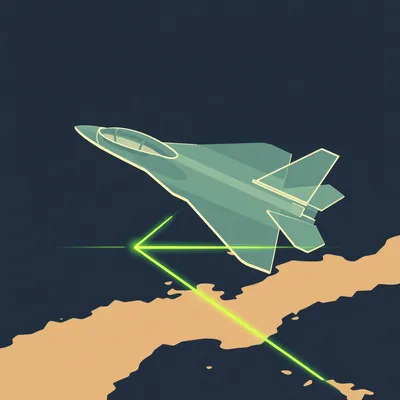
The Sandy mission is usually handled by A-ten Warthogs or F-fifteen-Es. Their job is "Rescue Escort." They loiter over the survivor’s position and act as the eyes and ears for the helicopters. If an Iranian ground team starts closing in on the pilot, the Sandy pilots are authorized to use whatever force is necessary to keep that perimeter clear. They also act as the communication bridge. The pilot on the ground might not be able to reach a base a thousand miles away, but they can reach a jet orbiting five thousand feet above them.
It’s this massive layers-of-the-onion approach. You’ve got the pilot at the center, hiding in a bush. Above him, the A-tens. Above them, maybe some F-twenty-twos providing air-to-air cover so the A-tens don't get jumped. Then you’ve got the H-C-one-thirty-J Combat King tankers circling just outside the danger zone to keep the helicopters fueled. It’s an incredibly expensive, incredibly complex dance.
It’s the ultimate expression of the value the U.S. military places on an individual life. We will risk a hundred lives and a billion dollars in equipment to save one person. And that has a huge effect on pilot morale. If you know that this entire machine will roar to life the second you punch out, you’re much more likely to fly the mission with the necessary aggression. But in Iran, the challenge is the S-A-M network. Iran has spent decades buying and building sophisticated surface-to-air missiles like the S-three-hundred. Pushing a rescue package through that is a gamble every single time.
You mentioned the Golden Hour earlier. What happens if they miss it? Press TV is already claiming they captured the pilot. If that’s true, the mission shifts from "Search and Rescue" to "Tactical Recovery" or potentially a long-term diplomatic nightmare.
If they’re captured, the "Resistance" part of SERE kicks in. Pilots are trained in how to handle interrogations, how to give up just enough information to keep themselves alive without compromising the mission, and how to look for escape opportunities. But capture is the worst-case scenario. The goal is to get them before they ever see an enemy soldier. There’s a psychological aspect for the rescuer too. The P-Js know that every minute they spend in Iranian airspace increases the chance that they’ll become the next person needing a rescue.
It’s that tension between speed and stealth. You want to get in there fast because of the Golden Hour, but if you go too fast and too loud, you get shot down yourself. I’m curious about the urban evasion bit again. If you’re a pilot and you land in a suburban area, what do you even do? You can't exactly "deep hide" in a backyard.
You look for "transitional spaces." Construction sites, abandoned buildings, or even sewage systems. It sounds disgusting, but the goal is to be where no one wants to be. SERE training actually includes urban evasion modules where they teach you how to blend in. You ditch the bright green flight suit if you can. You use a "civilianize" kit if you have one—maybe a plain jacket or a hat. But let’s be real, an American pilot in the middle of an Iranian city is going to stick out like a sore thumb regardless of what they’re wearing. Their best bet is to find a dark corner and stay absolutely still until the extraction team arrives.
And the extraction itself... that’s not exactly a quiet affair. A Jolly Green Two coming into a hover is like a hurricane in a bottle. The dust, the noise, the downwash. It’s a giant "Here we are!" sign.
That’s why the P-Js are so fast. They want to be on the ground for less than two minutes. The helicopter comes in, the P-Js fast-rope or the hoist comes down, they grab the survivor, verify their identity with a "challenge and response" password, and they are gone. They don't linger. They don't do a victory lap. They are at maximum power, staying as low to the ground as possible—what we call "nap-of-the-earth" flying—to stay under the radar.
I remember you talking about "nap-of-the-earth" in a previous life. It’s basically flying so low you’re dodging power lines and trees. In a place like Iran, with its mountainous terrain, that’s incredibly dangerous, especially at night using night vision goggles.
It’s white-knuckle flying. You’re essentially trusting your terrain-following radar and your own eyes to make sure a mountain doesn't suddenly appear in front of you. But it’s the only way to survive. If you pop up to five hundred feet, you’re a target for every radar-guided missile in the region. The courage it takes to fly those missions is just off the charts.
So, we’ve got this pilot on the ground. They’re using their burst radio. The P-Js are spooling up. The Sandy pilots are overhead. What’s the success rate for something like this in a contested environment? I mean, we saw the O'Grady rescue in Bosnia back in the nineties, which was a success, but Iran in twenty-twenty-six is a different beast entirely.
It’s much harder now. The proliferation of drones and cheap thermal imaging means the pilot is much easier to find from the air, and the rescue helicopters are easier to track from the ground. In the nineties, if you were in the woods at night, you were invisible. Now, an Iranian drone with a thermal camera can see your heat signature through the trees. The technological edge we used to have is shrinking. That’s why the coordination between the different layers of the rescue mission is more important than ever. You need your own drones to hunt the enemy drones that are hunting your pilot. It’s a meta-war happening over a single patch of dirt.
It really highlights how much has changed. The "weirdness" of the prompt isn't just the nightmare of being shot down; it’s the incredible complexity of the response. It’s not just "send a chopper." It’s "initiate a multi-domain electromagnetic and kinetic operation to secure a sixty-square-foot area of the earth's surface for five minutes."
That is a perfect way to describe it. It’s a surgical strike where the goal isn't to destroy something, but to retrieve something. And the "something" is a human being with a family, like Daniel’s son Ezra or his wife Hannah. That’s what’s at stake. When you realize that the person in that bush is a father or a son, the effort makes sense.
It’s interesting you mention that, because I think people often forget the human element in all this high-tech talk. We’re discussing G-P-S bursts and infrared countermeasures, but for that pilot, it’s about the next breath, the next footstep, and the hope that they’ll see their family again. That psychological resilience is something you can't really "engineer." SERE training tries to simulate it, but you don't know if you have it until you’re actually there.
They call it the "will to survive." In SERE school, they put you in a mock P-O-W camp, they deprive you of sleep, they make you stay in "stress positions," and they interrogate you. They’re trying to find your breaking point in a controlled environment so that if you ever hit it in the real world, you’ve already been there. You know that you can endure more than your brain is telling you. It’s about building a mental architecture that can withstand the weight of absolute isolation.
And the isolation must be the hardest part. You’re in a country where everyone is looking for you, you’re alone, you’re hurt, and your only link to the outside world is a little plastic box that might not even be working. It’s the ultimate test of the human spirit.
And let’s not forget the "Resistance" phase if they are captured. If the Press TV reports are true, and the pilot has been taken, the mission changes completely. Then it becomes a game of high-stakes diplomacy and potentially special operations to find out where they’re being held. We’ve seen this play out before, and it rarely ends quickly. The goal of the Iranian government would be to use that pilot as a bargaining chip, a trophy to show they can stand up to the U.S. air power.
Which is exactly why the U.S. is so desperate to get them before that happens. If you can snatch them out of the desert before the first Iranian soldier arrives, the story is "U.S. Rescue Mission a Success." If they get captured, the story is "American Pilot Paraded on State TV." The stakes couldn't be higher, both for the individual and for the nation.
It’s a race between two very different machines. One is a massive, slow-moving state bureaucracy trying to find a needle in a haystack, and the other is a high-speed, high-tech rescue force trying to grab that needle before the haystack gets burned down. The technical details of how they do that—the triangulation of signals, the suppression of enemy air defenses, the precision flying—it’s all just a means to an end.
I think one thing that often gets overlooked is the role of the "human sensor" in reverse. We talked about civilians spotting the pilot, but what about the pilot spotting the rescuers? In SERE training, they teach you how to use a signal mirror. It seems so low-tech compared to everything else we’ve talked about, but a flash of sunlight can be seen for twenty miles.
It’s the ultimate backup. If your radio battery dies, or if the electronics are being jammed, a piece of glass and the sun can save your life. There’s something poetic about that. Amidst all this twenty-first-century warfare, a technique used by ancient civilizations is still part of the curriculum for an F-thirty-five pilot. It’s about having layers of redundancy, from the most advanced satellite communication to a simple mirror.
It’s the same with the "blood chit" we mentioned. It’s a piece of cloth. It doesn't need batteries, it doesn't need a signal. It just relies on the basic human motivation of self-interest or compassion. It’s a reminder that even in the most technical environments, the human element is the final variable.
So, what’s the takeaway for us? I think it’s the realization that "survival" isn't a passive act. It’s a highly disciplined, technically supported, and psychologically grueling process. When we see a headline about a downed pilot, we shouldn't just think "Oh, they’re missing." We should think about the massive, invisible machine that is currently vibrating with activity to bring them home.
And the fact that this is happening right now, as we’re sitting here. There’s a person in Iran, right this second, who is leaning on every second of that SERE training. They’re checking their radio, they’re watching the ridgeline, and they’re waiting for the sound of those Jolly Green rotors. It’s a sobering thought.
It really is. And it makes you appreciate the people who choose that life. Not just the pilots, but the P-Js who go in to get them. They know exactly what they’re flying into, and they do it anyway. "That Others May Live" isn't just a catchy slogan; it’s a commitment to put your own life on the line for someone you’ve probably never met.
It’s a hell of a mission. And it’s a hell of a topic for a prompt. Daniel always manages to find the things that are both technically fascinating and deeply human. I think we’ve covered the "how" and the "who" pretty thoroughly, but the "what happens next" is still being written in the skies over Iran.
We’ll be watching. The next forty-eight hours are going to be critical. If that pilot is still evading, their chances are still good. But as the "Golden Hour" turns into the "Golden Day," the pressure on the C-S-A-R teams is only going to increase.
Well, I think that’s a good place to wrap this one up. We’ve gone from ejection seats to burst transmissions to the P-Js, and it’s clear that there is no "easy" part of this process. It’s all high-stakes, all the time.
Before we go, we should probably do the housekeeping. Thanks as always to our producer, Hilbert Flumingtop, for keeping the gears turning behind the scenes. And a big thanks to Modal for providing the G-P-U credits that power this show. We couldn't do these deep dives without that kind of support.
If you’re finding these explorations as interesting as we are, do us a favor and leave a review on your podcast app. It actually really helps other people find the show, and we appreciate the feedback. You can also find us at myweirdprompts dot com for the R-S-S feed and all the other ways to subscribe.
This has been My Weird Prompts. We’ll be back with another one soon, hopefully with some good news about that pilot.
Stay safe out there, and maybe keep a signal mirror in your pocket, just in case. See ya.
Goodbye.