Hey everyone, welcome back to My Weird Prompts. I am Corn, and I am sitting here in our living room in Jerusalem with my brother. It is a beautiful, clear morning here, and the light is just starting to hit the Old City walls in the distance.

Herman Poppleberry here, and I have been looking forward to this one all morning. I actually saw Daniel looking at some of those high end digital clocks online the other day, the ones with the massive red LED digits that look like they belong in a nuclear silo, so I had a feeling this topic was coming our way. He has been obsessing over his home office layout lately.
It is a classic rabbit hole, isn't it? Daniel's prompt today is about the intricate world of precise timekeeping. He is looking to set up a two clock system for his home office, showing both local time and Zulu time, which is essentially Coordinated Universal Time, or UTC. And in his search for the perfect setup, he has stumbled upon this hierarchy of time sources, from long wave radio signals to satellite constellations and professional network time protocol hardware.
It is a beautiful rabbit hole, Corn. Most people just look at their phone or their microwave and assume the time is the time. They do not realize there is this massive, global infrastructure of atomic clocks and synchronization protocols humming away in the background just to make sure those digits are correct. And when you want to build a command center style setup like Daniel is talking about, you really have to choose your source carefully because once you start looking for precision, you start seeing the gaps everywhere.
Right, because if you have two clocks side by side and they are even a second apart, it is going to drive you crazy. You want that satisfying, synchronized flip of the digits at the exact same moment. So, let's start with the traditional method Daniel mentioned, those specialist long wave terrestrial radio signals. In the United States, we have WWVB, and in Europe, there is DCF seventy seven. Herman, how do these actually work? Because they feel almost like a relic from a different era, yet they are still critical for millions of devices.
They are fascinating because they are basically the heartbeat of a nation. WWVB is operated by the National Institute of Standards and Technology, or NIST, and it broadcasts from a site near Fort Collins, Colorado. It uses a very low frequency, specifically sixty kilohertz. For our listeners in Europe, DCF seventy seven does something very similar from Mainflingen, Germany, on seventy seven point five kilohertz. There is also JJY in Japan and BPC in China.
And why long wave? Why sixty kilohertz? That is way down there on the spectrum compared to FM radio or Wi-Fi. It is almost in the range of human hearing if it were an acoustic wave.
That is exactly the point. Long wave signals have this incredible ability to hug the curvature of the earth. They follow what we call the ground wave, which means they can travel hundreds or even thousands of miles from a single transmitter. They also penetrate buildings and basements much better than higher frequency signals like GPS or Wi-Fi. If you have a radio controlled watch or a wall clock that says it is atomic, it is almost certainly listening for one of these terrestrial signals.
But it is not a high speed data connection. I imagine the way they actually encode the time is quite slow. You aren't streaming Netflix over sixty kilohertz.
Oh, it is agonizingly slow by modern standards. It takes a full minute to transmit one complete time code. The signal is basically a pulse width modulated carrier. Every second, the power of the signal drops for a certain duration. A short drop might represent a zero, a longer drop a one. By the time the minute is up, the receiver has collected enough bits to know the year, day, hour, and minute. It even includes bits for things like leap seconds and daylight savings time transitions.
So if you turn the clock on, you might have to wait a couple of minutes before it even knows what time it is?
Exactly. And because the data rate is so low, it is very susceptible to interference. If a vacuum cleaner or a cheap computer power supply is creating electromagnetic noise nearby, it can easily corrupt one of those bits, and the clock has to wait another full minute to try again. That is why those clocks often sync up in the middle of the night, usually around two or three in the morning, when the ionosphere is more stable and electronic noise in the house is lower.
That seems like a bit of a drawback for a high precision home office setup. If Daniel wants his Zulu clock and his local clock to be perfectly in sync, relying on a signal that might only successfully update once every few hours seems risky. What if the internal crystal in the clock drifts in between those updates?
It is reliable enough for a standard wall clock, but it is not what I would call high precision in the modern sense. You are looking at an accuracy of maybe a few dozen milliseconds, mostly because of the travel time of the radio wave itself. Light and radio waves travel at about three hundred thousand kilometers per second. If you are fifteen hundred kilometers away from the transmitter in Colorado, that signal takes five milliseconds just to reach you. Professional receivers can compensate for that if they know their exact distance from the transmitter, but your average consumer clock usually doesn't.
Okay, so if the terrestrial radio is the old guard, then the satellite systems Daniel mentioned, GPS, Beidou, GLONASS, and Galileo, they are the new frontier. We usually think of those for navigation and Google Maps, but you have told me before that GPS is essentially just a bunch of very accurate clocks in space.
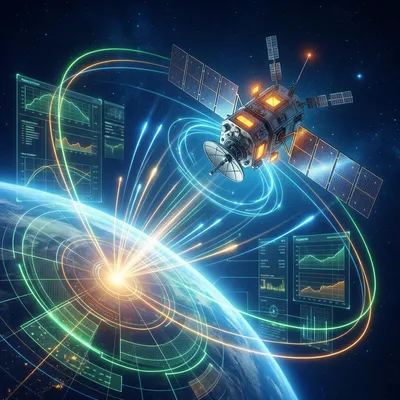
That is exactly right. A GPS satellite is basically a high end atomic clock with a radio attached to it. The entire Global Positioning System works on the principle of time. To find your location, your receiver calculates exactly how long it took for a signal to travel from at least four different satellites to your antenna. Since we know the speed of light is constant, if we know the time difference to the nanosecond, we can calculate the distance.
So to give you a location, the system first has to give you an incredibly precise time.
Exactly. This is where we get into the realm of nanosecond accuracy. While the terrestrial radio signals like WWVB are giving you milliseconds, a GPS disciplined clock can give you time that is accurate to within thirty nanoseconds of the global standard. And it is much more consistent than radio signals because you have a direct line of sight to the satellites, and you are receiving signals from multiple sources simultaneously.
But that line of sight is the catch, isn't it? Daniel is talking about a home office. You can't exactly see a GPS satellite through a roof and two floors of a house, usually.
That is the big practical hurdle. To use a satellite based timing system, you generally need an antenna with a clear view of the sky. In professional command centers or data centers, they will have a puck shaped antenna mounted on the roof, connected by a high quality coaxial cable to the clock or the server inside. If Daniel can't run a cable to his roof, GPS timing becomes much harder.
I've seen some people try to stick those antennas in a window, but that's hit or miss, right?
It is. You get what we call multipath interference, where the signal bounces off nearby buildings or the window frame itself. That adds nanoseconds of delay, which translates to errors in the time. For a home office clock, it might still be better than a terrestrial radio signal, but you lose that professional grade precision. However, in twenty twenty six, we have much better multi band receivers. The newer L five frequency signals are much more robust against that kind of interference than the old L one signals we used to rely on.
Now, Daniel also asked about the difference between these systems and the NTP hardware setups used in command centers, specifically mentioning master and slave clocks. In a professional environment, they aren't just putting a GPS antenna on every single clock on the wall, are they? That would be a lot of holes in the roof.
No, that would be a nightmare to manage and maintain. Instead, they use a hierarchical system. This is where we get into the concept of Stratum levels, which Daniel was curious about. Think of it like a ladder of trust. At the very top, at Stratum zero, you have the actual hardware that generates the time. This is an atomic clock, like a cesium fountain or a rubidium oscillator, or the GPS satellites themselves.
So Stratum zero is the source of the truth, but it isn't actually on the network. It's just a raw signal.
Right. You can't talk to a GPS satellite over Ethernet. So, you need a device that sits between the source and the network. That device is a Stratum one time server. It is physically connected to the Stratum zero source, usually via a GPS antenna or a specialized radio receiver. This Stratum one server's entire job is to take that incredibly precise signal and distribute it to other devices using NTP, the Network Time Protocol.
And that is what Daniel's command center setup would look like. He would have one master clock, which is the Stratum one server, and then all the other clocks in the building would be slave clocks that just listen to that master.
Exactly. In a professional command center, those slave clocks are often connected via Ethernet. They don't even have their own timekeeping crystals in some cases, or if they do, they are constantly being corrected by the master. The beauty of this is that every clock in the facility, from the one on the wall to the one on the operator's computer screen, is pulling from the same master source. They are perfectly, perfectly synchronized.
So if Daniel wants to do this at home, he is looking at setting up his own Stratum one server. Is that something a normal person can actually do without spending thousands of dollars on enterprise gear from companies like Meinberg or Microchip?
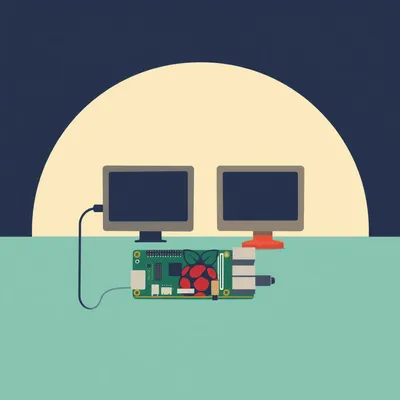
It is actually surprisingly accessible now. You can take a Raspberry Pi, which is a tiny fifty dollar computer, and attach a specialized GPS expansion board, often called a HAT, for another forty or fifty dollars. These boards have a specific pin called PPS, or Pulse Per Second.
What does the Pulse Per Second do?
That is the secret sauce. While the serial data from the GPS tells the computer what the hour, minute, and second is, the PPS pin sends a sharp electrical pulse at the exact start of every second. It is accurate to within a few microseconds. The Raspberry Pi's kernel can be configured to listen for that pulse and adjust its internal clock immediately. If you position that antenna correctly, you can run a piece of software called chrony or the standard NTP daemon, and suddenly, you have a Stratum one time server in your house that is as accurate as what a bank or a power company uses.
That sounds like a fun project, but let's talk about the accuracy of NTP itself. If you are sending time over a network, you have to deal with latency. If the packet takes ten milliseconds to get from the server to the clock, isn't the clock going to be ten milliseconds slow?
That is the genius of the Network Time Protocol. It doesn't just send the time. It performs a little dance of four timestamps. It records when the request left the client, when it arrived at the server, when the server sent the response, and when the client received that response. By doing that, it can calculate the round trip time and assume that the delay was symmetrical. It then subtracts that delay to get a very close approximation of the actual time.
How close are we talking? Because network traffic isn't always symmetrical. Sometimes a packet takes a longer route back than it did going out.
Over a local home network, wired with Ethernet, you can easily get within one millisecond of the master clock. If you use something called PTP, or Precision Time Protocol, which is used in things like cell towers, power grids, and high frequency trading, you can get down to microseconds. PTP requires specialized hardware in the switches and the network cards to timestamp the packets at the hardware level, but for Daniel's wall clocks, standard NTP is more than enough.
So let's compare the three options for Daniel's home office. We have the long wave radio, the direct GPS clock, and the NTP master-slave setup. If you are him, Herman, and you want that command center feel, which way are you leaning?
If I want the most authentic experience and I am willing to do a bit of cabling, the NTP master-slave setup is the winner. You buy these beautiful, industrial looking LED clocks that have an Ethernet port on the back. They are designed for hospitals or schools. You plug them into your network, point them at your Raspberry Pi Stratum one server, and they will be perfectly in sync forever. No drift, no manual adjustments for daylight savings, nothing.
And what about the reliability aspect? Terrestrial radio can be blocked by interference. GPS needs a clear sky. What happens to the NTP setup if the GPS signal drops out? Say there is a massive solar storm or someone is jamming the signal nearby.
That is where the quality of the master clock comes in. A good Stratum one server has what we call a holdover capability. It has its own internal crystal oscillator that it has been disciplining against the GPS signal for days. It knows exactly how much that crystal drifts based on temperature and age. So if the GPS signal drops out because of a storm or jamming, the server can maintain high accuracy on its own for hours or even days.
That is a level of redundancy you just don't get with a cheap radio controlled clock. If those lose the signal, they just start drifting based on whatever cheap crystal is inside them, which could be off by seconds within a week.
Exactly. And let's talk about the Zulu time requirement. This is a common point of confusion. People think they need a clock that specifically knows about time zones. But in the world of professional timekeeping, everything is UTC. The master clock only cares about UTC. The slave clocks are then told, hey, you are in the Jerusalem time zone, so add two hours, or you are the Zulu clock, so just show the raw UTC.
It makes it much easier to manage. You aren't trying to sync two different times; you are syncing one universal time and just changing the display offset. It's like having one source of truth and different lenses to look at it through.
Precisely. Now, there is one more thing Daniel mentioned that I think is worth digging into, and that is the difference between the various satellite constellations. He mentioned Beidou and GLONASS alongside GPS. In the past, you really only had GPS, which is American. But now, most modern timing modules are what we call multi GNSS, or Global Navigation Satellite Systems. They can listen to the American GPS, the Russian GLONASS, the European Galileo, and the Chinese Beidou all at once.
Does that actually make it more accurate, or is it just about having more satellites to choose from?
It is mostly about availability and robustness. If you are in a city with tall buildings, you might only see a small slice of the sky. If you can only see two GPS satellites, you can't get a time fix. But if you can see two GPS, two Galileo, and three Beidou, suddenly you have seven satellites, and your timing accuracy shoots up. It also protects you against any one system having a technical failure or being intentionally degraded in a specific region.
That feels like a very command center level of thinking. Redundancy upon redundancy. I'm curious about the specific hardware Daniel saw on AliExpress using the Beidou network. Is there any reason to prefer one constellation over another for a home setup?
Not really for a home user, but it is interesting to see how the market has shifted. Beidou has become incredibly popular because the modules are very cheap and they have a lot of satellites over Asia and Europe. Galileo, the European system, is actually technically superior in some ways for timing because it was designed from the ground up with civilian precision in mind, whereas GPS was originally a military system that we all just get to use. Galileo has a High Accuracy Service that provides even better corrections.
You mentioned earlier that most people just use their phones. Their phones are technically using NTP over the cellular network or Wi-Fi. Why is that not good enough for Daniel's command center?
It usually is good enough for daily life, but it is what we call Stratum two or Stratum three time. Your phone is talking to a server at your cellular provider, which is talking to another server, which eventually talks to a Stratum one server. Every jump in that chain adds a little bit of uncertainty and jitter. If the network is congested, your phone's time might be off by a hundred milliseconds or more. Usually, you don't notice, but in high frequency trading, scientific experiments, or even just high end audio synchronization, a hundred milliseconds is an eternity.
Or if you are Daniel and you have two clocks on the wall, and one flips to the next minute while the other is still showing fifty nine seconds. That is the nightmare. That is the visual proof that your system is flawed.
Exactly! That is the visual manifestation of network jitter. If you have two clocks pulling from different Stratum two servers over the public internet, they will almost never be perfectly in sync. They will drift towards and away from each other based on network traffic. The only way to guarantee they move as one is to have that local master clock in the house.
I love the idea that in a world where everything is moving to the cloud and becoming virtual, the ultimate solution for something as simple as time is to bring the hardware back into your own home. To have a physical connection to a satellite or a long wave transmitter.
It is a very grounding feeling, isn't it? To know that the clock on your wall is being disciplined by a signal coming from a satellite twelve thousand miles away. And it's not just a hobbyist thing. Think about our power grid. If the different substations across the country aren't synchronized to within microseconds, they can't phase match the electricity. If they are out of sync, the whole grid can collapse. Time is the invisible glue of modern society.
So Daniel's home office setup is basically a miniature version of the infrastructure that keeps the lights on and the internet running. It's a bit of a power trip, really.
Precisely. And let's talk about the Stratum zero sources for a second, because this is where it gets really nerdy. Most people will use GPS, but you can actually buy surplus rubidium atomic clocks on eBay. These are about the size of a thick paperback book. They used to be in cell towers to keep them in sync. You can plug one of those into your Raspberry Pi as your source.
Wait, so you can have an actual atomic clock in your house? Not just a clock that listens to one, but the actual physical mechanism?
Yes! It doesn't need an antenna because it is its own source of truth. You just have to calibrate it once against a GPS signal, and then it will keep incredibly precise time just by the vibrations of atoms inside a little glass cell. It is the ultimate flex for a home office command center. There are even Chip Scale Atomic Clocks now, or CSACs, that are the size of a postage stamp and run on less than a watt of power.
Okay, Herman, I think we might have just cost Daniel a lot of money because now he's going to be looking for rubidium oscillators on the internet. But let's bring it back to the practical takeaways. If someone is listening to this and they want to improve their home timekeeping without going full atomic, what are the levels of progression here?
Level one is just making sure your computers and devices are using a good NTP server. Instead of the default Windows or Apple servers, you can point them at the NTP Pool Project or specialized servers run by NIST. That will get you within a fraction of a second, which is fine for most people.
Level two?
Level two is the radio controlled clock. It is cheap, it is easy, but you have to be aware of the limitations. Put it near a window, ideally one facing towards Colorado or Germany depending on where you are. And don't be surprised if it only updates at night. It is a set it and forget it solution for a kitchen or a bedroom.
And level three is the Daniel level. The command center level.
Level three is the local Stratum one server. A Raspberry Pi, a GPS HAT, and an outdoor antenna. This is where you get into that satisfying, sub millisecond synchronization. This is where you can have ten clocks in your house and they all flip the second at the exact same moment. It is honestly a little bit hypnotic when you get it working. You can walk through your house and hear the ticks or see the flips in perfect unison.
I can imagine. It is like having a perfectly tuned orchestra where every player is hitting the beat at the exact same nanosecond. It brings a sense of order to the chaos of the world.
And for the Zulu time aspect, it really does change how you think about the world. When you stop thinking in terms of what time it is here and start thinking in terms of what time it is for the planet, it makes the world feel a lot smaller. You realize that while it is morning for us in Jerusalem, it is the middle of the night for someone else, but we are all sharing the same UTC moment. It is the one thing that is truly universal.
It is a very perspective shifting way to look at a clock. Instead of it being a tool for your personal schedule, it becomes a reference point for the entire human species. It’s why scientists and pilots use it. There is no ambiguity.
I think that is why those command centers use Zulu time. Whether you are a pilot flying over the Atlantic or a technician in a satellite ground station, everyone is on the same page. There is no ambiguity about whose ten o'clock we are talking about. It is ten o'clock UTC, period. And interestingly, in twenty twenty six, we are still dealing with the debate over leap seconds. The international community has decided to eventually scrap them by twenty thirty five, but for now, your Stratum one server still has to handle that occasional extra second to keep our clocks aligned with the Earth's rotation.
So, to recap for Daniel, the terrestrial radio signals like WWVB are great for low power, long term reliability, but they are slow and prone to interference. The satellite systems like GPS and Beidou are the gold standard for precision, but they require that clear view of the sky. And the NTP master-slave setup is how you actually distribute that precision throughout your office so that your local and Zulu clocks stay perfectly matched.
Spot on. And if he goes the NTP route, he should look for clocks that support PoE, or Power over Ethernet. That way, he only has to run one cable to each clock for both power and data. It makes for a very clean, professional installation. No messy power bricks hanging off the wall or batteries to change. It looks much more like a NASA control room that way.
That is a great practical tip. I can already see Daniel's office transforming into a miniature NASA flight control room. He'll probably start wearing a headset and drinking Tang while he works.
I hope he sends us a picture when it's done. There is something deeply satisfying about a well executed clock system. It is one of those things that most people won't notice, but the people who do will be incredibly impressed. It shows a level of attention to detail that is rare.
Well, this has been a fascinating dive into something we all take for granted. It is amazing how much complexity is hidden behind those simple digits on a screen. From the physics of the ionosphere to the vibrations of atoms in a vacuum.
It really is. The more you look into it, the more you realize that timekeeping is one of the most fundamental challenges of modern civilization. We have built our entire world on the ability to agree on exactly what nanosecond it is. Without it, the internet, the power grid, and global finance would all fall apart in an instant.
On that note, we should probably wrap this up before we run out of our own allotted time. Herman, any final thoughts for our listeners who might be feeling the urge to sync their lives?
Just start small. Check your computer's time settings, see which server it's talking to. You might be surprised to find you are already part of the NTP hierarchy without even knowing it. And if you decide to build a Stratum one server, be patient with the antenna placement. It makes all the difference.
And hey, if you are enjoying these deep dives into the weird prompts Daniel sends our way, we would really appreciate it if you could leave us a review on Spotify or Apple Podcasts. It genuinely helps the show reach more people who share our brand of curiosity. We are trying to grow this community of nerds and thinkers.
It really does. We love seeing the community grow and hearing your thoughts on these topics.
You can find all our past episodes, including our earlier discussions on network protocols and emergent behaviors, at myweirdprompts dot com. We have a full archive there and an RSS feed if you want to subscribe directly to the source.
And if you have your own weird prompt or some feedback on our timekeeping discussion, you can reach us at show at myweirdprompts dot com or through the contact form on the website. We might even use your prompt in a future episode.
This has been My Weird Prompts. Thanks for listening, and we'll be back soon with another exploration into the strange and technical.
Until next time, keep your clocks synced!
Goodbye, everyone.
Bye!