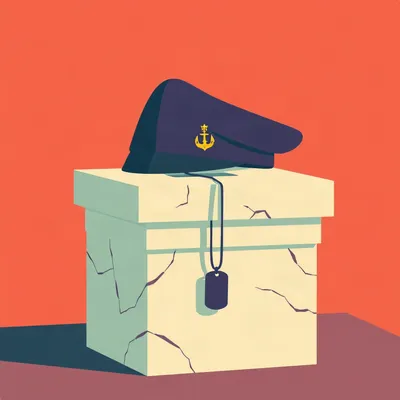
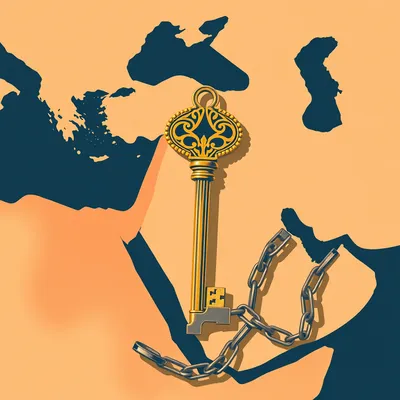
Daniel sent us this one — he wants to talk about the Wagner Group and the broader world of private armies used as state proxies. Not militias in general, not the kind of armed group that just exists because someone's angry and has a truck, but specifically organizations built to give a government plausible deniability. The model where a state hires a private military company, sends it abroad to do something messy, and if it goes wrong they can say "that wasn't us, that was a contractor." The question is whether this is a new trick, a Russian specialty, or something states have been doing forever. And what other examples look like.

This is one of those topics where the popular understanding is about five years behind what's actually been happening. Wagner gets all the headlines — and for good reason, they're practically a case study in this model — but the playbook is much older and much broader than most people realize.
I think the mental model most listeners have is: Wagner is a private army that does Russia's dirty work in places like Syria and various African countries, and when journalists ask the Kremlin about it, they get a shrug and something about "private security contractors operating independently." And everyone knows it's a fiction but nobody can quite prove the chain of command.
That's exactly the dynamic. And the thing that makes it work — the actual mechanism of plausible deniability — isn't that anyone is genuinely fooled. It's that the legal and diplomatic framework requires a certain threshold of proof to assign state responsibility. So the fiction doesn't need to be believable, it just needs to be legally convenient.
The diplomatic equivalent of "I'm not touching you.
And Wagner perfected this. The group was founded around twenty fourteen, initially as a small outfit of a few hundred contractors providing security for Russian energy interests. But by twenty fifteen they were running combat operations in Syria, and by twenty seventeen they'd expanded into multiple African countries — Sudan, the Central African Republic, Libya, Mozambique, Mali. Always with the same pattern: a mineral extraction deal, a security agreement with the host government, and Wagner forces on the ground doing things that Russian state forces officially weren't doing.
The mineral angle is important here, right? It's not just that Russia pays Wagner — Wagner pays itself by taking a cut of whatever the host country produces. Gold, diamonds, oil.
Right — it's a self-funding model, which is part of what makes the deniability work. The Kremlin can say, look, these are commercial arrangements, Wagner is a private company providing security services in exchange for resource concessions, this is just business. And on paper, in a very narrow sense, that's true. But of course Wagner's operations align perfectly with Russian foreign policy objectives, and the group receives logistics, weapons, and transport from the Russian military. Prigozhin himself — Yevgeny Prigozhin, the founder — was a close Putin associate who ran the Internet Research Agency troll farm before Wagner. He wasn't some independent mercenary entrepreneur who just happened to share the Kremlin's worldview.
The catering oligarch goes to war.
He was literally known as "Putin's chef" because his early business was catering state dinners. Which is almost too on the nose as an origin story. But the point is, Wagner wasn't an organic private military company that Russia happened to hire. It was built from the ground up as a state instrument, deliberately structured to provide distance.
That's the Wagner model. The question is, who else does this, and how far back does it go?
Let me start with the most direct parallel, because it's the one that actually predates Wagner and in some ways inspired the model. Blackwater — later rebranded as Xe Services, then Academi — was founded in nineteen ninety-seven by Erik Prince, a former Navy SEAL. By the mid-two thousands, Blackwater was the largest private security contractor for the US State Department in Iraq.
The plausible deniability angle?
It's not a perfect parallel because Blackwater was openly contracted by the US government — there was no pretense that they were independent actors. But the deniability function was different: it was operational and legal deniability rather than diplomatic. Blackwater personnel weren't subject to military chain of command or the Uniform Code of Military Justice. When Blackwater operators killed seventeen Iraqi civilians in Nisour Square in two thousand seven, the legal aftermath was a complete mess precisely because the contractors existed in this gray zone between civilian and military law.
The US version was less "we didn't send them" and more "we sent them but we're not responsible for what they did.
And that distinction matters because it reveals different flavors of deniability. The Russian model is about denying the state's involvement entirely. The American model was more about outsourcing tasks that the military didn't want to handle directly, or couldn't handle within the constraints of military law and congressional oversight. The US at the peak of the Iraq War had more private contractors on the ground than actual military personnel — something like a hundred and eighty thousand contractors versus a hundred and sixty thousand troops at the peak.
That's a staggering ratio. You're essentially running a war with a shadow army that doesn't show up in official force numbers.
Doesn't generate casualty counts that make the evening news. Contractor deaths weren't counted in the official military fatality statistics, which had obvious political benefits. So even though the US wasn't using Blackwater to pretend America wasn't involved in Iraq, it was absolutely using the contractor model to manage political perception and evade accountability mechanisms.
That's two flavors already. What about the historical stuff? Because I find it hard to believe the Russians invented this.
They absolutely didn't. The mercenary-as-state-proxy goes back centuries. The Italian city-states during the Renaissance used condottieri — professional mercenary captains who would contract with Venice or Florence or Milan to fight their wars. The condottieri ran private armies, negotiated their own contracts, and the city-state could disclaim responsibility for anything particularly ugly that happened.
"Oh, that sack of the city? That was Francesco Sforza's men, you'll have to take it up with him." Meanwhile Francesco Sforza ends up Duke of Milan.
And that's another recurring pattern with these arrangements — the mercenary leader who accumulates enough power and legitimacy to become a ruler in his own right. Prigozhin's mutiny in June twenty twenty-three, when Wagner forces actually marched toward Moscow before being turned back, was a modern echo of that exact dynamic. The condottieri model always contained the risk that the mercenary decides he's no longer content being the instrument.
The leash snaps.
It snaps in a very specific way when the mercenary leader realizes he commands more loyalty from his men than the state does. Prigozhin's Wagner troops had been fighting and dying together for years, they'd been through Bakhmut, they'd seen their comrades killed by the thousands while the Russian regular military provided inadequate support. When Prigozhin called for a "march for justice," his men followed him, not the defense ministry.
Which is why he's now dead. Plane crash, August twenty twenty-three, two months after the mutiny.
And that's the other historical pattern — the state eventually reasserts control, usually violently. The condottieri who got too powerful tended to meet unfortunate ends. But let me go further back, because there's an even clearer historical precedent. The British East India Company.
Oh, that's a good one.
It's practically the template for the modern PMC-as-state-proxy. The East India Company was a private corporation that raised its own army, fought wars, negotiated treaties, and administered territory — all of which served British imperial interests while allowing the Crown to maintain formal distance. By the early eighteen hundreds, the East India Company's private army was twice the size of the actual British Army. They conquered most of India not as agents of the British state, but as a commercial enterprise pursuing shareholder value.
"Shareholder value" being an interesting way to describe colonialism.
The mechanism is what's relevant here. When the East India Company's troops committed atrocities, or when a war they started went badly, Parliament could wring its hands and say this was a private company's doing. But the Company's board was packed with members of Parliament, and its monopoly was granted by the Crown. Everyone knew the score. The deniability was a legal fiction that served everyone's purposes until the Indian Rebellion of eighteen fifty-seven, after which the British government finally dissolved the Company and took direct control.
The arc is: state creates or enables a private military entity, entity does the state's dirty work for decades, entity eventually overreaches or becomes uncontrollable, state reasserts control or eliminates the entity. That's Wagner, that's the East India Company, and you could argue that's the arc Blackwater was on before multiple rebrandings and lawsuits forced a restructuring.
Blackwater is an interesting case because the overreach moment — Nisour Square — did lead to a significant pullback in how the US used private security contractors in combat zones. Not an elimination, but a substantial recalibration. The US became much more careful about what tasks were contracted out versus kept under military command.
Let's talk about some other contemporary examples beyond Wagner and Blackwater. The prompt specifically asks what else is out there.
The most interesting one that doesn't get enough attention is Executive Outcomes. This was a South African private military company founded in nineteen eighty-nine by Eeben Barlow, a former officer in the South African Defence Force. Executive Outcomes operated in Angola and Sierra Leone in the nineteen nineties, and the deniability structure was fascinating because it wasn't just one state using them — it was a web of mining companies, governments, and former apartheid military networks.
The mineral extraction connection again.
Executive Outcomes was hired by the Angolan government to fight UNITA rebels, and they were paid partly in oil concessions. In Sierra Leone, they were hired to push back the Revolutionary United Front rebels who were notorious for amputating civilians' limbs, and Executive Outcomes basically turned the war around in a matter of months using helicopter gunships and experienced combat veterans. The Sierra Leone government paid them partly in diamond mining rights.
Executive Outcomes was a South African company, but South Africa wasn't officially at war with anyone. The Angolan and Sierra Leonean governments were the clients, so the operations were framed as commercial security contracts. But Executive Outcomes' personnel were overwhelmingly veterans of the apartheid-era South African military, and there were strong suspicions that elements within the South African security establishment were quietly supportive — using EO as a way to maintain influence and keep former operators employed without official state involvement.
The South African deep state's alumni network.
That's not far off. And the model was so effective that it spawned imitators. Sandline International was a British PMC founded by Tim Spicer, a former British Army officer, that essentially copied the Executive Outcomes playbook. Sandline got caught up in the Sandline affair in nineteen ninety-eight — they were contracted to supply arms to the government of Papua New Guinea, which triggered a political crisis when the PNG military found out and arrested the Sandline personnel. The PNG prime minister resigned. It was a spectacular example of the model blowing up.
The British version of "oops, the contractor did what?
Spicer's defense throughout was essentially: we were hired by the legitimate government, we were transparent about what we were doing, this was a commercial contract. Which is technically true, but the political reality was that a private company had inserted itself into a sovereign nation's internal security affairs in a way that triggered a constitutional crisis. The plausible deniability didn't hold because the operation leaked.
Which is the recurring weakness of the model — it works until someone talks, or until the operation is too big to hide, or until the contractor goes rogue. The deniability is always thinner than it looks from the outside.
It's getting thinner in the modern information environment. One of the things that's changed is that open-source intelligence — satellite imagery, social media, financial tracking — makes it much harder to maintain the fiction. When Wagner was operating in the Central African Republic, OSINT researchers were tracking their aircraft movements, identifying their training camps from satellite photos, and mapping their mining concessions through corporate registries. The deniability only works if nobody bothers to look, and in twenty twenty-six, someone is always looking.
The information environment is eating away at the core premise. What about China? Everyone talks about Wagner as the Russian model, but China has overseas interests it needs to protect.
China's approach is different and in some ways more sophisticated. Chinese private security companies have been operating overseas since about two thousand four, primarily providing security for Chinese state-owned enterprises involved in Belt and Road projects. Companies like China Overseas Security Group and Frontier Services Group — the latter was founded by Erik Prince, actually, after Blackwater, which is a remarkable crossover.
Wait — Erik Prince, the Blackwater guy, founded a Chinese PMC?
Frontier Services Group was originally set up as a Hong Kong-based security and logistics company, and Prince was involved in its early stages. It's since been acquired by Chinese interests and rebranded. But the Chinese model isn't primarily about combat operations — it's about protecting infrastructure, providing security consulting, and doing the kind of work that doesn't make headlines. China's plausible deniability play is quieter.
The Wagner model is a sledgehammer. The Chinese model is a security guard who knows kung fu and has diplomatic cover.
The Chinese government has been very careful not to create a Wagner equivalent — no large-scale combat PMCs with direct links to the state. Instead, they've cultivated a network of smaller security companies, many of them nominally private but with close ties to state security apparatus. The deniability is baked into the corporate structure itself: a web of entities rather than a single visible organization.
It's deniability through complexity rather than deniability through formal separation. You can't point at "the Chinese Wagner" because there isn't one — there are forty small companies, any of which might be doing something useful for Beijing on any given day.
Good luck proving coordination. It's the same principle that makes investigating a distributed network harder than investigating a hierarchy.
Let me throw a question at you. Is there an example of this model actually working cleanly — where a state got what it wanted, the plausible deniability held, and nobody ended up dead in a plane crash or causing a constitutional crisis?
The problem is that the successful cases are, by definition, the ones we don't know about. If the deniability worked perfectly, the operation never becomes public, and there's no case study to analyze.
The selection bias problem. We only see the failures.
Every example we've discussed is a case where the deniability failed at least partially — where journalists, researchers, or rival intelligence agencies pieced together the truth. The truly successful operations are invisible. That said, I think there are cases where the model worked well enough for long enough that the state got substantial value before the exposure happened. Wagner's operations in the Central African Republic, for instance — by the time the full extent of Wagner's involvement was documented, Russia had already secured mining concessions, established a military foothold, and displaced French influence. The exposure didn't undo the strategic gains.
The deniability doesn't need to be permanent, it just needs to last long enough to create facts on the ground.
That's the operational logic. Create a fait accompli, and by the time everyone understands what happened, it's too late to reverse. This is particularly effective in places where the international community has limited attention and leverage — fragile states, conflict zones, places where a few hundred well-trained contractors can shift the balance of power.
Which is basically the entire African continent as far as Wagner was concerned.
Wagner's African playbook was remarkably consistent. Step one: identify a government that's struggling with an insurgency and feels abandoned by Western partners. Step two: offer security assistance with no human rights conditions attached, unlike Western military aid. Step three: secure mineral concessions as payment. Step four: use those concessions to generate revenue that funds further operations. Step five: embed political advisors who shape the host government's orientation toward Moscow.
The no-strings-attached security guarantee. That's attractive to a lot of governments that are tired of being lectured about governance by their Western partners.
It's a real competitive advantage. The French had security relationships with many of these countries but conditioned them on governance reforms, democratic progress, human rights. Wagner showed up and said: we'll keep you in power, we don't care how you govern, and we'll pay you for the privilege through resource deals. For an embattled leader, that's a much better offer.
"We'll protect you from your own people and pay you in diamonds." The authoritarian's dream package.
The Central African Republic, Mali, Burkina Faso — all countries where French forces were pushed out and Russian contractors moved in. In Mali, the junta expelled French forces in twenty twenty-two and brought in Wagner, which is now — though Wagner's been restructured since Prigozhin's death — effectively running security operations alongside the Malian military. The human rights situation has deteriorated significantly, but the junta is still in power, which is the metric that matters to them.
Let's talk about the restructuring after Prigozhin. Wagner isn't really Wagner anymore, is it?
After Prigozhin's death in August twenty twenty-three, the Russian state moved to absorb and restructure Wagner's operations. Some elements were folded into the Russian military more directly, others were reorganized under new management with closer Kremlin control. The Africa Corps — that's the new branding — is essentially Wagner two point zero, but with the deniability layer significantly thinner. The Russian government seems to have decided that the costs of the independent mercenary model, specifically the mutiny risk, outweighed the deniability benefits.
The arc we described earlier played out almost perfectly. State creates proxy, proxy becomes too powerful, proxy leader challenges the state, state eliminates the leader and reabsorbs the proxy.
It's almost textbook. And the lesson other states are drawing from this is clear: the PMC model is useful, but you need better control mechanisms than Putin had with Prigozhin. The Chinese approach of distributed smaller companies rather than a single powerful organization looks smarter in hindsight.
What about Iran? They have a proxy model but it's structured differently — more about sponsoring foreign militias than creating a private military company.
Iran's model is the third major flavor. If Wagner is the corporate proxy and the Chinese approach is the distributed network, Iran's is the franchise model. The IRGC Quds Force identifies, trains, funds, and equips foreign militant groups — Hezbollah in Lebanon, various Shia militias in Iraq, the Houthis in Yemen, Hamas and Palestinian Islamic Jihad — and then those groups operate with considerable tactical autonomy but strategic alignment with Tehran.
The deniability is different there too. Iran can say "these are independent resistance movements" and in a narrow sense they do have their own leadership and decision-making. But everyone knows where the weapons and money come from.
Iran is often less concerned with plausible deniability than with operational deniability. They're not pretending they don't support Hezbollah — that would be absurd, Hezbollah's leader Hassan Nasrallah openly acknowledges Iranian support. The deniability is more about maintaining the legal fiction that Iran isn't directly conducting military operations, which would trigger different responses under international law. It's deniability for lawyers, not for journalists.
"Deniability for lawyers, not for journalists" is a useful distinction. The Wagner model was deniability for journalists and the general public, and it worked until the journalists got too good at their jobs.
Until Prigozhin himself broke the fiction by publicly claiming credit. One of the weirdest things about the Wagner story is that Prigozhin spent years denying any connection to Wagner — he literally sued journalists for reporting the link — and then in September twenty twenty-two he released a statement saying "I founded Wagner, I'm proud of Wagner, here's what we've been doing." He just dropped the pretense entirely.
Prigozhin was in a public feud with the Russian defense ministry — Sergei Shoigu and Valery Gerasimov — over credit for military operations in Ukraine, particularly the battle for Bakhmut. He decided that publicly claiming Wagner's successes was more valuable to his political position than maintaining the deniability that had protected Wagner for years. He traded operational security for personal political capital.
Then he was dead within a year.
The mutiny was the proximate cause, but the erosion of his deniability cover was part of the same trajectory. Once you're a public figure claiming credit for state military operations, you're no longer a deniable asset — you're a political threat.
The deniability model contains a fundamental contradiction. To be effective, the proxy needs to be capable and credible. But the more capable and credible it becomes, the harder it is to maintain the fiction of independence, and the more threatening it looks to the state that created it.
That's the core tension. And it's why this model tends to have a limited shelf life. You can have a capable, deniable, and loyal proxy — but only for a while. Eventually you have to pick two of the three.
Are there any current examples that seem to be managing that tension well? Or is the whole model in decline now that the information environment has gotten so transparent?
I think the model is evolving rather than declining. The Wagner-style large combat PMC is probably less attractive now — the Prigozhin experience was a cautionary tale that every intelligence service in the world studied carefully. But the smaller-scale, lower-profile approaches are thriving. Turkey's use of Syrian mercenaries in Libya and Nagorno-Karabakh, for instance — relatively low-cost, plausibly deniable, and the mercenaries are disposable in a way that Turkish regular forces wouldn't be.
That's a grim phrase.
It's a grim business. But from the state's perspective, that's exactly the appeal. A dead contractor doesn't generate the same political costs as a dead soldier. The family doesn't get a flag-draped coffin and a visit from the president. There's no military funeral with media coverage. The contractor just disappears from the payroll.
That's true even for Western democracies that aren't trying to hide their involvement — the contractor casualty differential is a political benefit regardless of the deniability question.
In Afghanistan and Iraq, the US and its allies used contractors extensively not primarily for deniability but for political cost management. Every contractor killed was a casualty that didn't appear in the official military death toll, didn't generate a news story, didn't affect public opinion about the war. The political economy of contractor casualties is a huge part of why this model persists.
We've got roughly four flavors of this. The Wagner model — a single high-profile PMC doing overt combat operations with thin deniability. The Blackwater model — contractors used for political cost management and legal gray zones rather than diplomatic deniability. The Chinese model — a distributed network of smaller companies maintaining deniability through complexity. And the Iranian model — franchising to foreign militias that have their own identities and leadership.
That's a good taxonomy. I'd add a fifth: the historical corporate model, the East India Company approach, where a profit-seeking corporation with its own army does the state's imperial work. That one isn't really around anymore in pure form, but elements of it show up in the mineral extraction arrangements that Wagner and Executive Outcomes used.
The East India Company with a LinkedIn page.
Probably a diversity and inclusion statement, which is a deeply strange thought.
"The East India Company is committed to building an inclusive army of occupation." I'd read that press release.
I don't know whether to laugh or shudder. But that is the historical through-line: states have always found ways to outsource violence to entities that provide some degree of separation, whether legal, political, or diplomatic. The specific mechanisms change — corporate charters, security contracts, militia sponsorship — but the underlying incentive is constant.
The incentive is what, exactly? You've mentioned political cost management and legal gray zones and diplomatic deniability. But if you had to reduce it to one thing?
I think it's the gap between what states want to do and what the international system permits them to do openly. The post-World War Two international order, for all its flaws, created norms against overt military intervention — sovereignty, territorial integrity, non-intervention. But states still have interests they want to pursue, rivals they want to undermine, resources they want to control. The PMC and proxy models exist to pursue those interests while maintaining formal compliance with the norms. It's hypocrisy as a service.
"Hypocrisy as a service." That's the business model.
It's a thriving business. The global private military and security market was estimated at something like two hundred and fifty billion dollars in twenty twenty-four, and it's been growing steadily. That includes everything from mall security guards to combat mercenaries, but the high-end state-proxy segment is a meaningful slice.
What's the trajectory from here? If the Wagner model is tainted by the Prigozhin experience, and the information environment keeps getting more transparent, does the PMC-as-deniability model have a future?
I think it does, but it'll look different. The trend is toward more sophisticated corporate structures — shell companies, subcontracting chains, financial arrangements that are hard to trace. The PMC of twenty thirty-five won't be a single identifiable organization with a logo and a founder who gives interviews. It'll be a network of entities, some of them legitimate security companies, some of them fronts, all connected through complex ownership structures that make attribution difficult.
The Chinese model wins.
The Chinese model is better adapted to the modern information environment, yes. But I think there's another dimension here that we haven't touched on. The demand for these services is partly driven by the fact that conventional military intervention has become politically toxic in many democracies. If Western countries can't deploy troops without triggering domestic backlash, and if authoritarian states want to avoid triggering international sanctions, then the PMC model fills the gap. As long as the demand exists, the supply will adapt.
The demand isn't going anywhere. If anything, great power competition is intensifying, and the number of fragile states where a few hundred contractors can make a difference is not shrinking.
The African continent alone has multiple active conflicts where external actors are involved through proxies. Sudan, the Democratic Republic of Congo, Mozambique, the Sahel. In each case, there's a mix of state interests, resource competition, and security vacuums that PMCs are perfectly positioned to exploit.
One thing I want to circle back to: you mentioned that the deniability doesn't need to fool anyone, it just needs to provide legal and diplomatic cover. But doesn't that eventually corrode the norms it's supposedly respecting? If everyone knows the game, the norms become a joke.
That's the long-term cost. Every time a state uses a Wagner or a Blackwater to do something it couldn't do openly, it weakens the norm against intervention. Over time, the norm becomes less of a constraint and more of a rhetorical convention — something you nod to while ignoring it. And eventually, you get a world where great powers intervene openly because the norm has lost all force.
The thing pretending to uphold the norm is actually destroying it.
And that's the deeper problem with the PMC-as-deniability model. It's a short-term solution that creates a long-term pathology. States get what they want in the moment, but they're participating in the erosion of the very international order that they claim to be respecting by using proxies instead of uniformed forces.
Which brings us back to something you said earlier about the gap between what states want to do and what the system permits. The PMC model doesn't close that gap — it widens it by making the system's constraints less meaningful.
The constraints were already pretty thin. The post-war norm against intervention was violated constantly during the Cold War — both superpowers ran proxy wars all over the world. The PMC model is just the latest iteration of a very old pattern.
To answer the question from the prompt directly: is this a new or Russian phenomenon? It's emphatically not. It's ancient, it's global, and the Russians just happened to create the most photogenic recent example.
Wagner was unusually visible and unusually reckless, which made it a perfect case study. But the model predates Wagner by centuries, and it'll outlast Wagner by centuries. The specific forms will evolve — more distributed, more financially complex, more adapted to the OSINT era — but the fundamental dynamic of states outsourcing violence for deniability is permanent.
Until someone figures out how to make international norms actually binding instead of just rhetorically convenient.
Which is a much bigger conversation about international law, sovereignty, and enforcement mechanisms that we probably shouldn't try to cram into the last few minutes.
Let's land this: the PMC-as-deniability model is old, it's diverse, it's evolving, and it's not going anywhere. The Wagner case is a useful lens because it's recent and well-documented, but it's one chapter in a much longer story. And the tension between capability and deniability is the thing to watch — every state using this model is trying to solve a problem that may not have a stable solution.
That's a good summary. I'd add one thing: for listeners who want to understand this space, the key is to follow the money and the corporate structures, not the guns. The weaponry is the visible part, but the deniability lives in the contracts, the shell companies, and the resource deals. That's where the real architecture is.
Follow the LLCs, not the AKs.
And now: Hilbert's daily fun fact.
Hilbert: During the Cold War, marine biologists discovered that a single seamount in the Outer Hebrides — the Rosemary Bank — hosts a population of deep-sea sponges found nowhere else on Earth, numbering roughly four hundred individuals across the entire seamount.
Four hundred sponges, holding down a mountain. Good for them.
This has been My Weird Prompts. I'm Herman Poppleberry.
I'm Corn. If you enjoyed this episode, leave us a review wherever you get your podcasts — it helps other people find the show. We'll be back soon with another prompt.