Daniel sent us this one — and it's got a wartime origin that makes it more interesting than your average productivity tip. During the Iran war, he found that creating checklists and standard operating procedures was the only way to feel in control at home while going back and forth to shelters. Before bed checklist, after-shelter checklist. And he realized these same habits could fix something he'd struggled with forever — leaving keys, wallet, phone, knowing where things are, checking what needs doing. So he's asking us for recommendations on daily organization checklists. The stuff you might print up, stick on a wall, put in a little book, or even load into a phone app. Things like remembering an umbrella when heading out, unloading when you get home, checking what chores need doing. The daily friction points that add up.

By the way, DeepSeek V four Pro is writing our script today. Which feels appropriate given we're talking about systems and processes — let's see if the AI follows its own checklist.
I'd be more worried if it started writing its own checklists. That's how the robot uprising begins — they get organized.
That's the whole problem Daniel's describing. And what makes his framing interesting is that wartime context. Because when the cost of forgetting something is genuinely life-threatening, the psychological barrier to using a checklist evaporates. Nobody in a shelter thinks "this feels ridiculous." But in peacetime, when the consequence is just being late or wet or annoyed, we resist.
That tension's worth sitting with. Why does a checklist feel infantilizing when the stakes are low, but completely natural when they're high? Atul Gawande's book The Checklist Manifesto tackles this directly. He's a surgeon — he saw colleagues resist surgical checklists as beneath them, until the data came in. A simple W. surgical checklist cut complications by thirty-six percent and deaths by forty-seven percent across hospitals. These are highly trained professionals who know every step. The checklist wasn't teaching them anything new. It just made sure they didn't skip steps they already knew.
Gawande's core argument is that in complex modern life, failure doesn't come from ignorance — not knowing what to do. It comes from what he calls ineptitude — inconsistently applying what we know. You know to bring an umbrella when rain is forecast. You know where your keys should go. The breakdown isn't knowledge. It's execution under the conditions of real life, where you're tired or distracted or thinking about something else.
Which is exactly Daniel's situation. He's not asking us to teach him basic life skills. He's asking for systems that prevent the execution failures he knows he's prone to.
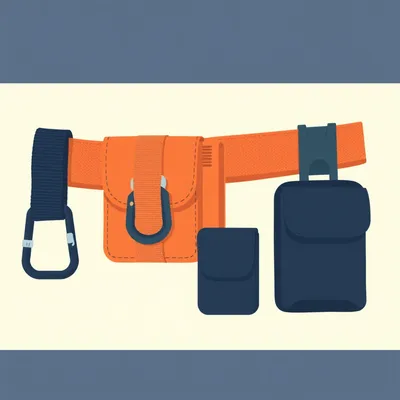
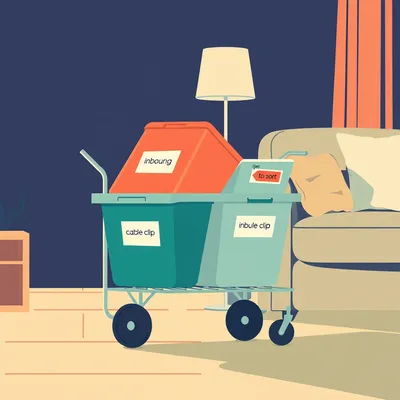
Let's build this out systematically. I want to start with the single most recommended physical system across every organization expert I've read. It's called a launch pad or a drop zone. The concept is dead simple — designate one spot near the door you use most. Hooks for keys, a tray or small basket for wallet and phone, space for shoes, and a spot for weather-dependent items like an umbrella. If multiple people live in the house, each person gets their own labeled section.
I've seen this work in practice and I've seen it fail. The failure mode is almost always the same — the launch pad becomes a dumping ground for everything. Mail, random receipts, things that don't belong there. So the keys get buried and you're back to square one.
That's where the unloading routine comes in, and it's the piece most people skip. The launch pad is not a storage zone. It's a transit zone. When you walk in the door, the unloading checklist needs to happen immediately — before you sit down, before you check your phone, before you do anything else. And the sequence matters. Experts recommend handling trash and junk mail first — throw it out at the door, don't let it enter the house. Then put away anything from the kitchen or perishables. Then sort remaining items by room and deposit them. Only then do you place keys, wallet, and phone in their designated launch pad spots.
The research I've seen frames this as a decision-fatigue problem. Coming home is a low-energy moment. Your brain is depleted from the day. The reason things end up on the counter instead of in their homes isn't laziness — it's that making even small placement decisions requires cognitive effort you don't have at that moment. A well-designed unloading checklist removes every decision. You don't think about where the keys go. The checklist tells you. You just execute.
This connects to the evening shutdown ritual, which is the mirror of the morning launch. Cal Newport popularized the shutdown ritual for work, but it's been widely adapted for home use. The idea is five to fifteen minutes before bed to clear physical spaces, do a digital shutdown, review tomorrow's calendar, set out clothes, and critically — place keys, wallet, phone, and anything weather-specific in the launch pad for morning. Some practitioners even say "shutdown complete" aloud. It signals to your brain that the operational day is over.
I'll admit, saying things aloud feels performative. But there's actually a neurological basis for it. The Japanese railway system uses a technique called Shisa Kanko — pointing and calling out. Train operators point at signals and verbalize what they see. It's been adapted by some organization experts for home use. Saying aloud "keys are on the hook by the door" creates a stronger memory trace than silently placing them. It forces mindful awareness of the action rather than letting it happen on autopilot.
That mindfulness piece might be especially relevant for Daniel given the wartime origin of his checklist habit. In a shelter situation, the stakes force presence. You're not thinking about your email while you check the go-bag. The checklist becomes a grounding ritual. In daily life, the same actions happen while your mind is already three steps ahead. The verbal callout bridges that gap.
Let's talk about the go-bag itself, because Daniel mentioned it in his shelter routine and it's a checklist in physical form. Emergency management authorities — the Red Cross, F. , local emergency offices — all publish standardized go-bag checklists. Three days of water and food, first aid kit, copies of important documents, cash, power bank, medications, change of clothes. The Houston Office of Emergency Management has a detailed printable P. that covers seasonal adjustments.
What's interesting is that the go-bag checklist principle applies to daily life in a scaled-down way. Daniel mentioned forgetting his umbrella. That's a weather-dependent item. A daily launch checklist should have a conditional step — check weather, if rain is forecast, umbrella goes in the launch pad or hangs on the door handle. The key is making the conditional step explicit rather than assuming you'll remember to check.
Let's get concrete. If I were designing Daniel's before-bed checklist based on everything we've discussed, it would look something like this. One — clear physical spaces. Put away anything that's out of place. Two — check tomorrow's calendar and weather. Three — set out clothes for tomorrow. Four — place keys, wallet, phone, and any weather-specific items in the launch pad. Five — verify phone is charging. Six — verbal confirmation. " That's six items. It fits on an index card.
The coming-home checklist. One — handle trash and junk mail at the door. Two — put away kitchen items and perishables. Three — sort remaining items by room and deposit. Four — keys on hook, wallet in tray, phone on charger. Five — verbal check. " Again, five items. The whole thing takes maybe ninety seconds.
Now Daniel also asked about checking what chores need to be done. That's a different category of checklist — it's not about preventing a specific failure in the moment, it's about maintaining awareness of recurring tasks. And there are established daily, weekly, monthly, and seasonal frameworks for this.
The daily tier is straightforward and short. Make beds, wipe kitchen counters, wash dishes or load dishwasher, do one load of laundry if needed, quick floor sweep of high-traffic areas. That's it. The goal is maintenance, not deep cleaning.
Weekly is where the real work lives. Vacuum and mop all floors, dust surfaces, clean bathrooms — toilets, showers, mirrors — change bedding, meal plan and grocery list, empty all trash bins. Some people assign each day of the week a specific zone or task so it doesn't pile up on Saturday.
Monthly is the stuff that's easy to forget because it's infrequent. filters, clean refrigerator coils — which most people have never done and it costs them energy efficiency — check pantry for expired items, wipe down cabinet fronts, clean under furniture, test smoke and carbon monoxide detectors.
Seasonal is the big-ticket maintenance. Clean gutters, service the H. system, wash windows inside and out, inspect the chimney if you have one, check weather stripping on doors and windows, rotate mattresses. White, who runs the blog A Slob Comes Clean, has free printable checklists that cover these tiers. So do Canva and OnPlanners if you want to customize your own.
The question Daniel raised about format — paper versus digital — is interesting and not just preference. There's research on what's called the encoding effect. Handwriting and physical interaction with paper creates stronger memory retention than typing. A laminated checklist on the wall that you physically check off has a different cognitive impact than tapping a checkbox on a screen.
Apps offer things paper can't. Reminders at specific times. Location-based triggers — your phone can ping you when you arrive home to run the unloading checklist. Easy updating when your routine changes. Portability for the go-bag inventory. And for chore tracking, apps can handle recurring tasks with different cadences automatically. You don't have to remember that it's the third Saturday of the month and time to change the H.
The app landscape is crowded, but a few stand out. Todoist is probably the best balance of power and simplicity — it handles recurring tasks well, has natural language input so you can type "check weather every morning at seven A. " and it parses that. TickTick is excellent for quick entry and has more customizable reminders. Microsoft To Do is solid if you're in that ecosystem. And HabitNow is interesting because it combines to-do lists, habit tracking, and routine planning in one app — it's specifically designed for the kind of daily checklist Daniel's describing.
My recommendation would be a hybrid approach. Paper for the daily launch and shutdown checklists — laminated, on the wall, physically checked. The tactile ritual reinforces the habit. Digital for the weekly, monthly, and seasonal chore tracking, where recurrence patterns and reminders actually add value. And a paper go-bag checklist physically stored with the go-bag itself, because the one time you need it, your phone might be dead.
That's a good principle. Match the format to the failure mode. If the failure is "I walked past the hook and didn't register it," paper on the wall at eye level solves that. If the failure is "I forgot it's been six weeks since I changed the filter," digital recurrence wins.
There's another angle I want to explore, and it goes back to Daniel's wartime experience. He mentioned that the checklists felt ridiculous at first but eventually became habit. That's the psychology of habit formation in action. The checklist is scaffolding. You don't need it forever. Eventually the sequence becomes automatic — keys always go on the hook, phone always goes on the charger, you check the weather as part of your morning routine without thinking about it. The checklist exists to get you to that point.
Gawande makes exactly this point in The Checklist Manifesto. The checklist isn't the goal. The goal is consistent execution. The checklist is a tool that becomes unnecessary once the behavior is internalized. But — and this is crucial — you keep using it anyway, because even experts skip steps when they're tired or stressed or distracted. The surgical checklist didn't go away once surgeons learned it. It stayed because the data showed that even experienced surgeons made fewer errors with it.
This is where I think Daniel's wartime context provides an insight that pure productivity advice misses. In a shelter situation, the checklist is also a psychological tool. It provides a sense of agency in a situation where you have very little. Checking off items is a small act of control. And I suspect that's part of why the habit stuck for him — it wasn't just about not forgetting things. It was about managing anxiety.
There's a fine line there that's worth acknowledging. Psychologists have identified that the "phone, wallet, keys" pocket-tapping ritual — which Adam Sandler turned into a comedy rap, by the way — can become a compulsive checking behavior. It's a dopamine-seeking anxiety ritual for some people. The checklist is supposed to reduce that anxiety by making the check unnecessary. If you know your keys are on the hook because you placed them there as part of a verbalized routine, you don't need to tap your pockets seventeen times.
The checklist should free mental capacity, not consume it. If you're checking the checklist obsessively, it's not working. The goal is to offload the worry onto the system so your brain can think about other things. That's the whole point of what Gawande calls "decision hygiene" — systems that beat willpower by removing the need for willpower entirely.
Let's talk about implementation. Daniel specifically mentioned printing something up, putting it on a wall or in a little book, or using a phone app. If I were building this from scratch for someone with his described friction points, here's what I'd recommend.
I'll poke holes.
First, establish the physical launch pad. This is non-negotiable. It doesn't need to be elaborate — hooks, a small tray or bowl, space for shoes. Near the primary door. Label the spots. If you live with other people, each person gets their own section. This is the hardware everything else depends on.
The launch pad is the foundation. Without it, the checklists are just telling you to put things where there's no designated place to put them.
Second, create two laminated checklists. The evening shutdown checklist and the coming-home unloading checklist. Print them, laminate them — you can get laminating sheets at any office supply store — and mount them at eye level. The evening one goes in the bedroom or wherever you do your end-of-day routine. The unloading one goes at the launch pad itself.
Make them specific. Not "put things away" but "keys on hook, wallet in tray, phone on charger." Not "check tomorrow" but "check calendar for first appointment, check weather for rain." The specificity is what prevents the decision fatigue.
Third, set up a digital chore tracker for the weekly, monthly, and seasonal tasks. Todoist or TickTick, whichever interface feels more natural. Set recurring tasks with appropriate cadences. The key here is to be realistic about what actually needs doing. Don't create a fifty-item weekly list that you'll ignore. Start with the five to seven things that actually matter for your household and add more only if you're consistently completing those.
Fourth, create a go-bag checklist and store it with the go-bag itself. The Red Cross has a solid template you can adapt. Review it every six months — that's a recurring calendar item — to swap out expired food, update documents, check batteries, and adjust for seasonal needs.
Fifth, give it two weeks of actual use before you judge it. The first few days will feel awkward and performative. That's normal. The checklist feels like overkill because you haven't yet experienced the cumulative cost of not using it. By day ten or so, the routines start to become automatic. By day fourteen, you'll notice that you haven't lost your keys once.
The two-week threshold is real. Habit formation research consistently shows that the initial resistance period is about ten to fourteen days. After that, the behavior requires less conscious effort. The checklist stops feeling ridiculous and starts feeling like a safety net.
One more thing I want to add — Daniel mentioned an app specifically. For his use case, I'd actually suggest looking at HabitNow. It's designed for exactly this kind of daily routine checklist. You can set up morning and evening routines with checkable items, it tracks streaks, and it sends reminders. The interface is cleaner than most general-purpose to-do apps for this specific purpose.
The downside of HabitNow is that it's less suited for the chore-tracking side — the monthly and seasonal stuff with irregular cadences. That's why I keep coming back to the hybrid approach. Use the right tool for each category of checklist rather than trying to make one tool do everything.
And the paper-versus-digital question really does come down to which failure mode you're trying to prevent. For the daily launch and unload, the failure is mindlessness — you walk past the hook without conscious awareness. A physical checklist at the point of action interrupts that autopilot. For recurring chores, the failure is memory — you simply don't remember it's time to change the filter. Digital reminders solve that perfectly.
There's also the question Daniel raised about a little book. A dedicated notebook for checklists has a certain appeal. You can keep your daily, weekly, and monthly checklists all in one place. You can check items off with a pen, which gives you that tactile encoding benefit. You can revise and iterate. The downside is you have to remember to open the book, which is itself a failure point.
The little book approach works best if you build a specific ritual around it. Morning coffee, open the book, review the day's checklist. Evening wind-down, open the book, run the shutdown checklist. The book becomes a physical anchor for the transition moments of the day. If that appeals to Daniel, it's a perfectly valid approach — it just requires more discipline to maintain than a laminated sheet on the wall.
Now: Hilbert's daily fun fact.
Sloths can hold their breath underwater for up to forty minutes, which is longer than dolphins can manage. Dolphins top out at about ten to fifteen minutes.
If you're building these checklists, the practical takeaway is start small and build the physical foundation first. Don't try to checklist your entire life on day one. Set up the launch pad. Print and laminate the evening shutdown and coming-home unloading checklists. Use them for two weeks. Once those are automatic, add the digital chore tracker for weekly and monthly tasks. Then build the go-bag and its checklist.
Be specific in your checklist items. "Put things away" is not a checklist item. "Keys on hook, wallet in tray, phone on charger" is a checklist item. The specificity eliminates the decision-making that causes failure. You're not deciding where to put your keys. You're executing a defined step.
One open question I keep coming back to — Daniel found that wartime urgency made the checklists feel necessary rather than ridiculous. The question is whether we can manufacture enough of that urgency in peacetime to push through the initial resistance. Because the cumulative cost of daily friction — lost keys, forgotten umbrellas, missed chores — is real. It's just spread out and invisible in the moment. The checklist makes the cost visible by preventing it.
That might be the best argument for tracking what happens when you don't use the system. Spend one week noting every time you lose something, forget something, or scramble to find something. Tally it up. The number will probably be higher than you think, and that's your motivation to give the checklists a real try.
Thanks to our producer Hilbert Flumingtop. This has been My Weird Prompts. Find us at myweirdprompts dot com or on Spotify.
We'll be back soon. Until then, check your launch pad.