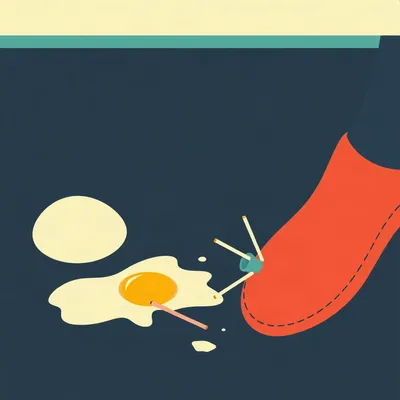
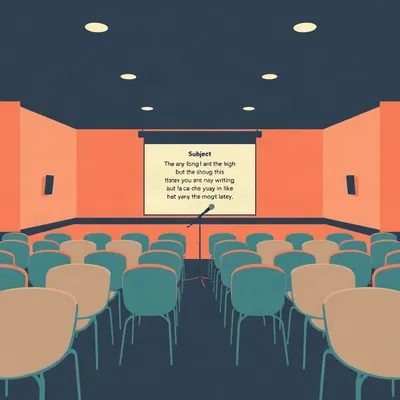
Daniel's been to one too many conferences and he wants us to catalogue the damage. His question — what are ten of the weirdest gimmicks conference organizers wheel out to get attendees engaged? Not hypotheticals. Things that have actually been reported as happening. The weirder the better.

And I love this because it's not just a list — it's almost an archaeological dig through the desperation of event planners who've been told engagement numbers are soft.
The prompt doesn't ask us to rank them, but I think we should. Least weird to most unhinged. A countdown.
Agreed. And I want to be clear about something upfront — every single one of these has been documented. These aren't urban legends. Conference attendees have been asked to do each of these things with a straight face.
Number ten. The human knot.
Classic entry-level weird. Everyone stands in a circle, grabs two random hands across from them, and then has to untangle themselves without letting go. It's been a staple of summer camps and corporate retreats for decades.
The physical contact with strangers is the obvious problem, but what I find more interesting is the completely unearned intimacy. You're three minutes into a conference about supply chain optimization and suddenly you're pressed against someone's torso trying to figure out whose arm goes where.
There's actual research on this — the human knot does have some cooperative problem-solving value in groups that already know each other. But at a conference of strangers? It's just forced vulnerability with no consent infrastructure.
Forced vulnerability with no consent infrastructure. That's the conference industry's business card.
Number nine. The silent disco icebreaker.
I've seen this one. Everyone gets headphones, three channels of music, and you're supposed to... what? Dance?
Dance, or at least move rhythmically, while watching other people dance to music you can't hear. The surreal part is when you take the headphones off and it's just forty people shuffling in near-total silence except for the squeak of shoes on carpet.
It's a surveillance-state nightclub. You can see everyone but you have no idea what they're listening to.
And someone always picks the channel nobody else is on and ends up doing an aggressive two-step while everyone else sways gently. That person is never invited to the breakout session.
Number eight. The professional cuddler.
This one's real. There are companies that provide certified professional cuddlers for corporate events. They set up a cuddle corner with pillows and blankets and attendees can book ten-minute sessions.
At a conference. With colleagues.
The pitch is stress reduction. The reality is your procurement manager watching you get spooned by a stranger named Greg who has a certificate from the Cuddlist Institute.
Which is a real organization.
It is. They have a code of conduct and everything. But the gap between "this is clinically valid" and "this is happening forty feet from the booth where I'm supposed to learn about enterprise resource planning" is just unbridgeable.
I don't think anyone's crossing that bridge. I think they're standing on opposite sides of a canyon, waving uncomfortably.
Number seven. The laughter yoga workshop.
I've been in a room where this was happening. It's haunting.
Describe it.
Thirty adults in business casual standing in a circle, making eye contact and forcing laughter. Not jokes — just the physical act of laughing. It starts as a kind of rhythmic ha-ha-ha chant and then the instructor tells you to let it become "authentic."
And does it?
What happens is about a third of the room starts laughing because the situation is so absurd, and the instructor takes credit for that as if the exercise worked. The other two-thirds are making sounds that would be admissible in a war crimes tribunal.
The clinical basis is that the brain doesn't fully distinguish between simulated and genuine laughter for endorphin release. But the clinical basis doesn't account for Janice from accounting making unwavering eye contact while producing sounds a fox would find distressing.
Number six. The ball pit networking session.
Adult ball pits were briefly a thing at tech conferences around 2018, 2019. The idea was that people would climb into a pit full of plastic balls and have more "playful" conversations.
I need to understand the theory of change here.
The theory, as far as I can tell, is that returning to a childlike state lowers inhibitions and encourages creative thinking. The practice is that you're sitting in a pit that smells faintly of feet, trying to have a serious conversation about API integrations while someone's knee keeps surfacing next to your elbow.
And the balls. The balls get everywhere. They migrate. You'll find one in your laptop bag three days later.
There's a hygiene dimension too. Those pits are almost never cleaned between sessions. By hour six of a two-day conference, that ball pit is essentially a petri dish with branding.
A petri dish with a sponsored banner above it. "The Innovation Playground, brought to you by Salesforce."
Number five. The professional roaster.
I hadn't heard of this one.
Some conferences have hired stand-up comedians specifically to roast attendees during networking breaks. The comedian walks around, identifies someone, and does two minutes of material about their outfit, their badge, their company.
So you pay a registration fee to be publicly mocked by someone you didn't ask to mock you.
And the organizer's logic is that it's "edgy" and "breaks down hierarchies." But what it actually does is make everyone terrified to leave their seat. The coffee break becomes a survival scenario.
Is there a consent mechanism? Do you opt in?
Sometimes there's a sticker system — a red dot on your badge means "don't roast me." But that creates a second problem, which is that anyone without the dot is now implicitly saying "please, humiliate me in front of my industry peers."
So your choices are public target or public coward. That's not a choice, that's a hostage situation with laminated badges.
Number four. The funeral for dead projects.
Alright, this one I want to hear about.
There's a facilitation technique where attendees write down failed projects, abandoned initiatives, or ideas that never launched on pieces of paper, and then the group holds a mock funeral. Eulogies, a cardboard coffin, the whole thing.
What are we burying? Like, "here lies the Q3 rebrand that marketing killed"?
And people are expected to share genuine emotional responses. The facilitator will say things like "honor what this project taught you" while someone is holding back tears about a CRM migration that got cancelled.
The thing is, I can see how this would be cathartic in the right context. A small team that actually went through something together.
Sure. But at a conference of two hundred strangers? You're performing grief for a project you never heard of, for a company you don't work at, while someone you met twenty minutes ago chokes up about a pivot that never pivoted.
And somewhere in that room is the person who actually killed that project, just nodding along.
Number three. The trust fall from an actual height.
No.
Yes. There are team-building companies that do elevated trust falls. Not the standard version where you fall backward off a table into coworkers' arms. These involve platforms, sometimes eight to ten feet up, and you fall backward into a crowd of attendees.
What conference has the liability waiver for this?
The waiver is part of the experience. You sign it, you climb up, and then you're supposed to learn something about vulnerability.
What you learn is that the legal department wasn't consulted. That's what you learn.
I found a report of one of these at a tech sales conference in 2023. Someone sprained a wrist catching a regional vice president. The regional vice president was fine. The catcher went to urgent care.
Did it close the deal?
The deal was not discussed in the emergency room, no.
Number two. The rent-a-mourner.
Oh, this one's wonderful. Companies hire actors to play mourners at a fake funeral — not for a project this time, but for the attendee themselves.
Explain.
You lie in a coffin. It's a closed coffin, you're not visible. And professional actors gather around and deliver eulogies about you based on a brief questionnaire you filled out beforehand.
So you're alive, in a box, listening to strangers say nice things about you.
That's the experience. It's marketed as a "life-prioritization exercise." The idea is that hearing what people might say about you clarifies what matters.
But the people saying it are being paid. They don't know you. They're working from a form you filled out in the lobby ten minutes ago. "He was... a devoted father who enjoyed cycling and hoped to one day visit Patagonia."
And you're lying in a rental coffin that was probably used for the same exercise by three other conference attendees that day.
The coffin has a frequent-flyer program.
The coffin is the most networked object at the conference.
Number one. And I need everyone to understand that this is the top spot for a reason. The goat yoga keynote.
I knew this would be number one.
For listeners who haven't encountered this: a keynote speaker delivers a talk about leadership or innovation or whatever while actual live goats wander around the stage and occasionally climb onto the speaker.
And sometimes onto attendees.
This has been done. Multiple times. There are companies that specifically provide goats for corporate events.
The goats are wearing little diapers. That's a real detail. They put diapers on the goats so they don't disrupt the keynote with what goats naturally do.
So you're sitting in a conference hall, watching a PowerPoint about digital transformation, and a diapered goat is standing on the presenter's shoulders. And you're supposed to find this inspiring rather than deeply confusing.
The stated rationale is that goats are "playful" and "unpredictable" and this somehow models the agility required in modern business. The actual experience is that nobody remembers a single word of the keynote because a goat tried to eat the slide advancer.
I want to know about the moment the speaker realizes it's not working. That moment when a goat is chewing on their lavalier mic and they have to decide whether to acknowledge it or just power through.
The best ones acknowledge it. The worst ones try to incorporate it into the metaphor. "And just like this goat, disruption doesn't ask permission before it climbs onto your strategic plan."
That's a real sentence someone has said into a microphone.
Almost certainly.
What's the through-line here? Across all ten?
I think it's the assumption that professionals are so starved for authentic connection that any gimmick will work if it's unusual enough. The logic is: people are bored, so let's add goats. People are disengaged, so let's make them fall off things. It's a complete failure to understand that what people actually want is content that respects their intelligence and time.
The more desperate the gimmick, the less confidence the organizer has in the actual program.
If your content is compelling, you don't need a cuddle corner. If your networking is well-structured, you don't need a ball pit. The gimmicks are an admission of failure dressed as innovation.
It's the conference equivalent of a restaurant that has a twelve-page menu. Nobody's confident about anything in the kitchen.
And the tragedy is that some of these probably started as genuine, well-intentioned ideas in small, consenting groups where they actually worked. The human knot with a team that's been together for two years? Fine. The funeral for a project your department actually lived through? Probably cathartic. But then the conference industry scales them, strips the context, and sells them as one-size-fits-all engagement solutions.
The scaling is what kills it. Intimacy doesn't scale. Vulnerability doesn't scale. You can't industrialize trust.
But the industry keeps trying because the alternative — just making the content better — is harder. It's easier to rent goats than to find a speaker who can hold a room for forty-five minutes without props.
I'd push back slightly on one thing. I think some of these gimmicks work, but not for the reason organizers think. They work because they're so absurd that attendees bond over the shared absurdity. The goat yoga keynote doesn't teach you about agility — it gives you a story you'll tell for years. That has value.
That's fair. The shared trauma becomes the actual networking. You meet someone at the coffee break and instead of "what do you do," it's "did you see the goat eat the slide advancer." That's a real connection.
The question is whether the connection is worth the registration fee. If I paid two thousand dollars and the main thing I remember is a diapered goat, I'm not sure I got my money's worth.
Unless the goat was the keynote speaker. In which case, honestly, I'd pay more.
A goat with actual insights about supply chain optimization? I'd attend that conference.

It was a pig.
Pardon?
Not goats. The first time this was tried at scale, it was a pig. A potbellied pig. South by Southwest, twenty twelve. They brought it out during a panel about disruption and it immediately urinated on the stage. Nobody had thought to put a diaper on it.
That's... a significant detail.
The panel was about lean startup methodology. The pig was supposed to represent "moving fast and breaking things." It broke the stage. They had to pause for twenty minutes while someone mopped.
And they still tried this again with goats?
People have short memories and long lists of things they'll rent to conferences. I know the man who supplied the pig. His name was Marcus. He ran a petting zoo in Austin. He got three hundred calls the next week from event planners who'd seen the coverage and wanted "the disruption pig."
So the failure spawned the industry.
Most industries start that way. Someone messes up in public and a dozen people think "I could monetize that."
Do you still talk to Marcus?
He retired. Moved to Florida. The pig lived another eight years and died of natural causes. Marcus put "pioneer of experiential corporate engagement" on the pig's obituary. The pig was more successful than most of the startups at that conference.
There's something almost profound about that. The pig achieved what the panelists were advising people to do — it pivoted from petting zoo animal to corporate thought leader.
It didn't pivot. It walked onto a stage and urinated. The pivot was everyone else's story about it.
That's the cleanest definition of conference culture I've ever heard. The pig just did what pigs do. The narrative was a group project.
Most of these gimmicks are that. Someone did something ordinary in an unexpected place and a consultant turned it into a framework. I've still got the brochure from the company that spun out of that panel. "Porcine Principles for Disruptive Leadership." Thirty pages. Spiral bound.
You kept the brochure.
It's in a box.
I want to circle back to something you said earlier, Herman. About how these gimmicks are an admission of failure. I think that's right, but I also think there's a second thing happening. These stunts aren't for the attendees. They're for the organizer's marketing.
Say more.
Nobody puts "we had excellent content and well-structured networking sessions" in a promotional video. But "we had a ball pit and a professional roaster and a goat in a diaper"? That gets shared. The gimmick is content for next year's registration page.
So the attendees are props in the marketing for the next conference.
The experience isn't designed for the people in the room. It's designed for the people who'll see the highlight reel.
That's why the pig worked. The pig wasn't for the audience. The pig was for the coverage.
And the coverage worked. We're talking about it fourteen years later.
Fourteen years and nobody remembers what the panel was actually about.
Do you?
Something about failing fast. They failed to keep the pig continent. That's what I remember.
The misconception here — and I think this is what Daniel's prompt is really pointing at — is that these gimmicks are random. That some event planner just has wacky ideas and throws them at the wall. But they're not random. They're systematic. Each one is an attempt to manufacture a moment that would otherwise happen organically if the conference were actually good.
Manufactured spontaneity. The most expensive kind.
And the least effective. Because people can tell. You can't fake the feeling of a genuine connection or a real insight. You can only create conditions where those things might happen. And those conditions are usually: good content, enough time, and not being asked to hold hands with strangers.
The best conference I ever attended had none of this. No icebreakers, no gimmicks, no trust falls. Just people who knew things, talking about those things, with breaks long enough to actually talk to each other.
Radical concept.
Unscalable, apparently.
The breaks are the part everyone gets wrong. I worked a conference in Chicago in the nineties — medical equipment, very dry — and the organizer cut the breaks to fifteen minutes because he wanted to pack in more sessions. Attendees revolted. Not formally. They just stopped going to sessions and stood in the hallway talking. By day two, the hallway was the conference.
The hallway track. It's the most valuable part of any conference and it's the one thing organizers can't schedule or monetize.
They tried. The next year, same organizer, he put up "designated networking zones" with timers. You got twelve minutes per zone, then a bell rang and you had to rotate. Like speed dating for radiologists.
How did that go?
The radiologists ignored the bells. Radiologists are not known for compliance with arbitrary timers. The zones became regular hallways. The organizer put out a press release about his "structured serendipity framework." I still have the press release.
Of course you do.
It's in the same box.
I think that's where we land. The weirdest conference gimmicks aren't the ones that fail spectacularly — the pig, the goat, the coffin. They're the ones that succeed at producing a story the organizer can sell, while producing nothing of value for the people who actually showed up.
And the metric that matters — would attendees come back — never gets measured against the gimmick. It gets measured against the whole package. So the organizer says "we had record attendance" and doesn't mention that half the attendees came because they heard about the goat and the other half left early.
Daniel, if you're at a conference right now and someone's handing out diapers for livestock, you have our permission to leave.
The prompt asked for ten. We delivered ten. I'd add an eleventh as a bonus — the conference that does none of this and still sells out. Those exist. They're just harder to find because their marketing doesn't feature a pig.
Thanks to Hilbert Flumingtop for producing, and for the porcine history lesson we didn't know we needed.
This has been My Weird Prompts. If you've survived a conference gimmick we didn't cover, we want to hear about it. Email the show at show at my weird prompts dot com.
We'll be back soon. Try not to fall off anything.