
Page 8 of 274

#5448: Toddler Mom-Clings After Daycare: What's Normal?
A 15-month-old suddenly wants only mom. Here's what attachment science says about daycare, clinginess, and whether dad can break in.

#5447: The Models That Never Talk Back
Some models read text, score it, and return a number. No chat, no reasoning, just decisions — and they're running under every router you use.

#5446: The Potter's Field: Who Buries the Unclaimed Dead?
From Hart Island's million graves to the met mitzvah, how societies bury the unclaimed — and why the shame of a pauper's funeral is surprisingly mo...

#5445: Israel's Periphery: Why It's Not About Distance
What "peripheria" really means in Israel — and why a $10B Intel fab sits in a town that still tops unemployment.

#5444: Carmei Gat: The Buchman of the Negev?
A planned neighborhood on Kiryat Gat's edge is pulling in Anglo olim with prices that undercut Beit Shemesh and Modiin.

#5443: Heads vs Layers: How Model Merging Actually Works
Heads aren't the Lego bricks of model merging — layers are. Here's what heads really do and how frankenmerges get built.

#5442: When Do LLMs Suddenly Get Good at Things?
New capabilities seem to appear out of nowhere as models scale. Whether that's real — or just how we measure — is still an open fight.
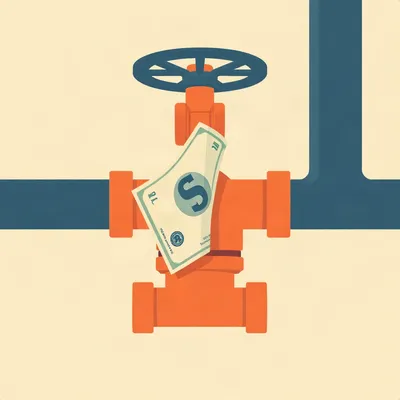
#5441: Dollar Plumbing: Why Bessent's Iran Threat Has Teeth
One line from Treasury can ground an airline worldwide. The reason lives in New York's clearing houses, not the currency itself.

#5440: What Does a Space Force Actually Do All Day?
Rockets get the coverage, but the real work happens at consoles on the ground. What 15,000 Guardians actually do.

#5439: Life at 76 Degrees North: Inside Pituffik Space Base
A few hundred people, four months of darkness, and a $100M-a-year mission on thawing permafrost.
#5438: Why Linguists Left the AI Room
Large language models grew out of linguistics — so why aren't linguists in the room where they're built?

#5437: Hunting the Tells That Vanish When Named
There's no tool for finding an LLM's verbal tics — you have to build one. Here's how keyness analysis works.

#5436: Small Models as Rewriters, Not Writers
Why "don't say X" prompts backfire, and how a tiny grammar-constrained model can scrub a script without breaking its grammar.
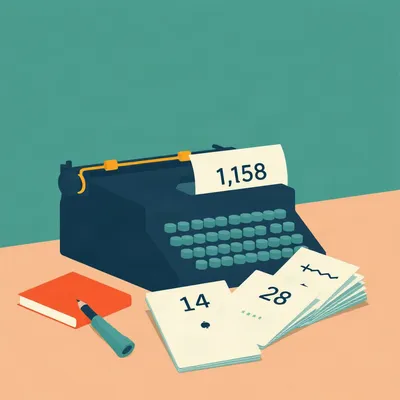
#5435: When Your TTS Model Eats the Numbers
Numbers, dates, and acronyms break text-to-speech in specific, documented ways. Here's where normalization lives — and why it depends on your model.

#5434: When Local AI Tools Phone Home
Local AI tools shouldn't need the network. So why is your on-device writing assistant uploading 40MB at 3am?

#5433: Thermostats, Thermal Mass, and the Buildings That Fight Back
A thermostat is a sensor, a set point, and a switch — until thermal mass, bad models, and sustainability mandates get involved.

#5432: What Hospice Workers See at the Deathbed
A UK survey found 97% of palliative care staff witnessed deathbed phenomena. What they see — and why 92% never makes it into the chart.

#5431: The Other Half of Hugging Face: Why BERT Still Out-Downloads Llama
Encoder models pull over a billion downloads a month. Decoder models pull 397 million. The AI conversation and the download counter are describing ...

#5430: Two Boxes: ASR and the Text Fixer Behind It
Punctuation, casing, ITN, disfluency — the four-job layer between raw ASR output and text you can actually read.

#5429: Bathtime Safety: What the Data Actually Says
Two-thirds of child drownings inside the home happen in the bathtub. Here's what the research says about temperature, supervision, and the towel.