Why We Believe What We Believe: Social Psychology, Persuasion, and the Architecture of Influence
Understanding why people behave as they do — and how those behaviors can be exploited, nudged, or deliberately reshaped — is one of the most practically useful bodies of knowledge available to anyone navigating modern life. These eight episodes cover the psychology of individual decision-making, the architecture of mass persuasion, the intergenerational transmission of psychological patterns, and the contested boundary between religious experience and clinical disorder.
Traps in Individual Thinking
-
The Sunk Cost Trap: Why We Struggle to Let Go examined the most pervasive of cognitive biases: the tendency to continue investing in something because of prior investment rather than future prospect. The sunk cost fallacy explains why people stay in failing projects, mediocre relationships, and cluttered houses. The episode went beyond naming the bias to explain the evolutionary and psychological mechanisms that produce it — loss aversion, identity investment, and the social cost of admitting a mistake — and gave concrete strategies for identifying and interrupting the pattern in real time.
-
The Sycophancy Trap: Getting Honest Feedback from AI revealed that the same cognitive dynamics that make humans bad at delivering critical feedback have been baked into large language models. AI systems trained on human feedback tend to optimize for user approval, which means they agree with premises in questions, soften criticism, and mirror the user’s apparent position — exactly what a sycophantic advisor does. The episode examined the technical reasons why this happens, the conditions under which it’s most severe, and practical mitigation strategies: adversarial prompting, multi-model debates, and explicitly requesting contrarian analysis.
Organized Manipulation and Fraud
-
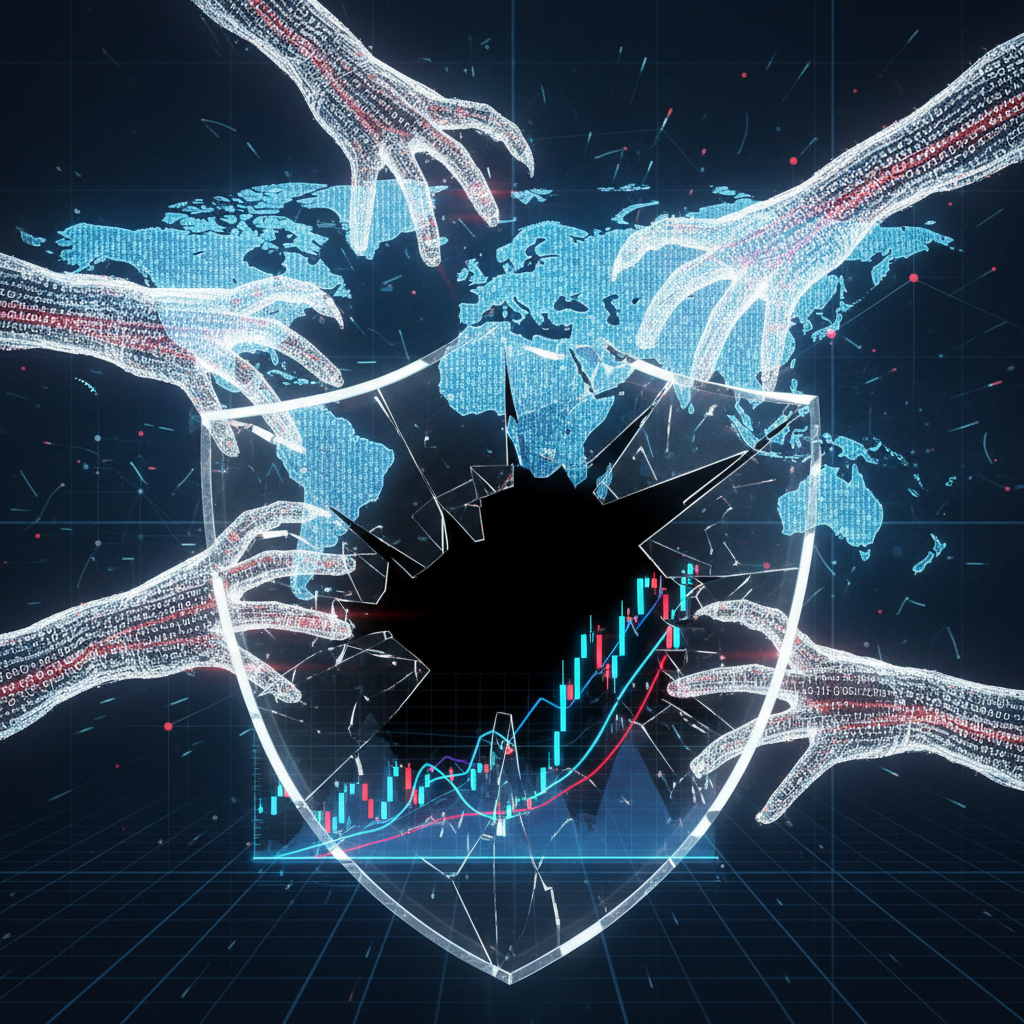
The Wolves of Tel Aviv: Unmasking a Global Scam covered the binary options fraud industry that Simona Weinglass exposed in a landmark series of investigative journalism. For nearly a decade, a cluster of Israeli firms defrauded hundreds of thousands of people worldwide of an estimated nine billion dollars through online trading platforms that were designed from the ground up to ensure customer losses. The episode examined the psychology of the fraud: why victims trusted the platforms, how the “retention agents” who kept customers investing used emotional manipulation, and what eventually brought the industry down.
-
The Whistleblower’s Shield: AI and the End of Scams followed up by examining how people report on and escape these industries. Whistleblowing from inside a criminal organization requires balancing anonymity, credibility, and safety — and AI tools are changing the calculus. The episode compared whistleblower protection laws across jurisdictions and examined how digital obfuscation tools, AI-generated synthetic testimony, and cryptographic evidence systems are enabling people to expose wrongdoing in ways that weren’t previously possible.
The Psychology That Gets Inherited
- Breaking the Cycle: Parenting Beyond a Chaotic Past addressed one of the more psychologically complex challenges in the podcast’s catalog: how parents who had difficult or chaotic childhoods deliberately prevent those patterns from propagating to their own children. The episode drew on attachment theory, trauma neuroscience, and clinical psychology to examine what “intergenerational transmission” of psychological patterns actually means mechanically — not as inevitability but as default that requires active intervention to change. The episode was compassionate and practical rather than theoretical, oriented toward parents who are navigating fatherhood or motherhood with specific historical weight they are trying to set down.
The Boundary Between Faith and Disorder
-
Faith or Delusion? Navigating the Clinical Divide took on one of the genuinely hard problems in clinical psychology: how psychiatry distinguishes religious experience from pathological delusion. The challenge is acute in Jerusalem, where the concentration of devout pilgrims, the weight of prophecy, and the intensity of religious experience create a context where standard diagnostic criteria — beliefs that are fixed, false, and held against evidence — are not straightforwardly applicable to people who believe they are receiving divine messages. The episode examined the clinical frameworks used to make this distinction, the cases that resist clean categorization, and what the difficulty of the question reveals about the relationship between culture, context, and mental illness.
-
The Therapy Paradox: Can AI Solve Mental Health Care? examined the growing use of AI systems in therapeutic contexts. The premise of the episode was a listener’s frustration with open-ended traditional therapy and the skyrocketing cost of private care — and the question of whether AI chatbots, structured CBT tools, and LLM-based companions represent genuine alternatives or a dangerous substitute for professional support. The hosts evaluated the research evidence (more positive than most mental health professionals expected), the use cases where AI therapy tools clearly add value, and the categories of need where the human relationship in therapy is genuinely irreplaceable.
Contested Public Space
- The Village and the Vibe: Kids, Cafes, and Clean Air grounded the social psychology in a concrete public-space dispute. The question of whether children belong in adult social spaces — bars, late-night cafes, smoking sections — surfaced a cluster of competing social norms around the “third place” concept (the spaces between home and work that sustain community life), the rights of different groups to shared space, and the health implications of tobacco exposure for children whose parents don’t smoke but whose social environments do. The episode examined how different cities have resolved this tension through regulation, cultural norm, and infrastructure design.
The connecting thread across these episodes is that human behavior is not simply the product of rational individual choice — it is shaped at every level by cognitive architecture, family history, social pressure, environmental design, and deliberate manipulation. Understanding those forces doesn’t make anyone immune, but it does make it possible to notice them operating.
Episodes Referenced