Daniel sent us this one — and it's a sharp question. He's looking at archaeology, particularly here in Israel where digs are everywhere, and he's asking what useful function the field actually serves in today's world. We've got museums, we know the civilizations, we have a decent track of history — so beyond filling in details about ancient empires, what justifies the profession's existence? And he's wondering whether this question has surfaced in actual policy debates, and what vital functions archaeologists perform that go far beyond what most people imagine. It's a fair challenge. I mean, on the surface, it does look like a profession that's mostly about cataloguing pottery shards with tremendous precision and occasionally making a museum plaque slightly more accurate.

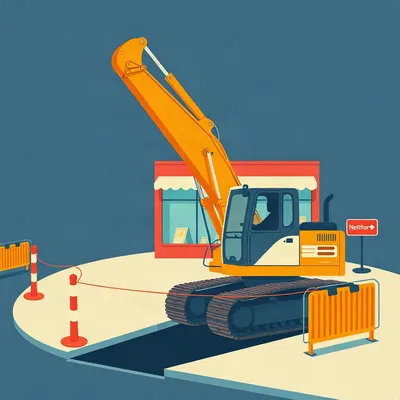
That surface impression is exactly where most critics stop. But the reality is that archaeology has been justifying itself in hard policy terms for decades now — and not just in dusty academic committees. There's a whole field called cultural resource management, CRM, that essentially functions as the regulatory backbone of modern development. In the United States, for example, Section 106 of the National Historic Preservation Act requires federal agencies to consider the effects of their projects on historic properties. That means before you build a highway, lay a pipeline, construct a wind farm, or put up a federal building, an archaeological survey has to happen. It's not optional.
Archaeology as the legal speed bump for construction projects.
That's one way to frame it, but it's more like archaeology as the due diligence arm of land use. And the scale is enormous. CRM archaeology accounts for something like ninety percent of all archaeological work done in the United States today. We're talking about a multi-billion-dollar industry that employs thousands of professionals, and most people have no idea it exists because it's not the Indiana Jones stuff. It's people in hard hats walking transects ahead of bulldozers.
The invisible army of shovel-wielding bureaucrats.
They find things constantly. In twenty nineteen, during a routine survey for a highway expansion in Ohio, a CRM team uncovered a Hopewell culture earthwork complex that completely reshaped the understanding of settlement patterns in that region. The highway got rerouted. That's archaeology directly altering infrastructure planning in real time, not in a museum decades later.
The first answer to the prompt is that archaeology is embedded in the regulatory machinery of the modern state in ways that are invisible to most people, and that alone employs more archaeologists than academia ever could. But that's a fairly procedural defense. It says archaeology exists because the law requires it. That doesn't answer whether the law should require it.
Right, and that's where the deeper justifications come in. One of them is forensic. Archaeology is, at its core, a method for reconstructing past events from material evidence. That skill set transfers directly into contexts that have nothing to do with ancient civilizations. Archaeologists have been central to war crimes investigations, for instance. The excavation of mass graves in Bosnia in the nineteen nineties and in Iraq after the Yazidi genocide — those were led by forensic archaeologists and anthropologists who applied the exact same stratigraphic methods you'd use on a Bronze Age site. You document the layers, you map the spatial relationships of remains, you establish sequence. The evidence they produced was used in international tribunals.
That's a function I genuinely hadn't connected to archaeology. So the same person who can tell you which layer of a tell corresponds to the Iron Age is also the person who can establish that a mass grave was dug after a specific military operation, not before.
And it goes further. Archaeologists have been deployed in disaster victim identification. After the World Trade Center attacks in two thousand one, forensic archaeologists worked at the Fresh Kills landfill site, sifting through debris using systematic excavation techniques. After the Indian Ocean tsunami in two thousand four, archaeological methods were used to locate and document victims in mass burial contexts where traditional identification was impossible. The skill is the same: reading the physical record with enough precision to reconstruct sequence, identity, and cause.
When someone says "what's the point of archaeology," part of the answer is that the methods developed to study ancient garbage heaps are also the methods that put war criminals in prison and identify disaster victims. That's a concrete, non-academic output.
That's before we get to climate science. This is one of the areas where archaeology has become indispensable in the last twenty years. Archaeologists study how past societies responded to environmental change — drought, sea level rise, agricultural collapse. Those aren't just interesting stories. They're data points for modeling what happens to human populations under climate stress. The classic example is the Maya collapse, which for decades was debated as either drought-driven or politically driven. The archaeological consensus now is that it was both — a series of severe droughts interacting with fragile political systems. That pattern, of climate stress amplifying existing social vulnerabilities, is basically the defining challenge of the twenty first century, and archaeology provides the only deep-time dataset we have for understanding it.
Archaeology as a laboratory for climate adaptation.
More specifically, as a source of longitudinal data that no other discipline can access. Climate models can tell you what the rainfall was in the Yucatan in the ninth century. But only archaeology can tell you what people actually did in response — which societies adapted, which ones collapsed, what the tipping points looked like. There's a paper from twenty twenty two in Nature that used archaeological data from the Indus Valley civilization to model urban adaptation to monsoon variability over a thousand-year period. That's directly informing how planners in South Asia think about water infrastructure today.
The Indus Valley civilization is not exactly the first thing that comes to mind when you're designing a drainage system in modern Mumbai, but the logic tracks. You're looking at the longest-running experiment in human adaptation that exists.
Here in Israel, this is especially acute. The archaeology of ancient water systems in the Negev — the Nabatean runoff agriculture, the Byzantine terraces — that's not just heritage. Researchers at Ben-Gurion University have been studying those systems for decades to understand how you sustain agriculture in arid environments with minimal water input. Some of those ancient techniques are being adapted for modern desert agriculture projects in Africa. The Nabateans were growing grapes in the Negev two thousand years ago using nothing but clever stone arrangements that captured dew and directed runoff. That's applied archaeology producing practical agricultural knowledge.
I've seen those stone piles in the Negev. They look like the world's most ambitious rock garden. I had no idea they were effectively a two-thousand-year-old field experiment in dryland farming that people are still learning from.
The policy debates the prompt asks about — those have been very real. In the United Kingdom, the debate over HS2, the high-speed rail project, involved massive archaeological work. The project became, in effect, the largest archaeological dig in British history. Over a thousand archaeologists worked along the route. They found everything from a Roman trading settlement in Northamptonshire to a previously unknown Anglo-Saxon church. The cost of that archaeological work was built into the project budget from the start — it wasn't an afterthought, it was a regulatory requirement, and it added hundreds of millions of pounds to the total cost.
Which I imagine sparked exactly the kind of debate the prompt is getting at. Someone in Parliament asking why a train needs to fund a thousand people digging up Roman pottery.
The answer that came back, repeatedly, was that the archaeology itself generated public value. The finds were documented, preserved, and in many cases put on display. The knowledge produced fed into local education programs. And here's the part that surprised a lot of the critics: the archaeological work actually accelerated in some cases because the project timeline forced a concentration of resources that would never have been available for academic digs. HS2 funded more archaeology in five years than the UK research councils funded in twenty.
The infrastructure project became the research grant.
That's a pattern. The Big Dig in Boston, officially the Central Artery Tunnel Project, was the largest urban archaeology project in American history. It uncovered an entire neighborhood of nineteenth-century Boston that had been buried under the elevated highway, including the homes of free African Americans in the Beacon Hill area. That data transformed the historical understanding of the Black community in antebellum Boston. None of that would have been excavated without the construction project forcing the issue.
There's a kind of symbiotic relationship where construction destroys archaeological sites but also funds the excavation of sites that would otherwise never be touched. It's like the medical principle of harvesting organs from a fatal accident.
That's a grim but not inaccurate analogy. And it points to something that the prompt gestures at — the idea that we "already know" the ancient world. That's a misconception that archaeologists deal with constantly. We don't have a rich picture of the ancient world. We have a fragmentary picture biased toward the monumental, the elite, the literate, and the durable. Most of human history was made by people who didn't build stone temples or write on clay tablets. They built in wood and earth, and their lives left traces that only systematic excavation can recover.
The hidden history of the non-monumental.
That history keeps overturning what we thought we knew. In twenty eighteen, a dig in Kenya at a site called Olorgesailie pushed back the evidence for long-distance trade networks and complex tool use by early humans by tens of thousands of years. In twenty twenty one, footprints found in White Sands, New Mexico, dated human presence in the Americas to about twenty-three thousand years ago — roughly double the previously accepted date for the Clovis-first model. These aren't minor adjustments. These are fundamental rewritings of the human story.
The White Sands footprints one was controversial, right? I remember there was a dating dispute.
Still is, to some degree. The dating used radiocarbon from aquatic plant seeds embedded in the footprint layers, and critics argued the seeds might have absorbed old carbon from the water, making the dates look older than they are. But follow-up work in twenty twenty-three used pollen grains from terrestrial plants and got the same dates. The point is that archaeology is not a static catalog of known facts — it's an active, contested, constantly revising body of knowledge. And those revisions have implications for how we understand human capacity, human migration, human resilience.
The "we already know history" premise is itself a kind of historical artifact — it assumes that the current textbook is approximately correct and just needs footnotes, when in reality the textbook gets rewritten every decade or so.
In some places, it gets rewritten every year. Israel is one of those places. The density of archaeological material here is almost absurd. You can't dig a foundation for an apartment building in parts of Jerusalem or Tel Aviv without hitting something. The Israel Antiquities Authority processes something like six thousand development-related salvage excavations every year. That's not a typo.
Six thousand small-scale emergency digs annually, in a country the size of New Jersey.
Those digs produce a constant stream of finds that reshape the historical picture. In twenty twenty three, a salvage dig in the City of David uncovered a toilet — a full private toilet installation from the seventh century BCE, which sounds comical but was actually a major indicator of elite living standards in Iron Age Jerusalem. In twenty twenty-four, a dig near the Temple Mount found a moat that had been mentioned in historical sources but never physically identified. These are not esoteric details. They're pieces of a historical puzzle that has direct contemporary resonance because people are living on top of it and making claims about it.
Which brings us to the elephant in the room — or maybe the donkey in the room.
I'll allow it.
Archaeology in Israel is not just a neutral scientific enterprise. It's entangled with national identity, territorial claims, and religious narrative in ways that make it inherently political. The prompt asks about vital functions that go beyond what one envisions, and one of those functions, uncomfortable as it may be, is that archaeology is a tool of statecraft. It has been used to establish historical presence, to legitimize claims to land, and to shape national origin stories.
That's true, and it's true everywhere, not just here. Every nation-state uses archaeology to construct a usable past. The Greeks did it in the nineteenth century when they were building a national identity after independence from the Ottomans — classical archaeology was essentially a nation-building project. The same in Egypt under Nasser, where Pharaonic archaeology was mobilized to construct a sense of Egyptian identity that predated and transcended the Islamic period. In China, archaeology has been systematically deployed to demonstrate the antiquity and continuity of Chinese civilization, which is a political project as much as a scholarly one.
Archaeology as the origin-story factory for modern states.
That's not necessarily a corruption of the discipline. It's a recognition that the past is never neutral. The question is whether the archaeological work is being done rigorously, with methods that can be evaluated independently, or whether it's being cherry-picked to serve a predetermined narrative. And that's where the professional standards of the discipline matter enormously. Peer review, stratigraphic documentation, open publication of findings — those aren't just academic formalities. They're the guardrails that prevent archaeology from becoming pure propaganda.
There's also the economic dimension that gets overlooked. The prompt mentions tourism as the surface-level encounter most people have with archaeology, but that surface level is actually a massive economic engine. Archaeological tourism is not a trivial thing. In Israel, tourism was about six percent of GDP before the pandemic disruptions, and a huge chunk of that is heritage tourism — people coming specifically to see archaeological sites. Masada, Caesarea, Beit She'an, the Western Wall tunnels. These are archaeological sites that function as economic assets.
Globally, the numbers are staggering. The World Travel and Tourism Council estimates that cultural heritage tourism accounts for about forty percent of all international tourism. That's not all archaeology — it includes museums, historic buildings, intangible heritage — but archaeological sites are a major component. In countries like Peru, Machu Picchu alone generates something like forty million dollars annually in ticket revenue, and the total economic impact including hotels, restaurants, transport, and guides is in the hundreds of millions. That's a single site.
When someone asks why we fund archaeology, part of the answer is that it pays for itself many times over through tourism revenue, and that's before you account for the employment it generates directly — the excavators, conservators, site managers, museum staff, tour guides.
There's a subtler economic argument that's gained traction in policy circles over the last decade. It's the idea of archaeology as a generator of social cohesion and community identity, which sounds soft but has measurable economic effects. There was a study published in twenty nineteen by the British Academy looking at the economic value of heritage, and one of their findings was that communities with strong heritage assets had higher levels of social trust, more civic engagement, and better economic resilience during downturns. The mechanism seems to be that shared history provides a kind of social glue that makes collective action easier.
That's a harder sell to a finance minister, but I can see the logic. A town with a well-preserved Roman amphitheater that hosts events and draws visitors and gives people a sense of place — that's not just a cultural amenity, it's a piece of social infrastructure.
It's the kind of thing that's easy to take for granted until it's gone. There's a concept in heritage economics called "non-use value" — the value people place on something existing even if they never visit it. People who have never been to Pompeii still value the fact that Pompeii exists. They'd be upset if it were destroyed. That willingness to pay for preservation, even at a distance, is a real economic preference that gets measured in contingent valuation studies. And it turns out to be substantial.
The full economic case for archaeology includes direct tourism revenue, employment, the indirect economic effects of place-making, and the existence value that people assign to preserved heritage even if they never personally see it. That's a more robust balance sheet than "we dug up a nice mosaic.
There's one more function that I think gets to the heart of the prompt's deeper question about the value of history. Archaeology is a discipline of humility. It confronts us with the reality that civilizations rise and fall, that things that seemed permanent were not, that people in the past were just as intelligent and complex as we are but operated under different constraints and different belief systems. That's not just philosophical musing. It's a corrective to the chronological snobbery that assumes we're the smartest people who ever lived and that our way of doing things is obviously superior.
I'm stealing that.
It's C.Lewis's term, not mine. But the archaeological version of it is particularly powerful because it's not abstract. When you excavate a Roman surgical instrument and realize it's functionally identical to something in a modern operating room, or when you study the water management system at Petra and realize it's more sophisticated than what many modern desert cities have, you're forced to confront the fact that progress is not a straight line and that knowledge gets lost as well as gained.
There's a humbling quality to realizing that people two thousand years ago solved problems we still struggle with, using a fraction of the technology we have.
That has policy implications too. There's a growing field called archaeo-engineering, where engineers study ancient technologies to understand principles that might have been lost or overlooked. Roman concrete is the famous example. Roman marine concrete, the stuff they used for harbors, actually gets stronger over time when exposed to seawater, unlike modern Portland cement which degrades. For decades nobody understood why. Then in twenty seventeen, researchers at Berkeley published a paper showing that the secret was volcanic ash that reacted with seawater to form aluminous tobermorite, a mineral that strengthens over time. Now there are startups trying to commercialize Roman-style concrete as a lower-carbon alternative to modern cement.
Archaeology as an R and D pipeline for materials science. That's not where I expected this conversation to go.
The concrete example gets all the attention, but there are others. Archaeologists working on medieval steel production in Central Asia have documented techniques that produced carbon nanotubes in Damascus steel — accidental nanotechnology from the thirteenth century. Researchers studying Maya blue, a pigment that has survived twelve hundred years without fading, discovered it's a complex organic-inorganic hybrid material that modern chemistry is still trying to fully replicate. These aren't just curiosities. They're potentially useful technologies that were discovered, used, and then forgotten.
Which suggests that the history of technology is not a cumulative upward curve but something more like a landscape with peaks and valleys, and archaeology is how we rediscover the peaks we lost.
That's a function that goes far beyond filling in museum labels. It's a form of knowledge recovery that has practical applications in the present.
Let me push on something, though. The prompt asks whether the question of archaeology's value has surfaced in policy debates, and we've talked about regulatory frameworks and economic arguments and even materials science. But has there been a serious political challenge to archaeology funding that forced the discipline to defend itself in explicit terms?
Yes, and the most dramatic recent example was in Australia. In twenty twenty, the mining company Rio Tinto destroyed Juukan Gorge, a site in Western Australia that had evidence of continuous human occupation going back forty-six thousand years. The site contained sacred Aboriginal artifacts, including a four-thousand-year-old hair belt that was genetically linked to the traditional owners living today. Rio Tinto had legal permission to blast the site — they were expanding an iron ore mine — and they did so despite the objections of the Puutu Kunti Kurrama and Pinikura people.
Forty-six thousand years of continuous occupation, and they blew it up for iron ore.
The fallout was enormous. The CEO of Rio Tinto resigned. The Australian Parliament held an inquiry that resulted in a report called "Never Again," which recommended sweeping changes to heritage protection laws. The company lost billions in market value, not because of the direct cost of the destruction but because of reputational damage and investor revolt. Major shareholders, including large pension funds, voted against the board. It became a global story about the failure of heritage protection frameworks and the need to take indigenous cultural heritage seriously.
Archaeology's value was asserted in the negative — the destruction of a site triggered a political and economic crisis that forced a re-evaluation of what these places are worth.
That re-evaluation is ongoing. The Australian government is still working on reforming its cultural heritage laws, and the debate has been fierce. Mining companies argue that the regulatory uncertainty is chilling investment. Indigenous groups argue that the current system still doesn't adequately protect their heritage. Archaeologists have been central to these debates, not just as technical experts but as advocates for a different way of valuing the past.
That case also highlights something the prompt gestures at — the difference between archaeology and history. The Juukan Gorge site wasn't important because it filled a gap in the written record. There is no written record for forty-six thousand years of Aboriginal occupation. The archaeology is the record. It's the only record. And destroying it is not like losing a book that could be reprinted. It's like burning the only copy.
And it applies to most of human history. Writing is only about five thousand years old, and for most of that period, it was restricted to tiny elites in a handful of civilizations. The vast majority of humans who have ever lived left no written records. Their lives are accessible only through archaeology. If you think those lives matter — if you think the experience of a farmer in Neolithic Anatolia or a hunter in Pleistocene Australia is part of the human story worth knowing — then archaeology is not optional. It's the only way to access that story.
If you don't think those lives matter, that's a position you should have to defend explicitly, not just assume by default when you're cutting a heritage budget.
The philosopher Kwame Anthony Appiah has a line about this. He says that the past is not something we inherit passively — it's something we actively construct through choices about what to preserve and what to study. Those choices reflect values. And archaeology is one of the primary tools we have for making those choices in an informed way rather than just preserving whatever happens to survive by accident.
That's a good segue to something I want to pull out of the prompt. There's an implicit question about whether archaeology is just filling in details around a known framework, or whether it's doing something more fundamental. And I think what we've arrived at is that the framework itself is archaeology's product. The broad outline of human history — the migration out of Africa, the development of agriculture, the rise of cities, the emergence of states — that outline is not something we got from written records and then archaeology filled in the gaps. It's almost entirely an archaeological construction. Written history covers a tiny sliver of the human past, and even for the periods it covers, it's wildly incomplete and biased.
The "known framework" is itself the achievement of a hundred and fifty years of archaeological work. In eighteen seventy, nobody knew that humans had existed in the Pleistocene. Nobody knew about the Neolithic Revolution. Nobody knew that cities predated writing by thousands of years. The entire deep history of humanity is an archaeological discovery, and it's still being discovered.
The premise that we have a rich picture of the ancient world is true, but it's true because of archaeology, not despite it. And the picture is still full of holes that only archaeology can fill.
Some of those holes are enormous. We still don't know when language emerged. We don't know exactly how the peopling of the Americas happened. We don't know why Neanderthals went extinct. We don't know what caused the Bronze Age collapse in the eastern Mediterranean around twelve hundred BCE, though we have theories. These are not minor footnotes. These are fundamental questions about what it means to be human, and the only discipline that can answer them is archaeology.
The Bronze Age collapse is a great example because it's also a cautionary tale about complex civilizations that thought they were permanent. Within a single generation, the Mycenaeans, the Hittites, the Canaanite city-states — all gone or radically diminished. Writing disappears from Greece for four hundred years. Trade networks that had operated for centuries collapse. And we still don't fully understand why.
The leading theory now involves a combination of climate change, seismic activity, internal rebellion, and invasions by the so-called Sea Peoples, whose identity is itself an archaeological mystery. But the point is that it's a systems collapse story, and understanding how complex systems fail is not an antiquarian pursuit. It's relevant to anyone living in a complex civilization today.
Which is all of us, unless someone's listening from a very remote yurt.
The Bronze Age collapse is not the only example. The collapse of the Western Roman Empire, the abandonment of the Ancestral Puebloan sites in the American Southwest, the fall of Angkor in Cambodia — these are all archaeological case studies in societal vulnerability. The archaeologists working on them are not just describing what happened. They're trying to understand the mechanisms: how does a society respond to stress, what are the early warning signs, which institutions fail first, which ones prove resilient.
Archaeology as a database of societal failure modes. That's a function that feels extremely relevant in the current moment and also completely invisible to most people who think of archaeology as a slightly dusty branch of art history.
That invisibility is part of what the prompt is getting at. The public-facing archaeology is the museum exhibit, the National Geographic special, the tourist site. The working archaeology is the CRM survey ahead of the pipeline, the forensic investigation of the mass grave, the climate adaptation study using ancient agricultural data, the materials science paper on Roman concrete, the heritage impact assessment for the mining company, the salvage dig ahead of the apartment building. Those functions don't make headlines, but they employ the vast majority of archaeologists and they produce value that extends far beyond the academic study of the past.
To answer the prompt directly: archaeology justifies its existence through at least seven distinct functions that go far beyond filling in historical details. One, it's embedded in the regulatory framework of modern development through cultural resource management. Two, it provides forensic methods used in war crimes investigations and disaster victim identification. Three, it supplies deep-time data for climate adaptation modeling. Four, it's a major economic asset through heritage tourism. Five, it serves as a tool for recovering lost technologies with contemporary applications. Six, it functions as a generator of social cohesion and community identity. Seven, it's the only discipline capable of accessing the vast majority of human history that predates written records.
That's a solid list. And I'd add an eighth: it's a check on chronological arrogance. It reminds us that our way of organizing society is not the only way, and that people in the past solved problems in ways we might not think of today. That's not just philosophically valuable. It's practically useful when you're trying to imagine alternative futures.
All of which suggests that the question "what is archaeology for" has a much richer answer than most people assume, including, I suspect, many archaeologists who get bogged down in the daily reality of grant-writing and pottery-washing.
The pottery-washing is real, and it matters. But yes, the broader justification is robust. And it has been tested in policy debates around the world — in Australia with Juukan Gorge, in the UK with HS2, in the US with the constant tension between development and preservation under Section 106. Every time, the discipline has had to make its case, and every time, the case has held up under scrutiny.
Although I suspect part of why the case holds up is that the alternative — consciously deciding that the past doesn't matter and we should just build over everything — is a position that very few people are willing to defend in public.
Revealed preferences suggest people care about the past a lot more than they say they do. Nobody wants to live in a world where the only things that exist were built in the last fifty years. There's a reason that even brand-new developments sometimes include fake historical features — exposed brick, reclaimed wood, industrial-chic aesthetics that gesture at a past that was demolished to make way for the new. It's like we know we need the texture of history even when we've erased the actual history.
The exposed brick of inauthentic heritage. That's a whole other episode.
It really is. But the point stands. Archaeology is the discipline that ensures the texture of history we build into our world is real rather than a decorative fiction.
That realness matters for reasons that are hard to quantify but easy to feel. Standing in a place where you know something happened — where someone lived, or built something, or buried their dead — that's a different quality of experience than looking at a replica or reading a description. It's the difference between seeing a photograph of a handprint and putting your own hand in the same spot where someone pressed theirs into wet clay ten thousand years ago.
There's a site in France called the Cave of a Hundred Mammoths, or Rouffignac, where you can see finger flutings — marks made by people dragging their fingers through soft clay on the cave walls, probably children based on the size of the marks. They're about thirteen thousand years old. And when you see them, you're not looking at art in the sense of a finished composition. You're looking at a gesture. A moment of someone, probably a kid, dragging their fingers through mud. And that moment survived thirteen thousand years.
That's the thing that a museum label can't quite capture. The directness of it. The sense that the past is not a story we tell but a physical reality that's still present, still tangible, if you know where to look and how to see it.
That's what archaeologists know how to do. They know how to look and how to see. Everything else — the museums, the textbooks, the policy debates — flows from that.
The short answer to the prompt is that archaeology is not a luxury. It's a set of methods and a body of knowledge that serves forensic, regulatory, economic, technological, and existential functions. And the longer answer is that we've only scratched the surface of what those methods can do, because most of the human past is still underground and most of the applications of archaeological thinking to contemporary problems are still being developed.
On that note, I think we've earned a fun fact.
Now: Hilbert's daily fun fact.
Hilbert: Nepalese ice caves in the Mustang region contain layers of frozen precipitation dating to the pre-Christian era, and chemical analysis of trapped air bubbles reveals atmospheric methane concentrations during the Mauryan Empire period that were less than one-fifth of what they are today.
The atmosphere during the Mauryan Empire was basically a different substance.
Less than one-fifth. That's not a gentle decline. That's a hockey stick in reverse.
This has been My Weird Prompts, with me, Herman Poppleberry, and my brother Corn. Produced by Hilbert Flumingtop. If you enjoyed this episode, share it with someone who thinks archaeology is just about digging up old pots. They're in for a surprise. Find us at myweirdprompts.
Or don't. The pots will still be there.