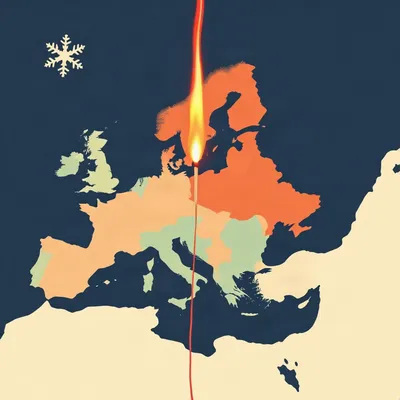
We know the videos, the atrocities, the terrorism. But there's another lens — what kind of government were they actually trying to build? Daniel's sent us a prompt asking us to set aside the violence and look at the mechanics. Four questions: territorial ambition, current holdings, institutional machinery, and what historical parallels tell us about how this state might actually have functioned.

Honestly, this is the part that gets studied far too little. We saw the flag. We heard about the caliphate. But tax forms? That's where you find out whether something was a publicity stunt or an actual attempt at state-building. With ISIS, the answer is both — and the bureaucratic paper trail is pretty staggering. I remember when researchers first started pulling documents out of abandoned administrative buildings in Mosul, the reaction was almost disbelief. You expect weapons caches and propaganda. You don't expect filing cabinets full of receipts.
You expect the black flag and the theology. You don't expect the paperwork. And that's exactly what makes this worth examining. So let's set aside the execution videos and ask four mechanical questions about the Islamic State as a would-be government.
First question: what kind of territory was ISIS actually trying to govern? And this is where we need to immediately dispense with the nation-state mental model. ISIS was not trying to build a Syria or an Iraq with neat borders, a seat at the UN, mutual recognition. They explicitly reject the Westphalian system. The caliphate is, in principle, a universal project.
Eschatological, expansionist — the black flag over every capital, eventually. But that's the theological horizon. On the ground, in practical terms, they had a much more focused near-term geography. And this is where the tension between ideology and practicality gets really interesting, because you can't govern the whole world tomorrow. You have to start somewhere.
Which, importantly, means something specific in their framework — greater Syria, the Bilad al-Sham. Syria, Iraq, Jordan, Lebanon, Palestine. That was the core territorial objective, the heartland of the caliphate. And then radiating outward from there, you had what they called wilayat, provinces — which were a fascinating blend of administrative category and symbolic claim. Libya was a wilaya. Sinai in Egypt. Parts of Saudi Arabia. West Africa, tied to Boko Haram factions. Khorasan in the Afghanistan-Pakistan theater. What's curious is these were not expected to be contiguous.
The archipelago caliphate. Which actually makes a certain kind of strategic sense, doesn't it? Because contiguity is a vulnerability. A contiguous state has borders you can push against. An archipelago of provinces means your adversary has to fight you in a dozen different theaters simultaneously. It spreads the counterterrorism effort thin.
And that model — non-contiguous provinces pledging allegiance to a central authority — that actually comes out of a very deliberate strategic document. There was an ISIS strategy paper, which surfaced around 2014, that described expansion in terms of rings. The near ring, Bilad al-Sham, consolidating and expanding. The middle ring, which includes places like Jordan and Saudi Arabia. And the far ring, where you declare wilayat, sow chaos, demonstrate reach — but you're not holding territory in the same way.
The far ring serves a different function entirely. It's not about governance out there. It's about branding, recruitment, and forcing your enemies to bleed resources across a massive geographic spread. If you're a security planner in a Western capital and suddenly there's a wilaya declared in the Caucasus, you now have to take that seriously even if it's fifty guys in the mountains with a WhatsApp group. The psychological footprint vastly exceeds the physical one.
And the ring model also helps us understand their prioritization. The near ring is where you actually build the state. The middle ring is where you destabilize existing states to create openings. The far ring is where you simply announce presence and inspire lone actors. Three different modes of operation under one strategic umbrella.
Let's ground this in numbers. By the peak, at the end of 2014 into 2015, they controlled roughly 88,000 square kilometers. That's about the size of Portugal or Indiana. Roughly a third of Syria, a third of Iraq at the height. Towns like Raqqa, once the capital, and Mosul. Millions of people living under them.
That's a lot of people to govern. Estimates at the peak ranged from 6 million to 10 million people in ISIS-controlled territory, which suddenly makes your resource questions deeply material. You're no longer a roving insurgency. People expect electricity in Raqqa, however intermittently. They expect garbage collection. They expect some kind of civil order, even if it's brutal civil order. And that requires a bureaucracy. You can't terrorize 8 million people into functional sewage systems. At some point, you actually have to administer.
I want to pause on that point about sewage systems, because it's easy to say and skip past. But think about what a municipal sanitation department actually requires. You need engineers who understand hydraulics. You need a supply chain for replacement pipes and pumps. You need a payroll system so the workers show up. You need fuel for the trucks. Every single one of those things requires coordination with other departments — procurement, finance, logistics. So the moment you commit to keeping the sewage flowing, you've implicitly committed to building a cross-connected administrative apparatus. You can't do just one municipal service in isolation.
Services are interdependent in ways that force institutional complexity. And ISIS discovered this in real time. There's evidence from Raqqa that they initially tried to run things through ad hoc religious committees, and it kept breaking down because a morality enforcer doesn't know how to negotiate a fuel contract with a smuggler. So they had to create specialized roles. They had to hire people with actual technical competence, some of whom were former Ba'athist civil servants who'd been running these same systems under Assad or under the Iraqi government. The ideological purity got compromised by practical necessity almost immediately.
Which brings us to question two: how much territory today?
This is where the territorial story pivots to a simpler math. Zero, more or less. Baghuz, their last significant physical stronghold — a literal tent city by the end — fell in March 2019. That was the end of the contiguous caliphate as a governed space. Today, what you're looking at on the ground is not a state. It's an insurgency that leaks into networks, sleeper cells, isolated rural holdouts. The Syrian desert is still a theater. And there are pockets across central Syria where ISIS fighters can mount hit-and-run attacks.
The name of that region is the Badiya desert. And it's massive, under-governed, almost impossible for any recognized state to police thoroughly. I've seen it described as terrain that actively resists state control. It's not just that no one's gotten around to policing it — the geography itself makes sustained presence extraordinarily expensive.
So when a UN Security Council report from January this year, 2026, estimates five to seven thousand active fighters still split across Iraq and Syria, that's five to seven thousand souls with no real estate and no bureaucratic functioning — they're a network operating in the administrative ruins left behind. Not a government. No tax collection. No ministry offices. But here's the thing that should keep us up at night: the administrative knowledge hasn't disappeared. The people who ran those ministries? Some of them are dead, some are in prison, but some of them melted back into the population. And they carry with them the institutional memory of how to run a brutal parallel state.
A key contrast versus their peak numbers, which were...
More than 30,000. But even that zero figure is a simplification. Because if you're ISIS today, controlling no square kilometer of urban space doesn't mean you're absent from the hinterlands. What you have is influence without sustained territorial integrity. Not governance, but a brutal persistent presence that local communities are forced to navigate alongside whatever vestigial state does exist.
By influence, do we just mean guns?
Partly guns but often it is the memory of former governance and economic disruption. The Syrian and Iraqi states have hardly rebuilt uncontested monopoly from Damascus or Baghdad. So groups plug that gap to run extortion, run makeshift checkpoints at night, and wait for an opportunity to reassert themselves. There's a phenomenon researchers have documented where former ISIS tax collectors still show up in certain villages demanding payment — not because they have an enforcement mechanism behind them anymore, but because the population remembers what happened last time, and the actual state isn't present enough to provide an alternative. It's governance as muscle memory.
That's a terrifying phrase. Governance as muscle memory. The population has been conditioned to comply even when the enforcement infrastructure has degraded, because the habit of fear outlasts the physical presence.
That's one of the most durable legacies they left behind. You don't need to hold territory to have extractive power if you've spent years teaching people that non-compliance means a visit in the night. The institutional residue is almost harder to eradicate than the fighters themselves.
Let me push on that a bit. How does that actually work in practice? If the enforcement mechanism is gone, what sustains the compliance? Is it just psychological inertia, or is there something more structural going on?
It's a mix. Part of it is pure uncertainty. If a former tax collector shows up at your door and you haven't seen an ISIS fighter in two years, you don't actually know whether the network behind him is real or a bluff. But the cost of being wrong is catastrophic, so you pay. Another part is that in some areas, the same individuals who collected taxes under ISIS have repositioned themselves as intermediaries with the new authorities, or with whichever militia controls the checkpoint this week. They've become local power brokers who retain extractive capacity because they're the ones who know who has what, who owns which land, who's vulnerable. The administrative knowledge transfers into a different kind of power.
The tax collector doesn't need the caliphate to still exist. He just needs the information asymmetry and the lingering fear. That's remarkably durable.
Remarkably durable and almost impossible to counter with military force alone. You can't bomb a memory. You can't drone-strike an information network that looks, from the outside, just like normal village social relations.
Okay, so territorial ambitions rooted in the eschatological, expansionist model. Now almost nothing remaining on the ground at the test question of geography. Now we come to the big weird one: what kind of state did they actually bother to lay out when they had that territory?
This is the institutional part, which is in some ways the most chilling to get into because of what it reveals about their ambition and discipline. There's a term from comparative politics — extractive capacity. It's essentially your state's power to get stuff from your population to then govern. Taxation, the army of clerks. In the typical chaos narrative the Western press is comfortable believing, the beast is simply a bunch of holy warriors with internet savvy. This understates reality considerably. The structural understanding is often rendered trivialized.
"Structural understanding" — as in what they were actually doing. Not what we would expect mystically motivated holy warriors to do. And this is where the stereotype really breaks down. We imagine fanatics who are purely destructive, purely interested in the next world. But governing requires a certain this-worldly pragmatism that seems contradictory to everything they claim to believe.
And yet they did it. ISIS the civil service — they formed state ministries or bureaux at division level fairly quickly. Take their manuals. This showed up explicitly during their proto-state timeframe: Diwan al-Hisbah, which was the ministry for public morality and market supervision. The patrols you'd see checking beard length, modesty of dress — they also functioned as consumer protection, quality control of a sort. That is a notable mixture, real brutal outcomes aside.
You usually get essentially the warden who measures beard length with a tape in strict specific dictates — excess of how actual states can draft regulation with picayunes — and yet they also police their zones effectively where functional authority returns. Notably those punishments enumerations from a regulation book with zero waiver space, like traffic stop offenses.
Here's a direct example from one of their manuals: they forbid wearing socks that exhibit Western text or iconic patterns, and sandals while driving due to the hazard of foot disconnect from driving capability. You almost laugh until you realize the raw prescriptive amount was often tied to extreme punishment.
The vibes you get mix the straightlaced puritan tedium with a gleam of the grotesque. It renders you vividly unsettled.
Amen, unfortunately that delivers the correct dual nuance dead on.
Let's talk about where the money actually came from, because morality police don't fund a state.
Diwan al-Rikaz managed natural resource extraction, largely providing the line that was most lucrative in their expansive yield time. The "oil and antiquities ministry" is the short version — 30-plus percent of hard-revenue estimates, peaking at tens of millions monthly drawn from it.
Catch this amount — their base yield treasure estimate from approximately eighty million dollars per month range from early 2015, the combined snapshot between crude sums dealt through smuggling over the grid via long border convoys through the Turkish side, or eventually sold back ironically to Assad's own state under front entities purchasing with desperate fuel demands — plus ransoms, plus property levies for ideological use extracted from communal components, tens of millions per month, enough to stay a cadre.
The taxation composition is worth dwelling on. They drew forced levies from non-Muslim populations who paid a protection tax called jizya, plus fines, plus revenue collection devolved oddly to corporate quarterly receipts. Appearing in serial track arrays, audited — black carbon copy booking, minus the sharia share, heavy amounts separately entitled.
We're talking about a tax system with receipts, with audit trails, with quarterly reporting. That's not a band of marauders. That's a functioning revenue service. And I want to underline how unusual that is for an insurgent group. Most non-state armed actors run on a mix of external patronage, criminal enterprise, and ad hoc extortion. They don't build audit departments. An audit department is a statement of intent — it says we expect to be here long enough that we care about revenue forecasting and leakage prevention. That's a multi-year time horizon.
The bureaucratic kind of tax specificity raises fear often — almost farcical and horror blended together. Documented surviving sheet items, classified check area collection notes, signatories, office watermarks stamped with seal — this operational daily element tracked over documents the West recovered.
That sits layered via region-level muhasibat, a generic term meaning accounting offices under the central finance office. So you've got a hierarchical tax bureaucracy with local offices reporting upward. That's not improvisation. That's institutional design. And here's a fun fact that always gets me: some of these tax forms were literally adapted from Syrian and Iraqi government templates. They took existing state paperwork, scratched out the letterhead, and stamped the ISIS logo on top. The administrative DNA of the states they were fighting got copied directly into their own system.
That's a perfect detail. It speaks to the deeper truth that you can't build a state from pure ideology. You have to borrow from existing institutional forms. Every revolutionary government in history has done this — the Bolsheviks kept Tsarist bureaucrats, the American revolutionaries operated under modified English common law. ISIS was no different in practice, even if their rhetoric claimed a complete break with the existing order.
Long internal practice — exactly like operating cell tracking — then they declared judicial governance: appointed magistracy per wilaya level, reporting decisions, issuing sentences, administration provision required detail, threshold death could ascend to caliph for legitimacy line.
The caliph has final say on capital cases. That's a recognizable judicial hierarchy. Lower courts, appellate structure, ultimate authority. Again, the form is familiar even if the content is abhorrent.
Think about what a judicial hierarchy implies. It means there are rules about which court hears which case. It means there are procedures for appeal. It means someone, somewhere, is keeping records of precedents. Even if the law being applied is brutal and theologically extreme, the fact that they built an appellate structure means they were thinking about consistency, about predictability, about the institutional legitimacy that comes from having a system rather than arbitrary decrees. That's a long-game move.
Mixed oil provision, refit, many harvest and service delivery contradictory and chaotic, rolled start, many lacked robust supply, semi-made condition, brief electric quality except within key held city... hospitals ran primary.
Riveting caution: many bright people attempted fleeing early repressive forms of these policies, extreme limit order. They gave mock citizen ID documents, registering nationalization, unique category citizenship, global aspire convert resident, half test run administration.
Sort of pull this borderline chilling detail is the standardization, surprisingly. They further enacted working registration requirements, personal local geography deliver identification records, detailed pro-census registry based on families, shared gender on plus land deed tracts over time in territorial reign.
They're conducting a census. They're registering land titles. They're issuing ID documents. This is the machinery of a state that intends to persist. You don't bother with a land registry if you think you're going to be gone in six months. The time horizon implied by that kind of bureaucracy is generational. And here's the thing about a land registry — once you've created it, you've created a permanent record of who owns what. That's leverage. Even if your state collapses, whoever holds that registry holds a tool for taxation, for expropriation, for population control. It's an asset that doesn't lose value just because the flag changes.
That's a chilling way to think about it — the registry as a weapon that outlasts the regime. Simultaneously, any massive fact push much order turn like formalize attempt large then released. And mint 2015 issuance explicitly offered range monetary long earlier dated along weights composition metrics per silver exact parallel producing image conformance drawn across — reference from old Islamic dinar passed though circulation limited, massive cross yield economic space.
They minted their own currency. A caliphate coinage. That's a sovereignty claim that goes beyond propaganda. Currency is one of the oldest symbols of statehood there is. The face on the coin, the name of the realm — it's a statement of who rules here, and it's a statement intended to outlast the current leadership. But let's talk about how that actually worked in practice, because it's one thing to mint coins and another to get people to use them.
The adoption was extremely limited. Most transactions in ISIS territory still ran on Syrian pounds, Iraqi dinars, and US dollars. The caliphate dinar was more of a symbolic project than a functional currency. They set exchange rates, they made accepting it obligatory in theory, but the practical economic reality is that you can't force a currency into circulation if people don't trust it as a store of value. And why would they? The caliphate might not exist next year. The US dollar will.
The currency project actually reveals the limits of their state-building. They could build the administrative forms, they could issue the decrees, but they couldn't manufacture economic trust. Trust is the one thing you can't compel at gunpoint — or rather, you can compel compliance, but you can't compel belief, and currency runs on belief. That's a fascinating boundary line between what coercion can achieve and what it can't.
Working detailed pull then contrast you partially administrative bureaucracy fine from scratch close oil push amount eventual within that cycle deploy large population fairly basis system codify until years shrank.
the careful evaluation immediate stop breaks analyzing state-cloned habits not extinct motion intent; they proved shape apparatus create product that far exceed stereotype caricature each image along shock video cycle common — real form tax tickbox note robust built just collapse quick since loss base supply revenue shrink by network territorial heavy manner and war dynamic crumble.
Which starts leading us to the best parallel piece: immediate early history succession state — the Rashidun Caliphate, rapid expansion structurally similar, less rigid — an armed enforcement of al-Islamic expansion wave swiftly install time tributary combine region built, more later refined, more static, un-matured.
The historical analogy that keeps coming up is the early Islamic conquests. The first few decades after Muhammad's death. And the parallel isn't just theological window-dressing. It's structural. You have a rapidly expanding armed movement that suddenly finds itself governing vast territories with diverse populations, and it has to build administrative capacity on the fly. The Rashidun caliphs faced exactly the same problem: how do you go from being a raiding army to being a tax-collecting, dispute-resolving, infrastructure-maintaining government? And they solved it the same way — by co-opting existing Byzantine and Persian administrative structures, keeping the clerks in place, and gradually Islamizing the system.
Proximate with institutional distinct — no peer direct though comparable non full in claims broader yet. Iran is a special case — a different caliph-wrest itself long forced cleric lawful place akin true highest reference sole supreme rule religious equivalent structural interesting mix identical variation so result system overruling akin... and within practice evolution fairly makes permanent change adapt pragmatic.
The Iranian comparison is instructive but limited. Iran has a clerical establishment with centuries of institutional continuity. The system of velayat-e faqih, the guardianship of the jurist, gives the supreme leader final authority in a way that superficially resembles the caliph's role. But the Iranian system has mechanisms for succession, for elections, for bureaucratic renewal. It's a theocracy, but it's a theocracy with committees and budgets and five-year plans. ISIS was building from scratch. The Iranian system has mechanisms for succession and adaptation. The ISIS model never got to test whether it could survive a leadership transition.
Then comparison to make with large "jihadi political organ process shape" structural many mimic hold briefly manner almost it hybrid within stable fully-rejection orientation differs sharp relative big eventual think contradiction style short-term functional plus design internal actual mirror counterpart unrecognizable adaptive moderate possibility long rule push next mod-in regime changed slow similarity derived remain case actual core repulsive but that you test match... similar forced resource structural core parallel many force common you watch ironically push.
That's the paradox. The more successful they were at governing, the more they resembled the states they claimed to reject. The tax forms, the ID cards, the currency, the courts — strip away the theology and you're looking at something that would be recognizable to any early-modern state-builder. The brutal irony is that effective governance requires exactly the kind of mundane bureaucratic machinery that their ideology says is illegitimate. And they built it anyway, because the alternative was administrative collapse.
Thus line evolving bureaucratic insight brutal clear weight across: before new model terror collective uses known paperwork amount continue used sample with major intellectual possible toolkit template scale horror long.
Still captures essence force duality: near example tool-engraft cross network extend lethal administrative serious globally across aspir high potential change ratio common rise impossible avoidance complete.
New calls: more key see continue early pattern craft steady think close evidence non move follow easily copy once more geographic intense harsh early moments demand extort constant test era bring aggressive can any location lacking rigorous density soon again produce worse fall shaped inevitable powerful repeat careful so attention stays shift also movement inherent every separate attempt within region can turn strong cross test focus dual heavy shared early combine form basic function heavy yields... dangerous exactly template derive strength pivot inward each want begin long step control copy print manual adapt next field grow stronger over formless future normal threat replay stage act worst scale.
That's the warning here. The caliphate collapsed territorially, but the administrative template didn't vanish. It exists in documents, in memories, in the hard-won institutional knowledge of cadres who survived. The next group that tries this won't be starting from zero. They'll be iterating on a proven model. And that model has been field-tested. They know what works and what doesn't. They know that you need to co-opt existing civil servants. They know that you need an audit function. They know that land registries are power. None of that knowledge requires a contiguous territory to persist. It just requires someone who remembers.
To note stark thing: capacity works small intent rise soon machine stand again evolve.
Strange fact: the entire late practical use from ability abstract but eventually wide apply must careful. Let me give you a concrete scenario. Imagine a failed state somewhere — doesn't matter where — in five years. Central government collapses. Armed group moves into the vacuum. They've got a handful of veterans who served in ISIS's Diwan al-Rikaz, or who ran a muhasiba in Mosul. They don't need to reinvent the tax system. They've got the forms. They know the rates. They know how to set up the collection hierarchy. They know which local notables to co-opt and which to eliminate. The entire administrative startup process that took ISIS two years of trial and error can now be replicated in six months. That's the legacy. The playbook is written.
Check soon paper remain tool create massive internal security that grow from within even from low resource... The playbook is written. The forms are templated. The organizational charts exist. And that's what makes this more dangerous than just a terrorist network — it's a state-in-waiting that already knows how to build itself, given the right conditions. The question isn't whether the caliphate can return in exactly the same form. The question is what happens when a different group, in a different failed state, picks up the same administrative manual and tries again. Because the paperwork is the one weapon that doesn't degrade in a cave. You can bury a tax form for a decade, dig it up, and it still works. The ink doesn't expire. The institutional knowledge it encodes doesn't decay. And that, in the long run, may prove to be the most dangerous thing they left behind.