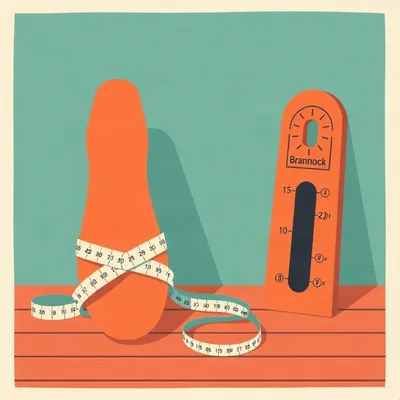
Daniel's in the U.S. trying to pick up a few things — Carhartt shorts, a t-shirt, jeans. He knows his waist size. Finds a pair of shorts on Amazon, orders them, and when they show up they're way too long. Ten-inch inseam. And his whole point is: the only thing standing between him and knowing how to buy shorts that actually fit was knowing that when you see inches on a listing and it's not the waist, it's the inseam. Seven inches is above the knee, six is shorter, eight to eleven gets you over the knee. Tiny morsel of information. But nobody ever tells you.

And his bigger question is — where do you go to learn this stuff? He says he watches YouTube videos and everyone seems to already know the basics, which just reinforces the feeling that he missed some Clothing 101 course the rest of the world took.
Right. So we're talking about three things today. What the basic sizing terms actually are — the ones nobody teaches. Why retail makes perfectly competent adults feel like idiots. And whether there's anywhere you can learn this without shame. Because Daniel's real problem isn't that he can't afford clothes. It's that he feels like he missed the manual.
So let's start with what he actually discovered — because it's a perfect microcosm of how this knowledge gap works. The inseam.
Which he'd never encountered as a concept until he ordered shorts that made him look like he was wading into a river.
Inseam is the measurement from the crotch seam to the bottom hem of the leg. That's it. On pants, it determines where the cuff hits your shoe. On shorts, it determines where the leg opening falls on your thigh — or your knee, or below your knee, depending.
And Daniel had been wearing seven-inch inseam shorts without knowing that's what they were called. He just knew they fit.
Which is how most people operate. You find something that works and you don't learn the vocabulary until something goes wrong. The inseam length spectrum on shorts is actually pretty straightforward once you see it laid out. Five to seven inches is above the knee — that's your shorter, more modern cut. Eight to eleven inches hits at or below the knee — that's the classic fit Daniel accidentally bought. Twelve-plus inches and you're in Bermuda territory, which is a whole different conversation.
So his Carhartt tens are sitting right at the knee, maybe below, and he's standing there thinking — why do I look like I'm wearing my dad's shorts?
And there's a brand-specific layer here too. Carhartt is a workwear company. Their shorts are cut longer for mobility and coverage — you're supposed to be able to crouch, kneel, move around on a job site without the leg riding up to your hip. A ten-inch inseam from Carhartt is going to feel longer than a ten-inch inseam from a fashion brand, because the whole garment is constructed around a different set of assumptions about what you're doing in it.
So even once you know the number, the number doesn't mean the same thing across brands.
Well — not exactly, but that's the problem. The number means something specific to the brand that used it, and you as the buyer have no way of knowing what their interpretation is.
That's the thing I want to sit with for a second. The knowledge itself isn't hard. Inseam, waist, rise — these are maybe six or seven terms. You could learn them in ten minutes. But the fragmentation is the real barrier. There's no single place where these are laid out in order, and the places that do explain them assume you already know the thing one step simpler.
The Art of Manliness has a guide on how to buy clothes that fit, and the opening insight is that most men wear clothes that are too big. Not slightly too big — meaningfully too big, because they've never been taught what "fits" actually means. The guide walks through neck measurement, chest, sleeve length, waist, inseam — the five numbers that actually matter. But to even find that guide, you have to know to search for "how to buy clothes that fit." And if you don't know that "fit" is the thing you're missing, you're not going to search for it.
Daniel's search was "Carhartt shorts" and then he picked the ones in his waist size. The inseam was right there in the listing — ten inches — but it didn't register because he didn't have the frame for what that number meant.
And this is where the Amazon problem compounds everything. When you shop in a store, you can hold the shorts up to your leg. You might not know the inseam measurement, but you can see — these are long, these are short. On Amazon, you're decoding a text description that assumes you already know the terminology. The size chart might say "10-inch inseam" but it doesn't show you a photo of what that looks like on a five-foot-ten person versus a six-foot-two person.
Which Daniel is neither of, by the way. He's somewhere in the middle, and height changes everything about how an inseam lands.
A seven-inch inseam on someone who's five-foot-six hits mid-thigh. On someone who's six-foot-three, that same seven inches might be approaching short-short territory. There's no universal "this length looks good" — it's always relative to your height, your leg proportions, and honestly what you're comfortable showing.
So we've got three layers of hidden knowledge already and we haven't even left the shorts section. The term itself, the brand's interpretation of the term, and how the term interacts with your specific body. And Daniel's point is — nobody told him any of this. He had to buy the wrong shorts to learn it.
Let me lay out the actual measurements that matter for pants and shorts, because these are the ones that keep coming up and nobody ever defines them in one place. Waist — that's the circumference around where the waistband sits. But here's the first trap: vanity sizing.
Explain vanity sizing.
A pair of pants labeled thirty-two inch waist might actually measure thirty-four inches. Sometimes thirty-five. The brand is lying to you, essentially, because they know you want to fit into a smaller number. This is rampant across the industry and it makes online shopping a guessing game. You order your usual size from a new brand and it arrives two inches too big or too small, and you think you did something wrong. You didn't. The brand changed what the number means.
So the number on the label is aspirational.
It's marketing. And it's worse than that — even within the same brand, sizing can shift season to season based on what sold last year and what their target demographic is telling focus groups. There is no universal standard. The second measurement is inseam, which we covered. The third is rise.
Which I'm guessing is not how high you can jump.
Rise is the distance from the crotch seam to the top of the waistband in the front. It determines where the pants sit on your body. Low rise sits on your hips. Mid rise hits around the hip bone. High rise comes up closer to your natural waist, which is around your navel. Get the rise wrong and the pants will never feel right, no matter how accurate the waist measurement is.
And this is on the label?
Almost never. Rise is one of those things you're supposed to just know by trying the pants on. But if you're shopping online, you're squinting at product photos trying to guess where the waistband falls on the model, who is six-foot-two and built nothing like you.
So you've got waist, which is lying to you. Inseam, which varies by brand philosophy. Rise, which isn't listed. What else?
Fit — slim, regular, relaxed, athletic. These describe how the fabric is cut through the seat and thigh. Slim means narrower through the leg. Relaxed means more room. Athletic usually means more room in the thigh and seat but tapered below the knee. And again — a "regular" fit from Carhartt is going to be roomier than a "regular" fit from a fashion brand, because their regular assumes you might need to climb a ladder.
Then there's taper — how much the leg narrows from the knee to the ankle. And break — how the pants interact with your shoe. No break means the hem hovers just above the shoe. Slight break means it touches the top of the shoe with a small fold. Full break means a deeper fold, more traditional.
Primer Magazine has a guide that walks through all of this — rise, taper, break — and the thing that struck me reading it is that this terminology is everywhere in fashion writing but almost never defined. You'll read "these pants have a gentle taper and a slight break" and if you don't know what those mean, the sentence is useless. It's like reading a recipe that says "deglaze the pan" without explaining what deglazing is.
And Daniel's watching YouTube videos where the host casually says "I prefer a seven-inch inseam with a slight break" and he's thinking — I don't know what any of those words mean, and the host isn't going to stop and explain because the host assumes everyone watching already knows.
That's the core of the problem. This knowledge is tacit. It's passed down informally — your dad shows you how to check if the shoulders fit, your friend tells you to size down in a particular brand. If you didn't get that informal transmission, there's no formal system to catch you up.
Which brings us to the second layer of this — the psychological one. Daniel said he buys on Amazon not because he loves Amazon, but because he feels self-conscious in retail stores. The "do you need help?" question makes him feel like he's about to be exposed as someone who doesn't know what he's doing.
And that feeling is incredibly common. I saw it in my practice constantly — not with clothing, but with health questions. Patients who'd been sitting on a symptom for months because they were embarrassed to ask what they assumed was a stupid question. The shame of not knowing something you think everyone else knows is paralyzing.
The retail version is specific though. You walk into a store, an attendant approaches, and suddenly you're performing competence. "Just browsing" becomes the default answer not because you're actually just browsing, but because admitting you need help would require admitting you don't know what you're looking for.
And if you do ask for help, you're now in a social situation where the attendant is the expert and you're the novice, and they might use terms you don't understand, and then you're nodding along pretending you know what "athletic taper" means while internally panicking.
So you retreat to Amazon, where at least the ignorance is private. You can Google "what is inseam" in your living room without anyone watching.
But Amazon creates its own problems. The size charts are inconsistent. The photos are shot on models whose measurements aren't listed. The reviews say "runs large, size down" but also "runs small, size up" and you're left with no actionable information. It replaces social anxiety with information anxiety.
Daniel's solution was to buy the wrong shorts, learn from the mistake, and now he knows what a ten-inch inseam means. That's a functional way to learn, but it's expensive and slow and it reinforces the feeling that you're bad at this.
Here's where I want to push back on something Daniel said. He framed this as "I missed Clothing 101 that everyone else took." But nobody took that course. There is no course. The people who seem confident in clothing stores either learned through years of trial and error, or they had someone teach them — a parent, a sibling, a friend who cared about clothes. Or they're faking it.
The faking it part is important. I'd bet a significant percentage of men walking through a department store looking confident are just grabbing things in their usual size and hoping for the best.
The difference is they've internalized that the system is broken and it's not their fault. Daniel's internalized that the system works and he's the one who's broken. That's the emotional core of this — the belief that the confusion is a personal failing rather than a structural one.
Let's talk about the resources that do exist. Daniel asked directly — where can an adult learn this stuff without shame?
There are actually a few good ones, and the frustrating thing is they're not hard to find once you know what to search for. But you have to know what to search for, which is the catch.
Right. If you don't know the word "inseam," you're not going to Google "inseam guide."
Stitch Fix has a men's pants sizing guide that's surprisingly good. It explains that inseam is measured from the crotch seam to the hem — not from the waistband, which is a distinction that seems obvious once stated but most people never think about. It walks through waist, inseam, rise, and fit in plain language, with diagrams. It's written for someone who has never bought pants before.
It exists because Stitch Fix wants you to use their service, but the guide itself is free and doesn't require an account.
Primer Magazine's guide is more comprehensive. It covers rise, taper, break, and it defines every term. It explains what "no break" looks like versus "full break" and why you might choose one over the other. It's written for guys who want to dress better but don't know where to start.
The Art of Manliness guide is the one I'd recommend for the absolute basics. It starts from zero — how to measure your neck, your chest, your sleeve, your waist, your inseam. It explains what "fit" actually means across different garment types. And it's direct about the fact that most men are wearing clothes that don't fit.
There's also a site called Hedgehog Shorts that has a dedicated inseam length guide — five to seven inches above the knee, eight to eleven at or below, twelve-plus Bermuda. It's a small niche site, but it answers exactly the question Daniel had.
The information exists. It's out there. But these are niche blogs and service-company marketing pages. They're not in any kind of centralized curriculum. Nobody's linking to them from a "hey, you're an adult who missed this, start here" page.
That's the deeper question Daniel's prompt raises. Is the solution better resources, or is it destigmatizing the act of not knowing? Because the resources are already decent. The barrier isn't information availability — it's the shame of needing to look it up.
If you're standing in a store and you pull out your phone to Google "what does inseam mean," you feel like everyone can see you doing it. If you do it at home before you order, you feel like you're studying for a test everyone else already passed.
The internet's answer to adult knowledge gaps is usually YouTube tutorials. But YouTube tutorials are made by enthusiasts for enthusiasts. The host has been thinking about clothing for ten years and has forgotten what it felt like to not know the basics. They'll say "obviously you want a mid-rise with a slight taper" and skip right past the part where they define mid-rise.
There's a term for this in education — the curse of knowledge. Once you know something, it's almost impossible to remember what it felt like not to know it. The person making the tutorial can't see which parts are confusing because to them, none of it is confusing.
What Daniel needs — what a lot of people need — is a resource written by someone who remembers not knowing. Or better yet, written by someone who still feels like they don't know and is figuring it out in real time.
Those resources do exist, they're just buried. Reddit threads where someone asks "how do I buy pants that fit" and a patient stranger walks them through it. Blog posts titled "I'm 30 and I don't know how to buy clothes." The problem is they're one-off, scattered, not collected anywhere.
I think the real answer to Daniel's question — "are there any resources" — is yes, but they're fragmented, and finding them requires overcoming the exact shame that makes the problem hard in the first place. You have to be willing to type "I don't know how to buy shorts" into a search bar and hit enter.
Which is a small act of vulnerability that feels enormous when you're doing it.
Speaking of things being more complicated than they seem...

I worked for a catalog company in ninety-eight. Haband. They sold pants to retired men. I was a fit model.
What does a fit model do?
You stand in a room while pattern makers pin clothes on you and argue about measurements. I did it for six months. Paid eleven dollars an hour.
What did you learn?
Nobody knows what they're doing. The pattern makers would argue for twenty minutes about whether a thirty-two inch waist should measure thirty-three or thirty-four. The head of production would come in and say make it thirty-three and a half, the returns last season were too tight. Then marketing would get involved and say our customer wants to feel like a thirty-two, so label it thirty-two and cut it at thirty-four. The whole system is made up.
There's no standard at all.
There's no standard. Every brand decides what their numbers mean, and they change them every season based on what sold. The size chart on the website is someone's best guess, and sometimes it's just copied from last season's chart even though the factory changed the pattern.
That explains a lot about why the same size fits differently across brands.
Here's the part nobody talks about. Inseam — you said it's measured from the crotch seam to the hem. That's true most of the time. But some brands measure from the waistband. And there is no way to tell which one they used from the product listing.
Wait. So Daniel's ten-inch Carhartt shorts might actually be ten inches from the crotch, which would make them longer than if they were measured from the waistband?
If they measured from the waistband, ten inches from the waistband might only be seven or eight inches from the crotch, depending on the rise. If they measured from the crotch, ten inches is ten inches of leg. Carhartt is probably crotch-to-hem, because they're a workwear brand and that's the standard. But you don't know. The listing doesn't say.
Even when you learn the terminology, the terminology might not mean what you think it means.
The whole thing is held together with assumptions. I still have a pair of Haband pants from ninety-eight. They're labeled thirty-two by thirty. The waist measures thirty-five. The inseam is twenty-nine and a quarter. I keep them in a box as a reminder.
A reminder of what?
That if you feel confused buying pants, it's not you. The people making the pants are confused too. They just get paid to be confused.
Where does that leave us? Let's wrap this up.
The misconception I want to name is the idea that clothing sizing is standardized. It's not. Every brand interprets measurements differently, vanity sizing means the number on the label is often fiction, and even the measurement methods vary — crotch to hem versus waistband to hem for the same term.
The other misconception is that not knowing this stuff means you failed at being an adult. This knowledge is tacit and informally transmitted. Nobody is born knowing what an inseam is. The people who know either learned through trial and error, had someone teach them, or are quietly Googling it same as you.
The open question I'm left with is what a real Clothing 101 would look like. Not a niche blog or a marketing page, but something designed from the ground up for adults who feel like they missed the manual. A single page that says: here are the five measurements that matter, here's what they mean, here's how they interact with your body, and no, you're not stupid for not knowing this.
The thing I'd add — the next time you're standing in a store feeling like everyone else knows something you don't, remember that the people who made the clothes are making it up as they go. The pattern makers are arguing about half-inches. The size chart was probably copied from last season. You're not the broken part of this system.
Thanks to our producer Hilbert Flumingtop for the Haband revelation.
This has been My Weird Prompts. If you want to send us your own weird knowledge gap — or your own fit model stories — email the show at show at my weird prompts dot com.
We'll be back soon.