Daniel sent us this one, and it's the kind of thing that gets under your skin once you notice it. He and Hannah took a first aid course before their son was born. He felt prepared. Eighteen months later, he realized he couldn't confidently perform CPR if his life depended on it. And here's the thing — research backs him up. CPR skills measurably decay within three to six months post-training. Meanwhile, he's carrying a phone with a LiDAR scanner and ARKit that could map a room and overlay step-by-step guidance in real time. And yet — no app, no refresher system, nothing persistent exists to bridge that gap.

That's the part that gets me. This isn't about a lack of courses. Magen David Adom runs them, the Red Cross runs them, hospitals run them. The problem is what happens after the certificate is printed.
This episode isn't about the supply of initial training. It's about the total absence of a persistent, accessible, community-maintained knowledge layer for first aid. Something that should absolutely exist by now but doesn't, despite the technology being ready and the demand being real.
Daniel's frustration is specific. He lives in Israel. He went looking for validated first aid resources — the kind of thing you can keep on a digital shelf and refresh every couple of months — and came up mostly empty. Magen David Adom's website has a first aid page. I looked at it. It's static text. No interactivity, no AR, no spaced repetition. Just paragraphs on a screen.
Which is fine if you're reading about the history of bandages. Not so much if you're trying to remember how many chest compressions per minute you need when your kid is choking.
A hundred to a hundred and twenty compressions per minute. And the depth matters — at least two inches for adults, about an inch and a half for infants. But knowing that as a fact and being able to execute it under pressure are two completely different things.
That's the gap Daniel's pointing at. He's motivated. He's willing to pay for something validated. He assumed — reasonably — that some ambulance service or first aid organization would have built an app with actual visuals, maybe AR overlays, not just bullet points. And he found nothing.
Let me put some numbers on why this matters. The research on CPR skill retention is brutal. Studies consistently show significant decay within three to six months. One meta-analysis found that compression depth and rate accuracy drops off sharply after just a few months, even among people who passed their certification with flying colors. By a year out, many people perform no better than untrained bystanders on key metrics.
You take a course, you feel competent, and six months later you're essentially back to square one — except you think you still know what you're doing. That's almost worse than no training at all, because false confidence can lead to hesitation or mistakes.
And the current model doesn't account for this at all. It's built around one-time certification. Take the course, pass the test, get the card, done. Maybe you get an email in two years reminding you to recertify. But human memory doesn't work on a two-year cycle.
It works on a "use it or lose it" basis, and most people never use it — thankfully. Which means the system is designed for the scenario where you never need the skills, and it breaks down precisely when you do.
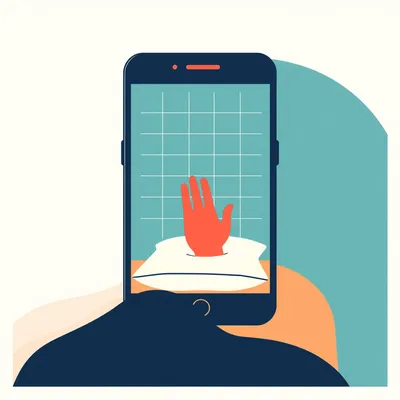
Here's where it gets genuinely puzzling. We have the technology to fix this. Apple's LiDAR scanner, which has been in iPhones for years now, can map a physical space in real time. ARKit and ARCore can overlay guidance onto that space. You could point your phone at a person on the ground and see exactly where to place your hands, how deep to compress, what rhythm to maintain. The technology is production-ready.
The raw ingredients exist. Motivated users, proven skill decay, available AR and AI tools, periodic guideline updates that a motivated body could easily track. And yet — nothing.
Daniel raised another angle that's worth sitting with. First aid guidelines do get updated, but not so frequently that it would be a technical challenge to maintain a living resource. Major CPR protocols get revised roughly every five years. A small team with medical review could keep a resource current without breaking a sweat.
The update cadence isn't the bottleneck. The technology isn't the bottleneck. The demand isn't the bottleneck. Which means we're looking at an organizational and motivational failure, not a technical one.
That's what we want to dig into today. Why does this gap exist? What would it actually take to build a persistent, community-driven refresher ecosystem? And who should be doing it — governments, the private sector, or communities themselves?
Because Daniel's experience isn't unique. It's the norm. And the fact that a motivated parent with a smartphone and a credit card can't find a validated, interactive first aid refresher tool in two thousand twenty-six — that's not just an inconvenience. It's a systemic failure worth understanding.
Let's ground this in what Daniel actually found when he went looking. Magen David Adom's first aid page is essentially a digital pamphlet. Text descriptions of procedures, some diagrams, no interactive elements whatsoever. The content is medically sound. But it's delivered in exactly the format you'd expect from a website built a decade ago and occasionally updated.
And to be fair, MDA does run in-person courses. Daniel and Hannah took one. They're well-regarded. But once the course ends, that's it. You're back to the static website. There's no bridge between the training and the ongoing need.
Which brings us to the broader structural question. First aid guidelines do change — CPR protocols get major revisions about every five years, guidance for things like tourniquet use or epinephrine administration can shift more frequently. But that update cadence is glacial by tech standards. A motivated organization could absolutely maintain a living resource.
The American Heart Association published its last major CPR guideline update in twenty twenty. The next one's expected around twenty twenty-five or twenty twenty-six. That's a five-plus year window. If you're maintaining an app or a platform, you have half a decade to prepare for the next revision. The technical challenge is essentially zero.
The bottleneck isn't the speed of medical updates. It's not the available technology — we've got LiDAR, ARKit, ARCore, and AI that can generate step-by-step visualizations from text protocols. The raw ingredients are sitting on the counter. Nobody's cooking.
That's the paradox Daniel's question gets at. You have motivated demand — parents, caregivers, teachers, coaches — people who actively want to keep these skills current. You have technology that can do real-time spatial mapping and overlay guidance. You have update cycles measured in years, not days. On paper, this should be one of the easiest public health tools to build.
Yet here we are, and the best option for someone like Daniel is to bookmark a static webpage and hope he remembers to look at it every few months. It's almost absurd.
What makes it podcast-worthy is that this isn't some niche edge case. First aid skill decay affects essentially everyone who's ever taken a course. We're talking millions of people walking around with certifications that represent knowledge they no longer possess. And the fix isn't a moonshot. It's an app with spaced repetition and AR overlays.
The fact that it's so achievable is what makes the absence so glaring. If this required some breakthrough in haptic feedback or neural interfaces, fine — we'd wait. But the phone in Daniel's pocket can already do room-scale AR. The gap isn't technological. It's organizational will.
Which is really what this episode is about. Not just "why isn't there a good first aid app," but why systems that should exist — that have every ingredient lined up — still fail to materialize. And whether the answer is to wait for institutions to act, or to build something from the ground up.
Let's look at what's actually out there. The Red Cross has an app. I downloaded it. It's a reference guide — tap a category, read the steps, maybe watch a pre-recorded video. Useful if you're standing in a quiet room with time to scroll. But it's not a refresher system. There's no spaced repetition, no skill assessment, no interactive practice.
It's a digital pamphlet with a better index.
That's exactly what it is. And Magen David Adom's website is the same thing but without the app wrapper. Static HTML, text descriptions, some diagrams. Accurate content, no delivery mechanism for retention.
The current landscape is essentially: take a course, get a card, and then you're on your own with a glorified PDF. For a skill set where three to six months is the difference between competent and functionally untrained.
That three-to-six-month number isn't vague. A study out of the University of Washington tracked CPR skill retention in laypeople. At three months post-training, compression depth was already drifting. By six months, more than half the participants couldn't maintain adequate compression rate. These were people who passed their certification.
The model is fundamentally misaligned with how human memory works. You can't cram procedural knowledge into a weekend course and expect it to stick for years. That's not a training failure — it's a design failure.
What's needed is spaced repetition for procedural skills. We know this works for declarative knowledge — flashcards, Anki decks, language learning. But applying it to physical skills is trickier. You need some combination of knowledge refresh and physical practice. And nobody has built a system that does both at scale.
Which is strange, because the pieces exist separately. There are CPR feedback apps that use your phone's accelerometer to measure compression depth and rate. There are AR prototypes that overlay hand placement on a mannequin. There are AI scenario generators that walk you through a simulated emergency. But they're all standalone projects — academic demos, startup MVPs, hackathon winners.
I found a few when I searched. One uses ARKit for wound assessment — you point your phone at an injury and it estimates severity and walks you through treatment steps. Another generates branching emergency scenarios using a large language model. But none of them are validated by a medical authority, none are maintained long-term, and none are part of a unified platform.
You'd have to cobble together four different apps, hope they're all accurate, and somehow build your own refresher schedule around them. That's not a solution. That's a hobby project with higher stakes than most hobbies.
This gets us to the validation barrier, which I think is the real bottleneck. First aid is high-stakes. If your language learning app teaches you the wrong verb conjugation, you sound silly in Barcelona. If your first aid app tells you the wrong compression depth or misidentifies a stroke symptom, someone could die.
That's a pretty strong disincentive to ship something.
It's a massive chilling effect. Organizations like the Red Cross, Magen David Adom, the American Heart Association — they're risk-averse by design. Their reputations rest on trust. If they put out an interactive AR app and it gives bad guidance in even one edge case, the liability and reputational damage could be enormous. So they stick with what's safe: static content that's been reviewed by seventeen committees.
Here's the paradox. Doing nothing also causes harm. Leaving millions of people with decayed skills and false confidence — that has a body count too. It's just a slower, more distributed one that doesn't generate headlines or lawsuits.
The risk calculus is completely broken. We weigh the visible risk of "our app gave wrong guidance" much more heavily than the invisible risk of "someone forgot how to do CPR because we never gave them a refresher tool." One is a lawsuit waiting to happen. The other is a statistical abstraction.
The person who dies because a bystander's CPR training had decayed — that death doesn't come with a label saying "caused by institutional risk aversion." It just looks like a tragic outcome. The accountability is diffuse.
There's another layer here too. Medical validation isn't cheap. You need physicians reviewing content, testing edge cases, signing off on updates. For a static webpage, that's manageable — update it every few years, one review cycle. For an interactive app with AR overlays and AI-generated scenarios, the surface area for errors is much larger. Every possible interaction needs to be reviewed.
Which means the validation cost scales with the interactivity. The more useful the tool, the more expensive it is to validate. That creates a perverse incentive to build the least useful version — the static pamphlet — because it's the safest and cheapest to approve.
That's exactly what we see. The Red Cross app exists. MDA's website exists. They're safe, validated, and almost entirely passive. They check the box of "providing first aid information" without taking on the risk of actually helping people retain it.
The gap isn't a mystery. It's a collision of liability aversion, validation costs that scale badly, and an incentive structure that rewards checking boxes over solving the actual problem. None of which is conspiratorial or malicious — it's just the natural output of large, risk-averse institutions operating in a high-stakes domain.
What's frustrating is that the technology side keeps getting easier. Five years ago, building an AR overlay for CPR would have required custom computer vision models and a lot of janky calibration. Now, LiDAR gives you a depth map of the room in real time. ARKit handles scene understanding automatically. You can build a prototype in a weekend.
We're in this strange situation where the technical barrier is falling toward zero while the organizational barrier remains exactly where it was a decade ago. The gap between what's possible and what's available keeps widening.
That widening gap is where the opportunity lives — whether for a private company willing to navigate the liability question, or for a community-driven effort that distributes the validation burden differently.
There's another dimension here that doesn't get talked about enough. This gap creates a two-tier system. If you work in a hospital, if you're a military medic, if you're married to a doctor — you get refreshers. Formal or informal, but you get them. Everyone else gets one weekend course and a certificate that's essentially a placebo after six months.
A placebo with your name on it in nice font.
The people most likely to be first on scene in an emergency — parents, teachers, coaches, the person standing next to you at the grocery store — they're in the second tier. The system is backward. The people with the most access to refreshers are the ones least likely to need them outside a clinical setting.
It's a health equity issue wearing a convenience problem's clothing. We frame it as "wouldn't it be nice to have a better app," but what we're really describing is a structural failure that distributes life-saving competence based on professional proximity to medicine.
Other countries have tried to address this structurally. Germany requires first aid training for anyone getting a driver's license. That creates a built-in refresh cycle — every few years when you renew, or at minimum once when you first apply. Millions of people get trained. It's better than nothing.
It's still course-based, right? You sit in a room, you practice on a mannequin, you leave. The refresher is just doing the same thing again years later.
Nobody has solved the living resource problem. Germany's approach addresses the "everyone should get trained" part, which is valuable. But it doesn't address the "skills decay in three to six months" part. No country has.
Which brings us to Daniel's suggestion that maybe this shouldn't be top-down at all. If governments and large institutions are structurally disincentivized from building persistent refresher tools, what about the community?
The Wikipedia model, essentially. An open-source first aid knowledge base, community-maintained, peer-reviewed by medical professionals. Protocols, visual guides, AR templates — all built and validated collaboratively.
Wikipedia works astonishingly well for reference knowledge. Symptoms, conditions, drug interactions — the medical content is good. But procedural skills are different. You can't crowdsource CPR the way you crowdsource the history of the Peloponnesian War.
The stakes are higher, and the validation is harder. But the model isn't impossible. You'd need a core of credentialed reviewers — physicians, paramedics, nurses — who sign off on changes. The community handles updates, translations, AR asset creation. The medical board handles approval. It's a hybrid.
The AR component is where this gets interesting. Wikipedia doesn't do video well, let alone interactive 3D overlays. But an open-source platform built specifically for procedural medical knowledge could. LiDAR-equipped phones can already map a room and place virtual objects in it. The missing piece is the content pipeline — the 3D models, the animation sequences, the step-by-step overlays.
Which is production-ready technology looking for a use case. ARKit and ARCore both support persistent anchors — you can place a virtual object on a real surface and it stays there as you move around. You could record a CPR demonstration once, have it reviewed by a medical board, and then anyone with a phone could project that guidance onto their actual environment.
The vision is: you open the app, point your phone at the floor, and it shows you exactly where to kneel, where to place your hands, the compression rhythm visualized as a pulsing circle. You practice with a pillow or a partner. The app tracks your timing and depth using the accelerometer. It schedules your next refresher based on your performance, not a calendar.
That's the thing — the spaced repetition scheduling is a solved problem. Anki's algorithm has been around for years. You could adapt it for procedural skills easily. Pass your quarterly CPR refresher with good metrics, the app pushes your next session further out. Struggle with compression depth, it brings you back in two weeks. Adaptive, personalized, evidence-based.
Why hasn't anyone built this? Daniel said he'd happily pay for it. I suspect millions of parents would. There's a real market.
I think there are three reasons. First, the addressable market might be smaller than we think. Motivated people — people who actively seek out refreshers — are a niche. Most people take the course, get the card, and never think about it again. The app would need to convert passive certificate-holders into active learners, and that's a hard behavioral shift.
You're not just selling a tool. You're selling a new habit. That's a tougher pitch.
Second, validation costs don't scale down. Whether you have a hundred users or a hundred thousand, you still need medical review. For a subscription app charging maybe five dollars a month, the math gets tight fast. You'd need scale to cover the review overhead, but you can't get scale without validation, and you can't get validation without funding. Classic chicken-and-egg.
Third, the "it's good enough" problem. Most people tolerate the status quo because they don't know their skills have decayed. They took the course, they have the certificate, they assume they're covered. The app would have to first convince people they have a problem before selling them the solution. That's marketing poison.
It's the same reason people don't buy earthquake insurance until after the earthquake. The risk is abstract, the cost is concrete, and the status quo feels fine right up until it isn't.
Given all of that — the liability trap, the chicken-and-egg validation problem, the "it's good enough" complacency — what does a motivated person actually do right now? Because Daniel's question isn't just diagnostic. He wants something he can use.
And the honest answer is that the current best approach is a bit janky. It's a hybrid. Step one: take an in-person course for the initial training. You need the hands-on reps with a mannequin, someone correcting your hand placement, the muscle memory. No app replaces that first exposure.
That's what Daniel and Hannah did before Ezra was born. So they've got the foundation.
Step two is where it gets creative. For knowledge retention — the stuff you can drill in your head — use a spaced repetition app. Anki is free, and you can build custom decks. CPR compression rates, stroke symptom checklists, choking protocols for infants versus adults, burn classification. Break the protocols into flashcard-sized chunks and let the algorithm schedule your reviews.
You're essentially hacking a med student's study tool into a first aid refresher system.
It's not designed for this, but the underlying principle is the same. You're fighting the forgetting curve with timed re-exposure. And you can load it with the specific protocols from whatever course you took.
Physical practice every three months. Find a partner, or even just a firm pillow, and run through the motions. Compression depth, hand placement, rhythm. If you can get access to a mannequin through a community group or a refresher workshop, even better. But the key is doing it on a schedule, not waiting until you feel rusty — because by the time you feel rusty, you're already well past the decay cliff.
The system is: in-person course for the foundation, Anki for the knowledge layer, quarterly physical practice for the muscle memory. It's not elegant, but it follows the evidence.
It's the best we've got until someone builds the thing we've been describing. And I'll add — the quarterly practice doesn't have to be solo. That's actually the bridge to Daniel's community point.
Because the social component solves a real problem. If you tell yourself you'll practice CPR every three months, you probably won't. If you've got four neighbors who are expecting you to show up on Saturday morning to run through scenarios together, you're far more likely to actually do it.
The accountability mechanism is powerful. Start or join a local first aid refresher group. Rotate who brings the scenarios. One session you do infant choking, next session you do adult CPR, then wound packing, then stroke recognition. Keep it to an hour. Make it social — coffee afterward, whatever keeps people coming back.
You don't need an instructor for this, because you're not learning new material. You're refreshing existing training. The group is there for accountability, feedback, and making sure you actually show up.
This also builds a local network. If someone in your neighborhood has a medical emergency, you now know which of your neighbors has recent refresher practice. That's not nothing.
It's the kind of thing that used to be more common — community preparedness groups, neighborhood watch, volunteer fire brigades. We've professionalized emergency response to the point where most people assume someone else will handle it. But the someone else is often just another bystander who also hasn't practiced in two years.
For the builders listening — the ones who hear this and think "I could build that app" — the market gap is real. A validated, subscription-based first aid refresher platform with AR visualization, spaced repetition scheduling, and community features would fill a genuine need. The technology is ready. The demand exists among motivated users. The barrier isn't technical.
The barrier is medical validation and liability. So don't try to go it alone. Partner with a national Red Cross society or an ambulance service. Let them handle the credentialing while you handle the delivery mechanism. You're not asking them to build the app — you're asking them to review the content, which they already do for their static materials.
That partnership model changes the risk calculus for them. They get to say they offer an interactive refresher tool without having to develop it in-house. You get the stamp of medical authority without having to build a review board from scratch.
Here's our call to action. If you know of a project that's actually solving this — a community-maintained first aid knowledge base, an open-source AR training app, a government initiative we haven't heard about — email us. show at my weird prompts dot com. We want to feature it.
Because the frustrating thing about this whole conversation is that the solution is so close. Every ingredient exists. Someone just needs to combine them. And if that someone is listening right now, we want to know about it.
To sum up: the gap is real, the technology is ready, and the community is motivated. What's missing is the coordination. But I keep turning over which of those three failures is actually the bottleneck. Is it a market failure — the economics don't work for a private company? Is it a coordination failure — the pieces exist but nobody's assembling them? Or is it a motivation failure — not enough people care?
I think it's all three, but the bottleneck is motivation — and I don't mean individual motivation. Daniel's motivated. Millions of parents are motivated. I mean institutional motivation. The organizations that could solve this don't feel the pain of not solving it. They're not the ones standing over someone who isn't breathing, realizing they can't remember the compression rate.
The pain is distributed across millions of individuals. The solution would have to come from a single organization. That asymmetry is the whole story.
Here's the thing that makes me optimistic despite all of this. We're probably five to ten years from AR glasses being mainstream. When that happens, ambient first aid guidance becomes plausible — your glasses walking you through a procedure in real time, hands-free, while you're actually in the emergency.
Which would be transformative. But it's also a decade away, and the gap today is much simpler to fix. We don't need neural interfaces or heads-up displays. We need an app with spaced repetition and maybe some AR overlays. The phone in your pocket can already do it.
That's what makes the whole thing so maddening. We're not waiting on a breakthrough. We're waiting on someone to decide it's worth doing.
Daniel — the guy who sent us this prompt — is exactly the person the system should serve. He's motivated. He's willing to pay. He just wants a good tool. The fact that he can't find one isn't just inconvenient. It's an indictment of how we've chosen to organize life-saving knowledge.
He's not asking for a miracle. He's asking for the thing that should already exist. And the fact that it doesn't — that a parent in Jerusalem with a smartphone and a credit card can't buy a validated first aid refresher — that tells you something about where our priorities actually land.
Let's build something better. Whether that's a community group in your neighborhood, an open-source project, or a startup that finally cracks the validation problem — the ingredients are on the table. Someone just needs to start cooking.
This has been My Weird Prompts. Thanks to our producer Hilbert Flumingtop for keeping us on track.
If you enjoyed this episode, share it with someone who'd want to know why their first aid certificate might be a placebo. And if you're building the thing we described — or you've found it — email us at show at my weird prompts dot com.
We'd love to be wrong about the gap.
Until next time.