
Intelligence & OSINT
Open-source intelligence, espionage, surveillance, and information warfare
123 episodes · Page 3 of 6

#3096: How Encrypted Plots Actually Get Busted
Encrypted phones don't stop arrests. Here's how intelligence agencies actually catch terror cells.

#3063: Inside the Secret Service Advance Team
How 200 specialized agents secure every presidential movement — from hotel ballrooms to G20 summits.
#3061: How Polygraphs Actually Work (And Why They Fail)
The DOE is phasing out polygraphs. Here's why the "lie detector" has never actually worked.

#3060: Air Marshals: The 1.4% Truth
Air marshals are real, but they're on just 1.4% of flights. Here's what the GAO report reveals.
#3052: The Boring Art of Professional Surveillance
Real surveillance is boredom by design, grey man theory, and choreographed teams — not Hollywood van work.

#3051: Witness Protection vs. Hollywood: Inside WITSEC and Global Programs
How witness protection actually works across the US, UK, and Germany — and why 17% of participants get expelled.

#3046: The Ghosts in the Force: Inside Long-Term Undercover Police Work
How police build fake identities, infiltrate gangs, and protect officers who can never go home again.
#3036: Plainclothes Police vs Facial Recognition: Inside London's Protest Ops
How do plainclothes officers actually operate? From covert earpieces to unmarked vans, here's what happened at London's May 16 protests.

#2945: How a World Leader Phone Call Actually Works
A president doesn't just dial. The real process involves SCIFs, encrypted terminals, switchboard operators, and at least six listeners.

#2899: Can We Trust Palestinian Polls in Wartime?
How one man's surveys became the world's only window into Palestinian opinion—and whether the data is real.
#2876: When Iran Recruits Your Iran Experts
How a DIA contractor with top secret clearance gave Iran dossiers on US intelligence officers — and why cultural expertise can be a vulnerability.

#2875: How Polls Actually Make Samples "Representative
The secret behind "representative samples" — and why the margin of error is just the beginning of the story.
#2868: Measuring Hidden Opinions in Iran and China
How researchers use digital snowball sampling and list experiments to gauge real public sentiment under authoritarian rule.
#2845: Why Reading Patents Is Always Free
Google Patents, Espacenet, and the secret weapon of classification codes for tracking ANC innovation.

#2760: How China's Overseas Police Stations Actually Work
MI5 footage confirms what investigators have tracked for years: a global network of unregistered Chinese police stations.

#2724: How Sanctions Actually Trap a Company
How the US Treasury freezes assets, isolates firms, and makes the world enforce its rules.
#2678: How IMSI Catchers Actually Track Your Phone
How fake cell towers intercept your phone, from GSM flaws to 5G fixes. Separating spy-thriller hype from real engineering.

#2648: The Art of the Brief: Writing What Busy People Actually Need
Why a crisp 600-word brief is harder than a 10-page report—and how AI changes the game.

#2635: How to Upgrade Your Readiness Without the Anxiety
A practical walkthrough on situational awareness, news consumption protocols, and go-bag checks for ambiguous threat periods.

#2633: How Live UA Map Bridges Conflict Information Gaps
A curated conflict map that trades raw speed for verified, de-duplicated event tracking — used by civilians in active warzones.
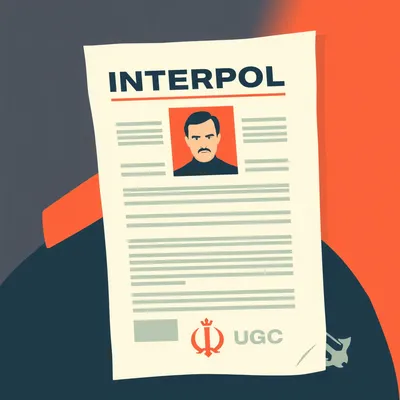
#2630: Ahmad Vahidi: Iran's Most Dangerous Insider
The IRGC's new commander is wanted by Interpol for the 1994 AMIA bombing. Here's why he matters now.

#2488: Hybrid Pipelines for Entity Resolution
Classic NLP pipelines vs. lightweight LLMs for handling Hezbollah’s half-dozen spellings.

#2455: How Protection Details Spot the Threat Before It Happens
The Marines developed a system for noticing what doesn't belong. Now it's the core of executive protection training.

#2437: The False Precision of GPS Coordinates
Why 8 decimal places of GPS data is mostly noise, and how tectonic plates move faster than your coordinate system updates.