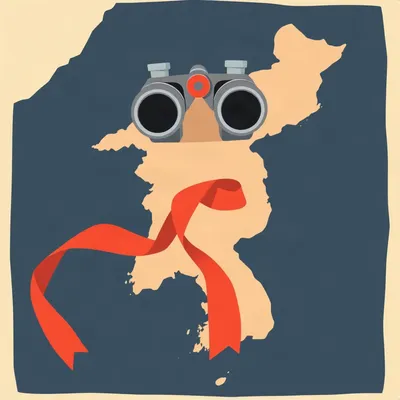
Daniel sent us this one — he's been watching the Iran polling numbers during the war, and he noticed something that doesn't quite match the headlines. The data shows remarkably low support for the Revolutionary Guard and the Islamic Revolution itself. But then he pivots to the bigger question: what do we actually know about popular attitudes toward the Chinese Communist Party inside China? Has anyone managed to get real, representative polling in a censored authoritarian society? And how does that support break down by age, gender, geography — urban versus rural, mega-city versus agricultural interior. It's a genuinely tricky measurement problem wrapped in a political question people project their own hopes onto constantly.

The Iran piece is the perfect setup because it's the same fundamental challenge — how do you measure public sentiment when the state controls the information environment and people have every reason to fear honest answers? With Iran we've actually gotten some surprisingly robust data despite the digital iron curtain. The Group for Analyzing and Measuring Attitudes in Iran, GAMAAN, has been doing really innovative work using what they call digital snowball sampling — essentially viral survey distribution through social media channels that reaches deep into the population. Their twenty twenty-two survey found only about fifteen percent of Iranians identifying as Shia Muslims who support the political establishment. And support for the Islamic Republic as a system of government was around twenty percent.
Fifteen percent support and the regime's still standing. That tells you something about repression versus popularity as two entirely separate things.
Exactly the distinction that matters. And support for the Revolutionary Guard specifically was even lower — single digits in some of their surveys. Now, is that a perfect representative sample? But they've done extensive methodological work comparing their results to face-to-face surveys conducted before the regime cracked down on polling, and the consistency is striking. They also cross-reference against the Iranian diaspora who can speak freely, and the patterns hold. So to the question's first premise — yes, the quiet majority opposing the regime in Iran appears to be real, not projection.
Which brings us to China, where the measurement problem is arguably harder and the projection problem is arguably worse. Because China's been delivering material prosperity for decades. The standard Western assumption used to be that economic growth would naturally create demand for political liberalization. That didn't happen. So then the assumption flipped — maybe the Chinese population actually is broadly satisfied with authoritarian governance because it delivers the goods. Both of those are stories people tell themselves.
Both are too simple. Let me start with what we actually have in terms of data, because this is a space where the absence of reliable independent polling gets filled with a lot of assertion. The short answer is: no, nobody has succeeded in getting the kind of gold-standard representative polling inside China that we'd expect from, say, Pew or Gallup in open societies. The Chinese government conducts its own surveys, but those are essentially internal party instruments — they're not publicly released in raw form, the methodology isn't transparent, and there's every reason to think sensitive questions get filtered. That said, we do have several interesting windows.
Give me the windows. What's the best data we've actually got?
There are basically four approaches researchers have used. First, academic collaborations — for years, some Western political scientists were able to partner with Chinese universities to conduct survey research, particularly through the China Survey based at Texas A and M and the Chinese Academy of Social Sciences. Those produced some of the best data we have, though they've become much harder to do under Xi. Second, the Asian Barometer Survey — this is a cross-national project that includes China and uses face-to-face interviewing. They've done multiple waves. Third, there's the World Values Survey, which included China in several waves. And fourth, more recently, researchers have gotten creative with online panels and list experiments — techniques designed to get at sensitive attitudes without directly asking "do you support the regime.
Walk me through what that actually means in practice.
Instead of asking someone directly "do you support the Communist Party," which basically guarantees a socially desirable answer in an environment where the wrong answer could have consequences, you give them a list of statements and ask how many they agree with — not which ones. Half the sample gets a control list of five non-sensitive items. The other half gets those same five plus the sensitive item — say, "I support the Chinese Communist Party." You compare the average number of agreements between groups. If the treatment group averages point-four items higher, you can infer that about forty percent support the party on that sensitive item — without any individual having to reveal their position. It's clever because it provides plausible deniability to every respondent.
The survey equivalent of a dead drop. So what do these methods actually tell us?
This is where it gets nuanced and frankly more interesting than either the "China's about to collapse" narrative or the "everyone loves the Party" narrative. The best synthesis of the evidence, and I'm drawing here from work by scholars like Tang Wenfang, Bruce Dickson, and Andrew Nathan among others, suggests a picture of broad but shallow and conditional support. When you ask Chinese citizens about the regime's performance — particularly on economic growth, stability, and national pride — you get very high approval numbers. We're talking seventy, eighty, sometimes ninety percent expressing satisfaction with the central government's performance in some of the Asian Barometer waves.
That's performance satisfaction, not regime legitimacy.
Right, and that distinction is everything. Performance satisfaction is "the government is doing a good job delivering what I want." Regime legitimacy is "this system of government is the right one, regardless of current performance." What the data consistently shows is that performance satisfaction in China is very high and has been for decades — which makes sense, because the country experienced the most dramatic poverty reduction in human history under this system. But when you probe deeper on democratic values and political rights, the picture fractures.
Tang Wenfang's work, which draws on multiple surveys conducted with Chinese collaborators over many years, finds that while Chinese citizens express high trust in the central government — often higher than citizens in many democracies express in their governments — they simultaneously hold what he calls "democratic values." Majorities support things like competitive elections, checks on power, freedom of speech. In one survey, over seventy percent agreed that "government leaders are like the head of a family; we should all follow their decisions" — that's the Confucian paternalism strain. But in the same survey, over sixty percent also agreed that "people should have the right to protest if they think a government policy is unfair." These aren't necessarily contradictory in people's minds, but they suggest a much more complex attitudinal landscape than simple pro-regime or anti-regime.
The same person can say "I trust Beijing" and also "I want the right to protest." That's not inconsistent — it's just not fitting into Western liberal categories. It's like someone saying "I love my dad but I also want to be able to argue with him.
That's a very Corn way of putting it, but yes. And this brings us to the stratification question — because that complexity isn't evenly distributed. Age is probably the most important cleavage. Younger Chinese, particularly those under thirty-five, are notably more nationalist and more supportive of the regime in many surveys than their parents' generation. This surprises a lot of Western observers who assume youth equals liberalism. But if you think about it, the younger generation has only known a rising China. They didn't live through the Cultural Revolution or the Mao era. Their entire life experience is one of growing prosperity, international respect, and national achievement. The Party's legitimacy narrative — that it rescued China from a century of humiliation and delivered greatness — maps directly onto their lived experience.
Whereas someone who's sixty-five remembers the Great Leap Forward famine. That's a different dataset.
The generational cleavage in China runs in almost the opposite direction from what you'd expect in the West. In many Western countries, younger people tend to be more skeptical of traditional authority and established institutions. In China, the youngest cohort often shows the highest levels of regime support and national pride. There's survey evidence that younger Chinese are more likely to endorse statements like "China should pursue its own path regardless of what other countries think" and less likely to express interest in Western-style democracy. This is the generation that came of age during the Beijing Olympics, the rise of Chinese tech giants, and the explicit state campaign of patriotic education.
What about the urban-rural split? Because that's the other axis the prompt specifically asks about, and it's where I'd expect the standard narrative to get interesting.
This one actually runs somewhat counter to the simple assumption. The naive expectation would be: urban, educated, globally connected Chinese are more skeptical of the regime, while rural Chinese are more traditional and deferential. The data doesn't really bear that out cleanly. Urban residents, particularly in the mega-cities, do tend to express more liberal attitudes on social issues and more support for individual rights. But they also tend to benefit most directly from the regime's economic policies — they're the ones with the apartments that appreciated, the careers in tech and finance, the international travel. So their performance satisfaction is often very high.
The Shanghai tech worker who just bought a Tesla and flies to Tokyo for weekends isn't exactly itching for regime change.
Meanwhile, rural residents and migrant workers — the people the economic miracle has been less generous to — sometimes express lower satisfaction with local government performance. But fascinatingly, they often maintain high trust in the central government specifically. There's a well-documented phenomenon in Chinese public opinion called "the center is good, the locals are corrupt." Citizens distinguish sharply between the central Party leadership in Beijing, which they view as benevolent and competent, and local officials, who they view as corrupt and self-serving. This is actually a stabilizing feature for the regime — it channels dissatisfaction downward to local cadres rather than upward to the system itself.
That's a clever structural feature if you're the Party. Every complaint about a corrupt local official reinforces the idea that the center is virtuous and just needs to crack down harder.
They do crack down — the anti-corruption campaign under Xi Jinping has been one of the most extensive in the Party's history, and it's popular precisely because it validates this "good center, bad locals" frame. But to round out the stratification picture: education is another interesting cleavage. More educated Chinese do tend to express more liberal political values in surveys — more support for free speech, more skepticism of unchecked authority. But education also correlates strongly with party membership and employment in state or state-adjacent sectors, which creates countervailing incentives. The most educated Chinese are simultaneously the most likely to hold liberal values and the most materially invested in the current system.
They're liberal in the abstract but conservative in their interests. That's not uniquely Chinese, by the way — you can find plenty of that in any society. But the intensity is different when the state is also your employer and your career gatekeeper.
This gets to what I think is the most important thing to understand about public opinion in China: the distinction between private attitudes and public expression. In a society where the state monitors communications, where social credit systems are expanding, and where career consequences can follow from political speech, what people say to a survey enumerator — even in a well-designed anonymous survey — may not be what they actually think. The list experiment work I mentioned earlier consistently finds that direct questioning overstates regime support relative to indirect methods. That doesn't mean everyone secretly hates the government. It means there's a gap between the public transcript and the private transcript, and the size of that gap is itself politically significant.
The gap is the thing. Because in a popular regime, there's no gap — what people say publicly and privately is roughly the same. In a regime held up purely by terror, the gap is enormous but the private side is uniformly hostile. China seems to be in this messy middle where the gap exists but the private sentiment isn't uniformly anything — it's conditional, it's stratified, it depends on what aspect of the regime you're asking about.
Conditional on what's happening in the moment. There's some evidence from online sentiment analysis — researchers scraping and analyzing Chinese social media during specific events — that support can shift dramatically around visible government failures or successes. During the early COVID outbreak in Wuhan, there was a visible spike in online criticism of local officials, and even some criticism directed at the central government's initial response. But then as the government mobilized its response and particularly as China's outcomes looked better than the West's during later waves, nationalist sentiment surged and criticism was muted. The regime's legitimacy is in constant negotiation with events.
Let me ask you something about the international dimension, because I think this connects back to the Iran framing. One thing that's different about China is that the regime can point to international respect — or at least it could until recently. China's rise was treated as inevitable and impressive for decades. Has that affected domestic attitudes?
National pride is probably the single strongest correlate of regime support in Chinese survey data. And it's not just abstract pride — it's tied to very concrete things. The high-speed rail network. The space program. Huawei before the sanctions. The fact that China handled the pandemic in a way that, for a period, looked more competent than many Western countries. The Beijing Olympics. The Belt and Road Initiative. These are tangible achievements that the state can point to and say: we did this, this system delivered this, the alternative is the chaos you see abroad.
The chaos abroad being a very effective propaganda tool, by the way. Every American mass shooting, every European terrorist attack, every democratic dysfunction — it all gets amplified in Chinese state media as evidence that the Western model doesn't work. It's not even subtle.
It lands because it has enough truth in it to be plausible. If you're a Chinese citizen watching American politics over the past decade, you're not seeing a compelling advertisement for liberal democracy. The January sixth Capitol riot, the pandemic mismanagement, the polarization — the CCP doesn't have to fabricate this stuff. They just have to curate it. And surveys suggest it works. When Chinese citizens are asked about democracy as practiced in the West, they express high levels of skepticism. When they're asked about democracy as an abstract concept, they're much more positive. The regime has successfully decoupled "democracy" as a universal value from "Western liberal democracy" as a specific, flawed implementation.
Which is a sophisticated ideological move. They're not rejecting democracy — they're saying they have their own version, "whole-process people's democracy," and that the Western version is broken. You get to keep the word and reject the substance.
And this matters for understanding public opinion because it means you can't just ask Chinese citizens "do you support democracy" and interpret a yes as opposition to the CCP. The CCP has spent enormous effort redefining what democracy means in the Chinese context. In the state's framing, democracy means responsiveness to the people's needs, not competitive elections. And on responsiveness — delivering economic growth, stability, infrastructure, poverty reduction — the regime has a strong story to tell.
Let me try to synthesize the answer to the prompt's core question. What do Chinese people actually think about the PRC? The honest answer is: it depends on what you're asking about, who you're asking, and how you're asking. Broadly, there's high performance satisfaction, especially with the central government. There's genuine national pride tied to concrete achievements. There's a distinction between central and local government trust. Younger people are more nationalist and often more pro-regime than older people. Urban educated people hold more liberal values but are also more invested in the system. Rural people are more skeptical of local government but still trust Beijing. And underneath all of this, there's a gap between public and private expression whose size we can estimate but not fully measure.
That's a good summary. And I'd add one more thing that often gets missed: there's a difference between active support and passive acquiescence. A lot of what gets measured as "support" in surveys is probably better understood as acquiescence — people who aren't enthusiastic about the regime but don't see a viable alternative and aren't willing to take risks to pursue one. That's not the same as genuine legitimacy, but it's also not the same as repressed opposition. It's a third category that's very stable and very common in authoritarian contexts that deliver the goods.
The "it's not great but what are you gonna do" constituency. Probably the largest group in most political systems, if we're being honest.
And in China specifically, the memory of the Mao era functions as a powerful stabilizer. Even people who are frustrated with aspects of the current system — censorship, corruption, environmental degradation — often compare it not to an idealized Western democracy but to the chaos and poverty of the Cultural Revolution period. The baseline for comparison isn't Denmark. It's China circa nineteen seventy.
That's a point that doesn't get enough attention. The relevant counterfactual in most Chinese citizens' minds isn't liberal democracy — it's the Mao era or the century of humiliation. The regime has very deliberately kept those memories alive.
There's a reason the Party invests so heavily in patriotic education and historical narrative. Legitimacy in China isn't just about performance — it's about historical mission. The Party positions itself as the culmination of Chinese civilization's struggle for dignity and prosperity. That's a much thicker claim than "we'll manage the economy well," and it's harder to dislodge with a few quarters of slow growth.
Let me push on one thing though. All of this data we're discussing — the Asian Barometer, the academic collaborations, the list experiments — this is mostly from the twenty tens and early twenty twenties. The political environment in China has tightened considerably under Xi. Does that affect the quality of what we know?
The academic collaborations that produced the best survey data have largely dried up. Chinese universities are much more cautious about partnering with foreign researchers on politically sensitive topics. The space for independent public opinion research inside China has narrowed dramatically. Most of what we know about Chinese public opinion now comes from either older data, online sentiment analysis — which has its own massive selection bias problems — or surveys of Chinese citizens outside China, which is a very different population.
We're actually flying somewhat blind on the most recent trends.
More blind than we were a decade ago, yes. And that's probably by design. The opacity serves the regime's interests. If nobody outside the Party apparatus knows what Chinese citizens really think, the Party gets to define the narrative. The official line is that the Chinese people overwhelmingly support the Party and the leadership. There's no independent data that can definitively contradict that claim because the independent data doesn't exist anymore.
Which is itself a kind of information. The fact that the regime has made it harder to measure public opinion tells you something about how confident they are in what that measurement would show.
That's a fair inference, though I'd be cautious about overreading it. Authoritarian regimes often restrict information not because they think it would reveal massive opposition, but because they want to control the narrative regardless. Even if support is high, independent polling introduces unpredictability. It could show the wrong thing at the wrong time. Better from the regime's perspective to be the sole source of information about what the people think.
The regime as both the subject and the sole authorized biographer. That's a neat trick if you can pull it off.
They've been pulling it off for a while. Though I will say — and this connects to the Iran comparison — that repression of polling doesn't necessarily mean the regime is on the verge of collapse. Iran's regime has survived with very low popular support for decades. The Chinese Communist Party has much deeper institutional capacity, much more extensive surveillance infrastructure, and much more material resources to distribute. Low support, if it exists, doesn't automatically translate into regime vulnerability.
The Iranian case is actually instructive here. GAMAAN's polling shows the regime is deeply unpopular — fifteen percent support for the Islamic Republic as a system. But it's still there, seventy-eight days into this war as we're recording. Repressive capacity matters independently of popularity.
The Chinese state's repressive and co-optive capacity is orders of magnitude greater than Iran's. The Party has something like ninety-eight million members. That's more than the entire population of Iran. The state security apparatus is pervasive. The surveillance infrastructure is the most advanced in the world. The economic levers — state-owned enterprises, social credit, employment ties — create a web of interests that binds a huge portion of the population to regime stability regardless of their private political views.
To the question of whether anyone has succeeded in getting real polling: yes, partially, but less so now than in the past. To the question of what it shows: broad but conditional and shallow support, with high performance satisfaction, genuine nationalism, and a meaningful private-public gap. To the stratification: younger more nationalist, urban more liberal but more invested, rural more skeptical of locals but trusting of center, educated holding the most complex mix of values and interests. And to the meta-question: the fact that we can't get better data is itself politically significant.
That's the picture. And I think the most important thing for Western listeners to understand is that this isn't a population waiting to be liberated. It's a population with complex, sometimes contradictory attitudes that don't map neatly onto Western political categories. Some of the regime's support is genuine — earned through decades of delivering material improvements and national dignity. Some of it is enforced — the product of censorship, surveillance, and the absence of alternatives. And a lot of it is conditional — contingent on continued performance and the absence of a better option. The proportions are impossible to nail down precisely, which is exactly how the regime wants it.
The fog of peace, I guess you could call it. Deliberate opacity as a governing strategy.
It works both domestically and internationally. Domestically, it prevents any clear signal of opposition from crystallizing. Internationally, it allows everyone to project whatever they want onto China. If you want to believe China is a stable, contented society pursuing its own path, the data is murky enough to support that. If you want to believe it's a powder keg of repressed dissent, the data is murky enough to support that too.
Which brings us full circle to what the prompt noted about projection. People project what they want Iran to be. People project what they want China to be. The actual attitudinal landscape in both countries is messier than either the regime's narrative or the dissident's narrative would suggest. But in China's case, the messiness itself leans toward regime stability rather than away from it. Conditional support plus massive repressive capacity plus the absence of a clear alternative — that's a pretty durable formula.
It's been durable for over seven decades. I wouldn't bet against it in the near term.
Before we wrap, one thing I want to flag — and this is me being the annoying brother who asks the question you didn't ask — is what we do with this information. If you're a policymaker in Washington or Jerusalem or Brussels, and you're trying to figure out how to approach China, knowing that the population isn't uniformly hostile to the regime but also isn't uniformly supportive — that the support is conditional and the nationalism is real — how does that change your approach?
It means that strategies predicated on regime collapse from internal discontent are probably wishful thinking. It also means that strategies that treat the Chinese people and the Chinese state as a single monolithic adversary are counterproductive. The nationalism is real and it's broad — threatening China tends to strengthen the regime's domestic position, not weaken it. If you want to influence Chinese public opinion, which is a whole separate question, you'd need to disaggregate: find the issues where performance satisfaction is vulnerable, where the private-public gap is largest, where the regime's narrative and people's lived experience diverge. Environmental degradation used to be one of those issues. Economic slowdown could become one. But broad ideological appeals to liberal democracy probably won't land — the regime has successfully inoculated against those.
The glockenspiel of Western liberal universalism doesn't play well in a room where the state has been soundproofing for thirty years.
That's a very compressed way of putting it, but yes.
Now: Hilbert's daily fun fact.
Now: Hilbert's daily fun fact.
Hilbert: In the late sixteen hundreds, the Hudson's Bay Company employed a man whose official title was "Governor of the Frozen Sea." The position was created to manage the company's interests around Hudson Bay in what is now Nunavut, but the governor spent most of his tenure stranded in a fort, waiting for ice to thaw, and never actually governed anything larger than his own frostbitten staff of four.
A title that outran the job by roughly the width of a continent.
Sounds like half the positions in any university administration.
This has been My Weird Prompts. Thanks to our producer Hilbert Flumingtop for keeping the ship pointed in approximately the right direction. If you enjoyed this, do us a favor and leave a review wherever you listen — it helps other people find the show. We're at myweirdprompts dot com for past episodes and the full archive. We'll be back soon.