
Science and Nature
Natural and formal sciences: physics, chemistry, biology, earth science, and mathematics.
#5806: Graphene's Real Story: Lab to Fab at Last
Graphene's properties were never hype — the physics is real. The hard part was always making it at scale. That's finally changing.
#5797: How Many Nuclear Tests Have There Really Been?
Three credible sources, three different numbers — and the gap isn't new explosions. It's what each one decided to count.
#5795: Digging Harbors with Nuclear Bombs: Project Plowshare
From Sedan's 104-kiloton crater to a plan for 520 bombs in the Negev — how the atomic age tried to become civil engineering.

#5794: Starfish Prime: When the US Nuked Space
In 1962, the US detonated a 1.4-megaton warhead 400 km above the Pacific. The sky turned green for 90 minutes.

#5792: Tsar Bomba: The 50-Megaton Test That Shook the World
In 1961, the Soviets dropped the largest bomb ever built — a weapon with no military purpose, designed to be seen.
#5789: Build First, Ask Later: Hermits Who Dug Cathedrals
No permits, no blueprints, no training. Two categories of builders who did the unreasonable — and what they share.
#5776: Why UV Epoxy Keeps Curing in the Dark
UV epoxy isn't the same as craft-store UV resin — and its acid-based cure keeps working long after the light goes off.
#5767: Inside Private Grids That Run Themselves
From hospital CHP plants to remote mines, private grids already run like miniature utilities. Here's where the fence line sits.

#5761: Why You Shouldn't Dremel Your Antique Silver
A rotary tool removes metal in seconds that took a century to form. Here's what museums do instead — and why shine isn't the goal.
#5758: Why Your Outlet Is 120 Volts and Europe's Is 230
The US isn't really a 120-volt country — it's 120/240 split-phase. Here's the engineering logic behind the numbers on your panel.
#5757: Why the Grid Still Runs on AC When DC Won
Every reason AC beat DC has been overturned by power electronics. So why is your wall socket still AC?
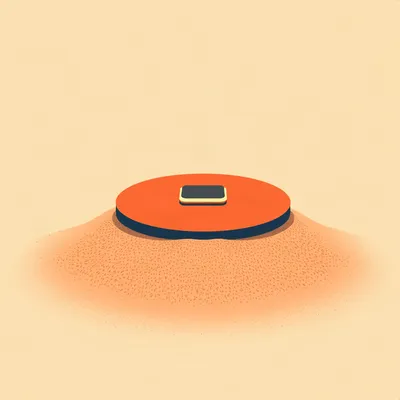
#5749: From Sand to Trillion-Dollar Chips: Semiconductors in 5 Levels
A bad conductor and a bad insulator — and the most important material in civilization. Semiconductors explained in five escalating levels.

#5747: Jamming Drones: The Physics of the Wearable Skylock Kit
How does a vest-sized jammer take on frequency-hopping drones? The inverse-square law, spread spectrum, and why jamming reaches farther than detect...
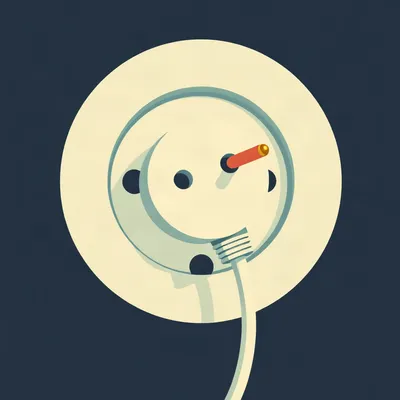
#5745: Why Europlugs Fit Israeli Sockets So Badly
A 2.5-amp plug, a 16-amp socket, and half a millimeter of interference. The physics of a connection that was never meant to hold.
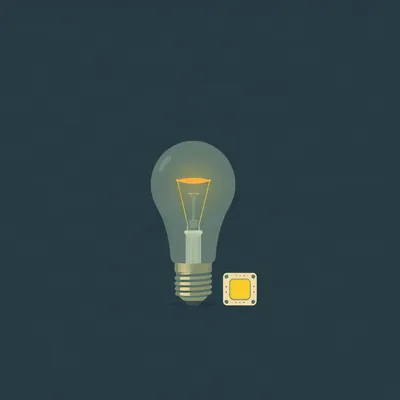
#5741: The Bulb That Lit the 20th Century
From Edison's carbon filament to the blue LED that unlocked white light — how we got from 1 lumen per watt to 150.
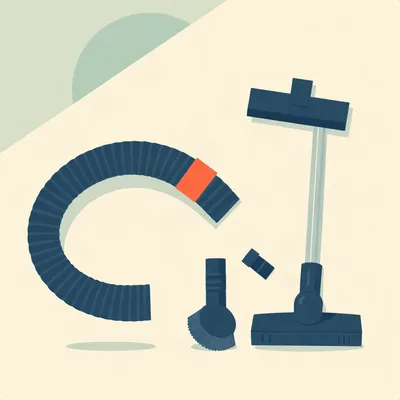
#5740: Your Vacuum's Best Upgrade Is the Head
Most people use 30% of their vacuum's capability. The cheapest fix isn't a new machine — it's the nozzle on the end.
#5737: Why Measuring a $4 Spudger Tip Is Weirdly Hard
A listener wants to put a number on his spudger's tip thickness. Turns out that's a real metrology problem.
#5730: What 4 Gs Actually Does to a Body at 17,000 Feet
A cockpit door left open, a passenger who knew one thing, and two off-duty pilots in row 30. What the physics of that descent really felt like.

#5729: Why There Are 1,500 Kosher Certifications
One product, three seals, and no way to tell which is "the" kosher one. How a single biblical sentence became a 1,500-agency industry.
#5720: Active, Passive, and the Speaker That Lied to Daniel
A rented PA speaker turns out to be mislabeled, and untangling why reveals the real difference between active and passive — plus what mic and line ...