So Hannah sent us something interesting this week. Ezra's hitting that classic eight and a half month mark where all the old sleep tricks just stop working. The rocking, the wearing, the stroller — none of it's cutting it for naps anymore. And she's hitting that wall a lot of parents do, where the whole sleep coach industry starts to feel less like help and more like pseudoscientific pressure.

It's a brutal phase. And by the way, today's episode is powered by DeepSeek V three point two.
Neat. So her question is a follow-up to that series we did on 'Hunt, Gather, Parent.' She wants to know what the Maya, the Inuit, and the Hadza actually do. Not sleep training, but the embedded tricks within their way of life. What's in their toolkit when a kid won't nap?
Which is perfect, because we're not giving parenting advice. We're doing anthropology. We're dissecting how sleep is woven into the fabric of a culture, rather than treated as a separate, managed event you succeed or fail at.
The frustration she's feeling is the friction point between a biological need and an industrial-era expectation of isolated, silent, independent infant sleep. So let's look at cultures that never bought into that expectation in the first place. Where do we start?
We start by defining what we're actually looking for. If we go hunting for discrete 'tricks'—like a three-step swaddle technique or a specific lullaby—we'll miss the point entirely. We're not extracting life hacks from a toolkit. We're observing integrated systems.
So the scope is understanding the embedded practice, not the extracted hack.
Right. And we're looking through three distinct cultural lenses, each adapted to a radically different environment. The Maya of the Yucatán Peninsula, living in a tropical climate. The Inuit across Arctic regions, dealing with extreme cold and seasonal light changes. And the Hadza in Tanzania, one of the last hunter-gatherer societies on Earth.
Three different answers to the same fundamental human problem, shaped by jungle, tundra, and savannah.
And that brings us to the core thesis we're testing. In these cultures, sleep—especially infant sleep—is not treated as an isolated biological function you switch on and off. It's a socially and environmentally scaffolded behavior. The 'trick' is the entire scaffolding.
Which is the polar opposite of the Western construct of 'nap time.' We segment it. We create a separate event, in a separate space, with a separate routine. We aim for quiet and stillness. The goal is the sleep itself.
Whereas in these cultures, sleep is often a byproduct. It happens incidentally during the flow of daily life—while a mother is weaving, a father is walking to a fishing spot, the community is gathered talking. The goal is the activity; sleep emerges when the conditions are right. So when we study their 'sleep tricks,' we're really studying how they engineer those conditions into the fabric of everything else.
So the question shifts. It's not 'how do they make the baby sleep?' It's 'how do they live in a way that allows sleep to happen naturally?' That's a much more interesting anthropological puzzle.
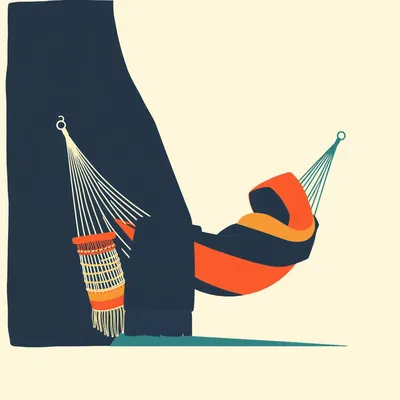
And that puzzle often starts with biomechanics. For instance, take the Maya and their use of the hammock, the 'hamaca.' This isn't just a bed. It's a sleep induction system. The key is in the type of motion.
Versus the classic Western rocking chair.
Right. A rocking chair moves in a single plane. Back and forth, like a pendulum. It's a predictable, repetitive motion. But a hammock, especially when gently nudged, creates a multi-axis sway. It rocks side-to-side, but also has a slight bounce, a sway forward and back. It's a more complex, womb-like motion.
So it's not just motion, it's the quality of the motion. A richer sensory input.
And it's often continuous. The hammock might be tied within arm's reach of where a mother is working. She gives it a nudge with her foot every few minutes without breaking her concentration. The motion isn't a dedicated 'I am now rocking you to sleep' performance. It's a background process.
Which ties into your second point—the social sleep environment. The baby isn't in a silent room. They're in the main living area. There's the sound of talking, of food being prepared, of other children playing.
That constant, low-level ambient noise acts as an auditory blanket. It prevents the jarring contrast of a pin-drop silent room, where any small sound—a creak, a distant siren—becomes a startling event. In the Maya context, the soundscape is consistent. Sleep begins and continues within that soundscape, so there's no disruptive transition when the 'sleep routine' ends and 'real life' noise begins.
It's the opposite of the white noise machine. It's 'life noise.'
Precisely. And this brings us to the 'body as bed' concept, which is perhaps the most significant divergence from Western practice. For the Maya, and this is documented in fieldwork like the 2017 study by Morelli and others, infants are in near-constant physical contact.
In a sling, a 'rebozo,' while the parent works.
Yes. So picture a mother weaving. The infant is tied to her back or chest in a rebozo. The rhythm of her body as she works the loom, the slight shifting of her weight from foot to foot, the vibration of the weaving process itself—all of this provides a predictable, rhythmic sensory input to the infant. The infant's nervous system is literally regulated by the parent's body. Heart rate, breathing, temperature—it's all co-regulated through that continuous contact.
So the infant's baseline state is already closer to a sleep-ready state. They're not starting from a place of high alert in a separate space. They're already physically entrained to the calm, working rhythm of the caregiver.
That's the portable sleep-ready state. The parent isn't trying to 'get the baby to sleep.' They're going about their task. And if the infant drifts off, it's a natural consequence of that secure, sensorily rich environment. There is no 'handoff.'
Which is the critical failure point in the Western model, isn't it? The entire painful ritual of rocking, shushing, waiting for 'drowsy but awake' or that deep sleep limpness, and then the agonizingly slow transfer to the static, silent crib. The moment of separation.
It's the moment where everything falls apart. Because you're attempting to transfer a baby from one sensory universe—warm, moving, close, rhythmic—to another that is the complete opposite: cool, still, distant, and silent. Even if you succeed in getting them deeply asleep first, the change in environment itself can trigger a wake-up reflex. The Maya model eliminates that transfer entirely. The body is the bed. The sleep surface moves with the child.
So the multi-sensory integration is key. It's not just one sleep cue, like motion alone. It's motion plus sound plus touch plus the smell of the parent, all layered together. It's a full-spectrum induction system, and it remains consistent. There's no dropping of sensory channels.
And that speaks directly to the parent's state. Think about the physiological co-regulation. A parent anxiously focused on 'getting the baby to sleep' is likely to have a higher heart rate, shallower breathing, more tension. That state transmits to the infant. Conversely, a parent calmly focused on a productive task—weaving, cooking, walking—enters a more regulated physiological state. That calm, purposeful rhythm is what the infant syncs to.
So the 'trick' is to stop making sleep the goal. Make the productive activity the goal, and provide the conditions where sleep can emerge as a side effect.
That's the embedded framework. The hammock isn't a magic trick. It's part of a system where gentle motion is ambient, sound is constant, and the infant's bed is literally a part of the living, working world. The sleep isn't managed. The environment is managed to be sleep-conducive as a background feature of life.
And that system works beautifully in its context. But moving from the tropical forest to the Arctic tundra, the Inuit approach has to solve a completely different set of problems. You can't have a baby napping in an open hammock when it's forty below.
Right. The environment demands a different kind of engineering. The central piece of technology is the 'amauti,' the traditional parka with a built-in baby pouch and a large hood called the 'ayaq.' This isn't just carrying; it's micro-environmental engineering on the move.
Explain the engineering.
The infant is carried against the parent's bare back, inside the parent's own parka, with the ayaq hood extending over the baby's head. The parent's body heat creates a stable, warm micro-climate. The hood regulates light and air flow—it can be opened or cinched to adjust for wind, snow, or sunlight. The baby is in a dark, warm, gently moving capsule that smells like the parent and moves with the parent's breathing and gait.
So the sleep environment is literally worn. It's not a place you put the baby; it's a condition you maintain around the baby as you move through the world.
There's a beautiful case study here. Imagine an Inuit parent walking across sea ice to check fishing lines. The journey might take an hour. The infant is in the ayaq. The parent's steady, rhythmic walking pace provides a constant vestibular input. The baby's environment—the temperature, the scent, the sound of the parent's heartbeat and breathing, the gentle motion—remains utterly consistent for that entire hour. If the baby falls asleep, that sleep is maintained uninterrupted by any transitions. There's no 'car ride ends, now we move you inside.' The sleep surface is the parent's back; it never changes.
That continuity is what's so starkly different. In our model, we create perfect sleep conditions in a stationary crib and then have to move the baby into them, breaking the spell. In their model, the perfect sleep conditions are mobile and never stop.
And it highlights the concept of sleep as a byproduct. The parent's goal isn't 'the baby's nap.' The goal is 'check the fishing lines.' The nap happens incidentally during the purposeful activity. There's no performance anxiety, no clock-watching, no 'did they get their ninety minutes?' The sleep is just something that occurs when the conditions are right during the flow of the day.
Which brings us to the third culture, the Hadza. They're not dealing with extreme cold, but with the savannah. What's their version of the mobile sleep pod?
It's arguably more fundamental. They practice ground-based sleep. The family sleeps together on animal skins or mats on the ground. For naps, infants are carried in slings, but the core principle is direct, continuous sensory connection.
No cribs, no bassinets.
None. Hadza infants are carried and held nearly one hundred percent of the time in their first year. Co-sleeping is universal. There's no concept of a separate infant sleep space. So during the night, the infant is right there, sensing the parent's breathing, their slight shifts in position, the stable temperature of the earth itself.
The earth's temperature stability is a big deal, isn't it?
It's a massive, overlooked regulator. The ground maintains a much more stable temperature than the air in a room, especially in a climate-controlled house where air might be drier and temperatures can fluctuate. The infant is buffered by that thermal mass. And throughout the night, as the parent naturally moves, the infant senses that movement. There's no jarring stillness. Sleep is a dynamic, shared state, not a solitary, static one.
So let's tie this back to Hannah's specific problem—the eight and a half month developmental leap. Ezra's awareness is exploding. He's more alert, more interested in the world, more resistant to being 'switched off.' How do these cultures accommodate that? It seems like their systems would be even more disrupted by a curious, wiggly baby.
That's the fascinating part. They don't accommodate it by providing less stimulation. They provide different stimulation. They don't try to reduce input to force sleep; they integrate the baby's alert state into a more engaging flow. For example, a Hadza mother might have her eight-month-old on her hip while she's pounding grain with other women. The baby is upright, seeing the action, hearing the chatter and the rhythmic pounding, feeling the movement of the mother's body. That rich, engaging sensory input can actually lead to sleep because it's satisfying the baby's increased need for engagement, not fighting it.
So instead of 'less movement, more quiet' to combat nap resistance, they go for 'more movement, more interesting activity.' The sleep comes from satiation, not deprivation.
The Western 'nap routine' often involves dimming lights, creating silence, reducing interaction—essentially trying to bore the baby into submission. For a cognitively leaping baby, that's frustrating. Their brain is screaming for more data, not less. The Hadza model says, 'Okay, you want data? Here's the whole village working. Here's the rhythm of a task. Process all this.' And often, in that secure, sensorily rich environment, the baby's system eventually says, 'Okay, I'm full,' and sleep emerges naturally.
It's the difference between trying to force a system to shut down and letting it run its course until it idles on its own.
And this is where the sleep coach industry often gets it backwards. They see the increased night-wakings and nap resistance at eight to ten months as a problem to be solved with stricter routines or 'training.' But from an anthropological and developmental perspective, it's a normal, healthy sign of cognitive growth. These cultures don't pathologize it. They simply adjust the baby's position in the flow of life—from chest to hip, from sleeping in the ayaq to peeking out from it—and keep going. The expectation isn't for the baby to conform to a sleep schedule. The daily rhythm accommodates the baby's changing needs.
That idea of the daily rhythm accommodating the baby is key. But for a parent like Hannah, listening with an eight and a half month old who won't nap, the question is the practical translation. We're not suggesting she builds an amauti parka or a hammock in the living room.
Right. The translation is about principles, not literal artifacts. The first actionable insight is about scaffolding sleep with multi-sensory consistency. We isolate cues—silence, darkness, stillness. They integrate them. So instead of a silent room, use consistent, mundane background sound. The hum of a dishwasher, the low volume of a podcast you're listening to, the ambient noise of a fan. It's the auditory blanket of village life. It prevents the startling contrast between the noise of being rocked and the dead silence of being set down.
And instead of still isolation, consider safe, sustained motion where sleep is allowed to happen, not forced. The goal isn't a ten-minute rock to sleep. It's a forty-five minute walk where you're going somewhere, and if Ezra drifts off in the carrier or stroller, great. If he doesn't, you still got a walk. You've removed the performance pressure from the motion itself.
That leads directly to the second insight: decouple parental success from infant sleep onset. Reframe the goal from 'making the baby sleep' to 'providing a secure, sensorily rich environment where sleep can emerge.' Your job isn't to be a sleep technician executing a perfect transfer. Your job is to be the regulated, engaged caregiver doing a thing. If sleep comes, it's a bonus. This alone can reduce the anxiety that probably radiates from both parent and baby during the whole 'nap battle' routine.
It's shifting from being a sleep coach to being a habitat manager.
And the third insight is to re-examine the sleep surface itself. The crib is a monument to separation. Consider if a firm, parent-adjacent floor mattress, following all the safe sleep seven guidelines, could allow for that 'ground-based' continuity. You could nurse or rock to sleep right there, and simply roll away, eliminating the transfer. The baby remains in the same thermal and sensory environment. It's the closest Western approximation to the Hadza model.
The meta-point here is that these cultures show us that the problem isn't necessarily the baby's ability to sleep. It's the ecosystem we're asking them to sleep in. We're providing fragmented sensory input and then wondering why they startle awake. The fix isn't a better trick; it's a more consistent, integrated environment.
And to Hannah's point about the sleep coach advice feeling pseudoscientific—it often is. A 2022 meta-analysis in Sleep Medicine Reviews found no long-term difference in child sleep outcomes at age two between sleep-trained and non-sleep-trained groups. The core premise that behavioral interventions create lasting, superior sleep habits isn't really supported by the data. These cultures, which never sleep train, produce children who eventually sleep fine. So the habit formation model is really a cultural story we tell, not a biological law.
And that cultural story leads us to a fundamental question: are we, in the West, pathologizing a developmentally normal increase in night-wakings and nap resistance at eight to ten months? We're viewing it through an industrial-era sleep efficiency lens, where uninterrupted, solitary sleep is the gold standard for both adult productivity and infant development.
I think that's exactly what's happening. We've medicalized a biological norm. The emerging field of evolutionary pediatrics is starting to challenge sleep training orthodoxy on this exact point. It asks: if these sleep patterns are so problematic, why are they near-universal in human infants across wildly different environments? The problem might be the expectation, not the behavior.
So the future implication isn't a new, better sleep training method. It's a gradual cultural shift away from seeing infant sleep as a problem to be solved with parental behavior modification, and toward seeing it as a state to be supported through environmental and social scaffolding.
That's the core idea Hannah can take away. It isn't about adopting a hammock or sewing an amauti. It's about understanding the principles of embedded sleep. Integration over isolation. Continuity over segmentation. Regulation through proximity. Build a sleep-conducive habitat into the flow of your day, rather than trying to extract the baby from your day to achieve sleep.
And give yourself, and Ezra, a lot of grace. The fact that the old tricks stopped working means he's developing right on schedule. The goal isn't to find a new trick to force the system. It's to provide the kind of consistent, secure, sensorily integrated environment where his system can find its own rhythm again.
We have to thank our producer, Hilbert Flumingtop, for his work behind the scenes. And a quick thanks to Modal, whose serverless GPUs power our entire pipeline, letting us focus on the conversation instead of the infrastructure.
If this discussion helped reframe things for you, we'd appreciate you leaving a review wherever you listen. It makes a real difference. You can find all our episodes, and the full archive, at myweirdprompts.com.
This has been My Weird Prompts.
Take your time.