Hey everyone, welcome back to My Weird Prompts. I am Corn Poppleberry, and we are coming to you as always from our home here in Jerusalem. It has been an incredible week of digging into some of the heavier technical questions we have received lately, and today is no exception. We are diving into a topic that sounds like science fiction but is actually the cornerstone of modern strategic defense. We are talking about the glowing bullet paradox.

Herman Poppleberry here, and I have been looking forward to this one. Our housemate Daniel sent us a prompt that really gets into the weeds of why space is hard, or more specifically, why coming back from space is even harder. We have spent a lot of episodes talking about the trajectory of missiles and the logic of interceptors, but we rarely stop to ask what these things are actually made of. When you think about a vehicle re-entering the atmosphere at twenty times the speed of sound, you have to ask: why does it not just melt into a puddle of molten slag the second it hits the air?
It is a great question because the physics involved are truly counterintuitive. When you see a video of a launch or an interception, you see a streak of light or a plume of smoke. You do not necessarily think about the fact that the object at the tip of that rocket is essentially a five-story building's worth of mass traveling at several kilometers per second. The material science required to keep that object from turning into a vapor is just incredible. Daniel was asking specifically about the extreme pressures and temperatures and why we cannot just build these things out of regular high-strength steel.
Right, and as hypersonic glide vehicles become the new standard in strategic deterrence, this material science gap is the primary barrier to entry for any nation trying to join the high-end missile club. It is not just about the engine anymore; it is about the skin. Today we are going to explore the physics of the stagnation point, the miracle of ablative shielding, and why the material ceiling is the ultimate bottleneck in modern aerospace.
So let us start with the environment itself. When we talk about a ballistic missile or a hypersonic glide vehicle, we are talking about speeds in the range of Mach fifteen to Mach twenty-five. For those who need a refresher, Mach one is the speed of sound, which is roughly twelve hundred kilometers per hour at sea level. So Mach twenty is twenty-four thousand kilometers per hour. Herman, walk us through that transition. What happens when an object goes from the total vacuum of space into the soup of our atmosphere at those speeds?
It is a violent transition. In the vacuum of space, you have no resistance. You are just a mass in motion. But the moment you hit the upper reaches of the atmosphere—around one hundred kilometers up, what we call the Karman line—you start hitting air molecules. At Mach twenty, you are hitting them so fast that the air cannot move out of the way. This creates what we call aerodynamic heating.
I want to pause there. Most people use the terms kinetic heating and aerodynamic heating interchangeably. Is there a distinction we should be making?
There is, actually. Kinetic heating is the general term for heat generated by the motion of an object. But aerodynamic heating is more specific to the interaction with the fluid—in this case, the air. At these hypersonic speeds, we are dealing with stagnation temperatures that can exceed two thousand or even three thousand degrees Celsius. To put that in perspective, the surface of the sun is about five thousand five hundred degrees Celsius. So you are effectively creating a small, localized sun right in front of your nose cone.
That is a terrifying image. The air itself becomes the furnace. It is not just that the metal is getting hot; it is that the environment surrounding the metal has fundamentally changed its state of matter.
That is right. This brings us to the first big misconception we need to bust. Most people think that a falling star or a re-entering missile burns up because of friction. They imagine the air rubbing against the side of the vehicle like sandpaper. But at these speeds, friction is a secondary concern. The real killer is adiabatic compression.
Break that down for us. What does that look like in practice?
Imagine the air in front of the missile. Because the missile is moving so much faster than the speed of sound, the air molecules do not have the physical time to flow around the vehicle. They get slammed together in a very thin region called the shock layer, or the bow shock. When you compress a gas that violently and that quickly, the temperature skyrockets. It is the same principle as a bicycle pump getting warm when you use it, but scaled up to a cosmic degree. The air molecules are crushed so hard that they actually dissociate. The oxygen and nitrogen molecules tear apart into individual atoms, and the air turns into a superheated plasma.
So the plasma is actually a buffer?
In a way, yes. There is a standoff distance between the shock wave and the actual surface of the vehicle. But that plasma is radiating heat directly into the hull. This is the stagnation point—the very tip of the nose where the air velocity relative to the vehicle is zero. All that kinetic energy has to go somewhere, and it goes into heat and pressure. We are talking about thousands of pounds of force per square inch.
This explains why we cannot just use a thicker piece of metal. If the stagnation temperature is three thousand degrees and iron melts at fifteen hundred, it does not matter how thick the iron is. Eventually, the front will melt, then the next layer, and so on, until the whole thing is gone.
Precisely. In the early days of the Cold War, engineers tried to use heat sinks. They used massive slabs of copper or beryllium. Copper is great because it conducts heat away from the surface very quickly, spreading it out through the mass of the metal. But copper is heavy. If you want to survive a long re-entry, your heat sink has to be so massive that the rocket can barely lift it. That is why we moved to the miracle of ablation.
I love the word ablation. It sounds so clinical for something that is essentially a controlled explosion of the vehicle's skin. How does it actually work?
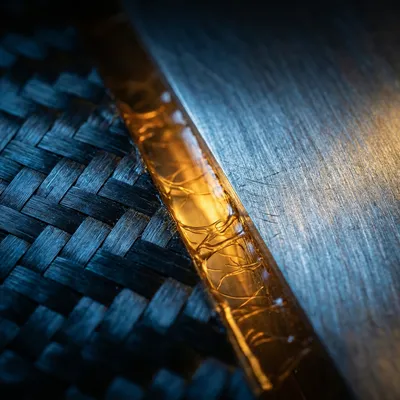
It is a beautiful endothermic process. Instead of trying to resist the heat, you use a material that is designed to be destroyed. The gold standard is carbon-phenolic composites. This is a high-tech plastic resin reinforced with layers of carbon fiber. When the intense heat of the plasma hits this material, the outer layer does not just melt; it undergoes pyrolysis. It turns into a layer of char.
So it turns into charcoal?
High-tech charcoal, yes. And as it chars, it releases gases. These gases blow outward, away from the missile. This creates a thin, relatively cool buffer layer between the three-thousand-degree plasma and the actual body of the missile. This is called the boundary layer. The heat from the atmosphere is literally used up by the chemical reaction of turning the resin into gas. The material sacrifices itself to carry the heat away.
It is like the missile is sweating, but the sweat is made of vaporized plastic and carbon.
That is a helpful way to look at it. And it is incredibly efficient. An I-C-B-M re-entry vehicle might lose thirty to fifty percent of its total shield mass during those few minutes of intense heat. But the payload inside—the electronics, the guidance systems—stays at a comfortable room temperature. If you compare an Apollo heat shield to a modern missile nose cone, the principle is the same, but the modern versions are much more refined. They have to be, because a missile is much smaller and travels even faster than a returning space capsule in some phases.
I remember we touched on this briefly in episode nine hundred thirty-six when we talked about why missile debris still falls to the ground even after an interception. The reason the pieces do not just vaporize is that the material integrity of these carbon composites is so high that even after a kinetic impact, the fragments still have enough of that ablative coating to survive the fall.
Spot on. But that brings us to Daniel's third question, which is my favorite part of this prompt. The scrap metal thought experiment. What if we just used what we had? What if we built a rocket out of regular three hundred four stainless steel or scrap metal from a junkyard? Let us say the propulsion is perfect and it reaches the edge of space. What happens the moment it starts its descent at Mach ten or fifteen?
I imagine it would be a very short flight.
Spectacularly short. Let us look at the failure modes. First, you have thermal expansion mismatch. Metals expand when they get hot. In a scrap metal rocket, the nose is going to hit two thousand degrees while the tail is still relatively cool. The nose will try to expand by several inches, but the rest of the structure is rigid. This creates massive internal stresses. The rocket would likely buckle or rip its own rivets out before it even reached the melting point.
It would basically twist itself into a pretzel because the front is growing faster than the back.
Right. And then you hit the grain boundary melting. Metals are not solid blocks; they are made of tiny crystalline grains. As you approach the melting point, the boundaries between those crystals weaken first. The metal becomes what we call short-hot. It loses all its structural integrity and becomes like wet noodles. At Mach fifteen, with thousands of pounds of dynamic pressure—what engineers call Q—pushing against that nose, the steel would simply flatten out. It would be like trying to hold a piece of warm taffy against a leaf blower.
And what about the structural integrity under high-G-force maneuvers? Because these modern hypersonic vehicles are not just falling in a straight line anymore. They are zig-zagging to avoid interceptors.
That is where the scrap metal really fails. If you try to pull a ten-G-force turn at Mach ten in a stainless steel vehicle that is already softened by heat, the aerodynamic forces will shred it. The wings or control surfaces would simply fold back against the body. But there is another effect that people often overlook, and that is the plasma blackout.
This is the part that always strikes me. The idea that the air itself becomes a radio shield.
It does. When the air turns into plasma, it becomes electrically conductive. It creates a literal sheath of ionized gas around the vehicle that reflects radio waves. If you are using a crude scrap metal body, you probably have not designed your antennas to peek through that plasma layer using specific frequencies or window placements. Your missile would be flying blind. No G-P-S, no guidance corrections, no telemetry. It becomes a very expensive, very hot, uncontrolled rock.
It is funny you say that, because we always talk about these things as high-tech marvels, but at that point, it really does just become a meteor. It is just a lump of matter fighting against the laws of thermodynamics and losing.
And the difference between a meteor and a re-entry vehicle is homogeneity. A meteor usually shatters because it has internal flaws—pockets of gas or different minerals. A re-entry vehicle has to be perfect. If you have even one tiny air bubble in your carbon-phenolic shield, or a microscopic crack in your scrap metal hull, you get the zipper effect.
We have mentioned the zipper effect before, but remind us how it works in this context.
We call it a burn-through. Once the plasma finds a tiny path through the outer shell, it acts like a plasma cutter. It is not just heat; it is high-pressure gas. It will hollow out the inside of the vehicle in milliseconds. The high-pressure air will rush into the low-pressure interior, and the whole thing will essentially explode from the inside out. This is why quality control in aerospace is so obsessive. You are not just building a container; you are building a thermal pressure vessel that has to hold back the equivalent of a small sun.
This really highlights why the material science is the ultimate bottleneck. You can buy the rocket engines on the black market, you can find the fuel recipes in old textbooks, and you can even write the guidance software on a laptop. But you cannot just look up the recipe for high-performance carbon-phenolic resins or the specific weaving pattern for the carbon fibers. It requires specialized chemical plants and incredibly precise manufacturing.
Truly, it is the material ceiling. And we see this in the development of hypersonic glide vehicles today. The challenge for nations like the United States, Russia, or China is not just getting them to go fast; it is making a skin that can survive that speed for twenty minutes of sustained flight instead of just the two minutes it takes for a ballistic missile to drop through the atmosphere. For a sustained hypersonic flight, you cannot really use ablation because you would eventually run out of material. You would have to carry so much shield that the vehicle would be too heavy to fly.
So what is the next step? If ablation is a one-way trip, how do we get to reusable hypersonic flight?
We are moving toward Ceramic Matrix Composites, or C-M-Cs. These are materials like silicon carbide reinforced with carbon fibers. They can handle extremely high temperatures without melting and, crucially, without ablating. They stay the same shape. But they are incredibly difficult to manufacture. They are brittle, like a coffee mug, but they have to be as strong as steel. We are basically entering an era where the battle is not being fought with better explosives, but with better ceramics.
It is a remarkable shift. It reminds me of the old days of armor versus cannonballs. For a while, the cannonballs were winning because they could go faster and hit harder. But now, the armor—in the form of material science—is trying to catch up so these vehicles can maneuver and survive longer.
And the stakes are so high. If you can develop a material that allows a missile to maneuver at Mach twenty without melting its own control fins, you have essentially made every existing interceptor obsolete. Because if the missile can turn, the interceptor cannot predict where it will be. But you can only turn if your wings do not deform the moment you tilt them into that three-thousand-degree airflow. The leading edge of a wing at those speeds is essentially a knife edge being held against a grinding wheel made of fire.
I think this really answers Daniel's question about the scrap metal rocket. It is not just that it would not work as well; it is that it would fail in a spectacular, multi-modal fashion. It would buckle from thermal expansion, melt at the grain boundaries, explode from a burn-through, and go blind from the plasma blackout all within about sixty seconds of hitting the upper atmosphere.
It would be a very brief and very bright lesson in why we have spent trillions of dollars on material science over the last seventy years. It is worth considering the historical context too. Back in the late nineteen fifties, when the first Intercontinental Ballistic Missiles were being developed, they actually used copper heat sinks because they did not have the chemistry for ablation yet.
Copper seems so primitive now.
It was a brute-force approach. They used massive, thick slabs of copper to just soak up the heat. They hoped the copper would absorb enough energy to keep the inside cool before the copper itself melted. It made the nose cones incredibly heavy, which meant the rockets had to be even bigger. The jump from copper heat sinks to carbon-phenolic ablation was what allowed missiles to become smaller, more accurate, and more reliable. It changed the entire strategic landscape.
It is a great example of how a breakthrough in materials can change the world. Without ablation, we probably would not have the compact, road-mobile missiles we see today. Everything would still be these giant, lumbering liquid-fueled rockets that take hours to prep.
Precisely. And that brings us to the present day. When we look at the advancements being made in regional powers, the real secret sauce is often in the composite laboratory. It is about how you weave the carbon fibers, what resins you use, and how you bake them in an autoclave. An autoclave is basically a giant high-pressure oven. If your pressure is off by even a few percent during the baking process, the shield will have microscopic voids. And those voids are where the burn-through starts.
It is a very clinical, very technical kind of warfare. It is not about bravery in the traditional sense; it is about the bravery of the engineer who says, I think this ceramic will hold at three thousand degrees.
And that is why we see such a focus on the manufacturing base. You cannot have a top-tier defense program if you do not have the ability to manufacture these materials at scale. It is one of the reasons why the United States has such a massive advantage—the industrial base for high-end aerospace materials is still incredibly concentrated, even as other countries try to catch up.
We have covered a lot of ground here, from the molecular level of compressed air to the sacrifice of the carbon shield. I think the practical takeaway for most people is that when you see a high-tech weapon, the tech is not just in the chips and the software. It is in the very atoms of the hull. We are moving from building a rocket to managing a thermal environment.
You are right. We are living in an era where material science is the primary driver of geopolitical power. If you can control the heat, you can control the sky. And if you cannot, you are just building very expensive fireworks.
Let us move into some of the more practical takeaways from this. If you are listening to this and wondering how this applies to the real world, think about the spin-off technologies. A lot of what we know about high-temperature ceramics and composites actually ends up in things like high-performance car brakes, industrial furnaces, and even the next generation of clean energy turbines.
You are right. The same research that keeps a missile from melting is what allows a jet engine to run hotter and more efficiently, which reduces fuel consumption for commercial flights. It is all connected. The extreme demands of defense and space exploration push the boundaries of what is possible, and eventually, those materials find their way into our daily lives.
I also think it is important to realize how narrow the margins are. In most engineering, you have a safety factor of two or three. If you build a bridge, you make it three times stronger than it needs to be. In aerospace re-entry, your safety factor is often just a few percentage points. There is no room for scrap metal thinking. Everything has to be calculated to the fourth decimal place because every extra gram of heat shield is a gram of payload you cannot carry.
It really changes your perspective on failure. When a test flight for a new hypersonic vehicle fails, it is usually because of a material failure that lasted for less than a tenth of a second. But that one failure provides the data needed to tweak the chemical composition of the shield for the next attempt. It is a slow, iterative, and incredibly expensive process of trial and error.
And for our listeners who are interested in the geopolitical side of this, keep an eye on the export controls. You will notice that the materials used for these shields are some of the most strictly regulated items in international trade. You cannot just ship a pallet of high-grade carbon-phenolic resin across borders without a mountain of paperwork. That is because the international community recognizes that the material is the weapon.
Truly, it is. Without the material, the rocket is just an expensive firework. You can have the best guidance system in the world, but if your nose cone melts at Mach twelve, your guidance system is just going to be guiding a cloud of vapor.
Well, I think we have thoroughly explored the glowing bullet paradox. It turns out the reason they do not melt is that they are designed to be destroyed in a very specific, very controlled way. It is the ultimate sacrificial act in engineering. The shield dies so the mission lives.
It is poetic, in a compelling way.
That is a perfect way to end it. Before we wrap up, I want to remind everyone that if you are enjoying these deep dives into the technical and the weird, we would really appreciate it if you could leave us a review on your podcast app or on Spotify. It genuinely helps the show reach more curious minds like yours.
It definitely does. And if you have a topic you want us to dig into—whether it is material science, geopolitics, or something completely out of left field—head over to myweirdprompts.com and use the contact form. We love hearing from you guys.
We have covered a lot of missile-related topics lately. If you want to hear more about the broader context, definitely check out episode seven hundred seventeen on Iran's missile arsenal or episode seven hundred five where we talked about the science of Israel's multi-layered shield. They both touch on different aspects of what we discussed today, especially the physics of interception.
And remember, all our past episodes are available in the archive at myweirdprompts.com. We have over a thousand episodes now, so there is plenty to explore if you are new to the show.
Thanks again to Daniel for sending in this prompt and getting us thinking about the molecular wall of re-entry. It has been a fun one.
Always a pleasure. This has been My Weird Prompts.
We will see you next time. Stay curious.
And stay cool—or at least, keep your ablation shield intact. Goodbye, everyone.
Goodbye.