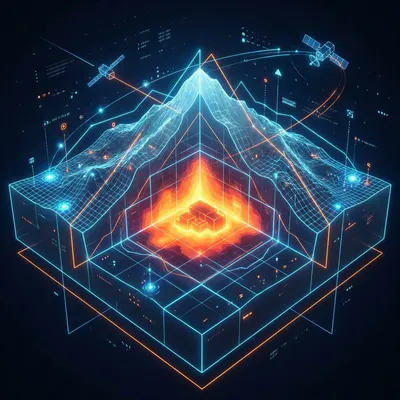
I was looking at some satellite imagery from Maxar the other day, and it is honestly staggering how much we can see now. You can practically count the bricks on a new facility in Yongbyon from your laptop while eating a sandwich. It made me think about today's prompt from Daniel, which is all about the failure of secrecy in North Korea. He is asking us to look at why a state that spends nearly all its resources on hiding itself is actually one of the most transparently understood regimes on the planet. It is March fourteenth, twenty twenty-six, and the paradox has never been more visible. We are talking about a country that treats a photograph of a leader like a holy relic, yet we have high-resolution, multi-spectral data of their entire geography updated almost hourly.

It is a massive paradox, Corn. My name is Herman Poppleberry, and I have been obsessed with this specific intersection of technology and totalitarianism for a long time. The traditional view of North Korea is this hermit kingdom, a black box where information goes to die. But in twenty twenty-six, that model is completely broken. Secrecy is not just a policy choice anymore; it is a technology that requires massive amounts of energy and resources to maintain. And as surveillance and communication technologies scale up, the cost of keeping those secrets grows exponentially. We are seeing the noise of modern Open Source Intelligence, or OSINT, drown out the regime's silence. Even with the border remaining largely closed after that brief opening in early twenty twenty-five, the digital and orbital eyes never blinked.
It feels like they are fighting a war against physics. If you have twenty-five million people and thousands of miles of border, you are generating an unbelievable amount of data every single second. Even if you ban the internet, that data leaks out through human movement, radio waves, and visual changes to the landscape. You can't hide the heat signature of a factory or the wake of a ship.
The regime treats information like a domestic product they can totally control, but they are dealing with a world where the resolution of reality is getting sharper every day. Think about the theater of deception they try to run. This is the Potemkin village model taken to a national scale. When foreign visitors or the few Russian tourists allowed in lately go to Pyongyang, they are handled by state guides. It is a curated, choreographed experience. But even that is backfiring now because of the influencer effect and the sheer level of visual literacy the rest of the world has developed.
Right, because even when you show someone a fake grocery store, the people in twenty twenty-six are savvy. They see the lack of dust on the shelves, the way people are dressed too perfectly, or the fact that no one is actually buying anything. The very act of trying to show off a fake reality highlights the absence of the real one. It is like a glitch in the simulation that everyone notices because we have seen so much real footage from the rest of the world. In the nineteen seventies, you could fool a delegation of journalists. In twenty twenty-six, you can't fool a teenager with a TikTok account who understands how lighting and staging work.
That leads us into the core thesis of today’s episode: secrecy is a resource-intensive technology that suffers from diminishing returns. In a world of sub-meter satellite resolution, the "black box" state is an impossibility. If you want to hide a nuclear reactor, you don't just have to hide the building; you have to hide the power lines, the water cooling runoff, the security perimeter, and the movement of the workers. Each of those is a data point. When you add them up, the secret becomes a shape in the data that is just as visible as the object itself.
I want to dig into the internal side of this. They have their own version of the internet, the Kwangmyong intranet. It is basically a walled garden with no connection to the outside world. How effective is that really? Because we keep hearing about the twenty twenty-three Pyongyang Cultural Language Protection Law where they are literally criminalizing South Korean slang. If the wall were working, they wouldn't need to pass laws against words, right?
The existence of that law is the ultimate admission of failure. You don't ban something that isn't already there. The information wall is leaking like a sieve. The Kwangmyong was designed to be a substitute for the world, but it is boring. It is filled with state propaganda and technical manuals. Meanwhile, the real world is vibrant and addictive. People are using smuggled Chinese cell phones near the border to catch signals, or they are watching South Korean dramas on flash drives that have been passed from hand to hand. The regime is terrified of linguistic contamination because language is the carrier for ideas. If people start using South Korean terms for freedom or consumer goods, the state's narrative starts to dissolve. They are trying to use the legal system to fight the laws of information theory. It is like trying to sue the tide for coming in.
It is interesting because they are in this impossible position. To survive economically, especially with the sanctions and their isolation, they have had to become world-class cybercriminals. We saw them steal roughly two billion dollars in cryptocurrency just in twenty twenty-five. But to run those operations, you have to be connected to the global internet. You have to understand how the outside world works. You have to have elite hackers who are, by definition, the most informed people in your country.
That is the transparency paradox. You cannot be a modern digital predator while remaining a medieval agrarian hermit. The Lazarus Group and their other hacking units are the regime's most effective window to the world, but they are also a massive security vulnerability. When they interact with the blockchain or launch ransomware attacks, they leave digital fingerprints. Investigators can trace those back to specific infrastructure. The very tools they use to bypass sanctions are the ones that give Western intelligence and private security firms the clearest view into the regime's financial heart. To steal two billion dollars in crypto, you have to move it through mixers, cross-chain bridges, and off-ramps. Every one of those movements is a public record on a ledger. The regime is essentially trading its anonymity for liquidity.
It is like they are trying to maintain a zero-trust environment internally while being forced to participate in a high-trust global financial system to get the hard currency they need. And that pressure is creating cracks. You mentioned the cost of secrecy earlier. Think about the manpower required to monitor twenty-five million people's speech, their media consumption, and their movements. That is a massive percentage of their gross domestic product just going toward friction. It is unproductive labor. While other countries are using AI to increase productivity, North Korea has to use its best minds to build better digital cages.
It is the definition of a legacy system that is too expensive to maintain but too dangerous to shut down. If they opened up even a little, the whole structure would collapse because it is built on a foundation of total information monopoly. We saw a version of this in episode one thousand fifteen when we talked about the security collapse in the Iranian Revolutionary Guard Corps. When the gap between the state's narrative and the lived reality becomes too wide, the internal security apparatus starts to fail because the people running it stop believing in the mission. In North Korea, the guards at the border or the censors in the Ministry of State Security are the ones most exposed to the "illegal" information. They are the ones who see the quality of the smuggled goods or the content of the seized flash drives.
Does that apply to the thirty-four thousand defectors in South Korea? That is a huge number of people who are essentially primary source intelligence agents. Every one of them has a story, a family connection, and a specific understanding of a local area. You can't patch a human leak with a firewall.
Each defector is a living archive. They provide the ground truth that validates what the satellites see from above. If a satellite shows a new building in a sensitive area, a defector might be able to tell you what the internal layout looks like because they worked on the construction crew, or what the guards in that sector are worried about. This creates a multidimensional map of the country that the regime simply cannot erase. They can burn paper files, they can encrypt hard drives, but they cannot reach into the minds of people who have escaped. This is why the regime reacts so violently to defector groups. They aren't just political opponents; they are the de-facto intelligence agency of the North Korean people.
And then you have the external pressure from groups like the Human Rights Foundation and their flash drives for freedom. It is such a low-tech solution, just balloons or drones carrying physical storage. But it is incredibly effective because it bypasses the digital surveillance state entirely. It is hard to jam a plastic stick falling from the sky.
It is the ultimate asymmetrical warfare. A five-dollar flash drive containing the entire Wikipedia in Korean, or a few seasons of a popular show, or even just videos of a South Korean grocery store, can do more damage to the regime's legitimacy than a million-dollar propaganda broadcast. Once someone sees that the outside world isn't the hellscape the Kim family describes, the spell is broken. You can't unsee prosperity. You can't unsee freedom. The regime's response—the twenty twenty-three law we mentioned—shows they know this. They are trying to criminalize the very act of knowing that a better world exists.
I wonder if the regime realizes that their secrecy is actually making them more vulnerable in some ways. Because we don't know exactly what is happening inside, the international community often assumes the worst or prepares for the most extreme scenarios. If they were more transparent, they might actually face less military pressure because their capabilities would be clearly understood rather than feared as unknowns.
From their perspective, the unknown is their only real leverage. If they were transparent, everyone would see exactly how fragile they are. Secrecy is the armor that hides the fact that the knight inside is starving. But that armor is getting thinner. We are moving into an era where the concept of a state secret is becoming an oxymoron. Between ubiquitous sensors, AI-driven pattern recognition, and the sheer volume of human communication, there is no place left to hide a whole country. The Streisand Effect is playing out on a national scale. By trying so hard to hide their internal struggles, they make every single scrap of leaked information a thousand times more valuable to intelligence agencies and human rights groups. If North Korea were just another developing nation with a messy but open society, no one would be paying millions of dollars for high-resolution satellite passes over their cabbage fields. But because it is a secret, it becomes a target for every OSINT enthusiast with a high-speed connection.
It really brings up the broader question of the physics of secrecy. If you are trying to keep a secret that involves a thousand people, you don't just have one secret; you have a thousand potential points of failure. When you scale that to a national level, the probability of total containment drops to zero. It is a statistical certainty that the truth will come out. The only variable is how long you can delay it.
And the delay is getting shorter. In the past, a defector might take years to get their story out through debriefings and memoirs. Now, they can be on a live stream in Seoul within weeks of crossing the border, talking to their followers. The feedback loop is tightening. This is why the regime is getting more desperate with laws like the Cultural Language Protection Law. They are trying to use the legal system to fight the laws of information theory. It is like trying to sue the tide for coming in. Information wants to be free, not because of some moral imperative, but because of the way it flows through systems.
Let us talk about the role of commercial actors here. It isn't just the Central Intelligence Agency or the South Korean National Intelligence Service anymore. It is companies like Maxar and Planet Labs. It is amateur OSINT researchers on social media who spend their weekends geolocating missile launches from state media photos. The democratization of surveillance has stripped away the state's monopoly on seeing.
That is a huge shift. In the Cold War, only the superpowers had the birds in the sky. Now, anyone with a credit card can buy sub-meter resolution imagery. This means the regime can't just hide things from governments; they can't hide them from the public. If they move a mobile launcher, someone on the internet is going to find it within hours by comparing satellite passes. The level of scrutiny is unprecedented. It creates a permanent state of exposure. This democratization of intelligence means that the "truth" about North Korea is being crowdsourced by thousands of people who have no official clearance but have a lot of time and very good eyes.
I think this has a really important takeaway for our listeners who aren't running totalitarian states but are worried about their own information security. If a regime with total control over its borders, its media, and its people cannot keep its secrets, what does that say about the idea of security through obscurity for a corporation or an individual?
It says that security through obscurity is a dead strategy. It is a relic of an era when information was physical and slow. In a world of ubiquitous data, your security has to be based on robust architecture and zero-trust principles, not on the hope that no one will find you. If your plan relies on a secret staying a secret, your plan is already failing. You have to assume that everything will eventually be known and build your systems to be resilient in the face of that transparency. Whether you are a Fortune five hundred company or a nation-state, the goal shouldn't be to hide the truth, but to build a reality that can survive the truth being known.
That is a powerful point. The North Korean model is the ultimate example of a zero-trust system where the state trusts no one, but the irony is that it makes the state itself incredibly fragile. Because they haven't built a system that can survive the truth, they are forced to spend every bit of their energy fighting a losing battle against it. They are essentially running a giant, nationwide denial of service attack against reality.
But reality has more bandwidth than they do. Eventually, the system crashes. We see it in the way they react to every little bit of outside news. They are so reactive because they are so brittle. A confident state doesn't care if its citizens watch a foreign movie. An insecure state treats a movie like a biological weapon. They are fighting a war against the very nature of the twenty-first century.
It also makes me think about the role of AI in this. As we get better at analyzing massive datasets, the ability to spot anomalies in North Korea becomes even easier. You can train a model to look for specific patterns of movement or construction that indicate a new underground facility. You don't even need a human to look at the millions of satellite photos anymore. The AI will just flag the changes for you.
The automation of surveillance is the final nail in the coffin for state secrecy. When you combine high-frequency satellite passes with automated change detection, you have a real-time map of a country's pulse. You can see the traffic patterns, the coal smoke from factories, the lights at night. You can literally watch the economy breathe. There is no way to mask that level of physical reality. Even their attempts at deception, like the Potemkin villages, have a specific signature that an AI can learn to recognize. The "uncanny valley" of propaganda is very visible to a machine learning model.
And they can't exactly turn off the lights if they want to keep the few factories they have running. They are stuck in this catch-twenty-two where any attempt to improve their situation requires them to become more visible. If they want more power, they need more infrastructure, which is more visible. If they want more money, they need more digital interaction, which is more traceable. Every move toward survival is a move toward exposure.
It is a slow-motion collapse of a facade. The theater of deception is still running, but the audience can see the actors backstage and the wires holding up the scenery. The question for the rest of the world is how to manage the moment when the curtain finally falls. Because when a state built entirely on a lie is forced to face the truth, the transition is rarely peaceful. The information blockade has failed, but the regime is still holding the door shut with everything it has.
That is the scary part. If secrecy is their only defense, and it is failing, they might feel forced to use their actual weapons to maintain their relevance. It is a dangerous corner for a regime to be pushed into. But from a purely technical and information standpoint, the battle is already over. North Korea is a glass house, even if the people inside are still being told the walls are made of steel.
It is a lesson in the futility of fighting the future. You can build the thickest walls in the world, but in the digital age, the walls are irrelevant. Information is like water; it finds the path of least resistance and eventually wears down even the hardest stone. The North Korean regime is trying to hold back a flood with a teaspoon.
I think we have covered a lot of ground here, from the crypto theft paradox to the linguistic laws and the sheer physics of surveillance. It is a fascinating and tragic case study. If you are interested in the deeper architecture of how states try to keep secrets, you should definitely check out episode five hundred thirty-seven where we talked about the shift from state secrets to zero trust. It provides a lot of the foundational theory for why what we are seeing in North Korea was always going to happen.
And for a look at what happens when these systems actually start to break down in real time, episode one thousand fifteen on the IRGC's security collapse is a great companion piece. It shows that even the most feared internal security forces have a breaking point when they lose the information war.
This has been a great dive into a heavy but essential topic. Thanks for the prompt, Daniel. It really pushed us to look at the systemic failure of the old model of power.
It is always a pleasure to nerd out on the intersection of tech and geopolitics. There is so much more we could say, but I think the core message is clear: the age of the hermit kingdom is over, whether the Kims like it or not.
Big thanks to our producer Hilbert Flumingtop for keeping the show running smoothly behind the scenes.
And a huge thank you to Modal for providing the GPU credits that make this whole production possible. We couldn't do this deep dive without that kind of technical support.
If you enjoyed this episode, please consider leaving us a review on your favorite podcast app. It really helps other people find the show and join the conversation.
You can also find us at myweirdprompts dot com for our full archive and all the ways to subscribe to the show.
This has been My Weird Prompts. We will see you in the next one.
Stay curious.