You know, Herman, I was looking at a satellite map the other day, just scrolling around, and it hit me that the very concept of a "secret military base" is starting to feel like a nineteenth-century relic. It is like trying to hide a neon sign in a dark room. We have spent a century building these massive walls and high fences, but the sky has become a snitch.

It really has. Herman Poppleberry here, and I have been diving into this exact shift for the last week. The walls are not just thin anymore, Corn. They are made of glass, and that glass is being polished every single day by millions of people with high-speed internet connections and a curiosity that borders on obsessive. We are living in an era of "environmental transparency," where the background noise of the world is now loud enough to drown out even the most sophisticated military secrets.
Well, today's prompt from Daniel is about this very thing. He is asking if the open source intelligence community—or O-S-I-N-T as the nerds call it—is actually a threat to modern military security. He is looking at how things like flight transponders and satellite imagery have democratized intelligence to the point where the Pentagon is basically playing poker with their cards facing the wrong way. It is a shift from the old "need to know" model to an "everyone knows" reality.
Daniel is hitting on a massive nerve here. We are not just talking about hobbyists with flight trackers anymore. We are talking about a professionalized, high-tempo discipline that is sometimes moving faster than the actual government agencies. There was a major milestone just a few days ago, on March nineteenth, twenty twenty-six. Elie Habib—the guy who founded Anghami—launched something called World Monitor. And Corn, this thing is a game changer.
I saw that on GitHub. It went viral almost instantly, right? I think I saw it trending before I even had my morning coffee.
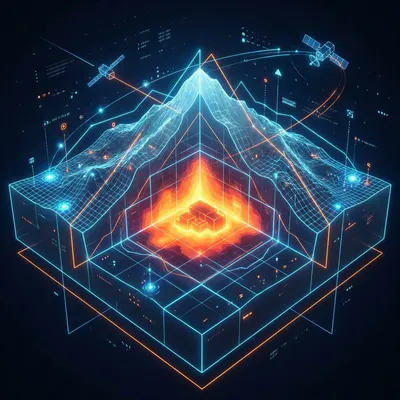
It is sitting at over forty-one thousand stars in just a couple of weeks. Think about that. That is an open source dashboard that aggregates over twenty-five different data layers. We are talking live military flight tracking, naval monitoring, even thermal data from NASA satellites that can spot fires—or missile launches—in real time. It has over two million unique users already. This is not a niche tool; it is a mass-market intelligence platform.
Two million people playing digital spy from their living rooms. That has to be a nightmare for operational security. If I am a commander trying to move a squadron of fighter jets quietly, how am I supposed to do that when there is a free dashboard telling two million people exactly where my transponders are chirping? It feels like we have hit this "O-S-I-N-T Gap" where the public's ability to see is outstripping the military's ability to hide.
That is exactly the tension that led to the legislative blow-up we saw back in February. There was this piece of legislation called the ROTOR Act—the Rotorcraft Operations Transparency and Oversight Reform. It seemed like a common-sense safety measure. The chair of the National Transportation Safety Board, Jennifer Homendy, was pushing for it because, as she put it, pilots cannot avoid traffic they cannot see.
Hard to argue with that logic. If you are flying a civilian helicopter or a small Cessna, you probably want to know if a military transport is about to occupy the same bit of sky as you. It is a safety issue, plain and simple.
Right. But at the very last second, on February twenty-fourth, the Pentagon pulled its support and the bill failed in the House. They cited operational security risks. Their argument was that if you mandate these A-D-S-B transponders for every military aircraft, you are essentially handing a real-time targeting map to every adversary on the planet, not to mention the O-S-I-N-T community. They see the democratization of this data as a direct threat to the lives of their pilots.
It is a bit of a catch-twenty-two though, isn't it? Because if they do not use the transponders, things go horribly wrong. I am thinking about that midair collision at Reagan National Airport back in January of twenty twenty-five. That was the "canary in the coal mine" for this whole debate.
That is the tragedy everyone points to. Sixty-seven fatalities because of a collision between a civilian jet and a military asset that was essentially invisible to the air traffic control system. The military fleet has these "equipage gaps" where a huge portion of their aircraft are either exempt or running with non-functional transponders for the sake of secrecy. But the cost of that secrecy is sometimes paid in human lives during peacetime. It is a brutal trade-off.
It feels like the military is trying to hold back the tide with a plastic bucket. Even if they turn off the A-D-S-B transponders, isn't there enough other data out there to find them anyway? We are talking about four hundred terabytes of data being posted online every single day. That is a staggering amount of information.
You are hitting on the technical reality that the Pentagon is struggling to accept. Secrecy used to be about what you could hide. Now, security has to be about how you operate when everyone can see you. Even if an aircraft goes dark on A-D-S-B, you have a global network of people with high-frequency radios and cameras. If a C-seventeen takes off from an airbase in Germany, someone is going to post a photo of it on a forum within five minutes. Then you have the commercial satellite imagery.
I remember we touched on this in episode nine hundred fifty-two when we talked about the O-S-I-N-T paradox. But it has leveled up since then. It is not just optics anymore. It is signals. It is the invisible stuff.
It is signals, and it is synthetic aperture radar, or S-A-R. This is what is really neutralizing the old-school "dark fleet" tactics. Take the Russian dark fleet in the Mediterranean. Just this month, analysts were tracking these L-N-G carriers that had disabled their automatic identification system transponders to evade sanctions. In the old days, they would have been ghosts. They would have just vanished off the map.
But now we have maritime artificial intelligence that does not need a transponder to find a ship. How does that actually work for the layperson?
It is fascinating. These S-A-R satellites do not use cameras in the traditional sense. They bounce microwave signals off the surface of the earth. They can see through clouds, they can see at night, and they can detect the metallic signature of a hull against the water with incredible precision. When you combine that with A-I models that can scan thousands of square miles of ocean in seconds, a ship turning off its transponder is like a person closing their eyes and thinking they are invisible. The O-S-I-N-T community has access to this data now. They are using platforms like World Monitor to cross-reference the radar hits with the transponder data. If there is a radar hit but no transponder signal, the system flags it as a "dark vessel" automatically. You cannot hide from the physics of the signal.
So the military's "operational security" is basically a game of hide and seek where the seeker has a thermal camera, a radar array, and a drone. It seems like the O-S-I-N-T community is acting as a sort of decentralized intelligence agency for the public. But Daniel's question about deception is interesting. If the military knows they are being watched, are they starting to feed the watchers bad information? Are they weaponizing the transparency?
They absolutely are. It has become a two-way street. Deception is no longer just about plywood decoys on the ground; it is about digital decoys. During the twenty twenty-two Ukrainian counter-offensives in Kherson and Kharkiv, there was a documented effort to project a specific storyline through O-S-I-N-T channels. They knew Russian intelligence was monitoring the same Twitter accounts and Telegram channels that the hobbyists were.
So they basically leaked "accidental" clues to the O-S-I-N-T community, knowing it would get amplified and end up on a Russian commander's desk as "verified open source intelligence."
It is called the "illusory truth effect." If you see the same piece of information from five different "independent" open source analysts, you start to believe it is a verified fact, even if all five of them are looking at the same planted photo. The Ukrainians used that to bait Russian troop movements, making them think the main thrust was coming in the south when it was actually aimed at the northeast. It was a masterclass in using the transparency of the environment as a weapon. They turned the O-S-I-N-T community into an unintentional part of their psychological operations.
That is brilliant and terrifying. It means the O-S-I-N-T community is effectively a new layer of the battlefield. It is like the weather or the terrain. You do not control it, but you have to account for it, and if you are smart, you can use it to your advantage. But that brings us to a critical question: if the data is out there, how do we know what is real?
That is where we move into the rise of "Verification O-S-I-N-T." The community is getting much better at spotting those deceptions. Look at what happened on March tenth of this year. There was this viral image going around that supposedly showed a destroyed U-S military base in the Middle East. It looked like a high-resolution satellite photo. People were losing their minds, thinking we were on the brink of a major escalation.
I remember that. It looked incredibly real. The smoke, the cratering, the specific aircraft types on the tarmac. But the O-S-I-N-T guys tore it apart in hours.
They did. It was an A-I generated fake. The analysts looked at the shadow angles—they were inconsistent with the time of day the metadata claimed. They looked at the grain of the image and found anomalies that do not exist in actual satellite sensors. This is the new era. O-S-I-N-T is moving from just being about collection to being about forensic verification. They are the frontline defense against deepfake warfare. They are the ones saying, "Wait a minute, the sun shouldn't be at that angle in Syria at four in the afternoon."
It is funny because the military seems to be having an identity crisis about this. On one hand, you have the Pentagon pulling support for safety acts because they are scared of being tracked. On the other hand, you have guys like Greg Zellmer, the director of the Army O-S-I-N-T Office, who is trying to bake this into the actual military structure.
Zellmer is an interesting figure. He is pushing the idea that O-S-I-N-T is not just a "nice to have" supplement; it is foundational. He has been vocal about the fact that if the Army does not master this, they are going to be blindsided. There was a report in the Small Wars Journal just this past January that was pretty scathing about S-O-C-O-M—Special Operations Command.
What was the gist? That they are too slow to keep up with the digital world?
Basically. The report warned that U-S special ops are ceding the initiative to adversaries because they are still stuck in this mindset where they only trust classified intelligence. They will wait six hours for a classified briefing that tells them what a guy on Telegram posted six minutes ago. In a high-tempo conflict, that lag is a death sentence. The "O-S-I-N-T Gap" is not just about what we can see; it is about how fast we can react to what we see.
It is the bureaucracy of secrecy. It is actually making them less informed than the average person with a World Monitor subscription. I can see why that would be a hard pill for a colonel to swallow. You spend your whole career being told that the "real" info is in the S-C-I-F, and then some twenty-year-old in a basement in Ireland tweets out the exact location of your convoy before you even arrive.
And that is where the pro-security perspective really has to grapple with reality. If we want our military to be effective, they have to be the best at this. They cannot just hide. They have to be the best at navigating the glass house. That means using things like DeepState, that Ukrainian O-S-I-N-T group. Have you seen their interactive maps?
I have. Their updates from the Huliaypole region earlier this month, between March thirteenth and eighteenth, were incredible. They were reporting Russian advances and Ukrainian counter-attacks days before any official military spokesperson would even acknowledge there was fighting in that sector.
And they do that by geolocating drone footage and social media posts. It is a level of granularity that was literally impossible twenty years ago. If you are a commander on the ground, you are probably checking the DeepState map on your phone while you are waiting for your official orders to come down the chain. That is the reality of modern warfare. The public map is sometimes more accurate than the private one.
So, to Daniel's question: is the community a threat? It seems like they are a threat to the old way of doing things. They are a threat to the idea that a military can operate in a vacuum. But they are also a massive asset if you know how to listen.
I think the real threat is institutional ego. If a military refuses to adapt to environmental transparency because they are wedded to the idea of total secrecy, they are going to get caught in more accidents like the D-C-A collision, and they are going to lose the information war. The O-S-I-N-T community is not going away. You cannot put the forty-one thousand stars back in the GitHub bag. You cannot un-invent World Monitor.
It is like what we talked about in episode one thousand three, "The Sky is a Snitch." You cannot stop the sensors. You have to change the strategy. If I am the Pentagon, I am looking at World Monitor and thinking, how do I make sure my guys are the ones contributing the most useful—and sometimes the most deceptive—data to this platform?
Precisely. The goal shifts from hiding the needle to making the haystack so complex that the needle is irrelevant. Or, making sure you have so many needles that the enemy does not know which one to worry about. We are seeing this with the rise of drone swarms and decoy emitters. If every truck is emitting a signal that looks like a high-value radar station, the fact that you are being tracked becomes less of a liability and more of a distraction for the enemy.
So the takeaway for our listeners who are into this stuff is that the era of being a passive observer is over. If you are using these tools, you are part of the ecosystem. You are part of the intelligence cycle. And that brings a certain level of responsibility, especially when it comes to verification. How do we distinguish between raw data and actionable intelligence?
That is the most important practical takeaway. In this world of four hundred terabytes of daily data, the most valuable skill is not finding information—it is knowing what to discard. When you see a "leaked" satellite photo or a "dark" ship being tracked, you have to ask: who benefits from me seeing this right now? Is this a genuine open source discovery, or is it a digital decoy meant to trigger a specific reaction? You have to look for the "Bellingcat" standard of verification.
Bellingcat really set the bar for this, didn't they? They showed that you have to show your work.
They did. They do not just say "this happened." They say "here is the satellite photo, here is the shadow analysis, here is the social media post from a soldier's girlfriend that confirms the unit was in this specific town on Tuesday." That level of transparency is the only antidote to the A-I generated fakes we saw on March tenth. If the source doesn't show the work, you have to treat it as noise.
It feels like we are moving toward a world where "classified" information is becoming a smaller and smaller slice of the pie. The real intelligence is in the synthesis of all these public layers. It is about connecting the A-D-S-B data to the NASA fire maps to the GitHub repositories.
It is. And for the military, the path forward is resilience, not just secrecy. They have to assume they are being watched at all times. That means changing how they communicate, how they move, and how they protect their people. The failure of the ROTOR Act was a symptom of a system that is still in denial about this reality. They are choosing a fragile secrecy over a robust, transparent safety system.
It is a dangerous gamble. Because eventually, the "invisible" aircraft is going to hit something else. And in the age of World Monitor, everyone is going to see exactly why it happened. We are never going back to a world where military movements are truly unseen. The democratization of intelligence is a one-way street.
That is the final thought here. The question is whether we use that transparency to build a safer, more accountable world, or if we let it become just another weapon in a more chaotic kind of warfare. The O-S-I-N-T community is the best check we have on power in the digital age, but it requires a public that is literate in how to read the data.
Well, if the ROTOR Act is anything to go by, we are still very much in the "chaotic" phase of that transition. But as long as guys like Daniel keep sending us these prompts, we will keep trying to make sense of it. It is a fascinating, if slightly terrifying, time to be an observer.
I hope the O-S-I-N-T community keeps pushing. Just remember to check those shadow angles before you hit retweet. Verification is the new currency.
Sage advice. I think we have covered the ground here. From the tragedy at D-C-A to the viral success of World Monitor, it is clear that the "environmental transparency" Daniel mentioned is the new baseline. We are living in a glass house, and the lights are always on.
It is the world we live in. We just have to learn how to see in the dark—or rather, learn how to live when the lights are never going off again.
This has been a fascinating deep dive. Daniel, thanks for the prompt. It really forced us to look at the intersection of technology, legislation, and raw data in a way that most people are ignoring.
Great stuff as always. It is a lot to process, but that is why we are here.
We are going to wrap it up there. Thanks as always to our producer, Hilbert Flumingtop, for keeping the gears turning behind the scenes and making sure our own signals don't get crossed.
And a big thanks to Modal for providing the G-P-U credits that power the generation of this show. We literally could not do this without that compute. It is the engine under the hood.
This has been My Weird Prompts. If you enjoyed this dive into the world of open source intelligence, do us a favor and leave a review on your podcast app. It really does help other people find the show and helps us grow this community of curious minds.
Find us at myweirdprompts dot com for the full archive and all the ways to subscribe. We have over a thousand episodes waiting for you there.
We will be back next time with another prompt. Until then, stay curious, and keep an eye on the sky.
See ya.