
Cloud Computing
167 episodes

#6522: Nebius and the GPU Cloud Pivot
Born from Yandex's post-invasion breakup, Nebius transformed leftover assets into a $65 billion GPU cloud backed by Nvidia.

#6521: Multitenancy in Qdrant Vector Databases
Migrating a hundred small tenants into a pooled Qdrant collection reduced resident memory by roughly eighty percent.

#6514: Why Even Solo Developers Face a GPU Shortage
H100 rental contracts jumped nearly 40 percent in five months as on-demand GPU capacity sold out across legacy and cutting-edge hardware.
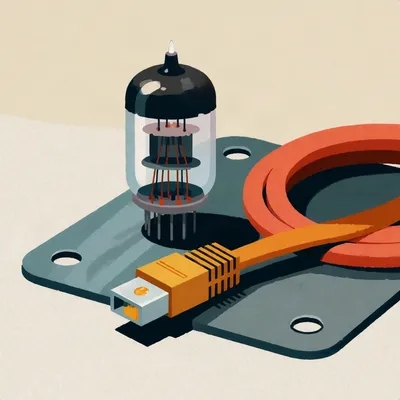
#6512: Build Servers Never Actually Build Anything
A Woodpecker CI server runs entirely as an idle control plane using roughly 100 MB of RAM while external agents handle compilation.

#6447: Why Uptime Math and Retry Storms Break Cloud Services
Between April and August 2026, GitHub's monthly commits doubled from 1.4 billion to 2.9 billion, exposing massive architectural coupling.
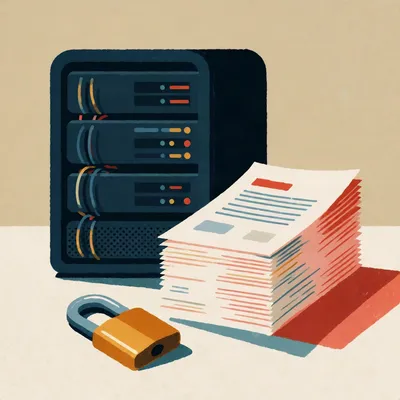
#6431: Why Four Cloud Data Warehouses Coexist
Despite scrapers counting nearly 200,000 users, Snowflake has just over 13,000 paying customers who average roughly $340,000 a year each.

#6430: Why Data Pipeline Tools Cost Billions With So Few Engineers
Despite a multi-billion-dollar market for ETL tools, data engineers make up just 1.9 percent of developers worldwide.

#6429: Why Postgres Needs an Analytical Partner
Under roughly five terabytes of analytical data, a single configured machine often beats a distributed cluster on both cost and latency.
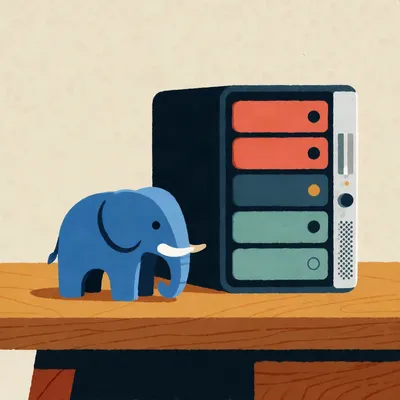
#6428: Self-Hosting an Analytical Stack Around Postgres
A complete reporting pipeline with Kafka and Debezium can run on just five gigabytes of RAM in Docker.

#6427: Why Database Replication Is Not Archival
Postgres replication slots default to retaining an unlimited volume of write-ahead logs, meaning a stalled pipeline can crash its source database.

#6420: Programmable Email Routing with Cloudflare Workers
Cloudflare Email Workers offer three core verbs—forward, reply, reject—operating before delivery to bounce spam at the edge.
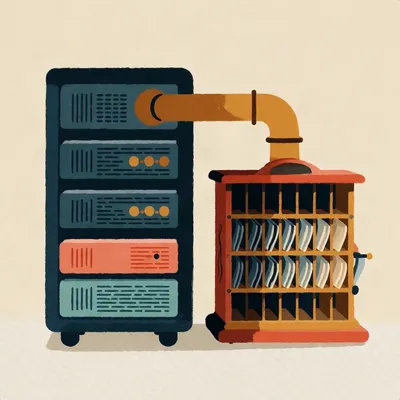
#6394: Why API Email Still Relies on SMTP
Connection pooling cut Mailgun's delivery time from ninety seconds down to roughly six hundred milliseconds per message.

#6383: Choosing Class Breaks for Skewed Price Data
In one dimension, k-means clustering avoids random restarts entirely and runs in polynomial time via dynamic programming.

#6369: The Most Popular GPUs - Today's Cloud Demand
RunPod charges about $1.34 an hour for serverless RTX 4090 access, while a community pod runs for roughly 34 cents.

#6348: Splitting AI Workflows Between Local and Cloud
A laptop failed a single video sampling step in 80 minutes, while paid cloud endpoints rendered clips in under 90 seconds for 40 cents.
#6334: Why Fast Backups Trigger Rate Limits
Listing files on Google Drive costs 100 quota units per call, while downloading costs 200, making folder traversals surprisingly expensive.

#6331: Backing Up Gmail with Got Your Back
Got Your Back pulls Gmail into individual local EML files using the Gmail API, enabling incremental backups that Google Takeout cannot do.

#6314: Why Forgotten Runpod Workloads Keep Billing
Runpod stops pods at a zero balance, but attached volume disks double in cost when stopped and unattached pods vanish entirely.

#6312: Choosing Between Modal, RunPod, and Vast.ai
RunPod lists an H100 SXM at $3.99 an hour on Secure Cloud, but its Community marketplace drops it to $2.69.

#6295: When Splitting Serverless Apps Earns Its Keep
Modal apps enforce atomic deployment, meaning all grouped functions redeploy in place together while scaling independently.

#6257: Where Your Prompts Actually Go
Selecting US-only inference on Anthropic's direct API incurs a 1.1x multiplier across token categories, while global routing is the standard rate.

#6205: Where Should Your Notebook Actually Run?
Colab's free GPU comes with a 12-hour wall and hidden secrets in your saved outputs. Here's where notebooks should actually live.

#6183: Private Podcast Feeds: Tokens, Buckets, and Basic Auth
How do you keep a podcast feed for four people away from everyone else? Tokens, buckets, and the auth podcast apps barely support.
#6170: One Endpoint, Many Boxes: Local LLM Routing
A LiteLLM-style proxy can fail over between your own GPU boxes and the cloud — but it can't see your VRAM.