
Taxonomy and Classification
112 episodes
#6206: Monte Carlo: How Random Guesses Solve Impossible Problems
From solitaire at Los Alamos to neutron diffusion, why rolling dice beats careful grids — and how many runs is enough.
#6109: Anteater Biology, With an Actual Anteater
A donkey and a sloth finally interview their anteater producer about tongues, claws, and sixty million years of family resemblance.
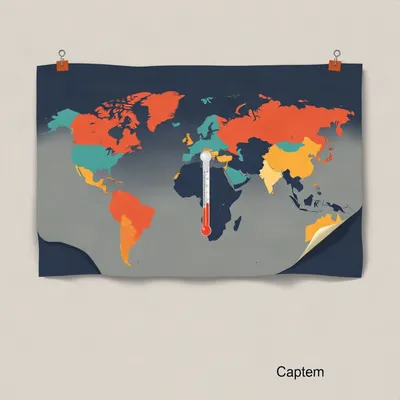
#6053: Köppen's 30 Boxes vs. a Changing Planet
Köppen squeezes the planet into 30 boxes — and the hottest places can't change class, even as they heat. What the map hides.
#6016: What 70 Billion Parameters Actually Means
A single artificial neuron, built from scratch — then the hard part: does that neuron analogy still describe a real transformer?
#5935: How Pressure Actually Bonds VHB Tape
Fifteen pounds of force isn't fifteen psi of pressure. That gap is why your whiteboard might fall off the wall.
#5925: Plus Codes, Geohash, and the Open Addressing Gap
Google's Plus Codes promise offline, self-contained location — but the shortened form quietly reintroduces a dependency the standard was designed t...
#5891: Four Ways Humanity Kept Records for 1,200 Years
The Shōsōin never burned. The Vatican lost a third of its archive. The Geniza kept 400,000 fragments by accident. Four preservation strategies.
#5887: Gears That Did Calculus: Mechanical Computers
From the Antikythera mechanism to battleship fire control, how gears and cams did real math — and why the approach never fully died.
#5876: Sloth Leaf Medicine: What's Real and What Isn't
A serious look at sloth leaf medicine — the rotation, the Cecropia pharmacology, and the fur microbiome nobody was told about.
#5797: How Many Nuclear Tests Have There Really Been?
Three credible sources, three different numbers — and the gap isn't new explosions. It's what each one decided to count.

#5737: Why Measuring a $4 Spudger Tip Is Weirdly Hard
A listener wants to put a number on his spudger's tip thickness. Turns out that's a real metrology problem.
#5732: Why You Own 40 Unlabeled Power Supplies
Three standards bodies tried to fix DC connectors. The box of mystery bricks in your closet is the result.
#5708: The Islands Between Two Oceans
Fifteen obscure sub-Antarctic islands, the governments that run them, and the penguin who holds a noble title.
#5600: Alien Abductions: 4 Million Claims, Zero Evidence
Nearly four million Americans say they've been abducted. Not one has produced a lab-verifiable artifact. What's going on?
#5565: Inside the Factory: Why Plant Tours Are Addictive
Boeing, Ford, and Shenzhen's Future Factory: why watching a bottling line is mesmerizing, and where to find real golden tickets.
#5337: The World's Weirdest Museums: Poop, Parasites, and Broken Hearts
From a Poozeum in Arizona to Tokyo's parasite museum, we explore the world's most oddly specific collections and the obsession behind them.
#5322: How New Is the Air You're Breathing?
A sealed air pillow from AliExpress leads to a genuinely strange question: how old are the molecules you're breathing right now?
#5279: Heavy Metals: Real Syndromes vs. Online Noise
Lead, arsenic, mercury, cadmium — each metal has its own syndrome, route, and treatment. The vague online version misses all of it.
#5209: Sensitivity, Specificity & the Numbers Doctors Use
A field guide to the numbers in a medical paper — what sensitivity, effect size, and risk ratio actually answer, and when they mislead.

#5170: How Many Languages Sit in the Middle?
Roughly 250 of the world's 7,000 languages have 100,000+ speakers. What's it like living in one of them?
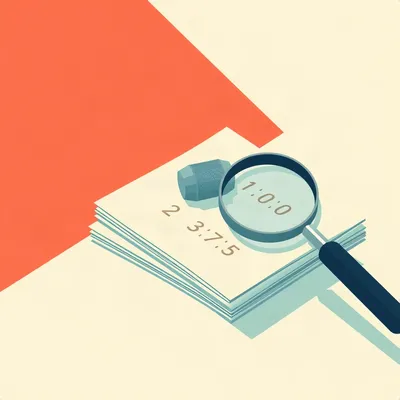
#5072: Tiny Raised Numbers: Why Embossing Is a Mold, Not a Mark
Why those tiny raised numbers on plastic parts are molded in, not stamped on — and what that means for aftermarket marking.
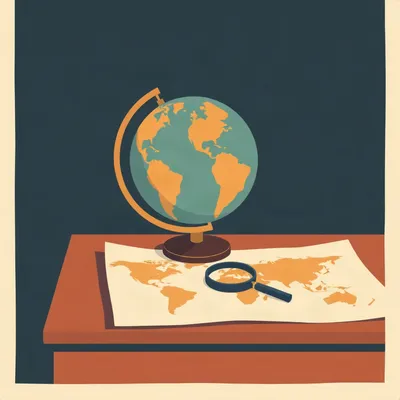
#5035: The Map That Lied: Africa vs. Mercator
The UN just voted 164-1 to correct a 450-year-old map distortion. Here's why Mercator still shapes how we see the world.
#5029: How Much Tuna Is Actually Safe to Eat?
We break down the science of mercury in tuna, the real symptoms of toxicity, and whether canned fish can actually hurt you.
#5009: How the Brussels Sprout Got a Makeover
The vegetable your grandmother served isn't the same one on your plate today. Here's why.