Daniel wrote in about a friend of his in the U.S. who's been caught in a fraud loop that won't quit. The friend's Social Security number was compromised in a breach, they thought it was resolved, and then the credit card fraud started. They cancel one card, a new one gets hit within weeks. Cancel that, it happens again. Daniel's question is whether the credit card model itself is broken, whether virtual cards actually fix anything, and what a genuinely viable best practice looks like when the underlying identity is already burned.

That cycle is maddening because it feels like you're the one doing something wrong. You cancel the card, you do everything the bank tells you, and the fraud comes right back. The friend's not failing at security. The system is failing them.
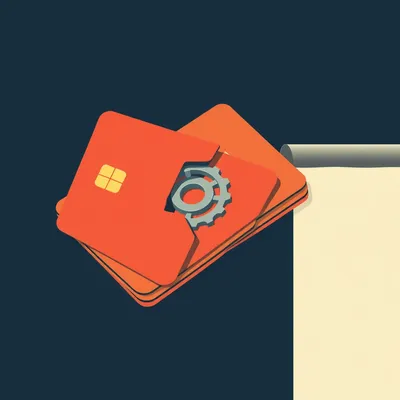
And the thing that makes this particularly nasty is the two-layer problem Daniel's pointing at. Layer one is the SSN compromise, which is basically irreversible. Once someone has your name, Social Security number, date of birth, and address, they can pass identity verification checks at a whole range of institutions. Layer two is the credit card credential itself, a sixteen-digit number that, once stolen, works anywhere until it's canceled. And those two layers feed each other.
Right. The SSN compromise is what lets the attacker keep coming back. You cancel the card, but the attacker still has enough identity material to call customer support, pass the knowledge-based authentication questions, and either request a replacement card be sent to a new address or open an entirely new account. The credit card number is the symptom. The SSN is the disease.
So let's pull on the credit card layer specifically, because that's where Daniel's question lands hardest. What is the actual design flaw?
The Primary Account Number, the PAN, the sixteen-digit string embossed on the front of your card. It is simultaneously the identifier and the authenticator. It tells the network who you are, and possessing it is treated as proof that you're authorized to transact. That's a single-point-of-failure design from the nineteen seventies that we've never moved away from. Every merchant you hand that number to becomes a potential rogue actor. The cashier at a restaurant, the payment processor's database, the subscription service that stores it in plain text because their backend engineer had a bad day. One breach anywhere in that chain, and the credential is burned for everyone.
It's the equivalent of using the same password on every website and then giving that password to every cashier you meet.
That's exactly what it is. And the scale of this is staggering. The Target breach in twenty thirteen exposed forty million credit and debit card numbers. Home Depot in twenty fourteen, fifty six million. And those are just the ones that made headlines. The Equifax breach in twenty seventeen exposed the Social Security numbers of a hundred and forty seven million Americans, which is what created the identity-compromise layer that Daniel's friend is now dealing with. Once somebody has both your SSN and your card number, they don't need to hack anything. They just need to impersonate you.
So Daniel's first instinct was to recommend virtual cards, like what Privacy dot com offers. Walk through how those work and where they actually help.
Privacy dot com lets you generate a virtual card number that's linked to your real bank account but is locked to a specific merchant. You can set a per-transaction limit, a monthly limit, or a total spend limit. So you create a card that only works at Netflix, with a fifteen dollar monthly cap. If Netflix gets breached and that virtual card number leaks, the attacker can't use it at Amazon, can't use it at a gas station, can't use it anywhere else. The blast radius is contained to that one merchant relationship. And you can pause or delete that virtual card with a tap, without affecting any of your other virtual cards or your real underlying card.
Which is useful. But Daniel's already spotted the limitation. If the virtual card itself gets intercepted, it can still be drained up to its limit. And if the underlying identity is compromised, the attacker can still open new accounts entirely outside the virtual card ecosystem.
The virtual card protects the funding source, but it doesn't protect the identity. If someone has your SSN, they can apply for a new credit card in your name at a completely different bank, and Privacy dot com never enters the picture. They can also social-engineer their way into your existing accounts. Call up your bank, provide your SSN and address and mother's maiden name, and say they lost their card. The bank issues a new one. The virtual card you carefully set up is sitting there untouched while a physical card is on its way to the attacker's drop address.
The virtual card is a blast-radius reducer, not a fraud eliminator. It shrinks the damage from "they can empty my whole account" to "they can maybe drain the Netflix budget this month."
And that's worth doing. It's worth doing. But it doesn't solve the structural problem, which is that the credential model itself treats a static number as proof of authorization. The industry's actual answer to this has been tokenization, specifically network tokens from Visa and Mastercard. And it's worth understanding what those do and don't fix.
Let's go there. What's a network token?
When you add your card to Apple Pay or when a merchant implements Visa's token service, the merchant never sees your real sixteen-digit PAN. Instead, Visa or Mastercard generates a merchant-specific token, a different number that substitutes for your real card number in that merchant's system. The token is tied to that merchant, that device, or that transaction context. If the merchant gets breached, the attacker gets tokens, not real card numbers. And tokens can be deactivated by the network without forcing you to get a new physical card.
So the merchant stores a number that only works for them, and if it leaks, Visa flips a switch and that token stops working. That sounds closer to a fix.
It's better. But the tokens are still long-lived credentials. They sit in the merchant's token vault, sometimes for years, because the merchant needs to process recurring charges, refunds, and chargebacks. If that vault is breached, the tokens can be replayed. The twenty eighteen Ticketmaster breach is a good example. A third-party chatbot vendor on Ticketmaster's site was compromised, and attackers extracted payment tokens that could be used to make fraudulent purchases through Ticketmaster's payment flow. The tokens didn't work anywhere else, but they worked on Ticketmaster, and that was enough.
So it's the same blast-radius problem in a nicer suit. The token limits the damage to one merchant, but it's still a persistent credential. Anyone who steals it can transact within that merchant's ecosystem until the token is revoked.
And revocation isn't instant. The fraud detection systems have to notice the anomalous pattern, flag it, and trigger the token revocation. In that window, the attacker can do damage. It's a much smaller window than with a raw PAN, but it's not zero.
Which brings us to the idea Daniel raised. What if the credential were truly ephemeral? A one-time-use authorization that self-destructs after the transaction clears. Why don't we have that?
Because the entire credit card infrastructure is built on the assumption of a persistent identifier. Authorization, settlement, chargebacks, recurring billing, refunds. All of it assumes there's a stable account number that transactions can be tied to over time. Let's take recurring billing. Netflix charges you monthly. With today's model, they store a token or a PAN, and each month they submit a new charge against that same credential. If the credential were ephemeral, they'd need a fresh authorization from you for every single charge. You'd get a push notification every month asking you to approve your Netflix payment. Most subscription businesses would consider that catastrophic for retention.
Every monthly charge becomes a moment where the customer might reconsider. The friction is the point, from a security perspective, but it's also the thing the subscription economy is built on avoiding.
And refunds are even messier. When you return something to a store, the refund needs to route back to the original payment credential. If that credential no longer exists because it was ephemeral and self-destructed after the authorization, where does the money go? You'd need a separate refund routing system that maps ephemeral transaction IDs back to the underlying account, which adds complexity to every layer of the payment stack.
Chargebacks too, I'd imagine. The whole dispute process assumes a persistent transaction record tied to a persistent account.
Right. The card networks have a ninety to a hundred and twenty day chargeback window. The merchant needs to be able to reference the original transaction and the original credential. If the credential evaporated after authorization, the dispute process would need to be completely rearchitected.
So the system isn't just casually attached to persistent credentials. It's structurally dependent on them.
Every layer of the payments stack assumes persistence. The authorization layer, the settlement layer, the dispute layer, the loyalty and rewards layer. Changing any one of those breaks the others. It's what you once described as a stack of compromises where each layer solves a problem and creates new ones.
I stand by that. And it's why the closest thing we have to ephemeral credentials is something like Apple Pay's approach, which is clever but still not truly per-transaction.
Apple Pay uses a Device Account Number, a DAN, which is a token stored in the phone's Secure Element. The merchant never sees your real PAN, and every transaction requires biometric authentication, your face or your fingerprint. The DAN is persistent per device, so it's not ephemeral, but the combination of the token plus the biometric auth plus the dynamic security code generated per transaction gets reasonably close. If someone steals your phone, they can't use Apple Pay because they don't have your face or fingerprint. If a merchant is breached, they only have a token that's useless elsewhere.
But the DAN is still persistent. If someone compromises the Secure Element itself or finds an exploit in the token generation process, the credential can be extracted and replayed. Unlikely, but not impossible.
And that's the pattern with every mitigation. We're layering defenses on top of a fundamentally flawed credential model. The EU took a different approach with PSD Two, the Payment Services Directive, which mandates Strong Customer Authentication for most online payments. Two-factor authentication, something you know plus something you have or something you are. That cut fraud rates by something like thirty to forty percent in Europe. But it didn't change the credential model. The card number is still static. It can still be stolen. It's just harder to use without the second factor.
And the U.S. hasn't adopted anything close to PSD Two, which means the friend Daniel's describing is operating in a regulatory environment that's even more permissive for fraudsters.
The U.S. is still largely signature-based or no-authentication for card-not-present transactions. Chip and PIN took decades to roll out here. Strong Customer Authentication is barely on the radar of most U.S. issuers. So the friend is dealing with the worst of both worlds. A permanently compromised identity, a static credential model, and a regulatory framework that doesn't require meaningful authentication.
So given all of that, what does a realistic best practice actually look like? Daniel's asking for viable recommendations, not a wish list for a payment system that doesn't exist.
The first thing, and I cannot stress this enough, is to freeze credit at all three bureaus. Equifax, Experian, and TransUnion. This has been free under federal law since twenty eighteen. A credit freeze prevents anyone, including you, from opening a new credit account until the freeze is lifted. It doesn't affect your existing accounts, it doesn't affect your credit score, and you can temporarily lift it with a PIN when you actually need to apply for something. For someone with a compromised SSN, this is the single most important step. It closes the primary vector for recurring fraud, which is the attacker opening new accounts in your name.
And most people don't realize that freezing your credit is different from a fraud alert. A fraud alert just tells creditors to verify your identity before opening an account. It's a request, not a block. A freeze is a hard stop.
Correct. And you should also freeze your ChexSystems report, which is what banks use when you open a checking or savings account. If the attacker can't open new credit cards, they might try to open a bank account in your name and use it for check fraud or money laundering. ChexSystems lets you place a security freeze just like the credit bureaus.
So step one is freeze everything. Step two?
Use virtual cards for all online transactions, but with the clear understanding that they're a mitigation, not a cure. Set low per-merchant limits. If a service costs twelve dollars a month, set the limit at fifteen. Enable push notifications for every transaction so you see charges in real time. The goal is to shrink the window between fraud occurring and you noticing it. And for anything high-risk, a new merchant you're trying for the first time, a free trial that you suspect will be hard to cancel, use a virtual card with a one-dollar limit or a single-use card that burns after the first charge.
The burner card approach. Treat every online transaction like it's happening in a sketchy alley.
That's honestly the right mindset. Assume every merchant will eventually be breached. Assume every credential you hand over will eventually be stolen. The question is just how much damage that theft can do.
And step three?
Enable transaction alerts on every single account, and set them to push notifications, not email. Email gets filtered, delayed, ignored. A push notification pops up on your lock screen the moment the charge authorizes. If you see a charge you don't recognize, you can call the bank within minutes, not days. The faster you report fraud, the easier the dispute process is, and the less likely you are to hit the liability limits.
The liability limits are worth mentioning here. Under U.S. federal law, if you report a lost or stolen card before any fraudulent charges occur, you're not responsible for anything. If you report within two business days of learning about the loss or theft, your liability is capped at fifty dollars. If you wait longer than that but still report within sixty days of receiving your statement, your liability could be up to five hundred dollars. After sixty days, you could be on the hook for everything.
And that's for consumer credit cards. Debit cards have a different, less favorable timeline. So the alerts aren't just convenient. They're financially protective.
Daniel also mentioned something interesting in his prompt, the idea that even if you use virtual cards, anyone who intercepts the virtual card can make it unusable. There's a recovery mechanism, but it's incomplete. And I think he's right. The recovery is that you delete the virtual card and create a new one. But you still have to update every legitimate service that was using the old virtual card. The recovery is manual and tedious.
And that's the friction that the industry hasn't solved. If you have thirty virtual cards and one gets compromised, you have to go through your accounts and figure out which ones were tied to that card, update them one by one. There's no automated credential rotation for consumers. In the enterprise world, you have secrets management tools that rotate API keys automatically. Consumers get a spreadsheet and an afternoon of frustration.
So if we zoom out, the honest answer to Daniel's question is that the credit card model has a fundamental design flaw, and the available solutions are all damage containment, not prevention. Freeze your credit, use virtual cards, enable alerts, treat every credential as temporary. But none of that fixes the underlying problem.
The underlying problem is that the PAN is both identifier and authenticator, and that's not changing anytime soon. The industry has too much infrastructure built on that assumption. What could change, and what I think will change, is the regulatory environment. The EU's PSD Two shows that mandating strong authentication actually works. If the U.S. adopted something similar, if every online transaction required a second factor, the fraud cycle Daniel's friend is experiencing would be much harder to sustain.
You'd still have the SSN problem. The identity compromise doesn't go away with better authentication at the payment layer. But it would raise the cost for attackers. Right now, the cost of committing credit card fraud with a stolen SSN and a stolen PAN is essentially zero. You just type in the numbers. Adding a second factor makes that harder.
And that's really the goal. You can't make fraud impossible. You can make it expensive enough that attackers move on to easier targets. Right now, Daniel's friend is an easy target because the credentials are static and the identity is compromised. The best we can do is add enough friction that the attacker decides it's not worth the effort.
There's one more thing I want to touch on, which is the psychological toll of this cycle. Daniel's friend cancels a card, gets a new one, the fraud happens again. That breeds a kind of learned helplessness. You start to feel like nothing you do matters, like the system is rigged against you. And in a real sense, it is. The system was designed in an era when the threat model was completely different. It was designed for a world where you handed your card to a trusted merchant and the biggest risk was someone stealing your physical wallet.
The clinical analogy would be treating a chronic condition where the underlying pathology can't be cured, only managed. You don't tell the patient they're failing because the disease keeps flaring up. You adjust the management plan, you add layers of protection, and you're honest about the limitations. That's what we're doing here. The system is the pathology. The mitigations are the management plan.
And the management plan works, within its limits. Freeze your credit, use virtual cards, enable alerts. You'll still get fraud attempts, but they'll be contained, and you'll catch them faster. That's not a satisfying answer, but it's an honest one.
The satisfying answer would be a payment system designed from scratch today. What would that look like? I think it would look like ephemeral credentials by default. Every transaction generates a unique authorization token that's cryptographically tied to that specific merchant, amount, and timestamp. Recurring billing would be handled through a pre-authorized token exchange where the merchant requests a new ephemeral token for each charge, and you approve the ongoing relationship once, not the individual charges. Refunds would route through transaction-level identifiers rather than account-level credentials.
And identity would be decoupled from the payment credential entirely. Your SSN wouldn't be the skeleton key that unlocks every financial account you have. We'd have something closer to a decentralized identity model where you prove specific attributes, I am over eighteen, I am a U.S. resident, I am authorized to open this account, without revealing the underlying identity documents.
That's the direction the more thoughtful parts of the industry are heading. But the infrastructure is decades away from that. In the meantime, we manage the condition.
So to bring it back to Daniel's friend, the practical recommendations are freeze everything, use virtual cards with low limits, enable push alerts on every account, and treat every credit card number as a temporary credential that will eventually be compromised. It's not a cure. It's containment. But containment is better than the cycle.
And one more thing. Check your credit reports regularly, not just your credit score. Annual credit report dot com is still the official free site. Look for accounts you don't recognize, inquiries you didn't initiate, addresses that aren't yours. The earlier you catch identity fraud, the easier it is to unwind. The friend should also consider an identity theft protection service that monitors the dark web for their SSN and alerts them if it shows up in new breaches. It doesn't prevent fraud, but it shrinks the detection window.
The detection window is everything. The difference between catching fraud in hours versus catching it in weeks is the difference between a five minute phone call with your bank and a months-long battle to recover stolen funds and repair your credit.
And on that note, if you do find fraudulent accounts, file an identity theft report with the FTC at identity theft dot gov. That report is the document you'll need to dispute fraudulent accounts with creditors and credit bureaus. It creates a paper trail that establishes you as the victim, not the debtor.
Daniel, I think your instinct was right. The credit card model is fundamentally flawed, and virtual cards are a partial mitigation, not a solution. The honest answer is that until the industry moves toward ephemeral credentials and decoupled identity, the best we can do is contain the damage and push for regulatory changes like PSD Two that make fraud more expensive for attackers. Your friend isn't failing. The system is.
And if you're listening and you haven't frozen your credit yet, do it today. It's free, it takes about twenty minutes across the three bureaus, and it's the single most effective thing you can do to prevent new account fraud. Everything else is layers on top of that.
What would a payment system look like if it were designed from scratch today? Would we even have sixteen-digit card numbers? Would we have chargebacks as we know them? I suspect the answer is no on all counts. And that tells you everything about how much of what we accept as normal is just legacy inertia.
Next time, we'll dig into another angle on the security conversation. Maybe the role of biometrics or where decentralized identity is actually going. Thanks to our producer Hilbert Flumingtop for keeping this show running.
This has been My Weird Prompts. If you want to dig into the show notes or send us your own question, visit my weird prompts dot com.
We'll be back soon.