
Computing
Non-AI computing: networks, servers, hardware, software engineering, and digital security and privacy.
#5748: What's Actually Inside an eSIM Adapter
An eSIM adapter isn't a converter — it's a eUICC chip in a SIM shell. Here's the silicon, the certificates, and the open source tools underneath.

#5746: Why Power Tool Cords Are So Short
Nobody regulates that stubby cord — it's container math. And making it longer can actually make your tool more dangerous.

#5743: Why Claude Keeps Saying "Prior Art
Daniel noticed "prior art" creeping into his Claude reports. Is it wrong — or just a prestige term the model learned to love?
#5739: Why Your Vacuum Is Legally Weaker Than a Shop Vac
A toddler, a Bosch, and an EU power cap: why the consumer vacuum in your closet is legally weaker than the dust extractor at the tool shop.
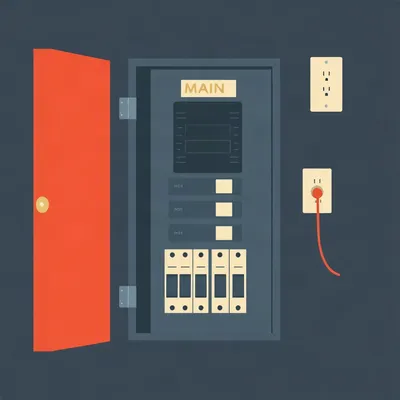
#5735: The Breaker Protects the Wire, Not You
How service size, load calculations, and the 80% rule actually determine what your outlets can deliver.
#5734: USB Amps: What Actually Happens When You Plug In
Your device pulls current, it doesn't get pushed — and that changes everything about picking USB adapters.
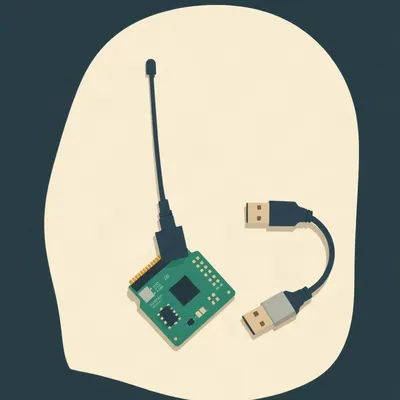
#5733: Why Your Raspberry Pi's Wi-Fi Keeps Dropping
The antenna on your Pi isn't the problem — where it sits is. What actually keeps an SBC link alive.
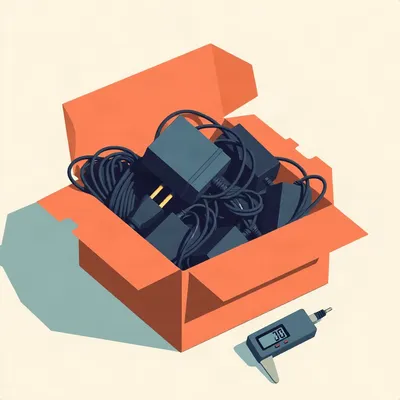
#5732: Why You Own 40 Unlabeled Power Supplies
Three standards bodies tried to fix DC connectors. The box of mystery bricks in your closet is the result.
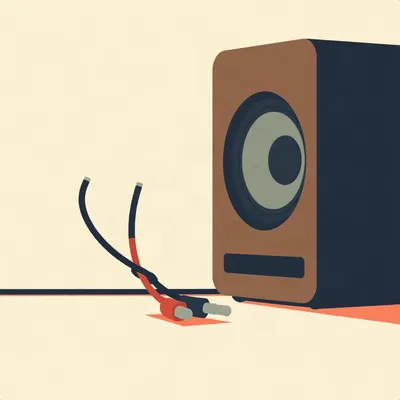
#5721: What's the Red and Black Speaker Cable Actually Called?
It's called zip cord — and the gauge you need depends entirely on current, not the 300V printed on the jacket.
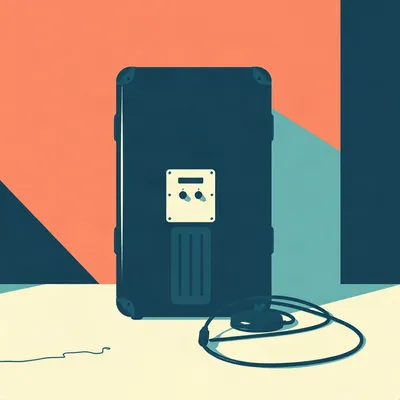
#5720: Active, Passive, and the Speaker That Lied to Daniel
A rented PA speaker turns out to be mislabeled, and untangling why reveals the real difference between active and passive — plus what mic and line ...
#5718: How Far Can You Run RCA, XLR, and 3.5mm Cables?
Published cable-length advice ranges from 3 meters to 200 feet. The physics explains why — and why the cable isn't the variable that matters.

#5707: Epoxy vs Superglue: The Tooling Gap Nobody Talks About
Epoxy beats superglue on every measurable axis — so why does everyone still grab the tube? The answer is metering, and the tools that fix it.

#5705: Tape Isn't a Pool: How LTO Really Works on Linux
Tape on Linux needs no driver — but it also doesn't behave like ZFS. Here's how LTO really integrates, and why "pool" means something else.

#5704: Superglue: One Drop, Two Reactions, Five Mistakes
One part, no mixing, seconds to set — and most of us have been using it wrong since we were nine.

#5700: Did the Internet's Pioneers Know What They Were Building?
Vint Cerf says they didn't know — and they did. How early internet subculture formed, where it lived, and whether it survived.
#5697: Decision Models That Return Probabilities, Not Text
A new class of model skips text generation entirely and returns calibrated probabilities in one forward pass. Here's what that changes.
#5681: Why Your Volume Knob Can't Find the Right Spot
Your phone has 15 volume steps. More steps won't fix the real problem — and the math explains why.
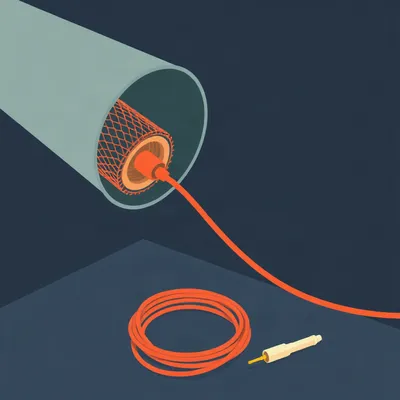
#5665: Fiber Through the Conduit: Bends, Dust, and Pull Socks
A failed Ethernet crimp caps a link at 100 megabit. Can the same conduit carry 10GBASE-SR fiber instead?
#5664: Rack Dreams: Getting Display and USB Across the Room
Display over fiber is the easy part. USB is where it gets annoying — and the single-UPS dream doesn't quite close.

#5655: Organizing the Electronics Repair Bench
Why phone repair benches resist order, and the trays, lights, and magnification that fix it.