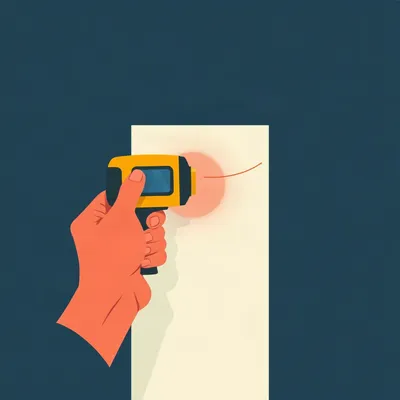
Daniel's prompt this week starts with a conversation he had with Hannah before drilling into the safe room wall. She asked why he wanted the stud finder, he said to scan for AC, and that led to a whole back and forth about what actually makes alternating current dangerous. His working model was that line voltage kills you while low voltage DC generally doesn't. And there was a thing his science teacher told him years ago, that in most electrocutions the muscles involuntarily contract and grasp the live conductor, creating what the teacher called a ratcheting mechanism for shocks. Then Hannah dropped the complication. Years ago she was in a building with a poorly laid out electrical system, and she briefly held a live wire. Nothing happened. She survived. So she asked Daniel, if AC is so lethal, why am I still here. His guess was luck and low conductivity, but he admits that was pure speculation. He wants us to separate the physics from the folklore, and pull out some actionable safety clues for anyone drilling into walls or working near power sources.
So that's the question. What actually happens when AC meets a human body, and why do some people walk away.

The first thing to straighten out is that voltage is not what kills you. Current is what does the damage. Voltage is just the pressure that pushes current through resistance. A fifty thousand volt static shock from a doorknob can be completely harmless because the current is microscopic and it's over in nanoseconds. A hundred twenty volts AC from a wall outlet can kill you because the current is sustained and it's flowing through tissue. So the framing of AC versus DC, line voltage versus low voltage, it's a shorthand. The actual question is always how much current went through what path for how long.
Which is why Hannah's story is not a contradiction. It's a data point.
And the numbers are surprisingly well established. You can perceive current somewhere around one milliamp. It feels like a tingle. Around ten milliamps it becomes painful. Then there's this threshold called let-go, which is the maximum current where you can still voluntarily release the conductor. For sixty hertz AC it's roughly six to nine milliamps for adult women and nine to sixteen for adult men, depending on contact area. Above that, your muscles lock up and you cannot let go. And if you get somewhere around fifty to a hundred milliamps through the heart, you're in ventricular fibrillation territory. The heart stops pumping effectively, and that's the usual cause of death in electrocution.
So the danger zone is a pretty narrow band. Ten times the tingle and you're dead.
And the path matters enormously. The body is not a uniform conductor. Skin is the big resistor. Dry, calloused skin can present a hundred thousand ohms or more. Wet or broken skin can drop to around a thousand ohms. That's a hundredfold change from the same person on the same day. Once you get past the skin, the internal resistance is dominated by the path the current takes. Hand to hand crosses the chest and the heart. Hand to foot on the same side can miss the heart entirely.
So the body is a circuit, and the circuit diagram is different every time.
And that's before we even get to the AC versus DC distinction. The reason AC at fifty or sixty hertz is nastier than DC at the same voltage is partly about what it does to muscle. DC gives you a single strong contraction. It can throw you clear. AC at mains frequency causes tetanic contraction, a sustained spasm. Your muscles are being told to contract fifty or sixty times a second, and they never get the signal to relax. So the hand clenches and stays clenched. That's the basis of the grasp reflex claim.
Daniel's science teacher called it a ratcheting mechanism. Is that right?
Directionally, yes. Mechanistically, it's not a ratchet. What's actually happening is that the flexor muscles in the hand, the ones that close your grip, are stronger than the extensor muscles, the ones that open it. When AC causes tetanic contraction, both sets of muscles are being stimulated, but the flexors win. The hand closes around the conductor and stays closed. It's not that the electricity is ratcheting you tighter. It's that your own grip strength is doing the holding, and you can't override it.
So the wire isn't grabbing you. You're grabbing the wire, and your hand has stopped taking orders.
That's the cleanest way to put it. And there's a feedback loop that makes it worse. The longer you're in contact, the more you sweat at the contact point, and the tissue starts to break down. Both of those things lower the resistance. Lower resistance means more current. More current means more muscle contraction and more heating. So a contact that starts out borderline can escalate into something lethal over seconds.
Which is why duration is not a minor variable. It's the thing that turns a bad moment into a fatality.
The let-go threshold was measured systematically by a researcher named Charles Dalziel back in the nineteen forties and fifties. He ran experiments on volunteers, mostly students and colleagues, and mapped out the current levels where people could no longer release a conductor. The curves are still used today. The numbers I gave earlier come from that work. And the frequency matters. Fifty and sixty hertz sit right in the range that interferes with cardiac rhythm. The heart has its own electrical signaling, and mains frequency is close enough to disrupt it.
So it's not just that AC causes muscle spasm. It's that the frequency is tuned to the heart's own wiring.
That's the unsettling part. Higher frequencies are actually less dangerous per milliamp. Some medical devices use frequencies in the kilohertz range precisely because they don't interfere with cardiac pacing the same way. But your wall outlet is at sixty hertz in the US, fifty in Europe, and that's the sweet spot for causing fibrillation.
And low voltage DC? Daniel's claim was that it generally can't kill you.
Below roughly fifty or sixty volts, DC typically can't push enough current through dry skin to reach the dangerous range. The skin resistance acts as a natural limiter. A twelve volt car battery, for example, won't drive lethal current through dry skin. A car battery can deliver hundreds of amps. If you bridge the terminals with something metal, like a ring or a tool, you can get severe burns. And if the skin is wet or broken, the resistance drops enough that even low voltage can push current through tissue. There are documented cases of people being killed by forty two volts DC in wet conditions.
So the distinction is real but it's not a guarantee. It's a probability.
A cliff edge, not a slope. Most exposures are survivable. The ones that aren't are often a matter of milliseconds and millimeters. Which brings us back to Hannah.
Right. She held a live wire briefly and nothing happened. Daniel guessed luck and low conductivity. Let's actually work through the variables.
The first one is duration. She said briefly. That's the most important word in her story. If the contact was a fraction of a second, the feedback loop never got going. No time for sweating, no time for skin breakdown, no time for the current to ramp up. The current she experienced was whatever the initial resistance allowed, and then it stopped.
Second variable, contact area and pressure. A light touch is not the same as a firm grip. If she brushed the wire or held it loosely, the contact resistance would have been high. High resistance means low current.
Third, the path. We don't know what else she was touching. If the current went from her hand to her feet and through the floor, it might have crossed the chest. But if she was standing on something insulating, or if the current found a local path to ground through the same hand, it might have missed the heart entirely. The path is everything.
Fourth, skin condition. If her hands were dry, and if she does the kind of work that builds calluses, her skin resistance could have been in the hundreds of thousands of ohms. At a hundred twenty volts, a hundred thousand ohms gives you about one point two milliamps. That's a tingle. Maybe a bit more if the resistance was lower, but still nowhere near the let-go threshold.
And fifth, there's a random factor. The cardiac cycle has a vulnerable period, the T wave, when the heart is most susceptible to induced fibrillation. A shock that lands during that window is far more likely to be fatal than one that lands elsewhere. It's a window of maybe a hundred milliseconds in every heartbeat. Hannah's contact could have missed it entirely. That's the luck Daniel was talking about, but it's not mystical. It's the phase of a waveform.
So she probably had high resistance, a short contact, a path that missed the heart, and timing that didn't land on the T wave. Any one of those could have saved her. She had all four.
And the poorly laid out electrical system is another layer. In a building with grounding faults, the neutral and ground can be at different potentials, or a hot wire can be accessible where it shouldn't be. But the actual voltage gradient across Hannah's body depends on what she was touching and the impedance of the path to ground. She may have been isolated enough that only a fraction of the available voltage dropped across her.
Which is the thing people miss about electricity. The voltage is there, but the circuit has to be completed. If you're not a good path to ground, you don't get the full dose.
The same wire could kill her on a different day. Wet hands, standing in a puddle, touching a grounded pipe with the other hand, and suddenly the path is hand to hand across the chest with low resistance. That's not a different wire. That's the same wire with a different circuit diagram.
Which is why the safety practices electricians use are all about breaking the path or limiting the duration. The one hand rule. You work with one hand in your pocket or behind your back when working live, so that if you do touch something, the current doesn't have a path across your chest. Insulated boots and mats raise the resistance between you and ground. Lockout tagout makes sure the circuit is de-energized before you touch it at all.
The one hand rule is the direct response to the grasp reflex. If you touch a live conductor with both hands, and the current locks your grip, you're stuck. Both hands are on the conductor, the path is hand to hand across the chest, and the current is increasing as your skin breaks down. That's the worst case scenario. One hand means the path is hand to foot at worst, and you might still be able to pull away.
So for Daniel drilling into the safe room wall, what's the actual practical guidance?
The stud finder with AC detection is the right instinct. Residential wiring runs at a hundred twenty volts in the US, two thirty in Europe. Both are well above the thresholds for let-go and fibrillation. The wires are usually routed through studs at predictable heights, outlet height, switch height, but not always. Renovations happen, people do weird things, and a wire can end up anywhere. A non-contact voltage tester or a stud finder with AC detection senses the electric field around an energized conductor. It can find a live wire behind drywall without you touching it.
And the key point is that you scan before you drill, not after you hit something.
The tool only helps if you use it. It's not a guarantee either. A wire that's not energized at the moment you scan won't show up. A wire deeper in the wall than the detector's range won't show up. So the tool reduces the risk, it doesn't eliminate it. The backup is knowing where wires should be, drilling shallow, and stopping if you feel resistance that isn't wood.
There's a broader point here about how we think about electrical risk. The statistics are strange. Electrocution deaths in the US are roughly three to four hundred per year from all causes, including lightning. That's rare. You're far more likely to die in a car crash. But the risk profile is catastrophic. When it goes wrong, it goes wrong in milliseconds, and the margin between a tingle and a fatality is path and duration.
Which is why the phrase can kill versus will kill matters. A hundred twenty volt outlet can kill you. It usually doesn't. Most people who get shocked by household current survive. But the ones who don't are not a different species. They just had a different path, a longer contact, wetter hands, worse timing.
So Hannah's survival doesn't mean the wire wasn't dangerous. It means the circuit wasn't completed in a lethal configuration. The danger was always there.
And that's the thing I want people to hold onto. The wire doesn't know who's touching it. The physics is the same every time. What changes is the path, the duration, the resistance, and the timing. You don't get to choose those in the moment. You choose them before you start, by de-energizing, by using the right tools, by keeping one hand clear, by respecting the path.
There's one more thing I want to pull out of the frequency angle. We said fifty and sixty hertz is the danger zone because it disrupts the heart. But that's also the frequency we standardized on for power distribution. It's this weird accident of history that the frequency we chose for efficiency and compatibility happens to be the one that's most lethal to the human heart.
It's not entirely an accident. Early power systems experimented with different frequencies. Some early systems ran at a hundred thirty three hertz or other values. Fifty and sixty won out for reasons of transformer efficiency and motor design. The fact that it's also the frequency that interferes with cardiac rhythm was not a consideration. Nobody was thinking about cardiac electrophysiology in the eighteen nineties.
We built a world where every wall contains a frequency tuned to our own heartbeat.
That's the kind of sentence that makes me want to go check my own wiring.
Let's talk about the practical safety angle more directly, because Daniel asked for actionable clues. The first one is that the tool matters less than the procedure. A non-contact voltage tester is cheap, twenty or thirty dollars, and it tells you if a wire is live behind the wall. But you have to test the tester first. Touch it to a known live circuit, make sure it beeps, then scan the wall. A dead battery in a safety tool is worse than no tool at all because it gives you false confidence.
The second is about the drilling itself. Most residential wires are run through the center of studs, not along the surface. If you're drilling into a stud, you're generally safe. If you're drilling between studs, into the cavity, there shouldn't be wires there either, but there could be. The danger zone is drilling into a stud where a wire is passing through, or drilling into a wall where someone ran a wire diagonally or horizontally outside the normal routing.
The third is about what you do after the tool says clear. You still drill with awareness. If the bit suddenly gets easier or harder, stop. If you smell burning plastic, stop. If the drill starts to chatter in a way that doesn't feel like wood or drywall, stop. The tool is a first line, not a guarantee.
The fourth is about the path through your own body while you work. If you're on a metal ladder, or leaning against a metal pipe, or standing in water, you've just lowered your resistance and created a path. Electricians don't just think about what they're touching with the tool. They think about what they're touching with their other hand, their feet, their back.
The safety advice is not really a list of products. It's a way of thinking. Where is the current going to go if I hit something. What's the path. How long will I be in contact. Can I let go.
That's the thing about the grasp reflex. It's not just a trivia fact. It's the reason you don't work live with both hands. If you only have one hand on the tool and the other hand is clear, a shock is a shock. If you have both hands on the tool and it grabs you, you're stuck.
The ratchet metaphor from Daniel's science teacher is actually useful there, even if it's not mechanically precise. The image of a ratchet, of something that only tightens and never releases, that's what tetanic contraction does. It's not a ratchet in the sense of a pawl and gear, but it's a ratchet in the sense of a one way process. The grip tightens, the resistance drops, the current increases, the grip tightens more.
The only thing that stops that loop is something external. The circuit breaker trips, someone pulls you off with an insulating object, the wire burns through. Your own willpower is not in the loop anymore. That's the part that's hard to grasp intellectually. You can know exactly what's happening and still not be able to stop it.
Which is why the advice is always to de-energize first. Not because you're incompetent. Because the failure mode is one that removes your agency.
There's a clinical parallel here. In medicine, we don't rely on the patient's willpower to survive a bad situation. We design the system so that the bad situation doesn't happen. The same applies to electricity. The safety is in the procedure, not the person.
Let's go back to Hannah for a second, because I think her story is actually the perfect illustration of the non-linearity. She touched a live wire and nothing happened. The same wire, under different conditions, could have killed her. That's not a contradiction. That's the whole point.
It's why the question why did I survive is the right question to ask. It forces you to think about the variables. Duration, path, resistance, timing. She probably had high resistance and a short contact and a path that missed the heart. But she doesn't know for sure. Nobody does. The only thing she knows is that the circuit wasn't completed in a lethal configuration that day.
Daniel's guess was luck and low conductivity. He was closer than he thought. Low conductivity is skin resistance. Luck is the T wave timing and the path. He just didn't have the framework to explain why those things matter.
That's what the physics gives you. A framework. Not a guarantee, but a way to reason about the risk. If I'm drilling here, what's the worst case path. If I hit a wire, how long will I be in contact. What's my skin condition right now. What am I standing on.
The last thing I want to touch on before we wrap is the broader trend. Homes are getting more low voltage DC in them. USB-C, Power over Ethernet, LED lighting. Does that change the danger profile of residential wiring, or does the presence of a hundred twenty or two thirty volt mains remain the dominant risk.
The mains voltage remains the dominant risk, because it's everywhere and it's at the lethal frequency. Low voltage DC is generally safer, but it introduces its own issues. High current DC can cause burns. A short in a USB-C cable can melt things. But the lethality profile is different. The thing that kills you in a house is still the mains circuit, and that's not going away. The low voltage stuff is layered on top of it, not replacing it.
The stud finder with AC detection is still the right tool, because the thing it's detecting is the thing that can kill you. The low voltage wiring is less of a concern, not zero, but less.
The deeper insight is that the risk is not linear. It's a cliff edge. Most exposures are survivable. The ones that aren't are a matter of milliseconds and millimeters. The difference between a tingle and a fatality is not a different wire. It's a different path.

Ninety volts.
What?
Between the mic stand and the amp chassis. Ninety volts AC. That's what we measured after the guitarist got thrown across the stage.
That's a very specific number to just drop into a conversation.
I ran sound for a small touring theatre company. Early nineties. We had a venue with a missing ground on the dimmer rack. The whole lighting rig was floating at a potential above true ground. Nobody noticed because the stage was wood and the performers wore rubber soles. Then one night the guitarist touched the mic stand with one hand and the grounded amp with the other. Completed the circuit through his chest. He dropped the instrument and went down.
Was he hurt?
He finished the set sitting on a stool. Shaken. We tested the voltage between the stand and the amp after the show. Ninety volts AC. The path was there the whole time. Just needed a body to complete it.
That's exactly the Hannah scenario. The voltage was present, but the path wasn't. She was isolated enough that the circuit never closed through her heart. The guitarist closed it.
The ninety volts is the detail that gets me. That's below the US mains voltage of a hundred twenty, but it's still well above the let-go threshold and well into the range where fibrillation is possible. The reason nobody died is that the path was usually incomplete. The stage floor was wood. The shoes were rubber. The moment someone bridged two points at different potentials, the circuit was complete and the current flowed.
The mic stand was the hot side. The amp was grounded. He was the wire.
The fact that it was ninety volts rather than a hundred twenty didn't matter. That's the thing about the thresholds. Once you're above the let-go threshold and the path crosses the chest, the exact voltage is almost beside the point. The current is what does the damage, and the current at ninety volts through a hand to hand path is plenty.
The theatre story is also a good illustration of why grounding matters. The dimmer rack was supposed to be grounded. If it had been, the potential would have been zero and there would have been no voltage to measure. The missing ground meant the entire rig floated at whatever potential the dimmers imposed, and that potential was just sitting there waiting for a path.
The venue owner said it had been like that for years. Nobody had noticed because nobody had touched the stand and the amp at the same time.
That's the thing about electrical faults. They're invisible until someone completes the circuit. The hazard isn't the voltage. It's the potential difference between two points that both seem safe.
That's the practical takeaway for Daniel. The stud finder detects energized conductors. But the real question is always what's the potential difference between the things I'm touching. If the drill is grounded and the wall has a live wire in it, the path is through the drill, through your hand, through your body, to ground. That's the circuit.
We fixed the ground. Took an afternoon. The rig was fine after that.
The ninety volts just went away.
Went to zero. The difference between a tingle and a trip to the hospital was one missing wire.
That's the whole episode in one sentence. The path matters more than the voltage. Hannah survived because the path wasn't there. The guitarist got shocked because the path was there. Same physics, different circuit diagram.
The guitarist still plays. He checks the mic with the back of his hand now.
There's a reason for that, actually. The back of the hand thing. If you touch a potentially live surface with the back of your hand, and it is live, the muscle contraction pulls your hand away instead of closing it around the conductor. It's the opposite of the grasp reflex. You're using the flexor strength to your advantage.
That's a real technique. Electricians use it. The back of the hand test. It's not a substitute for proper testing, but it's a last resort habit that can save you from the grasp reflex.
He learned it the hard way.
Most people do.
The thing I keep coming back to is how narrow the margin is. Six milliamps is a tingle. Fifty milliamps can kill you. That's not a big gap. And the difference between those two outcomes is not the voltage. It's the path and the duration and the resistance. All the things you can't control in the moment.
Which is why the safety culture exists. The one hand rule, the insulated tools, the lockout procedures. They're all about controlling the variables before the moment happens. Because once the current is flowing, you're not making decisions anymore.
Daniel asked for actionable clues. I think the honest answer is that the action is mostly before the drilling. Scan the wall. Test the tester. Know where the wires should be. Keep one hand clear. Don't stand in water. Don't lean on metal. And if you do feel a shock, the fact that you survived doesn't mean you were safe. It means the path wasn't lethal that time.
The one thing I want to leave with is the cliff edge. Electrical risk is not linear. Most exposures are survivable. The ones that aren't are a matter of milliseconds and millimeters. The same wire that gave Hannah a brief scare could have killed her under different conditions. The same ninety volts that sat on a theatre rig for years put a guitarist on the floor the moment the path closed. The danger isn't in the voltage. It's in the circuit.
The circuit is something you can reason about. Path, duration, resistance, timing. Those are the variables. If you can keep the path away from your heart, keep the duration short, keep your resistance high, and get lucky on the timing, you walk away. If you can't, you don't. The physics doesn't care.
The future question is whether the rise of low voltage DC in homes changes the risk profile. I don't think it does, not yet. The mains wiring is still there, still at the lethal frequency, still in every wall. The low voltage stuff is layered on top. The thing that can kill you is still the thing the stud finder is looking for.
Until that changes, the advice stays the same. Respect the path. De-energize when you can. Scan when you can't. And never assume that because someone survived a shock, the wire was safe.
Thanks to Hilbert Flumingtop for producing.
This has been My Weird Prompts, the human AI collaboration podcast. If you've got a story about a shock you survived, or a question about the physics of something that nearly killed you, email us at show at my weird prompts dot com. We'll be back soon.