Daniel sent us this one about Alibaba's inspection service — he's wondering how liable it actually is compared to hiring your own agent or just inspecting goods when they arrive. He's got a hunch that inspecting on the export side makes more sense, and he wants us to walk through how that works under different Incoterms. And honestly, this is one of those questions where the surface answer is simple but the implications for anyone doing real procurement are pretty significant.

It's a great question because it cuts right to something most buyers don't think about until it's too late. You've found a supplier on Alibaba, you've negotiated a price, and now you're staring at that inspection service checkbox. It's usually somewhere between two hundred and five hundred dollars. And the question is, is that money buying you actual protection or just a feeling of protection?
I think the answer, spoiler alert, is mostly the feeling.
Mostly the feeling. But let's be precise about why. So first, let's define the three services Daniel mentioned. Sales Guarantee, which is essentially Alibaba's assurance that if the supplier doesn't deliver, you get your money back — provided you kept communication on the platform. Verified Suppliers, which is a badge that says Alibaba has checked the supplier's business license and factory exists. And then Inspection, which is our topic. Alibaba contracts with third-party inspection companies — Bureau Veritas, SGS, TÜV Rheinland — to send an agent to the supplier's factory before shipment. The agent does a visual check, counts the quantity, runs some basic functionality tests, and produces a report.
That report is the thing. It's the deliverable. It's not a warranty, it's not a certification, it's not a guarantee. It's a report that says, here's what I saw.
And Alibaba's terms of service are very explicit about this. The inspection service is described as a facilitation service. They are facilitating the inspection. They are not liable for the quality or condition of the goods. The report is advisory. So if the inspector says everything looks fine and your shipment arrives with thirty percent of the units defective, Alibaba's liability is zero. They didn't manufacture the goods, they didn't guarantee the goods, they just sent someone to look at them.
Which is a little bit like hiring a home inspector who then tells you, look, I walked through the house, I saw some walls, there appears to be a roof, but if the foundation crumbles next week, that's on you.
That's actually a perfect analogy. And just like home inspectors, the scope of what they're checking matters enormously. A typical Alibaba inspection is a visual and functional check. They're looking for obvious defects — scratches, wrong color, things that don't power on. They're counting units. They might check dimensions against the spec sheet. But they are not doing a full quality assurance audit. They're not doing lab testing on materials. They're not verifying supply chain traceability. And critically, they're typically using a sampling method that may or may not be statistically rigorous.
Let's talk about that sampling, because this is where the gap between perception and reality gets really wide. Most buyers see a passing inspection report and think, great, the whole order is good. That's not how sampling works.
A proper third-party inspection — say from a company like QIMA or AsiaInspection — will use something called AQL sampling, Acceptable Quality Limit. This is a statistical method defined by ISO standards. You decide on an acceptable defect level — AQL two point five is common for consumer goods — and the inspector pulls a statistically significant sample size based on the total order quantity. If you order ten thousand units, they might inspect two hundred or three hundred units. If the number of defects found is below the threshold, the lot passes. But here's the thing — a pass under AQL two point five does not mean zero defects. It means the defect rate is statistically likely to be below two point five percent. You could still have two hundred defective units in a ten thousand unit order and pass inspection.
Alibaba's inspection may not even be using AQL methodology. It varies by the inspection company they contract with and the product category. Sometimes it's just a convenience sample — the inspector looks at whatever units the supplier puts in front of them.
Which is a huge red flag. If the supplier is selecting the samples, you're not inspecting the production run, you're inspecting a curated display. I've read reports from buyers who discovered that the units shown to the Alibaba inspector were from a separate, higher-quality batch. The rest of the order was a different story entirely.
That's the baseline. Now let's bring in Incoterms, because Daniel specifically asked about how the inspection model changes depending on which term you're using. And this is where the whole inspection-upon-receipt idea falls apart for most Alibaba transactions.
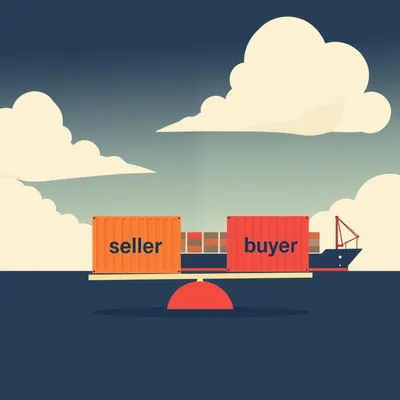
Let's do the three most common ones. EXW, Ex Works. This is the most basic. The seller makes the goods available at their premises — factory, warehouse — and the buyer bears all costs and risks from that point forward. The moment those goods are sitting on the loading dock with your name on them, they're your problem. If you're using EXW, you absolutely must inspect before the goods leave the factory. Inspecting upon receipt is pointless because the risk was yours the entire time. Any damage or defect that occurred after the factory gate is on you, and any defect that existed before the factory gate is nearly impossible to prove once the goods have moved.
Alibaba's inspection service is actually well-suited to EXW for exactly this reason. The inspector goes to the factory before pickup, checks the goods, and you get the report before your truck arrives. It's the right timing. The problem is the liability gap we already talked about — the report is useful, but if it's wrong, you have no recourse against Alibaba.
Then there's FOB, Free on Board. This is probably the most common Incoterm for Alibaba ocean freight transactions. Under FOB, the seller is responsible for getting the goods to the port and loaded onto the vessel. Risk transfers when the goods cross the ship's rail at the port of origin. So the seller bears the risk of damage during inland transport to the port and during loading. But once those goods are on the vessel, they're yours.
This is where a lot of buyers make a critical mistake. They think, well, if risk transfers at the port of loading, I'll just inspect when the goods arrive at my warehouse. But by then, you've already accepted the risk. The goods could have been defective before they ever reached the port, and you'd have no way to prove it. The supplier could say, they were fine when they left the factory, must have been damaged in transit. And since risk transferred at the port of loading, not at your warehouse, you're in a weak position.
The correct move under FOB is still to inspect at origin, before the goods are loaded. Ideally at the factory, but at minimum at the port before loading. Alibaba's inspection service can do the factory visit. A dedicated agent can do both — factory inspection plus a loading supervision at the port to make sure the right containers are being loaded and properly secured.
Then there's CIF, Cost Insurance and Freight. The seller arranges and pays for transport and insurance to the destination port. But here's the subtle part that trips people up — under CIF, risk still transfers at the port of loading, just like FOB. The seller is paying for the insurance, but the risk is yours from the moment the goods are on the vessel. So again, inspection upon receipt is too late for supplier quality issues. You'd only catch carrier damage at that point, which is what the insurance is for.
The Incoterm that would actually make inspection upon receipt viable is DDP, Delivered Duty Paid. Under DDP, the seller bears all risk and cost until the goods are delivered to the buyer's specified location. If you're buying under DDP and the goods arrive damaged or defective, the seller is on the hook. But DDP is rare on Alibaba. Most suppliers don't want to take on that much risk and complexity, especially for international shipments.
Daniel's instinct is right — inspection on the export side almost always makes more sense. The question is just who's doing the inspecting and what liability they carry.
Let's compare the three options directly. Option one, Alibaba's inspection service. Cost is two hundred to five hundred dollars. The inspection covers visual checks, quantity, basic functionality. Liability is essentially zero — the report is advisory. Best used as a screening tool for new suppliers or low-value orders where the cost of failure is manageable.
Option two, a dedicated third-party agent like QIMA, AsiaInspection, or a local sourcing agent you've hired directly. Cost is higher — typically five hundred to fifteen hundred dollars depending on scope. But you can specify exactly what you want inspected, including AQL sampling, lab testing for materials compliance, factory audits, and even ongoing production monitoring where the inspector visits the factory multiple times during production. And crucially, you can negotiate a contract with the inspection company that includes liability for negligence. If they miss something they should have caught, you may have recourse.
Option three, inspect upon receipt yourself. Cost is essentially zero in terms of inspection fees, but the hidden cost is enormous. By the time you're inspecting, you've already accepted the risk under most Incoterms. If you find defects, your only recourse against the supplier is whatever leverage you have left — which is usually none, because you've already paid and the goods have shipped. You might be able to file a claim with the shipping company for damage in transit, but that won't cover manufacturing defects.
There's a case that illustrates this perfectly. A buyer ordered twenty thousand dollars worth of electronic components from a supplier on Alibaba, used Alibaba's inspection service, got a passing report, and the goods arrived with a fifteen percent failure rate. Alibaba's Trade Assurance refunded the order value — twenty thousand dollars. But the buyer had also spent five thousand dollars on expedited shipping and lost another ten thousand in production downtime because their assembly line was waiting on these components. Trade Assurance doesn't cover consequential damages. The refund was cold comfort.
Compare that to a buyer who hires a dedicated agent with a liability clause. If the agent's inspection was negligent — say they failed to test a critical function that was explicitly in the scope of work — the buyer could potentially recover damages beyond the order value. It's not automatic and it depends on the contract, but the legal framework exists. With Alibaba, it doesn't.
That brings us to the knock-on effect, which I think are actually more important than the direct comparison. The biggest risk with Alibaba's inspection service isn't that it's limited — it's that it creates a false sense of security.
This is the behavioral economics part of procurement. When a buyer pays for Alibaba's inspection and gets a clean report, they feel like they've done their due diligence. They might skip other steps they'd otherwise take — negotiating better payment terms, requesting pre-production samples, doing a factory audit, building in a buffer for defects. The inspection checkbox becomes a substitute for actual risk management.
They know they're flying blind, so they order a smaller trial batch, they negotiate thirty percent upfront and seventy percent after delivery, they build relationships with multiple suppliers. The buyer with the Alibaba inspection report in hand feels protected and takes bigger risks.
There's a term for this in risk management — it's called risk compensation. When people feel safer, they take more risks. It's why drivers with anti-lock brakes tend to drive faster and follow closer. The safety feature changes behavior in a way that offsets some of the safety gain. Alibaba's inspection service can work the same way.
What's the right way to think about this? I'd say Alibaba's inspection is best understood as a smell test. It answers the question, does this supplier seem to have real products that roughly match what they promised? It's useful for vetting a new supplier before you've built trust. It's also fine for low-value orders where the cost of total failure is something you can absorb.
For anything over about five thousand dollars, or anything with critical specifications — electronics, medical devices, custom-manufactured parts, anything where a defect could cause downstream problems — you want a dedicated agent. The cost difference between Alibaba's inspection and a proper third-party inspection is maybe three hundred to a thousand dollars. On a twenty thousand dollar order, that's a tiny fraction. And the cost of not doing it can be the entire order value plus consequential damages.
Let's talk about the practical side. If you're using Alibaba's inspection, what should you actually do to maximize what little protection it offers?
First, be specific in your inspection request. Don't just check the box. Provide detailed specifications, photos of acceptable products, a list of critical dimensions and functions to test. The more specific you are, the harder it is for the inspector to miss something important. Second, don't let the supplier know the inspection date in advance. Give them a window, not a specific day. Third, if possible, be present for the inspection yourself or have someone you trust there. Video call during the inspection if you can't be there in person.
Fourth, which I think is the most important — use the inspection report as one data point among many. Combine it with a factory audit, with sample testing, with checking the supplier's export history and other buyer reviews. No single check is sufficient on its own.
Now let's map this to the Incoterm framework more concretely. Daniel asked how it works in both examples — export-side inspection and receipt inspection. Here's the practical playbook. If you're using EXW, schedule inspection at the factory before your freight forwarder picks up the goods. This is non-negotiable. Once the goods leave the factory, they're yours. If you're using Alibaba's inspection, it'll happen at the factory by default, which is the right place. If you're using your own agent, have them inspect at the factory and then supervise the loading onto your truck or container.
For FOB, the ideal is a two-point inspection. First at the factory, before the goods leave for the port. Then a loading supervision at the port to verify that the inspected goods are the ones actually being loaded into the container. There's a common scam where a supplier shows high-quality goods to the inspector at the factory, then swaps them for lower-quality goods before shipping. Loading supervision closes that gap.
For CIF, same approach as FOB — inspect at origin, before loading. The fact that the seller is paying for freight and insurance doesn't change where risk transfers. And for the rare DDP transaction, you could theoretically inspect upon receipt and reject defective goods, but even then, it's better to catch problems early. Returning goods internationally is a nightmare of customs paperwork and shipping costs.
What about inspecting upon receipt as a general practice? Is there ever a case where it makes sense?
It makes sense as a secondary check, not a primary one. When goods arrive, you should absolutely open the containers and inspect for transit damage, verify the quantity, and do a spot check on quality. But this is for your own inventory management and for filing claims with the shipping company or insurer. It's not a substitute for origin inspection because under most Incoterms, your window for holding the supplier accountable has already closed.
The one exception is if you've negotiated specific payment terms that give you leverage after delivery. For example, if you've structured the deal as a letter of credit with payment against documents that include a third-party inspection certificate, or if you've negotiated retention of a percentage until goods are accepted at destination. But those are contractual protections you have to build in upfront — they're not provided by Alibaba's standard terms.
That's really the meta-lesson here. Alibaba is a marketplace. It provides tools that make transactions easier, but those tools are designed to facilitate transactions, not to protect buyers from every risk. The liability stays with the buyer in almost all cases. Alibaba's inspection service, Trade Assurance, Verified Suppliers — these are all friction-reducers, not risk-absorbers.
Which makes sense from Alibaba's perspective. They're connecting millions of buyers and suppliers. If they took on real liability for the quality of every transaction, they'd be an insurance company, not a marketplace. Their model depends on keeping liability limited and making that limitation clear in the fine print.
To be fair, they do make it clear. It's not hidden. The terms of service for the inspection service explicitly state that it's a facilitation service and that Alibaba is not liable. The problem is that most buyers don't read the terms, and the marketing around these services implies a level of protection that the legal terms don't deliver.
Where does that leave us? Let's boil this down.
First, always inspect at origin, never rely on receipt inspection, unless you're using DDP. The point of risk transfer under your Incoterm dictates your inspection window. For EXW, inspect at the factory before pickup. For FOB and CIF, inspect at the factory and ideally supervise loading at the port. Second, treat Alibaba's inspection as a screening tool, not a quality guarantee. For orders over five thousand dollars or with critical specifications, hire a dedicated third-party agent and negotiate a contract that includes liability for negligence. Third, build inspection costs into your procurement budget from the start. The inspection fee — whether it's three hundred dollars or fifteen hundred — is a fraction of the cost of a failed order. The real cost isn't the inspection. It's the lost sales, the production downtime, the reputational damage when you can't deliver to your own customers.
I'd add a fourth. Before your next Alibaba order, map your Incoterm to your inspection plan. If you're using FOB, write down exactly when and where inspection will happen, who will do it, and what they'll check. If you're using EXW, make sure inspection happens before your truck arrives. Don't leave this to chance or to the supplier's suggestion.
The suppliers who are reliable will welcome inspection. The ones who resist it or try to steer you toward a particular inspector or a particular timing — that's a signal worth paying attention to.
Which raises an interesting question about where all this is heading. Alibaba has been layering on more and more services — logistics, inspection, financing, the AI sourcing agent Accio you mentioned before. As they build out this infrastructure, do you think they'll eventually offer a full-liability inspection service? Something where they actually stand behind the quality of the goods?
I'm skeptical. The economics of it are brutal. To offer full-liability inspection, Alibaba would need to control the entire quality assurance process — not just a visual check at the end, but ongoing production monitoring, materials testing, compliance verification. That's expensive and it doesn't scale easily across millions of product categories and suppliers. And the liability exposure would be enormous. One bad batch of electronics that causes a fire, one shipment of contaminated food products — the damages could be in the millions.
The low-liability model might be inherent to the marketplace structure. They can facilitate trust, but they can't guarantee quality without fundamentally changing what kind of business they are.
I think that's right. And it means buyers need to get smarter about risk allocation. The platforms are making it easier than ever to find suppliers and place orders, but the fundamental principles of international trade haven't changed. You still need to understand Incoterms, you still need to verify quality before you accept risk, and you still need to structure your contracts and payments to protect yourself.
Daniel, I think your instinct was spot on. Export-side inspection is the way to go. The question is just whether you're using Alibaba's low-cost, low-liability service or investing in a proper agent. And the answer to that depends on what you're buying and what it costs you if things go wrong.
Now: Hilbert's daily fun fact.

The Aztec board game patolli used a scoring system based on beans marked with dots, and the word for the scorekeeping beans — patol — shares a root with the modern botanical term for the genus of mesquite trees whose seed pods were used as game counters, a connection first noted in an 1810s linguistic survey of Nahuatl by a Prussian naturalist who was actually in Mexico to study volcanoes.
...right.
This has been My Weird Prompts. If you want to send us a question like Daniel did, email the show at show at my weird prompts dot com. We're also on Spotify and Telegram. I'm Corn.
I'm Herman Poppleberry. Go inspect something before it ships.