Daniel sent us this one — he wants to look at the total opposite end of the Incoterms spectrum from what we've covered before. Ex Works, or EXW. This is the most buyer-burdensome shipping term in international trade, and it's actually reasonably common on Alibaba, which means it's a pitfall for people who don't know what they're signing up for. The core question is: when does EXW actually make sense, who uses it, and for a small importer staring at an EXW quote, what alternatives shift some responsibility back to the seller without going all the way to door-to-door delivery?

The nightmare version of this — the one that makes the concept stick — is imagining you've paid for five hundred units of custom packaging from a factory in Dongguan, and the legal reality is that you are responsible for walking into that factory, packing the goods onto a truck yourself, and arranging export customs clearance in China. That's not an exaggeration. That's the contract.
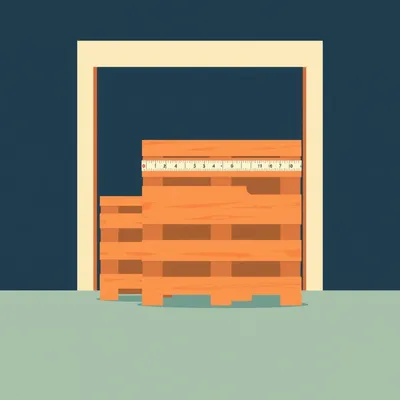
The seller's entire obligation is to have the goods sitting on their loading dock. They don't even have to help you lift the box.
The Investopedia definition is brutally simple: the seller makes the goods available at their premises, and the buyer is responsible for all costs and risks involved in taking the goods from there. All of them. Loading, export clearance, main carriage, import clearance, final delivery — every single link in the chain after the factory floor belongs to the buyer.
It's the mirror image of DDP. With Delivered Duty Paid, the seller does everything — door to door, import duties included. EXW is the seller doing nothing beyond manufacturing the thing and putting it in a box.
DAP sits in the middle, where the seller gets the goods to the destination country but the buyer handles import customs clearance. EXW is so far on the other end that it makes DAP look like a full-service concierge. The critical hidden detail — the one that catches first-time importers — is export customs clearance. Under EXW, you as the buyer are legally responsible for clearing the goods out of the seller's country. Which means you need a customs broker in China, or Vietnam, or wherever the factory is, with power of attorney to act on your behalf.
Most small importers don't have a customs broker in Shenzhen.
Most small importers don't know what a customs broker is until this moment. And that's the trap. The EXW price looks great on a spreadsheet — two thousand dollars for five hundred units of custom packaging, fantastic margin — and then reality starts stacking up.
Let's walk through what actually happens on the ground. I buy from a factory in Dongguan on EXW terms. What's step one?
Step one is you need to get the goods from the factory onto a truck. And here's the first thing that surprises people: under EXW, the seller has no obligation to load the goods. Freightos has a good piece on this — they point out that if the seller's workers do help load your truck and something gets damaged, the liability is a complete gray zone. The seller can say they were just being helpful, they weren't contractually obligated, and suddenly you're arguing about who pays for crushed packaging while your shipment sits in limbo.
The loading dock is a legal no-man's-land.
In theory, yes. In practice, most sellers will load the truck because it's faster and they want the goods gone. But the contract doesn't require it, and if something goes wrong, you're on thin ice. That's the first hidden risk.
Then the truck leaves the factory.
Now your goods need to get through Chinese export customs. This is where the real complexity kicks in. You need a licensed customs broker in China who has power of attorney to represent your company. You have to share your commercial invoice, packing list, and sometimes manufacturing details — sensitive commercial documents — with a third party in a foreign jurisdiction. For a lot of small importers, this is the first time they've ever had to do anything like this, and they're doing it in a language they don't speak, in a regulatory system they don't understand.
That broker is your agent, not the seller's. So if something goes wrong with the export declaration — if the goods get held up, if there's a classification error — it's your problem, not the factory's.
The factory has already fulfilled its obligation. The goods were available at the premises. Everything after that is on you. And then we get to the cost stacking effect, which is where EXW goes from complex to genuinely expensive. iContainers has done research on this — under EXW, you pay for every logistics leg separately. Domestic pickup from the factory to the port, origin handling at the terminal, export customs clearance fees, ocean or air freight, import customs clearance at destination, and final delivery to your door. Each of those legs carries its own markup and its own minimum charges.
Instead of one freight forwarder giving you a consolidated quote, you're essentially buying logistics à la carte, and every item on the menu has a surcharge.
The total can be staggering. Let's use Daniel's hypothetical — a US-based entrepreneur buying five hundred units of custom packaging from Dongguan. The factory quotes two thousand dollars EXW. Then you arrange a truck from Dongguan to the port — call it three hundred dollars. Hire a Chinese customs broker — two hundred dollars. Ocean freight — eight hundred dollars. US customs clearance — a hundred and fifty dollars. Drayage from the port to your door — two hundred and fifty dollars. Your total landed cost is now three thousand seven hundred dollars. That's an eighty-five percent increase over the EXW price.
That's assuming nothing goes wrong. No delays, no demurrage charges, no customs inspection fees.
Demurrage alone can wreck your margins if the container sits at the port too long. And under EXW, you're the one on the hook for every minute of delay, because you're the importer of record for the entire journey from the factory gate onward.
The EXW price is a mirage. It's not what you pay for the goods — it's what you pay for the privilege of then paying for everything else.
That's the perfect way to put it. It's a starting gun, not a finish line. And this is why EXW is such a common trap on Alibaba. Sellers quote EXW because it's the simplest thing for them. They don't need to understand international shipping, they don't need relationships with freight forwarders, they don't need to know anything about export regulations. They make the product, you figure out the rest.
The buyer sees a low number and clicks purchase.
Three weeks later they're on a forum somewhere asking why their shipment is stuck in Chinese customs and what a commercial invoice is.
When does EXW actually make sense? Because it's not a scam. It's a legitimate Incoterm that real businesses use.
It makes sense in three specific scenarios. First, and this is the most common legitimate use case — you already have a freight forwarder with a presence in the origin country and consolidated shipping schedules. If your forwarder has an office in Shenzhen and they're doing weekly LCL consolidations — less than container load — they can add an EXW pickup to their existing route for maybe fifty to a hundred dollars extra. At that point, EXW might actually be cheaper than FOB because you're not paying the seller's markup on domestic trucking and export clearance.
It's for importers who've already built the infrastructure.
It's the logistics equivalent of bringing your own truck. If you've already got the truck on the road, adding one more stop is cheap. If you're hiring a truck from scratch for one pickup, it's expensive.
What's the second scenario?
When you want to inspect the goods before they leave the factory. EXW gives you physical control of the goods at the seller's premises, before any freight costs are incurred. If you're buying something where quality is critical — custom machinery, high-value components — you might want your own inspector to examine every unit before it gets loaded onto a truck. Under FOB, the goods are already in transit to the port by the time you'd realistically inspect them. Under EXW, nothing moves until you say so.
It's about control, not cost.
You're trading higher logistics complexity for total quality assurance at the source. That can be worth it for the right product.
The third scenario?
When the seller is a small workshop that can't handle export logistics. Some factories in China are tiny operations — five, ten people — and they've never exported directly. They don't have a relationship with a customs broker, they don't know how to arrange export clearance, and they don't want to learn. EXW is the only way they'll sell to you. In that case, you're not being trapped — you're dealing with a supplier whose capabilities are limited, and EXW accurately reflects that.
It's not always a red flag. Sometimes it's just a small factory being honest about what they can and can't do.
Here's the thing — even in that third scenario, you should still ask for FOB pricing. Because if the seller can't provide it, that tells you something important about their export readiness. And if they can provide it, the incremental cost is usually small.
Let's talk about FOB, because this seems like the single most important alternative for someone staring at an EXW quote on Alibaba.
FOB — Free On Board — is the most common Incoterm for Chinese exports, and for good reason. Under FOB, the seller is responsible for getting the goods to the port and loading them onto the vessel. That means the seller handles domestic trucking from the factory to the port, and — critically — export customs clearance. Those are the two hardest parts of EXW for a small importer, and FOB shifts both of them back to the seller.
The seller hires the Chinese customs broker, not me.
The seller already has relationships with local trucking companies and customs brokers. They do this all the time. For them, adding one more shipment to their existing logistics flow is incremental. For you, building that capability from scratch is a project.
The cost difference?
Let's go back to our five hundred units of custom packaging. EXW total landed cost was three thousand seven hundred dollars. An FOB quote from the same factory might be two thousand four hundred dollars — that includes the product, domestic trucking to the port, and export clearance. Then you add ocean freight, import clearance, and destination delivery on your side. Your total is probably around three thousand two hundred dollars. You save five hundred dollars and you never have to hire a Chinese customs broker or worry about a truck in Dongguan.
That's the part that seems almost absurd — you pay less and get more.
Because the seller's incremental cost for domestic trucking and export clearance is lower than yours. They have volume relationships. Their customs broker charges them a fraction of what a broker would charge a one-time foreign buyer. The seller might pay a hundred dollars for export clearance where you'd pay two hundred or more. And they're not adding a coordination markup because it's just part of their normal workflow.
The seller's efficiency becomes your savings.
That's the whole logic of FOB. It allocates each responsibility to whoever can handle it most efficiently. The seller handles origin logistics because they're better at it. You handle destination logistics because you're better at that. It's a clean split at the vessel.
What about FCA? I've seen that term and it seems similar.
FCA — Free Carrier — is essentially the multimodal version of FOB. FOB is specifically for ocean freight and the risk transfers when the goods are on board the vessel. FCA transfers risk when the goods are handed to the carrier at a named place, which could be a port, an airport, a rail terminal, or even the seller's premises. It's more flexible. If you're shipping by air or rail, FCA is the right term. FOB technically only applies to sea and inland waterway transport.
If I'm buying from a factory in Chengdu and shipping by rail to Europe, FCA is the better choice.
And functionally, FCA and FOB do the same thing for the buyer — they shift origin logistics and export clearance to the seller. The main difference is where exactly the risk transfers and what transport modes are covered.
What about CPT? Carriage Paid To?
CPT goes a step further. The seller arranges and pays for the main carriage — the ocean freight or air freight — to a named destination. But the risk still transfers when the goods are handed to the first carrier. So the seller pays for the shipping, but if the container falls off the ship, that's your problem. It's an odd split of cost versus risk that catches people off guard.
CPT is like the seller buying your plane ticket but you're responsible if the plane crashes.
That's actually a perfect analogy. The seller pays for the journey, but the risk is yours once the goods leave the origin. It's useful in specific situations — mainly when the seller has better freight rates than you do — but you need to understand the risk transfer point and make sure your insurance covers the gap.
Then beyond CPT you get into the D terms — DAP, DDP — where the seller takes on more and more.
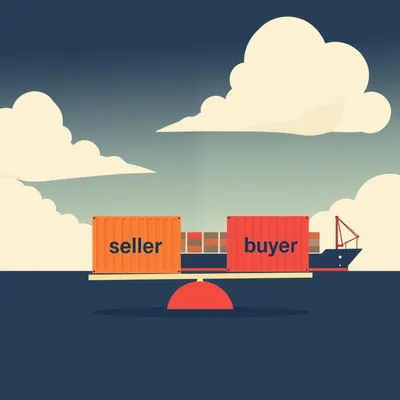
The spectrum runs EXW, FCA, FOB, CPT, CIP, DAP, DDP — from buyer-does-everything to seller-does-everything. Each step shifts one more piece of the puzzle. The key insight for a small importer is that you almost never want to be at either extreme. EXW puts too much on you. DDP puts too much on the seller, and they'll price that risk into the quote.
The sweet spot is somewhere in the F group.
For most small importers sourcing from China, FOB is the default correct answer. It's well understood by Chinese factories, it's standardized, and it draws a clean line at the vessel. You handle what happens on your side of the ocean, they handle what happens on theirs.
What if the seller insists on EXW? You ask for FOB and they say no.
Then you have a negotiation. First, understand why they're insisting. If it's a tiny workshop that can't handle export clearance, that's one thing — you might decide to accept EXW and use a freight forwarder with origin-country capabilities. If it's a larger factory that just doesn't want the hassle, that's a different conversation.
You can use EXW as leverage.
If the seller quotes EXW, they're saving money on logistics coordination. They don't have to pay for a truck, they don't have to pay a customs broker, they don't have to do any paperwork beyond the commercial invoice. That savings should be reflected in the product price. So you can say: fine, I'll accept EXW, but I want the unit price reduced by the amount you're saving on logistics. And then you use a freight forwarder who offers EXW consolidation services.
EXW consolidation — that's where the forwarder bundles multiple pickups?
A good freight forwarder with a presence in China will have trucks doing regular pickup routes through the major manufacturing regions. They might pick up from five different factories in Dongguan in a single day, consolidate the shipments at their warehouse, and load them into a shared container. Your EXW pickup becomes a marginal stop on an existing route, which keeps the cost low.
You're essentially buying into someone else's logistics infrastructure.
Which is the only way EXW makes economic sense for a small importer. You can't build your own China logistics operation for a five-hundred-unit order. But you can pay a forwarder who already has one.
Let's talk about the Alibaba-specific dynamic, because that's where a lot of listeners are encountering this. Why is EXW so common there?
Because Alibaba is a marketplace that connects buyers with manufacturers, many of whom are small to medium enterprises that have never exported directly before. For these sellers, EXW is the path of least resistance. They don't need to understand Incoterms, they don't need to learn about international shipping, they don't need to hire a logistics coordinator. They make the product, you figure out the rest. It's the default because it's the easiest thing for them to offer.
Alibaba's platform doesn't exactly discourage it.
Alibaba has been pushing Trade Assurance and Alibaba Logistics as more standardized shipping options, but EXW persists because it's simple for sellers. The platform shows the EXW price prominently, and a buyer who doesn't know Incoterms sees a low number and thinks they're getting a deal.
What's the practical decision framework? If I'm on Alibaba right now, looking at an EXW quote, what do I do?
First: do I have a customs broker in the seller's country? If the answer is no — and for most small importers it will be no — you need to either hire one or switch to a term where the seller handles export clearance. Second: do I have a freight forwarder who can do origin pickup? If you've already got a forwarder relationship and they have a China office, EXW might be viable. If you don't, you're about to learn the hard way how fragmented international logistics can be.
The third question?
Is the cost savings over FOB at least fifteen to twenty percent to justify the complexity? If the FOB quote is only two or three hundred dollars more than EXW, you're essentially paying two hundred dollars to avoid hiring a Chinese customs broker, coordinating a truck in Dongguan, and taking on export clearance liability. That's a bargain.
The rule of thumb is: if you're sourcing on Alibaba for the first time, always ask for FOB.
Make FOB your default comparison price. When you're evaluating quotes from different suppliers, get them all on FOB terms so you're comparing apples to apples. An EXW quote from one factory and an FOB quote from another are not comparable numbers.
Because one is a product price and the other is a product-plus-logistics price.
And if a seller can't or won't provide an FOB quote, that's useful information. It tells you something about their export experience. A factory that's exported before will have an FOB price ready. A factory that hasn't might not know how to calculate it, which means you're dealing with a less experienced supplier.
Which isn't necessarily a dealbreaker, but it changes your risk calculus.
You might still buy from them, but you go in knowing you'll need to handle more of the logistics yourself, and you price that into your decision.
There's one more piece I want to touch on — the long-term play. If someone's importing regularly, does EXW become more attractive over time?
As your import volume grows, you build relationships with freight forwarders who handle origin-country logistics. You might eventually have a forwarder with a dedicated China desk, regular consolidation schedules, and preferential rates on domestic trucking and export clearance. At that point, EXW becomes increasingly viable because you've internalized the capabilities that make it work.
EXW is a maturity model. It's terrible for beginners, viable for intermediates with the right forwarder relationships, and potentially optimal for high-volume importers who've built their own logistics pipeline.
The same term that's a trap for a first-time Alibaba buyer is a strategic advantage for a company importing twenty containers a month. They can squeeze efficiency out of every leg because they control the whole chain.
Let's distill this into something actionable. Someone gets an EXW quote on Alibaba. What's their move?
Step one: ask for the FOB price. It's one message. The seller will either give you a number or they won't. Step two: if they give you an FOB price, compare the difference. If FOB is within ten to fifteen percent of EXW, take FOB and don't think twice. Step three: if they won't give you FOB, decide whether you're willing to manage origin logistics. If you are, get quotes from freight forwarders who offer EXW pickup and consolidation before you commit to the order. Know your total landed cost before you pay the factory.
Never confuse the EXW price with what you're actually going to pay.
That's the single most important thing to remember. The EXW price is the beginning of the calculation, not the end. If you don't know what the other legs cost, you don't know what you're spending.
Where is all this heading? Alibaba is pushing more standardized shipping — Trade Assurance, Alibaba Logistics. Does EXW become less common over time?
I think it persists, honestly. EXW survives because it's the path of least resistance for sellers, and marketplaces have limited ability to force sellers to adopt more complex terms. What might change things is the rise of fulfillment models where Chinese factories hold inventory in overseas warehouses — at that point, the whole Incoterms conversation becomes less relevant because the goods are already in the destination country.
The factory ships a container to a warehouse in Los Angeles, and then sells from that inventory domestically.
That's a fundamentally different supply chain model. The buyer is purchasing from what is effectively domestic stock, even though the seller is a Chinese manufacturer. Incoterms don't really apply in the same way. But that's still an emerging model for most small importers. For the foreseeable future, the Alibaba buyer is going to encounter EXW quotes, and they need to know what to do with them.
The core message is that Incoterms are a negotiation, not a given. The seller's first quote is their preferred position. Your job is to understand what you're signing up for and push back to the point on the spectrum that matches your capabilities.
For almost every small importer, that point is FOB. Not EXW, not DDP. Right in the middle, where each party handles what they're good at.
Now: Hilbert's daily fun fact.
Now: Hilbert's daily fun fact.

In the 1840s, astronomers attributed certain irregularities in lunar libration to gravitational effects from an undiscovered planet, which they named Proserpina. The effects were later found to be entirely explained by observational error caused by temperature fluctuations in the telescope tube at the Drake Passage observatory.
They invented a planet to explain a wobbly telescope.
That's a great name for a thing that doesn't exist.
The big question for anyone sourcing internationally is whether EXW becomes less relevant as platforms push standardized logistics, or whether it sticks around because it's just too convenient for sellers. My bet is it sticks around. The trap stays set.
The antidote stays the same. Know your terms, know your costs, and never accept the first quote without understanding what it actually covers. Thanks to our producer Hilbert Flumingtop. This has been My Weird Prompts. If you enjoyed this, leave us a review wherever you listen — it helps other people find the show.
We'll be back next week.